
Two heritage marks in one design
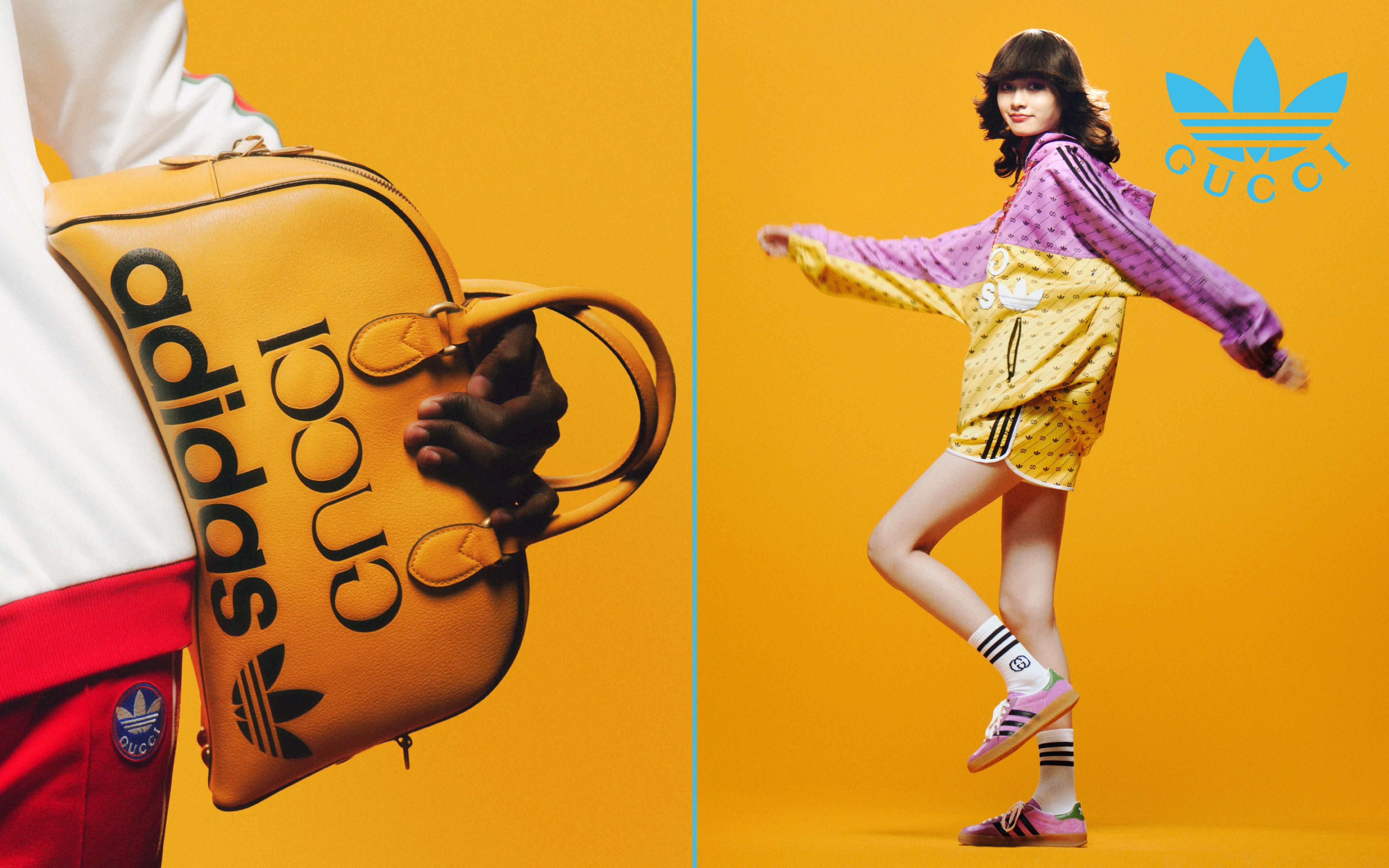
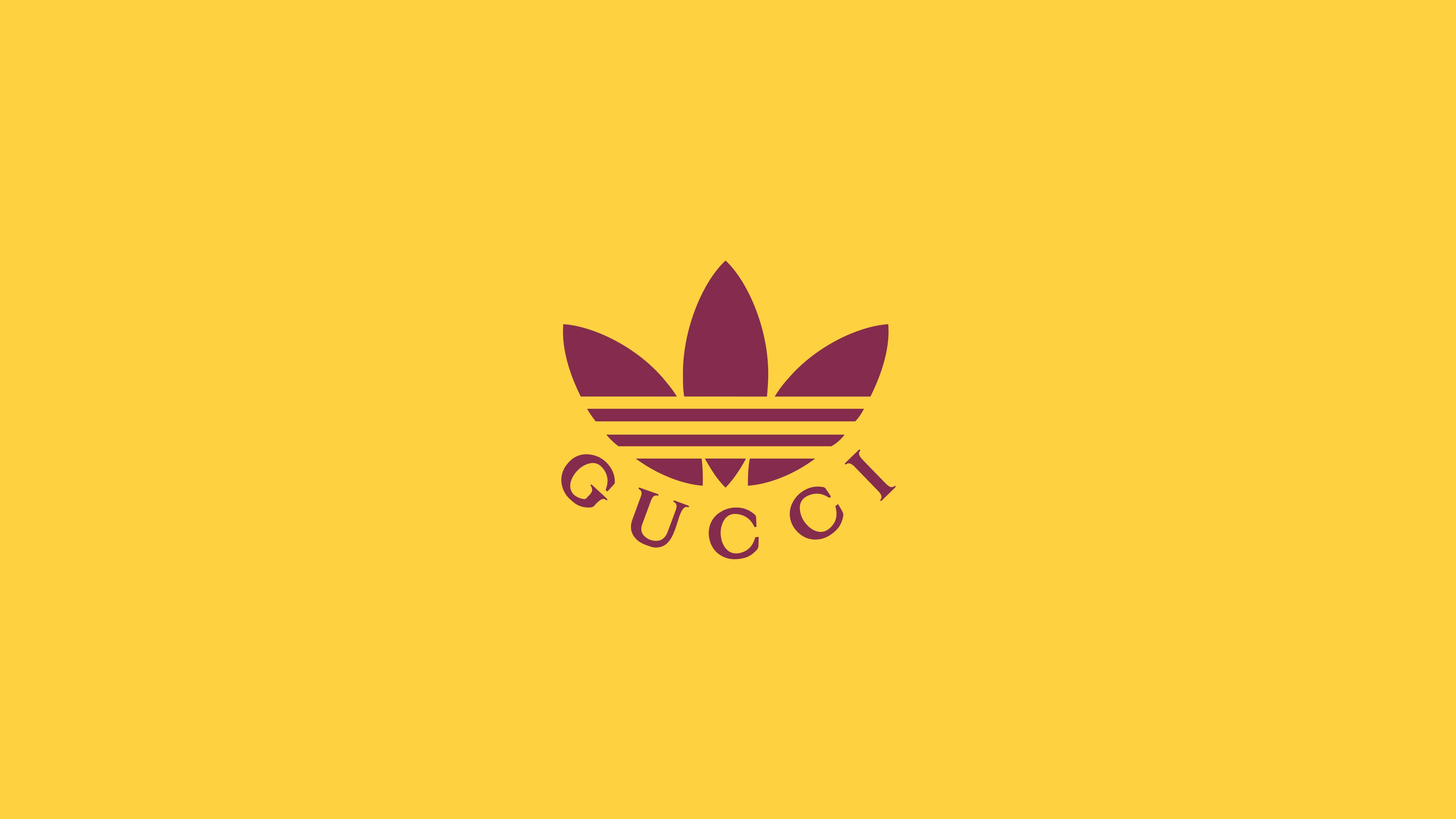
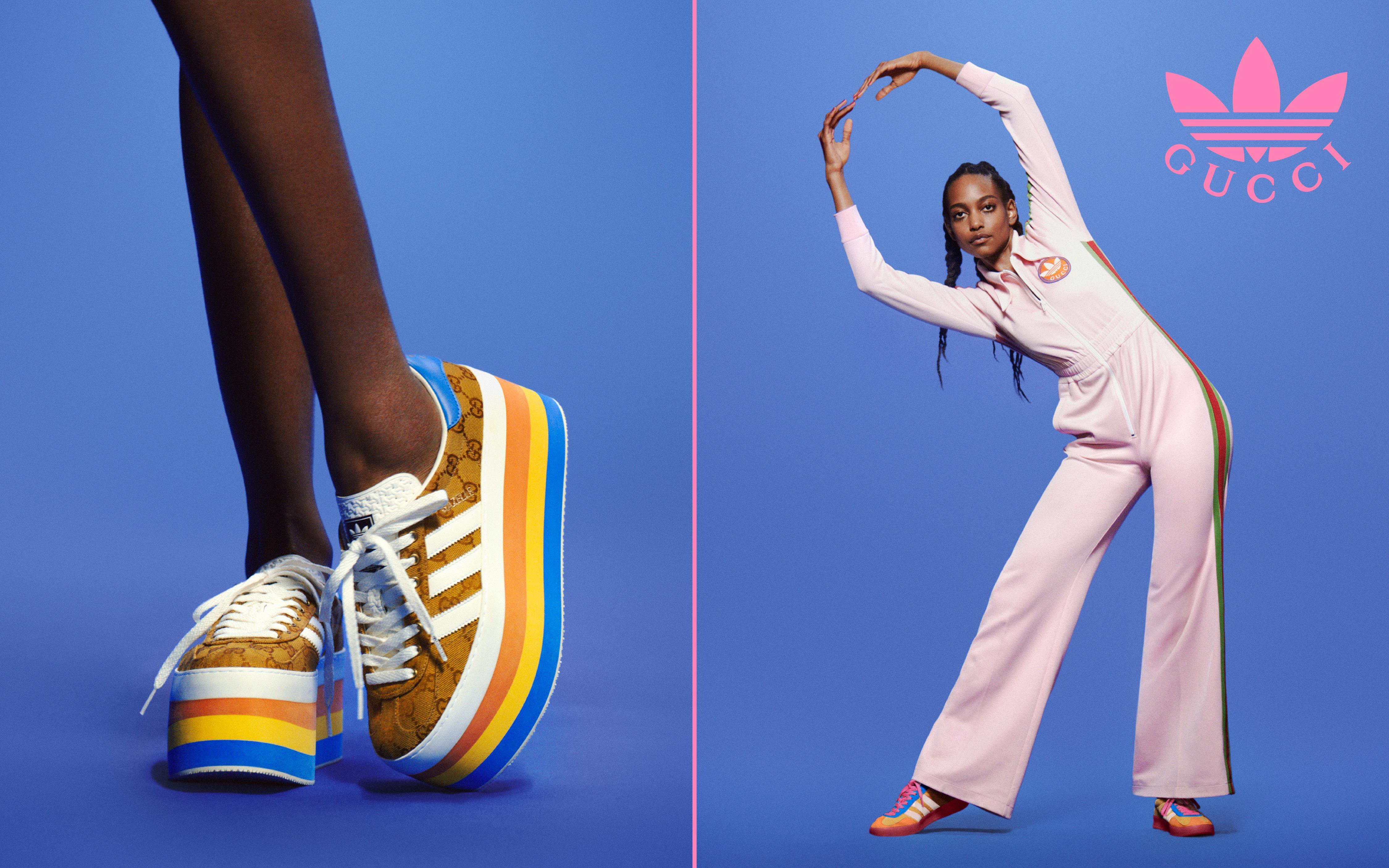
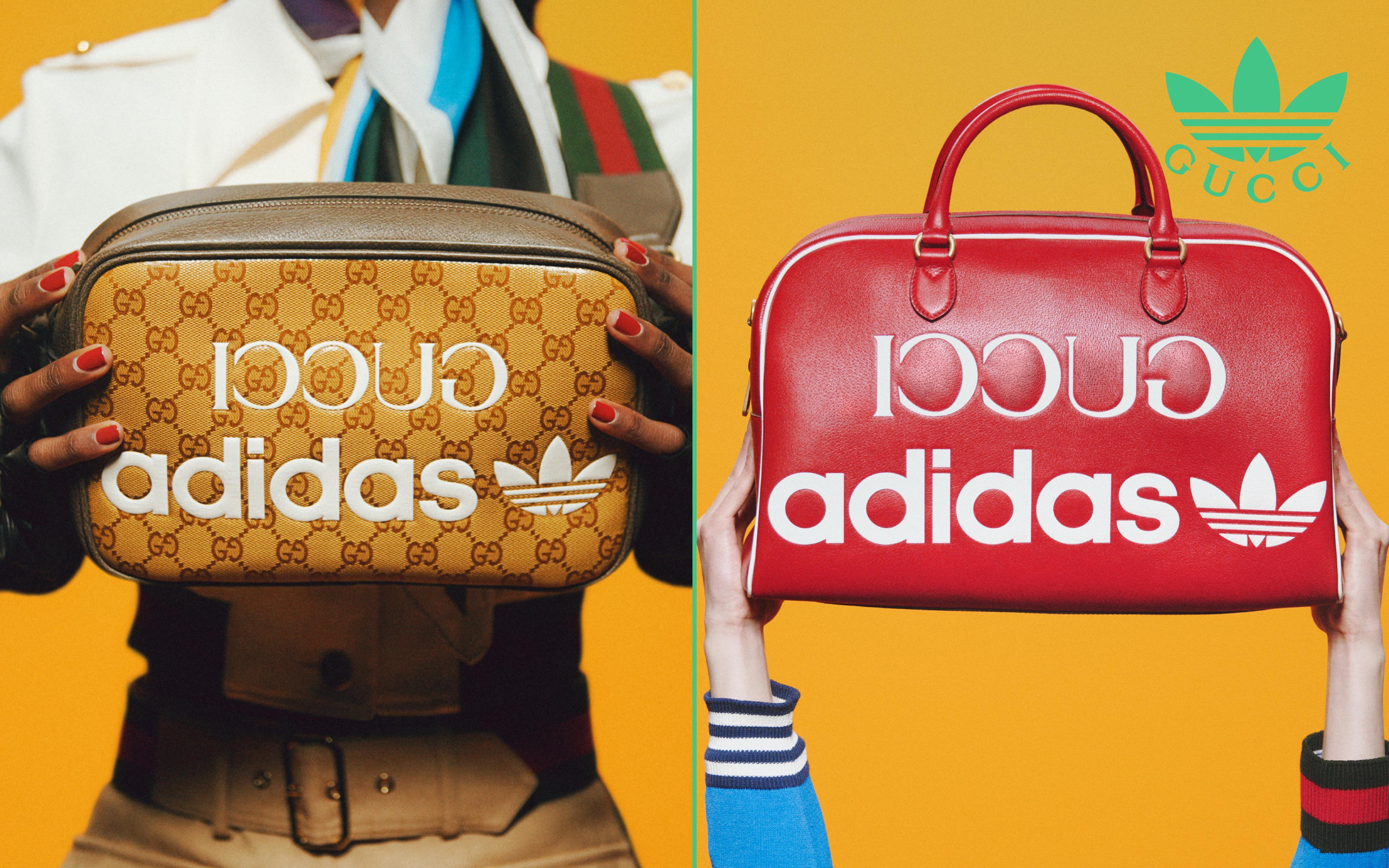
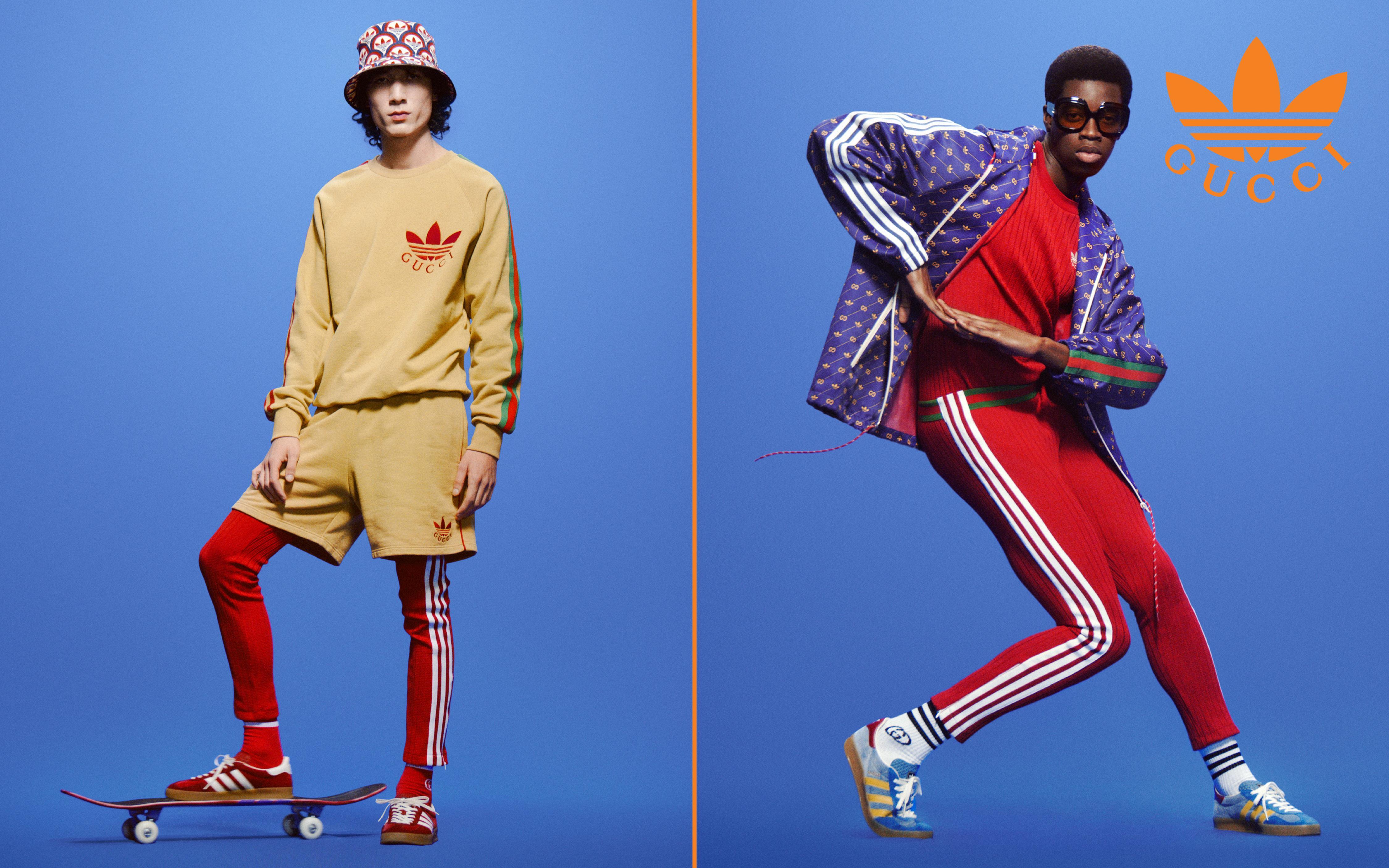
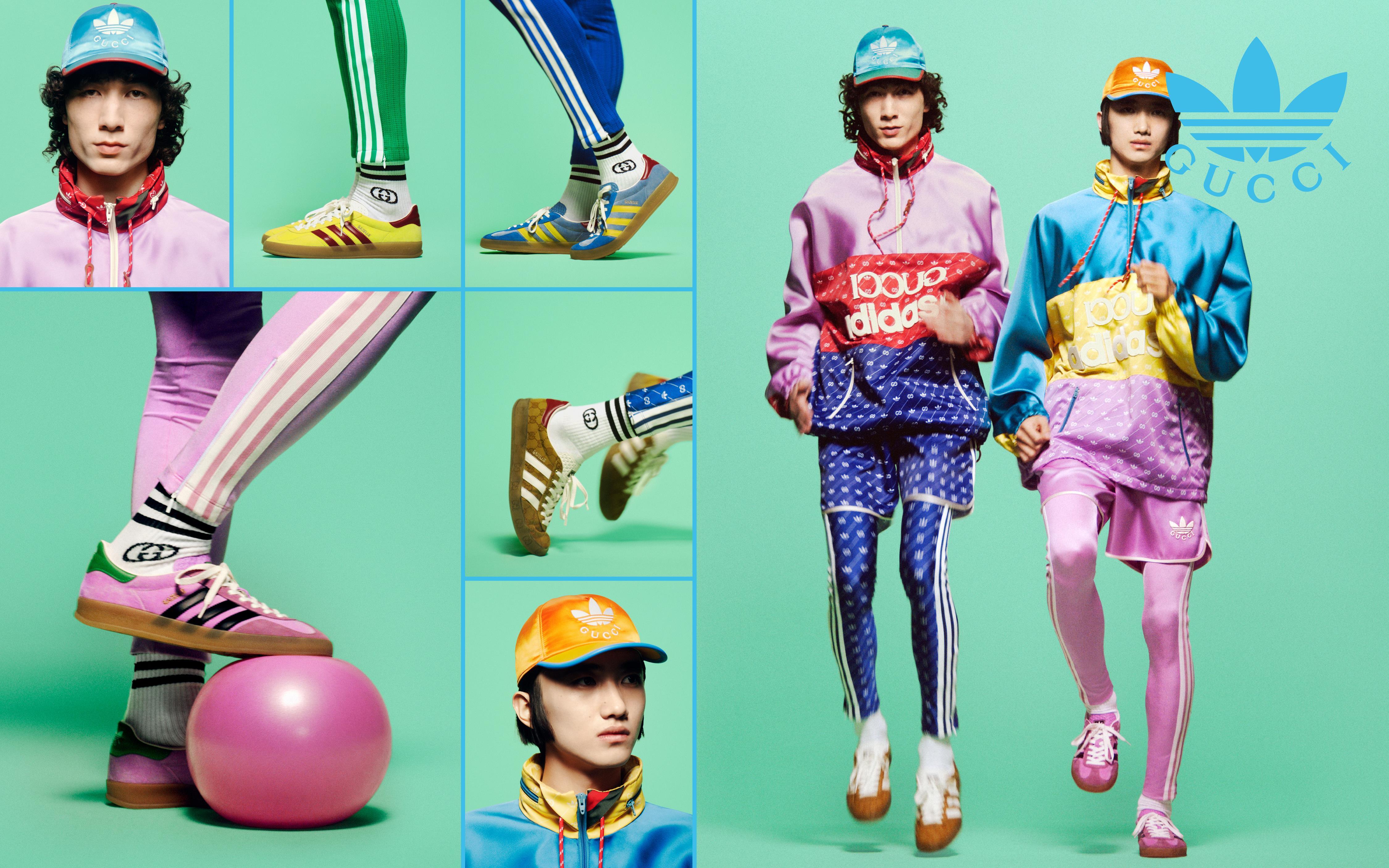
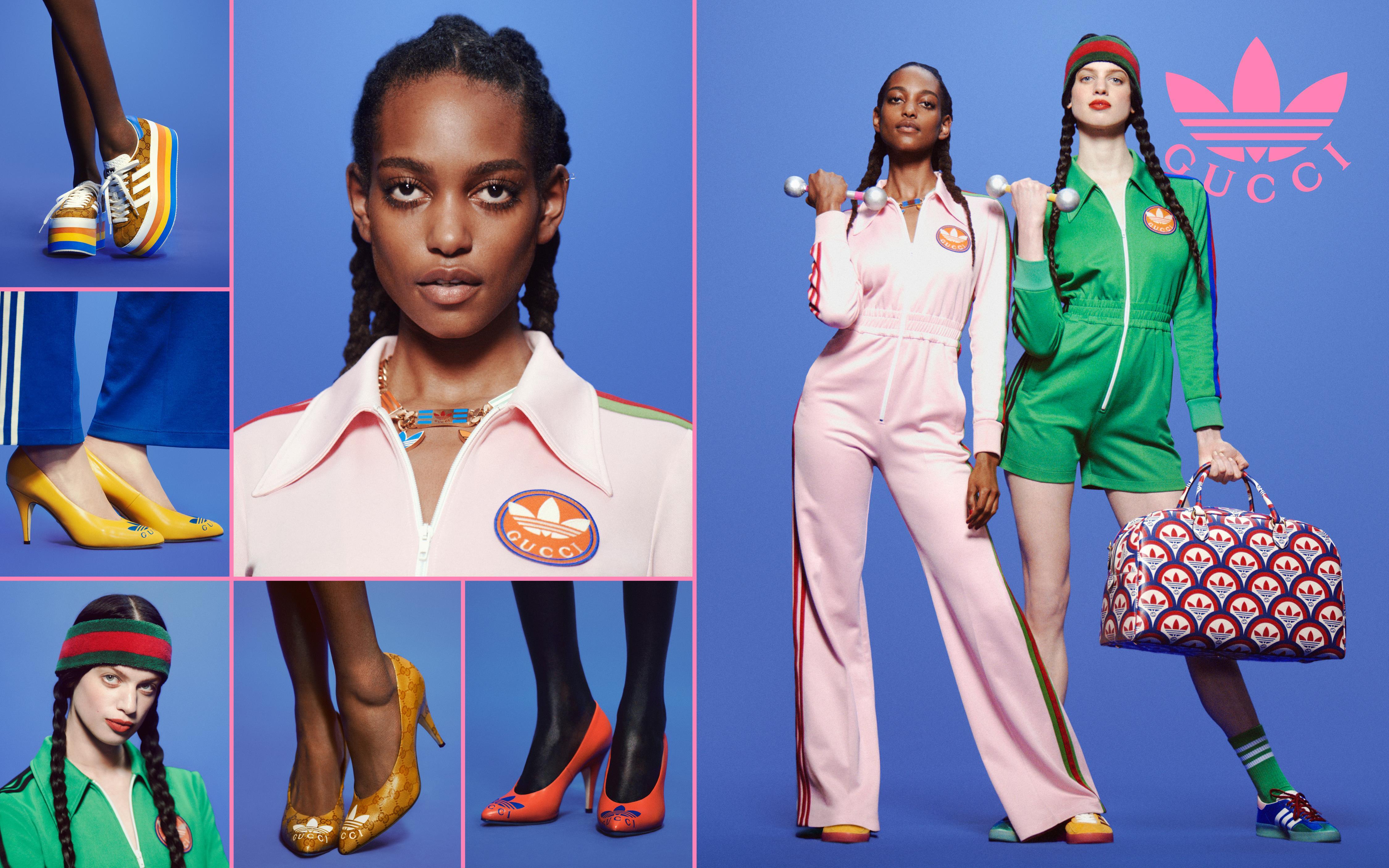
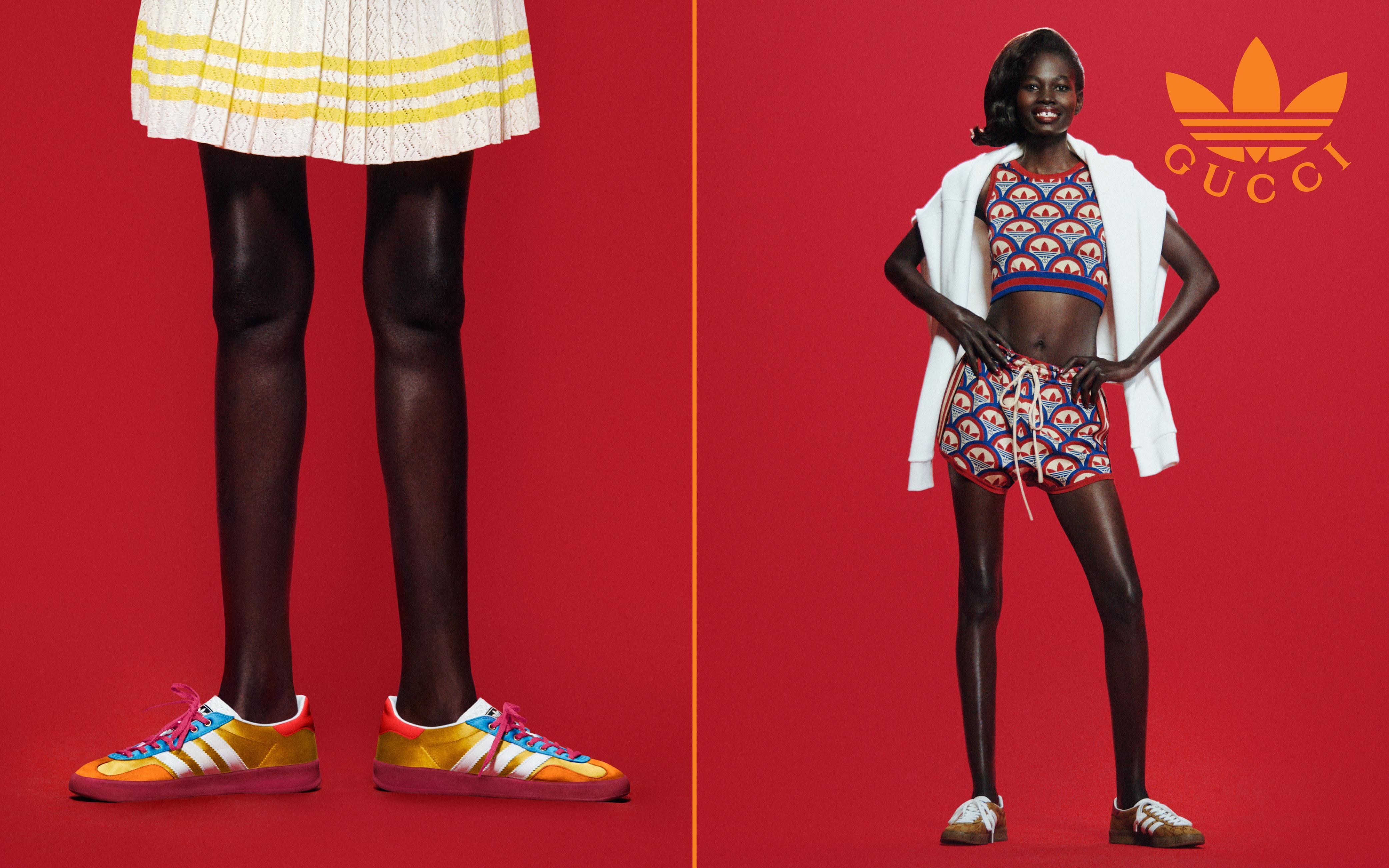
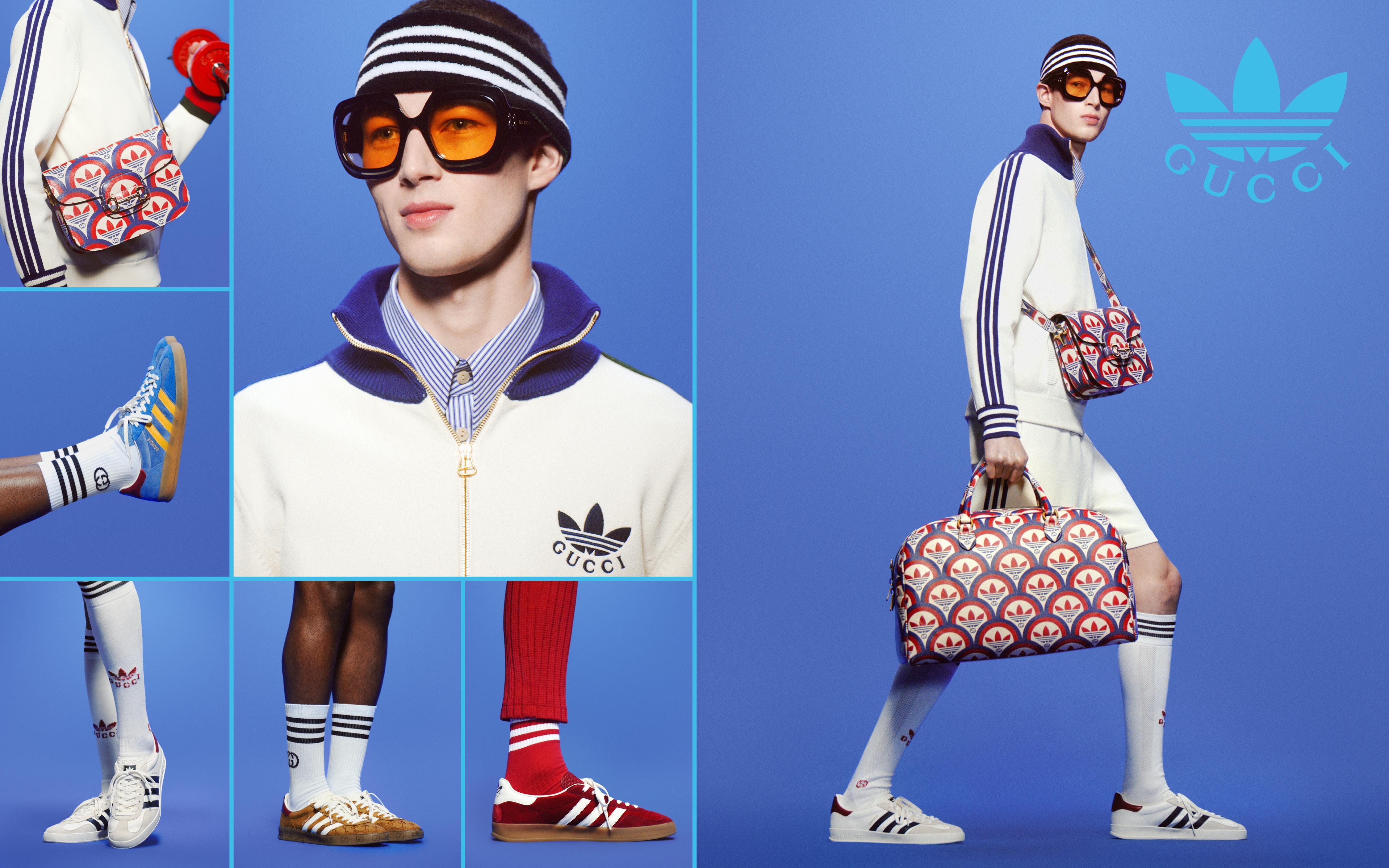
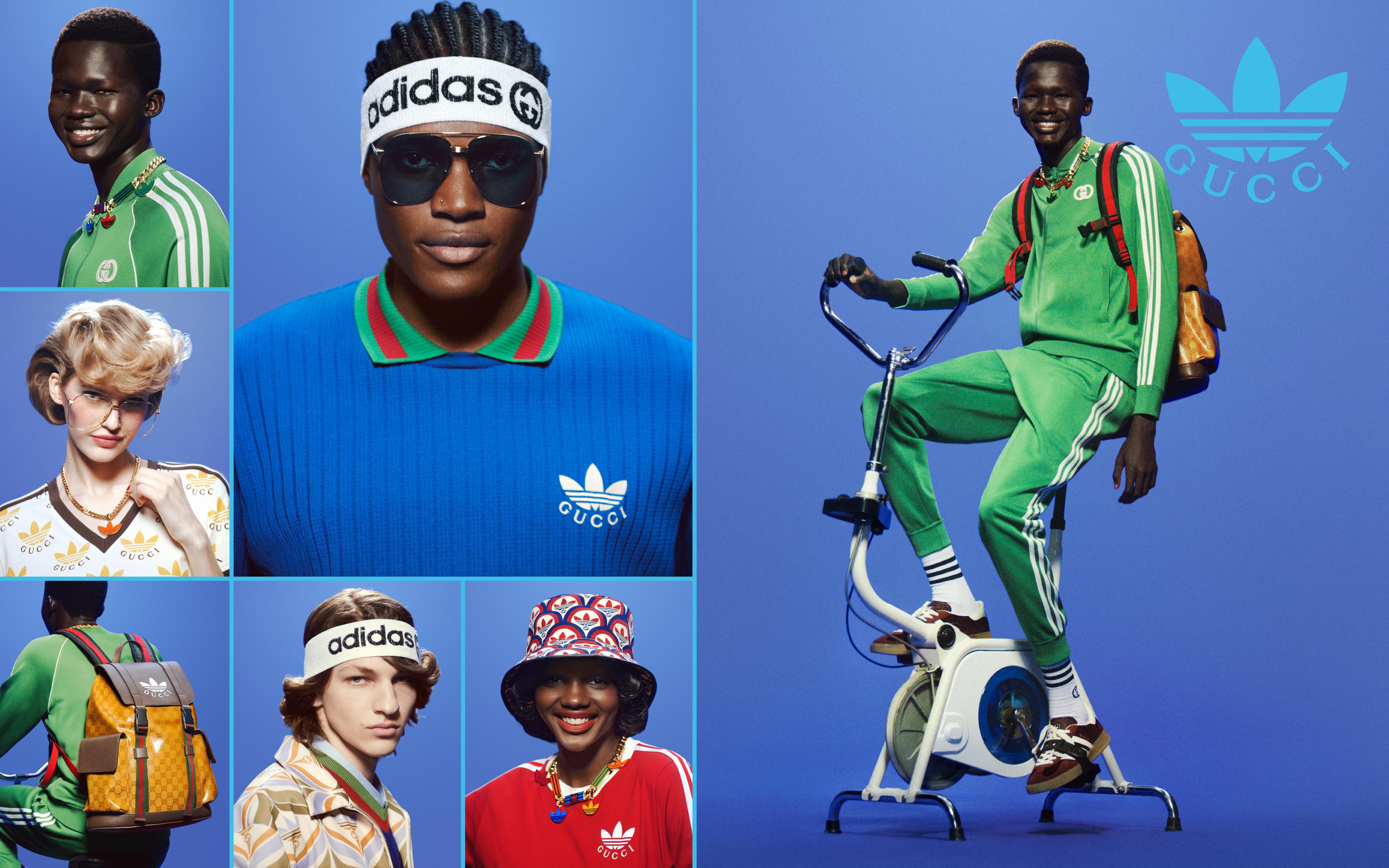
The adidas and Gucci collaboration, presented in 2022, is one of the clearest recent examples of a sportswear brand and a luxury house merging their identities.1 Rather than one brand quietly supplying the other, the collection puts both marks on display at once, combining the adidas Trefoil and three stripes with Gucci's monogram and colours.2, 3 The result treats two of the most recognisable logos in their respective worlds as a single visual language.
The collaboration emerged from Gucci, whose creative director Alessandro Michele wove adidas branding through the house's Fall 2022 collection before a wider release later that year.1, 2, 4 The mix of tailored luxury clothing with unmistakable sportswear marks made the co-branding the defining feature of the collection rather than a minor detail.
Logos as the material
What makes the collaboration notable in branding terms is how directly it works with logos. The adidas Trefoil, the three stripes and the Gucci monogram are combined, overlaid and repeated as motifs across products, so that the branding itself becomes the design.2 For two companies whose logos carry enormous recognition and value, putting them together is a deliberate statement about the standing of each.
This is a confident move for both sides. A luxury house does not lend its monogram to a mass-market sports brand lightly, and a sportswear company does not place its marks alongside a luxury logo without reason. The willingness to merge the two signals that each brand sees the other as an equal partner capable of enhancing its image rather than diluting it.
The risk on the luxury side is real. A house guards its monogram carefully, because overexposure or an ill-judged partner can cheapen it, so lending it to a mass sports brand is a calculated wager. That Gucci was willing to do so, and to make the adidas marks so prominent, signalled unusual confidence that the pairing would read as creative rather than merely commercial.
What each brand gained
For adidas, the collaboration reinforced its credibility in fashion and luxury, extending the three stripes into a world of high prices and runway presentation. For Gucci, adidas brought sport heritage, street relevance and a younger cultural energy. The pairing let each borrow from the other: adidas gained prestige, Gucci gained sporty accessibility and buzz, without either abandoning its core identity.5
The commercial effect was visible. Industry trackers reported that the adidas link helped push Gucci to the top of rankings of the most in-demand fashion brands during 2022, evidence that the collaboration generated genuine consumer heat.5 A well-judged pairing can lift both partners at once, and this one appeared to do so.
The appeal lay partly in contrast. Combining the formality of a luxury house with the everyday familiarity of sportswear produced something neither brand could make alone, and the tension between the two registers gave the collection its energy. Consumers responded to the novelty of seeing two worlds they knew separately brought together in a single object.
Part of a longer strategy
The Gucci collaboration fits a strategy adidas has pursued for two decades: using partnerships to move between sport and fashion. It follows the path opened by Y-3 with Yohji Yamamoto in 2003, which first showed that adidas could operate credibly in high fashion.6, 7 Where Y-3 created a standalone label, the Gucci project instead fused two existing brands directly, a different but related way of bridging the two worlds.
The approach reflects how central collaboration has become to modern branding. Rather than building a new identity, a brand can combine with another to create novelty and reach audiences it could not access alone. For established marks with strong logos, co-branding offers a way to appear fresh while trading on recognition, and adidas has become adept at using it.
The Gucci project also showed the range of that skill. adidas can build a permanent designer label, as with Y-3, or stage a headline co-branding with an established house, as here, choosing the format to suit the goal. That versatility in how it collaborates has become a distinct competence, and one that keeps the brand present in fashion without diluting its sporting core.
The adidas and Gucci collection stands as a high-profile demonstration of sport and luxury converging, a trend that has reshaped fashion in recent years. By merging their logos rather than merely sharing a project, the two brands made a statement about mutual status and about how far the boundary between sportswear and luxury has dissolved. It confirmed adidas as a brand able to move comfortably between the pitch and the runway, and it extended a strategy the company began with Y-3 almost twenty years earlier.7
Written with AI assistance, edited by a human. Find out more about our Use of AI.
1. Hypebeast, Shaun Harris, "An adidas Collaboration Dominated Gucci's Fall 2022 Season", 25 February 2022, for Gucci having unveiled its Fall 2022 collection of tailored suits and coats in collaboration with adidas in February 2022, which places the presentation of the collaboration in 2022, and for Alessandro Michele adapting the adidas Trefoil and Three Stripes as a running visual motif through that collection; off whitelist and used for corroboration only. https://hypebeast.com/2022/2/gucci-adidas-collaboration-fall-2022-collection-runway
2. adidas, "adidas x Gucci is here", 7 June 2022, added during the retrofit, for the first adidas x Gucci collection, which debuted on the Exquisite Gucci runway and carries "the kaleidoscopic aesthetic of Alessandro Michele", going on release on 7 June 2022 through Gucci stores, Gucci.com, Gucci pop-ups and the adidas CONFIRMED app, and for the collection's design, in which "the GG monogram and Interlocking G mix with the adidas Trefoil in colorful prints, as well as on jacquard fabrics" and "the red and green Web of Gucci complements the three stripes of adidas" across ready-to-wear, accessories, bags and shoes. https://news.adidas.com/originals/adidas-x-gucci-is-here/s/73828335-7f0b-4f46-8d9a-ba0af35277c5
3. adidas, "adidas x Gucci Continues its Exploration of Past and Future With A Mix of New Footwear", 31 March 2023, for the collaboration "having first launched in 2022" and for the Gazelle, "which blends adidas' Three Stripes with the GG monogram". The release announces the Spring/Summer 2023 return of the collaboration, after the date of this article, and is cited for these two points only. https://news.adidas.com/originals/adidas-x-gucci-continues-its-exploration-of-past-and-future-with-a-mix-of-new-footwear/s/c2222706-2be8-4d3e-9b61-9be330bf17f6
4. Wikipedia, "Gucci", accessed 25 September 2026, for Alessandro Michele having been appointed creative director of Gucci in January 2015 and having left the post on 23 November 2022, so that he held it when the Fall 2022 collection was shown and when the collaboration was released. https://en.wikipedia.org/wiki/Gucci
5. The Harris Poll, Catherine Edwards, "A Sportswear-Luxury Collab Strengthens Both Brands", 21 September 2022, for what each brand gained after the June 2022 release: QuestBrand data from June to July 2022 showing adidas rising in perceived quality (+6.4) and purchase consideration (+4.3) and Gucci rising in consumer familiarity (+5.5), with online searches for Gucci up 286 per cent in the first 48 hours after launch; and for the Lyst Index Q2 2022 report, as the poll reports it, crediting the adidas x Gucci line with lifting Gucci "to the top as the world's hottest fashion brand" and displacing Balenciaga; off whitelist and used for corroboration only. https://theharrispoll.com/articles/a-noteworthy-sportswear-and-luxury-collaboration-strengthens-both-brands/
6. Wikipedia, "Adidas", accessed 25 September 2026, for Y-3 being a collaboration between adidas and the Japanese fashion designer Yohji Yamamoto, the Y standing for Yamamoto and the 3 for the three stripes of adidas. https://en.wikipedia.org/wiki/Adidas
7. Wikipedia, "Yohji Yamamoto", accessed 25 September 2026, added during the retrofit, for the Y-3 line and collection having debuted in 2003, the year the article gives for Y-3 and from which it counts almost twenty years to the Gucci collection. https://en.wikipedia.org/wiki/Yohji_Yamamoto