
A new category, named after its makers
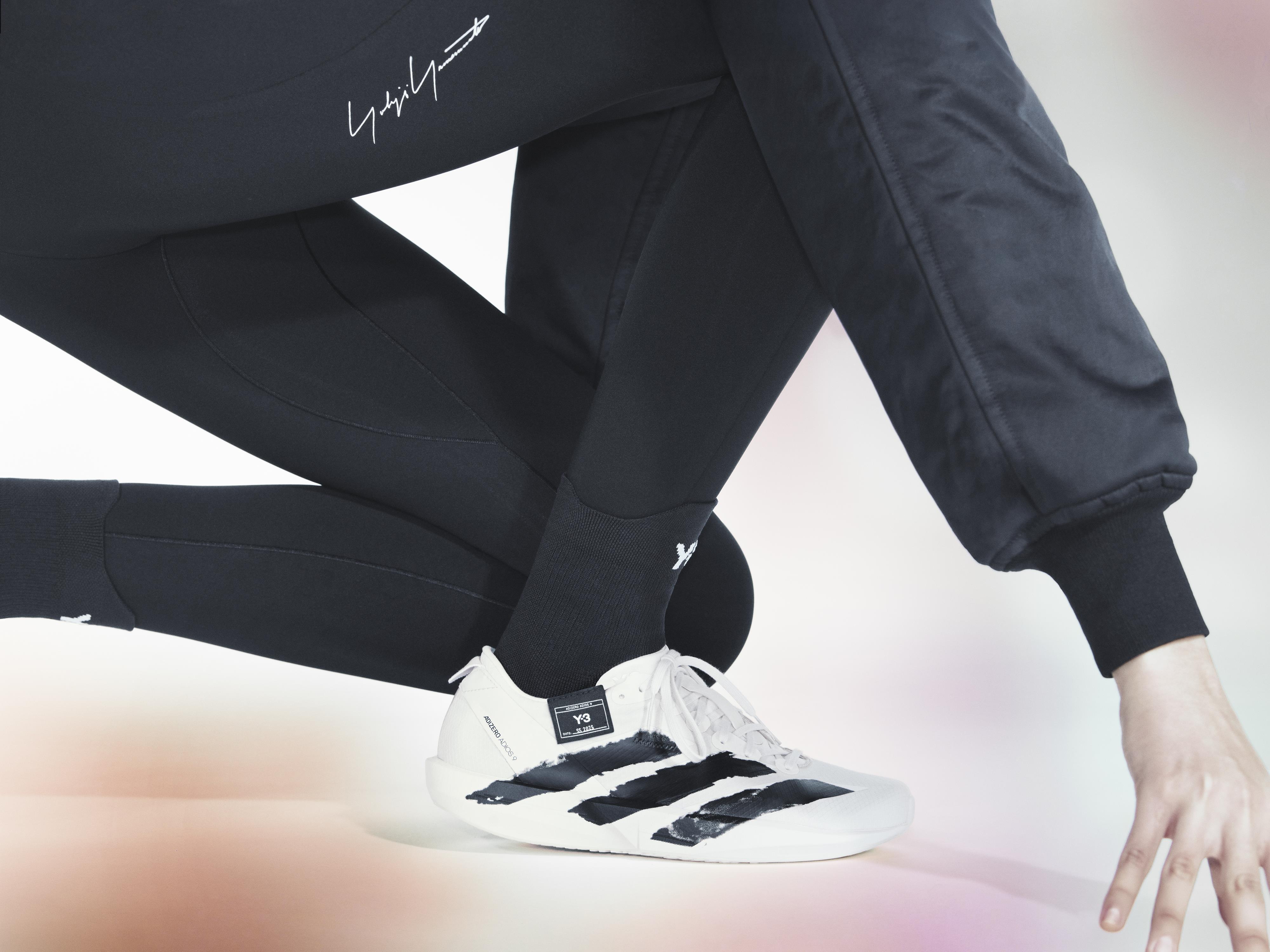
In 2002 adidas launched Y-3, a collaboration with the Japanese designer Yohji Yamamoto that helped create a category the industry had not seen before: designer sportswear.1, 2 The name itself explained the venture, with the Y standing for Yohji and the 3 for the adidas three stripes.1, 3 It signalled a genuine merger of two identities rather than a licensing arrangement, and it placed a sportswear brand inside the world of high fashion at a time when the two rarely met.
The significance was as much conceptual as commercial. Y-3 proposed that athletic design and avant-garde fashion could be combined into something coherent, sold through fashion channels and shown on the runway. For adidas, it opened a route into luxury that its performance and heritage lines could not reach on their own.
How the partnership came about
The collaboration reportedly began with a rejection elsewhere. Yamamoto is said to have first approached Nike with the idea and been turned down, after which he brought the proposal to adidas, which accepted.1, 4 Whatever the precise sequence, the outcome placed adidas at the origin of a movement that would later become central to the fashion industry, while its main rival sat it out.
The fit was logical. Yamamoto was one of the most respected figures in fashion, known for a distinctive approach to fabric, layering and silhouette, and adidas brought technical apparel expertise and the three stripes.5 Each partner contributed something the other lacked, and the resulting label carried real creative authority rather than a superficial designer badge.
The naming reinforced the parity. By splitting the label between Yohji and the three stripes, adidas signalled that neither partner was merely lending its name to the other.1 That equal billing was unusual for the period, when designer tie-ins were often little more than a signature applied to an existing product, and it set Y-3 apart as a true joint identity.

Redefining where sportswear belongs
Y-3 changed expectations about where athletic brands could operate. Before it, sportswear and luxury fashion occupied separate worlds with different customers, price points and retail environments. Y-3 crossed that boundary deliberately, presenting sport-derived garments with the ambition and pricing of designer fashion, and showing collections within the fashion calendar.6 It argued that the language of sport could be treated as material for high design.
The venture also gave adidas a distinct position that its competitors did not hold. While rivals pursued performance and mass-market lifestyle, adidas could point to a credible presence in fashion built on a serious creative partnership. That presence enhanced the parent brand's cultural standing, associating the three stripes with design sophistication as well as sport.
The retail choices carried the message. Y-3 was sold and presented as fashion, in fashion contexts and at fashion prices, which told the market to take it seriously as design rather than as branded sportswear. That positioning protected the label's credibility and, by extension, lent the parent brand a foothold in a world it had not previously entered.
A template for fashion collaborations
Y-3 proved durable in a way that many collaborations do not. Rather than a single season, it became a lasting label with its own identity, sustained over many years and collections.2, 4 Its longevity demonstrated that a partnership between a sportswear company and a fashion designer could be a permanent business rather than a marketing gesture, provided both sides committed to it fully.
The influence extended across the industry. The later wave of collaborations between athletic brands and luxury houses and designers, which became a defining feature of fashion in the following two decades, follows the path Y-3 opened in 2002.4 By showing that sportswear and high fashion could merge convincingly, adidas helped establish a template that competitors and luxury brands alike would eventually adopt.
What made the model transferable was its seriousness. Y-3 worked because both partners treated it as a lasting creative enterprise, not a quick promotion, and later brands learned that the most successful collaborations demand the same commitment. The venture set not only the idea of fashion and sport combining, but the standard for how to do it credibly.
For adidas, Y-3 remains one of the clearest examples of using collaboration to extend a brand into new territory. It took the three stripes into fashion without diluting the core business, created a category others would follow, and demonstrated that a heritage sports mark could carry genuine creative credibility. Two decades on, the label stands as an early and influential proof that sport and fashion belong together.4, 6
Written with AI assistance, edited by a human. Find out more about our Use of AI.
1. END., "A History of adidas and Yohji Yamamoto's Y-3", 2 July 2025, for Y-3 having been "established in 2002 with the Spring/Summer '03 collection" and for Y-3, "Unusual at the time", representing "the dawning of a new era, where sportswear and high-fashion could successfully merge", which the body renders as a 2002 launch that helped create the category of designer sportswear; for the name reflecting "this equal union: 'Y' for Yohji Yamamoto and '3' for the three stripes synonymous with the sportswear brand", which also carries the sentence on neither partner merely lending its name to the other; and for Yamamoto having pitched the idea to Nike, "who declined", before calling on adidas, "who readily accepted his invitation to collaborate"; off whitelist and used for corroboration only. https://www.endclothing.com/us/features/a-history-of-adidas-yohji-yamamotos-y-3
2. Interview Magazine, Alice Pfeiffer, "Yamamoto and Adidas: A Decade-Long Affair", 18 January 2011, for Y-3 having "presented its first collection in 2003" and for Yamamoto's own words that "Ten years ago, together with Adidas, we created something that did not exist before and completely projected into the future. Y-3 opened a new segment, a niche in the fashion and sportswear market", which support the claim of a category not seen before; and for the label marking its tenth anniversary in Paris during men's fashion week in January 2011, as evidence that Y-3 was sustained over many years and collections; off whitelist and used for corroboration only. https://www.interviewmagazine.com/fashion/yohji-yamamoto-adidas-y-3
3. Wikipedia, "Adidas", accessed 2 October 2026, a reference source under the Brandvelle whitelist, for Y-3 being "a collaboration between Adidas and renowned Japanese fashion designer Yohji Yamamoto", with "the Y representing Yamamoto and the 3 representing the three stripes of Adidas". The entry gives no year for Y-3. https://en.wikipedia.org/wiki/Adidas
4. AnOther Magazine, Susannah Frankel, "Y-3: Yohji Yamamoto on the Original Sportswear Collaboration, WW2 and Anger", 2 March 2023, for Yamamoto's own account of the origin, in which he "made a phone call to Nike, directly" and was told "We will never make that. We are doing only sportswear", and then "made a phone call to Adidas and immediately they said yes"; for Y-3 having been first shown for the Spring/Summer 2003 season; for Y-3 being "the first, the great-grandfather of them all" among fashion and sportswear partnerships, the path the later wave of collaborations followed; and for "More than 20 years later, Y-3 has its own identity, separate from the designer's yet informed by his values", which covers the lasting label with its own identity and the two decades. Off whitelist and used for corroboration only. https://www.anothermag.com/fashion-beauty/14713/yohji-yamamoto-delves-into-the-subversive-world-of-y-3
5. Wikipedia, "Yohji Yamamoto", accessed 2 October 2026, a reference source under the Brandvelle whitelist, for Yamamoto's standing as "a master tailor, alongside those such as Madeleine Vionnet", "best known for his avant-garde tailoring featuring Japanese design aesthetics", and for the signature "oversized silhouettes" that "often feature drapery in varying textures" and his "exotic and luxurious materials", which carry the body's fabric and silhouette; the entry does not use the word layering, and the adidas half of the sentence is not covered by this note. https://en.wikipedia.org/wiki/Yohji_Yamamoto
6. adidas, "adidas and Yohji Yamamoto Re-Introduce the Iconic Y-3 QASA HIGH", 19 May 2022, resolved from the newsroom root listed in the sources, for the statement that "adidas and Yohji Yamamoto first took to the runway at Paris Fashion week in October 2002 for the inaugural Y-3 collection", the basis for Y-3 showing its collections within the fashion calendar, and for the reissue marking "20 years of collaboration", which supports the two decades in the closing sentence. The pricing of Y-3 is not covered by this note. https://news.adidas.com/originals/adidas-and-yohji-yamamoto-re-introduce-the-iconic-y-3-qasa-high/s/7d883906-50a1-4861-afb9-56d516030d7a