A belt that became a brand
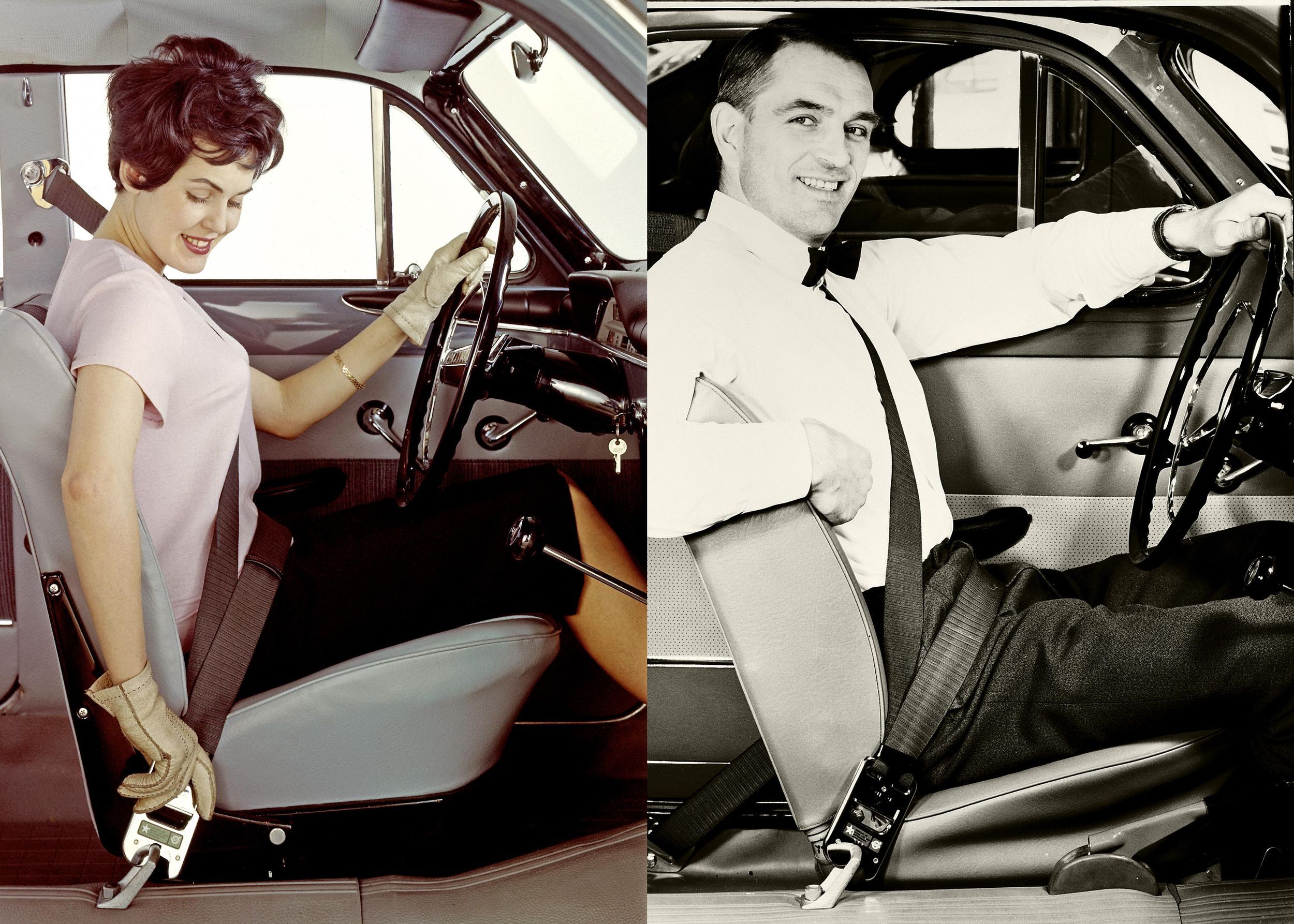
On 13 August 1959 a Volvo PV544 fitted with a three-point safety belt was delivered to a dealer in Kristianstad, Sweden.1 With the PV544 and the Amazon (120) on the Nordic markets, Volvo became the first carmaker to fit safety belts as standard.2 The belt, a lap strap and a diagonal chest strap meeting at a low anchor point beside the seat, could be fastened with one hand.2 What began as a piece of equipment was to become the founding story of the brand.
From ejection seats to car seats
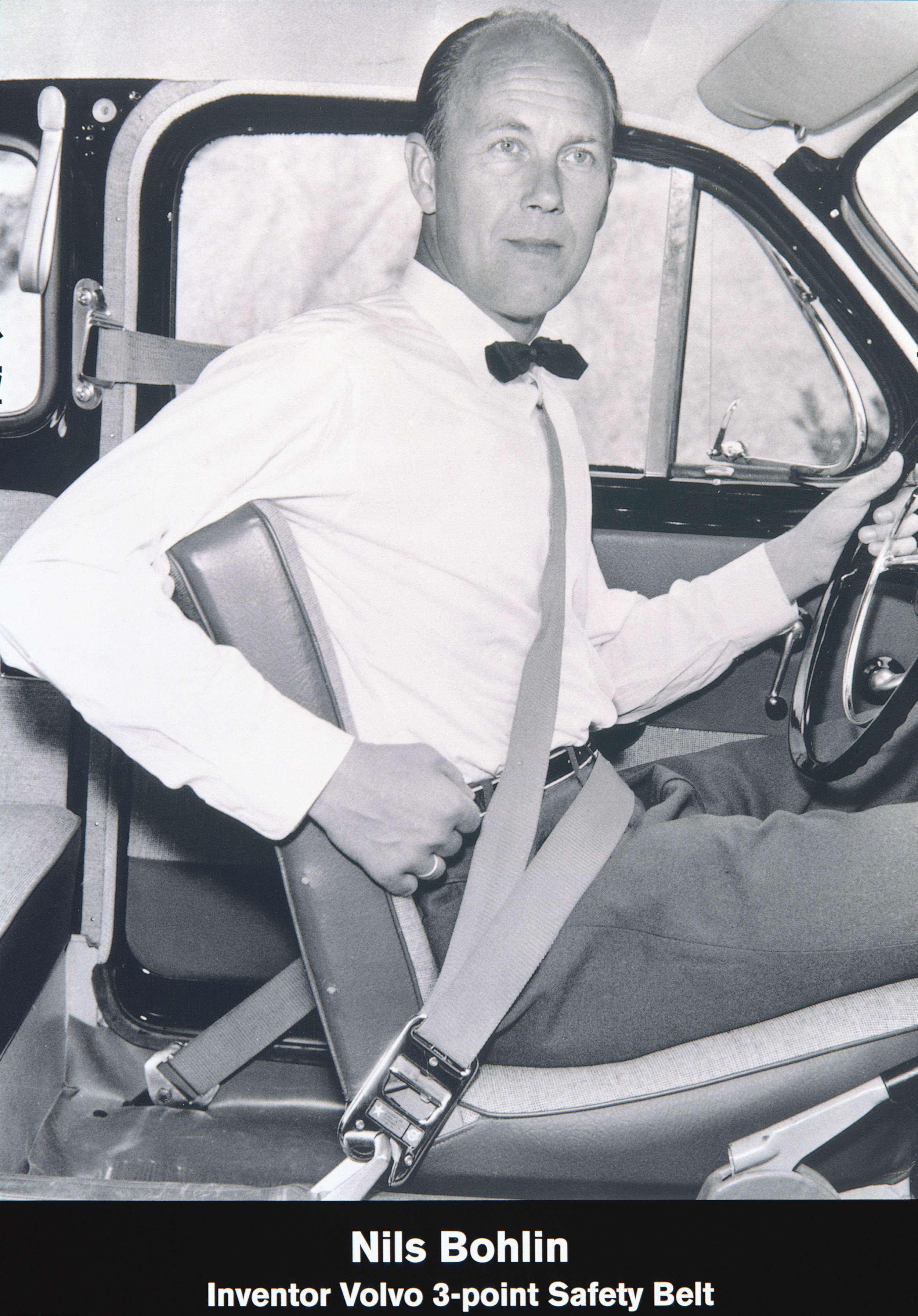
The belt came from Nils Ivar Bohlin, born in 1920 in Härnösand.2 He joined Saab in 1942 and worked in its aviation division, where he developed ejection seats and pilot belts.2,3,4 In 1958 Volvo's president Gunnar Engellau recruited him as the company's first safety engineer.3 Bohlin later described the task in plain terms: "It was a matter of finding a solution that was both simple and efficient in use".3
The Swedish application for the belt was filed on 29 August 1958.4 The corresponding United States patent, number 3,043,625, titled "Safety belt", names Bohlin as inventor and Aktiebolaget Volvo as assignee, and was granted on 10 July 1962.5 In Bohlin's words, quoted by Volvo, the design "effectively, and in a physiologically favorable manner, prevents the body of the strapped person being thrown forward".6
Source: Volvo Cars Youtube
An open patent
Volvo made the patent available to all carmakers, free of charge, and the design spread around the world.1,2,6 The decision shaped the brand more than any exclusive feature could have done. A protected invention would have been a selling point for Volvo owners only. A shared one made Volvo the author of a standard that drivers of every make came to use, and gave the company a claim to moral authority on the subject of safety that competitors could hardly contest.
The idea fitted a principle Volvo had stated long before the belt existed. In their 1936 sales handbook the founders wrote: "An automobile is driven by people. The fundamental principle for all construction work is and must therefore be, safety."6 The belt gave that sentence a physical form. Volvo extended it to the United States and other markets in 1963, and its 1967 study of 28,000 accidents found that belts reduced injuries by about 50 to 60 percent.1,2
Counting lives
From the 50th anniversary onwards, Volvo has told the story in a single figure. In 2009 it estimated that just over a million lives had been saved since 1959, while noting that no globally coordinated statistics exist.3 Hans Nyth, head of the Volvo Cars Safety Centre, said: "The belt represents by far the biggest lifesaving potential in modern traffic".3 Peter Rask, Managing Director of Volvo Car UK, called it "the most important safety device in any modern car".3 Volvo's own releases describe it as "the single most important safety device in the car's 120-year history" and recall that German patent registrars ranked it in 1985 among the eight patents of greatest significance to humanity.2
The number turns an engineering detail into a measure of public good, and it places Volvo's reputation in other people's cars as much as in its own. In 2019, for the belt's 60th anniversary, Volvo repeated the logic of the open patent by publishing its safety research in a digital library under the E.V.A. initiative, again citing more than one million lives saved, including in cars made by other manufacturers.7
A little Volvo in every car
The French market makes the claim explicit in 2026. On 11 January Volvo Car France launches a brand campaign by VML France under the line "Il y a un peu de Volvo dans chaque voiture" ("There is a little Volvo in every car"), with a 360 media plan across television, cinema, outdoor, press and social media.8 The film, directed by Peter Funch for the production company Birth and set to "Lean on Me" by Bill Withers, moves through 65 years of drivers at the wheel; whatever the car or the decade, the belt forms the same V across the body, presented as the signature of the brand.8,9
Steve Pachter, Marketing Director of Volvo Car France, frames safety as a position rather than a feature: "For us, it is not a marketing argument, it is a starting point."10 He reduces it to a formula: "it is our DNA: safety before ego".10 The campaign thereby turns generosity into reach, claiming as Volvo's every belted occupant of every rival's car.
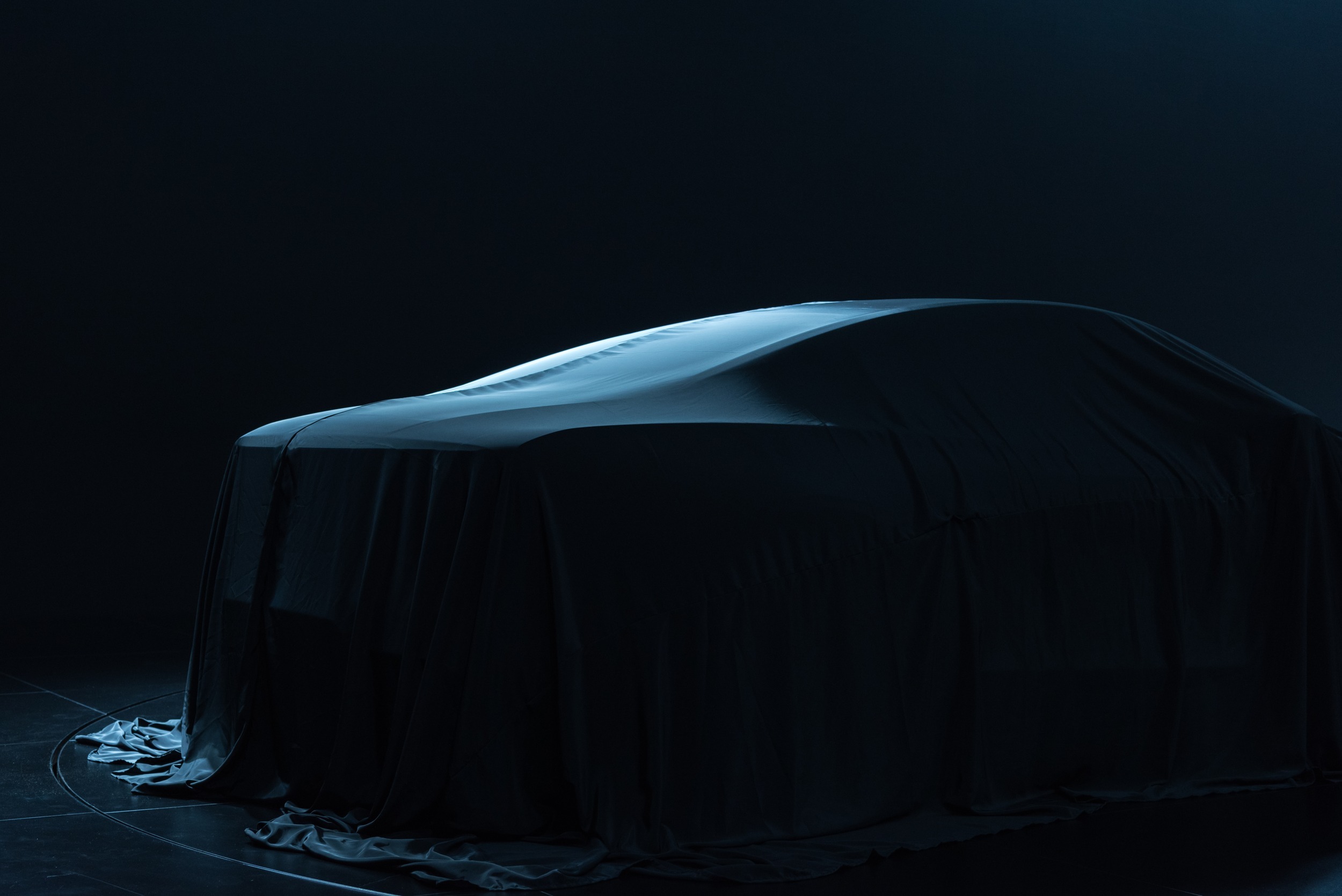
The same campaign links the heritage to the present. It introduces the multi-adaptive safety belt, which uses sensor data to adjust its load to the crash and to each occupant's height, weight and seating position, and which debuts in the electric EX60, revealed on 21 January 2026.9,11 Åsa Haglund, head of Volvo Cars Safety Centre, describes it as "leveraging real-time data to adapt to the situation and the person wearing it".11 More than six decades after the PV544, the belt remains the object through which Volvo explains what it stands for.
Written with AI assistance, edited by a human. Find out more about our Use of AI.
1. Volvo Cars, "Volvo's three-point safety belt turns 50", press release, 12 August 2009, for the delivery of a PV544 with three-point belt to a dealer in Kristianstad on 13 August 1959, the open patent free of charge for anyone, the introduction in the United States and other markets in 1963, and the 1967 study of 28,000 accidents with injury reduction of about 50 to 60 percent. The German Patent and Trade Mark Office dates the launch of the 544 with standard three-point belt in Sweden to 1958 (note 4); this article follows Volvo's dating. https://www.volvocars.com/intl/media/press-releases/3994CD9300514746/
2. Volvo Cars, "3-point safety belt from Volvo, the most effective lifesaver in traffic for fifty years", press release, 8 January 2009, for Volvo as the first carmaker to fit safety belts as standard on the Amazon (120) and PV 544 in the Nordic markets in 1959, the belt's design and one-hand operation, Bohlin's birth in 1920 in Härnösand, his start at SAAB in 1942 and work on catapult seats, the patent made available to all carmakers, the 1963 introduction in the United States, the 1985 listing by German patent registrars among the eight patents of greatest significance to humanity, and the description "the single most important safety device in the car's 120-year history". https://www.volvocars.com/us/media/press-releases/6F9543144E1D82E3/
3. Volvo Car UK, "A Million Lives Saved Since Volvo Invented the Three-Point Safety Belt", press release, 11 August 2009, for Bohlin's work in SAAB's aviation division, his recruitment in 1958 by president Gunnar Engellau as Volvo's first safety engineer, the estimate of just over a million lives saved and the absence of globally coordinated statistics, and the quotations from Nils Bohlin, Hans Nyth, head of the Volvo Cars Safety Centre, and Peter Rask, Managing Director of Volvo Car UK. https://www.volvocars.com/uk/media/press-releases/AB57626B8B94A718/
4. Deutsches Patent- und Markenamt, "Three-point safety belt", updated 16 January 2026, for Bohlin's development of ejection seats and pilot belts at Saab, the Swedish application of 29 August 1958, and the hero image of Nils Ivar Bohlin with his three-point belt, 1959 (pictures credited to Volvo AG Schweiz, DEPATISnet and DVR). https://dpma.de/english/our_office/publications/milestones/inventionsthatmadehistory/safetybelt/index.html
5. Google Patents, "US3043625A, Safety belt", granted 10 July 1962, for the patent number, inventor Nils Ivar Bohlin, assignee Aktiebolaget Volvo, Swedish priority of 29 August 1958 and grant date. https://patents.google.com/patent/US3043625A/en
6. Volvo Group, "The three-point safety belt", heritage page, undated, for the free availability of the patent, the quotation from the founders' 1936 sales handbook, and the quotation from Bohlin's patent. https://www.volvogroup.com/en/about-us/heritage/three-point-safety-belt.html
7. Volvo Cars, "Volvo Cars celebrates 60 years of sharing safety knowledge with open-for-all digital library", press release, 20 March 2019, for the E.V.A. initiative, the digital safety library and the estimate of more than one million lives saved, including in cars by other manufacturers. https://www.volvocars.com/us/media/press-releases/705A7C804E5C46EA/
8. Edwige Brelier, CB News, "Volvo dévoile sa nouvelle campagne de marque signée VML", 12 January 2026, for the campaign by Volvo Car France and VML France, the line "Il y a un peu de Volvo dans chaque voiture", the launch on 11 January 2026 with a 360 media plan by Initiative, the 65 years of car history and the music "Lean on Me" by Bill Withers. https://www.cbnews.fr/creation/volvo-devoile-sa-nouvelle-campagne-marque-signee-vml
9. Packshotmag, "Volvo, Il y a un peu de Volvo dans chaque voiture", 13 January 2026, for the director Peter Funch, the production company Birth, the V shape of the belt as brand signature across eras, and the introduction of the multi-adaptive belt on the EX60. https://www.packshotmag.com/films/volvo-il-y-a-un-peu-de-volvo-dans-chaque-voiture/
10. Louane Choplin, J'ai un pote dans la com, "Interview : « La sécurité avant l'ego », les coulisses de la nouvelle campagne de marque avec Steve Pachter, Directeur Marketing de Volvo Car France", 23 January 2026, for the quotations from Steve Pachter, Directeur Marketing de Volvo Car France, in the original: « Chez nous, ce n'est pas un argument marketing, c'est un point de départ. » and « c'est notre ADN : la sécurité avant l'ego ». https://jai-un-pote-dans-la.com/interview-steve-pachter-directeur-marketing-volvo-car-france/
11. Volvo Cars, "Volvo Cars' multi-adaptive safety belt, debuting in the upcoming EX60, named one of TIME's Best Inventions 2025", press release, 9 October 2025, for the function of the multi-adaptive belt, the EX60 reveal on 21 January 2026, and the quotation from Åsa Haglund, head of Volvo Cars Safety Centre. https://www.volvocars.com/intl/media/press-releases/6F0F4A73035F8A59/