Three years after the swimmer
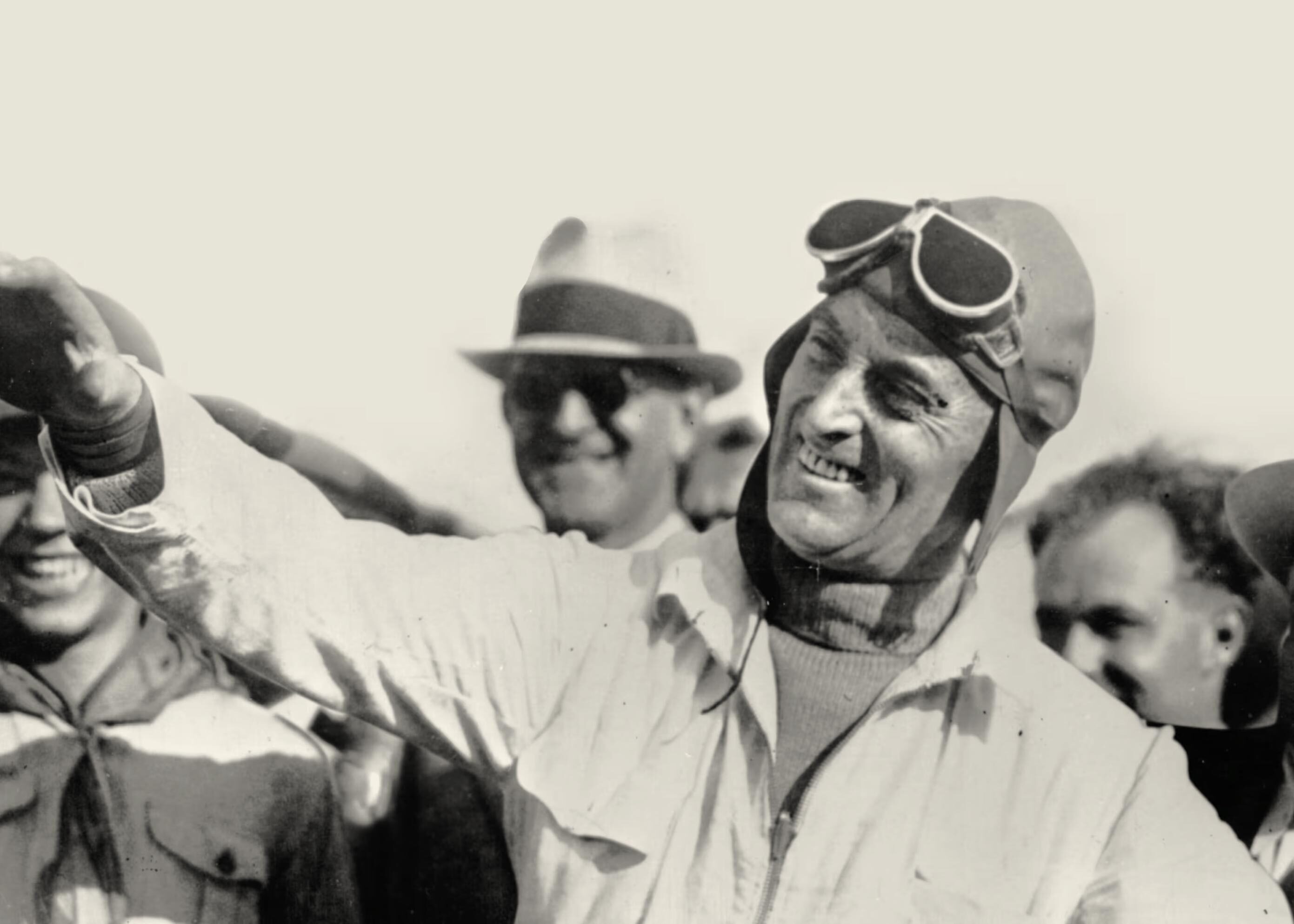
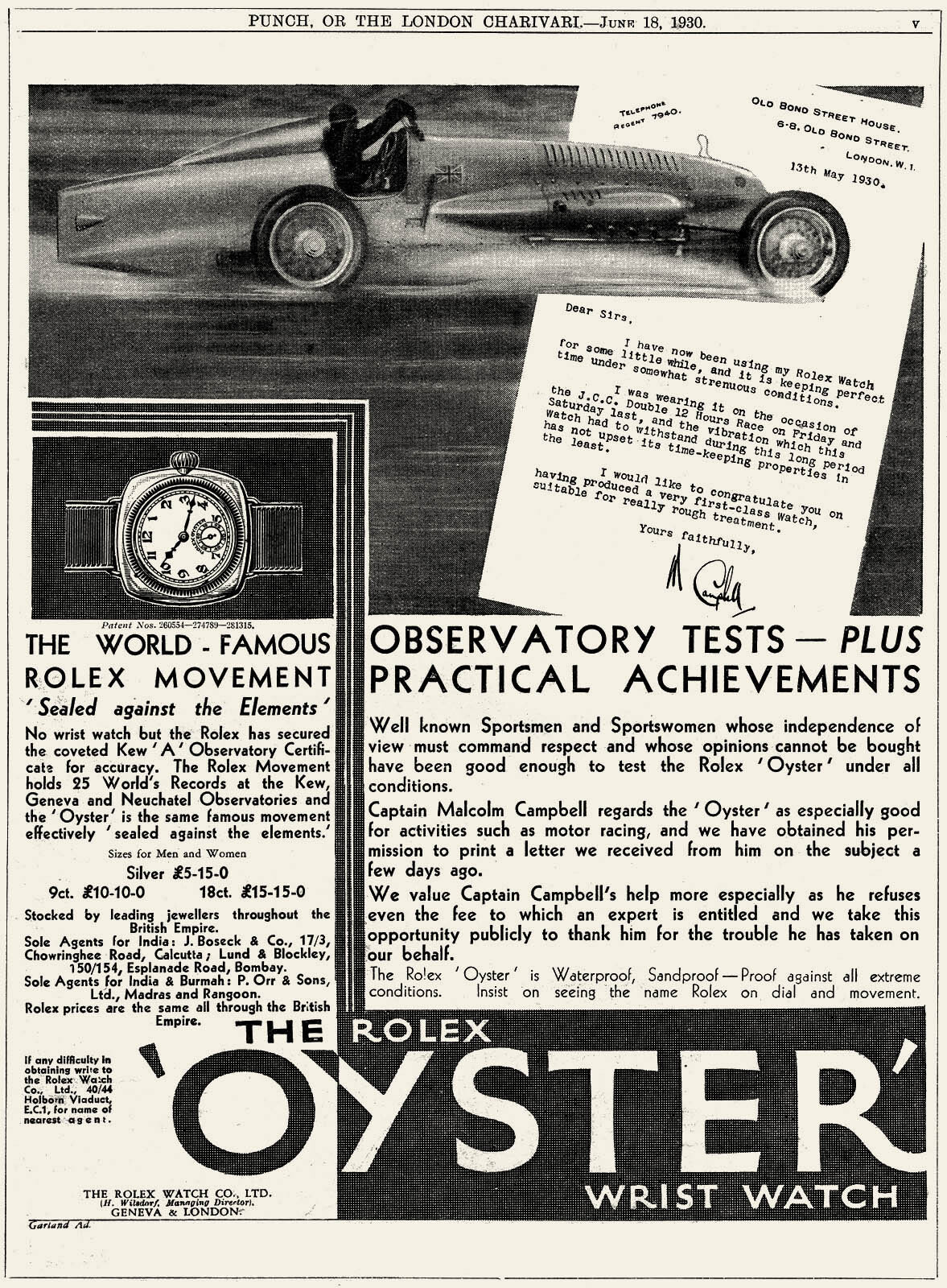
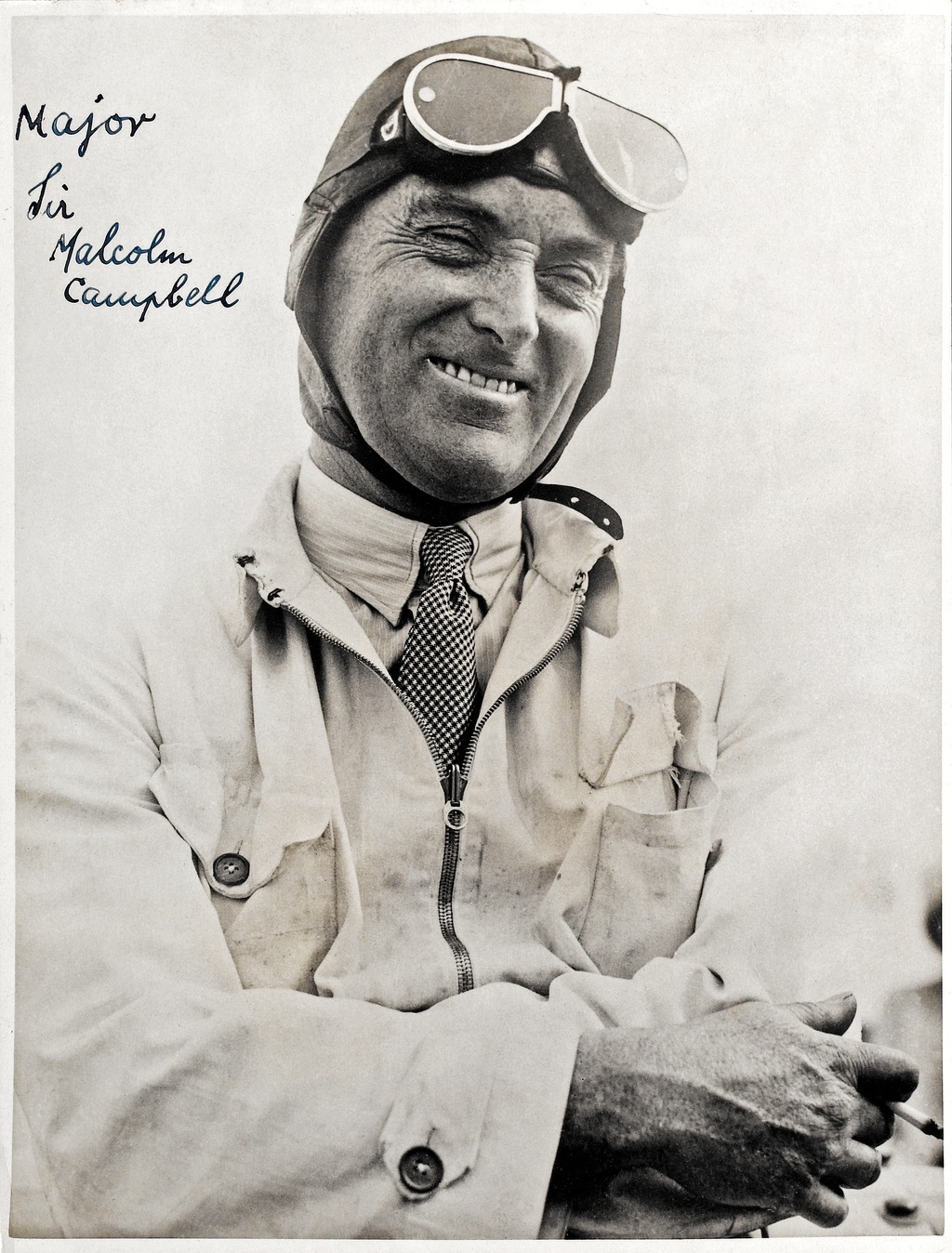
Rolex dates the beginning of its links to motor sport to 1930 and to one man: Sir Malcolm Campbell, who between 1924 and 1935 set the world land speed record nine times, including the first run past 300 miles an hour.1
Three years earlier the company had made its first partnership of any kind. Mercedes Gleitze was a typist from Brighton, unknown outside the sports pages, and what Hans Wilsdorf wanted from her was not her name. It was the state of a watch after ten hours in cold water.1, 2
Campbell was a different transaction. He was already the most famous man in British motor sport when Rolex attached itself to him, and Rolex calls him the "King of Speed" on its own pages.1 Nothing about him needed establishing.
Two kinds of proof
The Gleitze arrangement produced evidence. A watch went into the Channel and came out working, and the claim could be stated in a sentence that anyone could check against the object: this case keeps water out.
The Campbell arrangement produced attention. A land speed record is not a waterproofing test, and no reader was expected to conclude anything about case construction from the fact that a man in a car went faster than anyone had before. What the association delivered was a transfer of qualities that are not measurable at all: daring, modernity, national standing, the specific glamour of a machine built to do one thing.
Both are legitimate and they are not the same asset. The first can be defended if challenged. The second cannot be challenged in the first place, because it makes no claim.
Why a brand needs the second kind
A company that only ever argues from evidence is limited to buyers who want evidence, and there are not enough of them to build a luxury house on. The demonstrable claim answers a question about the product. The famous name answers a question about the owner.
Campbell also solved a problem Gleitze could not. A swimmer's proof is spent the moment it is published: the crossing happens, the watch survives, the story ends. A celebrity is a standing asset who keeps appearing, keeps being photographed, and keeps the association live between achievements. Rolex had discovered it could buy recurrence as well as evidence.
The risk it accepted
A famous partner also imports a risk an instrument reading never carries. A measurement cannot embarrass the company that publishes it. A person can, and the more famous the person, the more of the brand's standing sits inside a life it does not control.
Rolex's answer, then and since, has been volume and duration. A house with one celebrity is exposed to that celebrity. A house with several dozen across sport, exploration and the arts is exposed to none of them, because no single name is carrying the brand. The company was still buying evidence at the same time, and the Trieste and the Everest expeditions are what it fell back on: a partnership can end badly, a pressure test cannot.
What the association turned into
The Campbell connection did not stay a signature. Five of the fourteen world land speed records set at Daytona Beach between 1904 and 1935 were his, which is how a stretch of Florida sand entered the company's story at all.3 When the beach gave out and a speedway was built in its place, Rolex partnered the Daytona International Speedway in 1959, describing it as renewing one of its earliest sporting associations, and in 1963 put the track's name on a chronograph.1
So a 1930 endorsement became a sponsorship twenty-nine years later and a product name four years after that. The famous man is the origin of an asset the company still sells, and none of it was foreseeable when the association was made.
The method and its vocabulary
Rolex now applies one word to all of it. Testimonee is the company's own term for the people it partners, and it is used backwards through the whole history, from Gleitze onward, which flattens the difference the 1927 and 1930 arrangements actually represent.1
The two logics have run in parallel ever since. The brand still puts watches where they can be measured, on hulls and expeditions, and it still signs people whose fame does the other half of the work. What 1930 established is that the second was permissible: that a watch company could stand next to someone celebrated without pretending the celebration proved anything about the watch.
Written with AI assistance, edited by a human. Find out more about our Use of AI.
1. Rolex, "Behind the crown, Rolex and Partners", retrieved 22 September 2026, for the brand's links to motor sport beginning in 1930 with Sir Malcolm Campbell, for his setting the world land speed record nine times between 1924 and 1935 including breaking the 300 mph (483 km/h) barrier, for the description of him as the "King of Speed", for Hans Wilsdorf inviting Mercedes Gleitze to wear an Oyster during her crossing in 1927 and her becoming the first Rolex Testimonee, for Rolex partnering the Daytona International Speedway in 1959 as a renewal of one of its earliest sporting associations, for the naming of the Cosmograph Daytona in 1963, and for Testimonee being the company's own term applied across its partnerships. https://www.rolex.com/en-us/about-rolex/behind-the-crown/rolex-partners
2. Brandvelle, "Rolex bought the front page of the Daily Mail", for the 1927 Gleitze arrangement and what Rolex did with it. Rolex's own account of the crossing and of Gleitze as the first Testimonee is on the partners page cited in note 1. https://www.rolex.com/en-us/about-rolex/behind-the-crown/rolex-partners
3. Rolex, "Rolex History, 1953 to 1967", retrieved 22 September 2026, for Daytona Beach holding fourteen world land speed records set between 1904 and 1935, five of them by Sir Malcolm Campbell, for the deterioration of the sand, and for the Daytona International Speedway being built by 1959. https://www.rolex.com/en-us/about-rolex/history/1953-1967