The singer Rolex signed
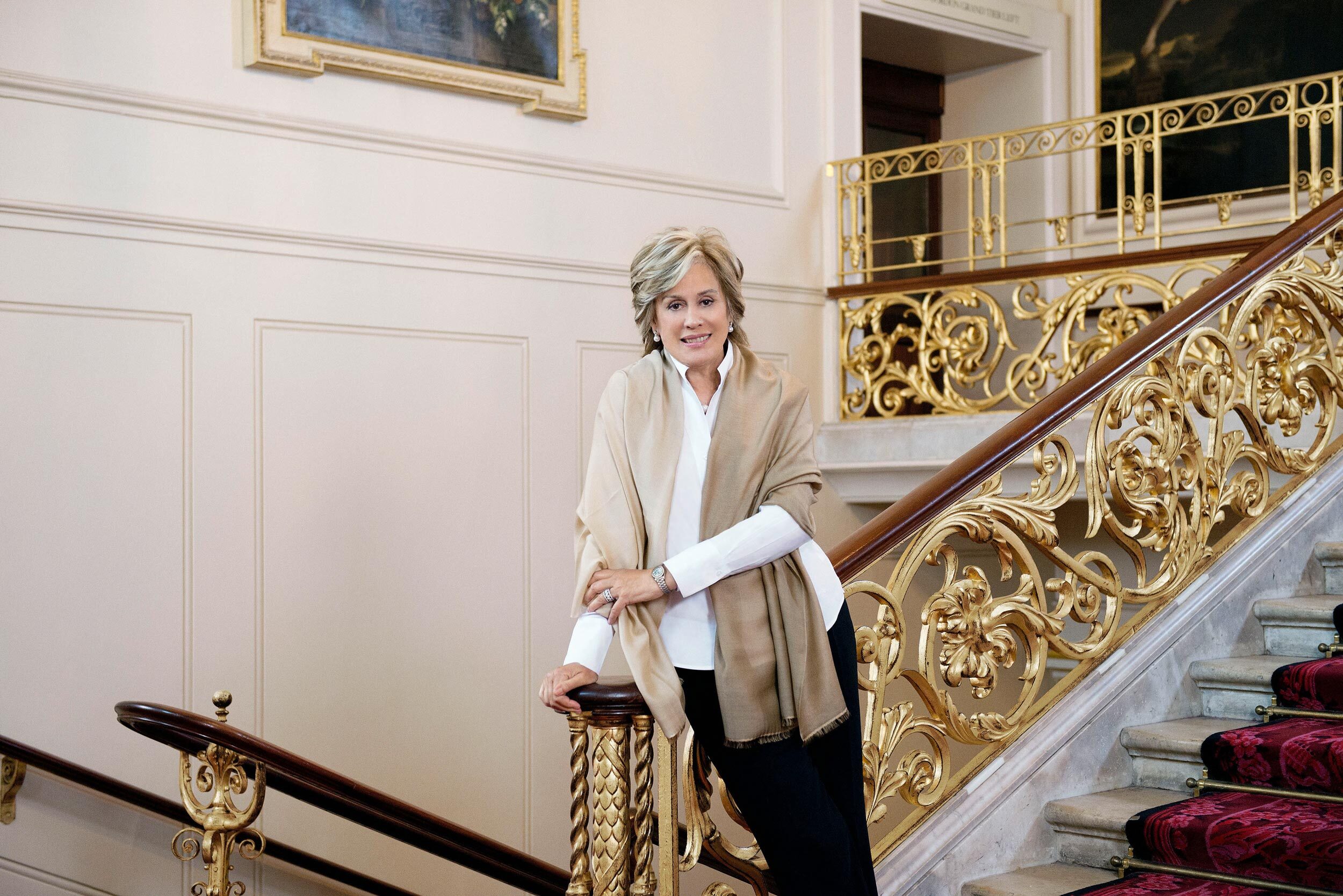
In 1976 Rolex made the New Zealand soprano Dame Kiri Te Kanawa its first Testimonee in the arts.1 She was not yet a monument when it did. Her breakout had come five years earlier, as the Countess Almaviva in The Marriage of Figaro at the Royal Opera House in 1971, and two years before the signing she had stepped into Desdemona in Otello at short notice, which is the sort of thing that makes a reputation among people who already follow opera.2
She still holds the role. Rolex describes it as one she has kept to this day, which makes it a partnership approaching fifty years.2
What she could not give the brand
Every Rolex partnership before hers had produced a number. Mercedes Gleitze swam and the watch came up working. Sir Malcolm Campbell went faster than anyone alive. An expedition reached a summit, a bathyscaphe reached a trench floor, a racing driver won championships.1 In each case the person was incidental and the measurement was the asset: a depth, a speed, an altitude, a time.
Te Kanawa offered none of that. There is no reading to take off an aria, no instrument that settles whether a Mozart interpretation is correct, and nothing about singing that tests a waterproof case. Signing her meant giving up the thing every Rolex endorsement had rested on for half a century. That is the decision worth noticing, and it is a harder one than the date makes it look.
What she gave instead
What she brought was reach of a kind exploration could not produce. In 1981 she sang at the wedding of Prince Charles and Lady Diana Spencer, broadcast to millions. In 1984 she won a Grammy for Best Opera Recording. A single concert in Auckland drew 140,000 people.2 None of that is an audience of people who test equipment. It is an audience of people who attend things.
Her standing also does not expire, which a record does. Rolex's earlier proofs were rented from whoever held them at the time, and a land speed record is broken by definition. An interpretation of Strauss is not overtaken by a faster one. The brand exchanged a claim that could be beaten for an association that only accumulates.
Rolex prints her own account of what the work felt like rather than anything about a watch: "The magic happened on stage. You were so in the zone that you never thought about it all being unreal. It was everything I'd ever dreamed of."2 A company whose advertising had spent fifty years quoting people on performance under test now quotes a partner on the experience of standing in front of an audience.
What fifty years does that five cannot
The length of the relationship is the part that is hard to copy. Sponsorships are negotiated in cycles, and an association that renews every three years is read as an arrangement. One that has run since 1976 stops being read as one at all.
It also changed shape along the way. Rolex supports the Kiri Te Kanawa Foundation, which helps young New Zealand opera singers advance their careers, so the relationship now funds the next generation rather than borrowing from this one.2 That is patronage, not endorsement, and it is the model Rolex has since built its whole arts programme on.
The buildings came thirty years after the singer
What Rolex did not do in 1976 was buy an institution. By its own dating it became Exclusive Timepiece of Teatro alla Scala in 2006, formed its first partnership with the Royal Opera House in London in 2008, became Official Timepiece of the Metropolitan Opera in 2011 and Exclusive Timepiece of the Opéra national de Paris in 2014.3
Thirty years separate the first singer from the first opera house, and the order matters. Buying La Scala in 1976 would have looked like a watch company purchasing its way into opera. Buying it three decades after Te Kanawa looked like a brand consolidating something it already had, and she is the reason it already had it.
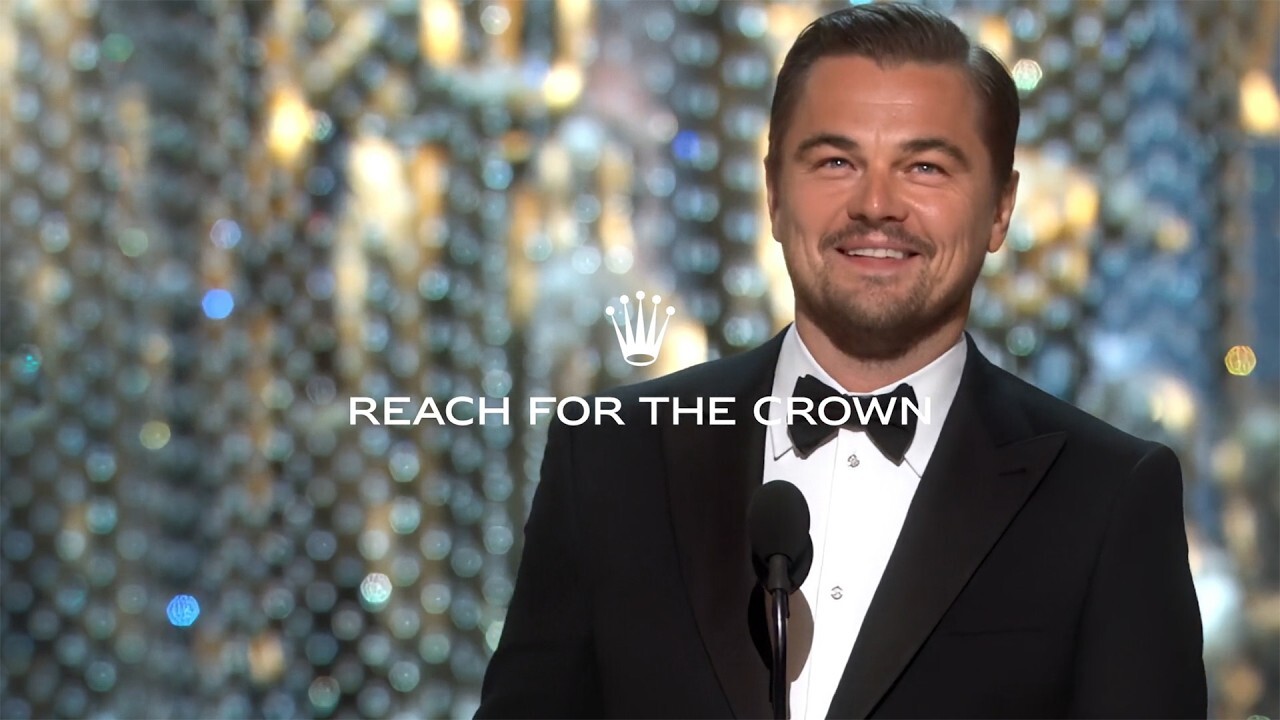
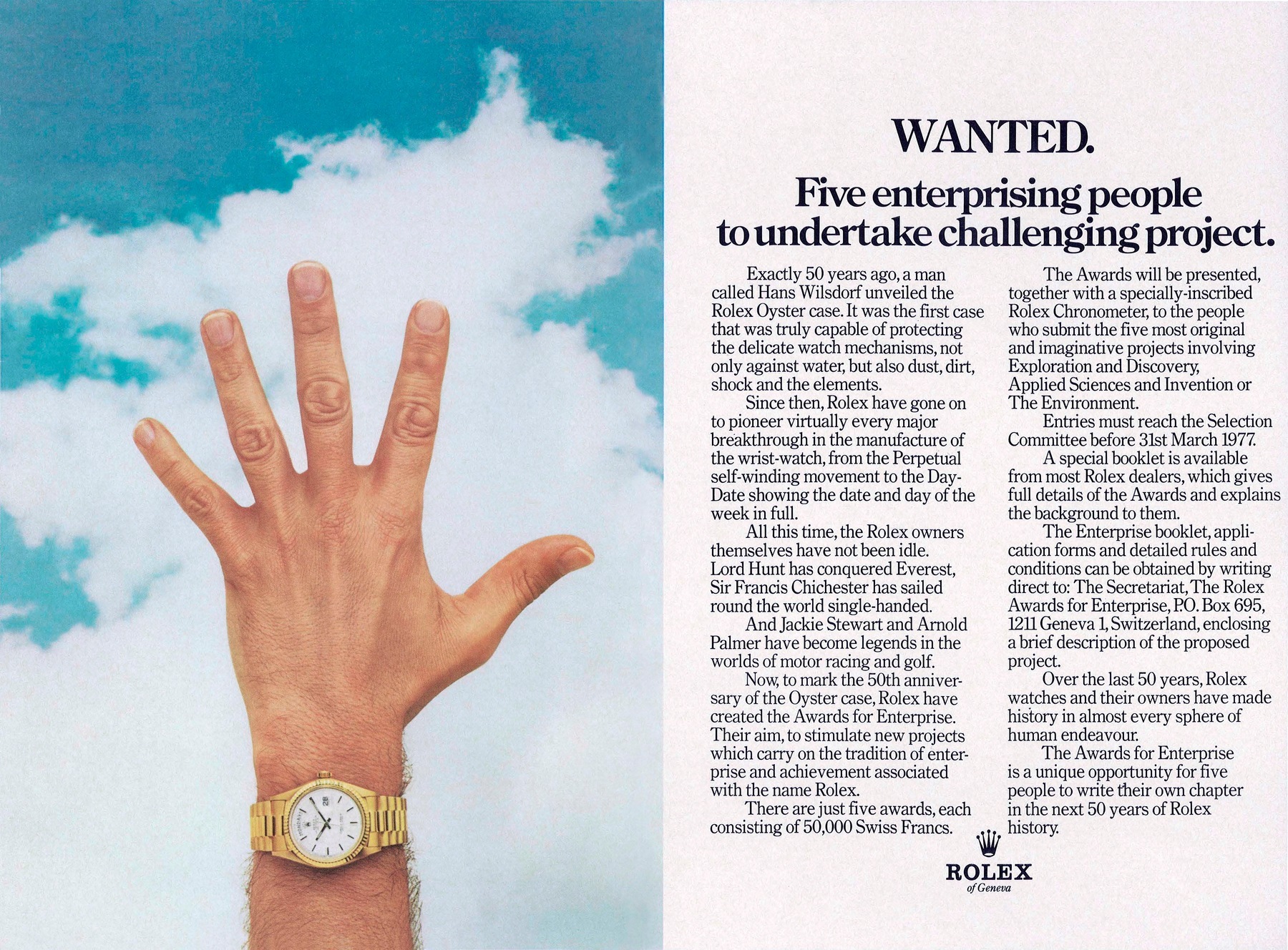
Everything Rolex now runs in culture stands on that signature: the mentoring programme, the architecture and cinema partnerships, the Perpetual Arts Initiative.4 The Oscars sponsorship of 2017 reads as continuity rather than as a reach because a soprano signed in 1976 has been standing in front of it ever since. The same anniversary year produced the Rolex Awards for Enterprise, founded to mark fifty years of the Oyster and kept on when they were meant to run once.1 Both decisions spent the anniversary on other people's work rather than on the watch.
Source: Rolex Youtube
Written with AI assistance, edited by a human. Find out more about our Use of AI.
1. Rolex, "Behind the crown, Rolex and Partners", retrieved 22 September 2026, for the Rolex Awards for Enterprise being set up in 1976 by the then chairman André J. Heiniger to mark the 50th anniversary of the Rolex Oyster, for their having been intended as a once-only celebration and being transformed into an ongoing programme after the international interest they drew, and for Dame Kiri Te Kanawa becoming the first Rolex Testimonee in the arts in 1976. The same page carries the earlier partnerships referred to in the body: Mercedes Gleitze in 1927, Sir Malcolm Campbell from 1930, the 1953 Everest expedition, the Trieste dive of 1960, Arnold Palmer in 1967 and Sir Jackie Stewart in 1968. https://www.rolex.com/en-us/about-rolex/behind-the-crown/rolex-partners
2. Rolex, "Dame Kiri Te Kanawa", Rolex Family, retrieved 22 September 2026, for her becoming the first Rolex Testimonee in the arts in 1976 and holding the role to this day, for her breakout as the Countess Almaviva in The Marriage of Figaro at the Royal Opera House in 1971, for stepping into Desdemona in Otello at short notice in 1974, for her performance at the wedding of Prince Charles and Lady Diana Spencer in 1981, for the Grammy Award for Best Opera Recording in 1984, and for the concert in Auckland that drew 140,000 people. https://www.rolex.com/rolex-family/arts/kiri-te-kanawa
3. Rolex, "Rolex and music, Opera's finest temples", retrieved 22 September 2026, for Rolex being Exclusive Timepiece of Teatro alla Scala since 2006, for the first partnership with the Royal Opera House in London in 2008 and the 2024 evolution of that relationship, for Official Timepiece of the Metropolitan Opera since 2011, and for Exclusive Timepiece of the Opéra national de Paris since 2014. The same page names Dame Kiri Te Kanawa as the first arts Testimonee of 1976. https://www.rolex.com/en-us/perpetual-initiatives/perpetual-arts/music/opera-s-finest-temples
4. Rolex, "Perpetual Arts Initiative", retrieved 22 September 2026, for the initiative's current scope across music, architecture and cinema and for the Rolex mentoring programme sitting within it. The mentoring programme's establishment in 2002 and the sponsorship of the Oscars from 2017 are given on the partners page cited in note 1. https://www.rolex.com/en-us/perpetual-initiatives/perpetual-arts