Ralph Lauren and The Great Gatsby: how a film tailored a brand
On 27 March 1974 Paramount Pictures premiered Jack Clayton's adaptation of F. Scott Fitzgerald's novel The Great Gatsby at the Manhattan Theatre. Robert Redford played Jay Gatsby, Mia Farrow played Daisy Buchanan, Sam Waterston played Nick Carraway. For an emerging American designer named Ralph Lauren, the production became the most consequential editorial platform of the decade. The menswear on screen carried his Polo label and pushed the brand from a respected New York necktie house into the national style imagination.
A young label in search of a stage
Ralph Lauren had founded his company in 1967 with a single drawer of men's neckties in the Empire State Building. The first complete menswear line, named Polo, followed in 1968. By 1970 the Council of Fashion Designers of America awarded him the Coty Award for menswear. Womenswear arrived in 1971, the embroidered polo player mark debuted on cotton mesh polo shirts in 1972. By the time the Gatsby production approached him in 1973, Lauren was 34 years old and well known inside the New York retail apparatus, but largely absent from popular culture. The commission would change that arithmetic.
The garments
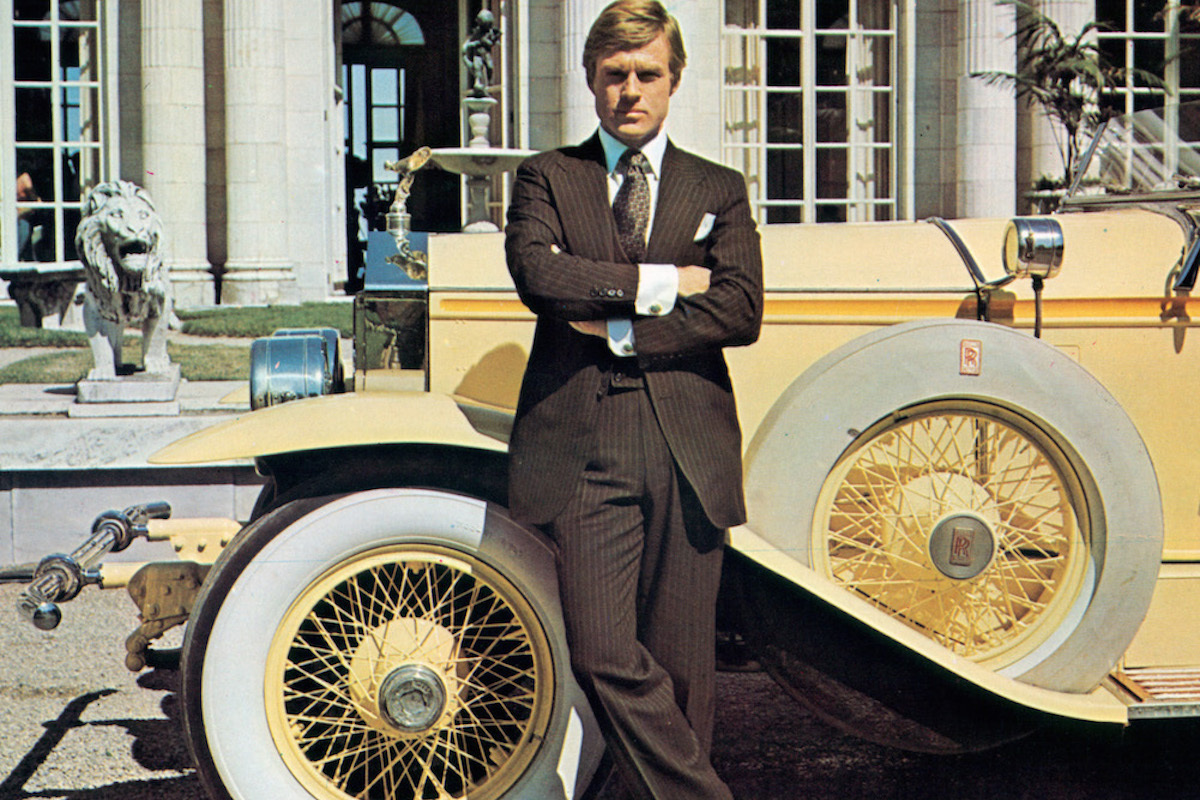
The film required a complete 1920s menswear wardrobe for Redford, Waterston and the supporting cast. Lauren delivered a series of custom suits, sport coats, shirts, ties and accessories that referenced Jazz Age tailoring without copying it. The most discussed pieces ran across three registers. A chocolate brown chalkstriped three-piece carried super-broad notched lapels, a double-breasted waistcoat with a wide wrap, and rich forward-pleated trousers. A pink wool suit, made for Gatsby's central reunion scene with Daisy, became one of the most quoted menswear images of the decade. A white linen flannel suit, paired with a Panama hat and a striped club tie, anchored the summer set pieces on the Long Island lawn. Across the wardrobe Lauren paired the suits with starched club collars, striped shirting, jacquard ties, watch chains and patterned silk pocket squares. The period accuracy was deliberately loose. Lauren read the script as a 1970s film about the 1920s and dressed it accordingly.
The credit dispute
The official Costume Designer of record was Theoni V. Aldredge. Aldredge had been hired with two weeks of preparation after a late producer change and absorbed an unusually compressed schedule. She met Lauren early, accepted his contribution to the menswear, and supplied the fabric specifications that shaped the final pieces. The relationship deteriorated during the press cycle. Lauren spoke openly about designing the clothes for the film, Aldredge took the position that she was the costume designer and that Lauren had functioned as a tailor and supplier. The dispute reached the production office and Aldredge had Lauren's screen credit removed before release. Aldredge later won the 1975 Academy Award for Best Costume Design for the film. The Polo brand still carried the cultural credit in the public mind, which mattered more for the trajectory that followed.
From costume to canon
The film opened to mixed reviews and modest commercial returns, yet its visual residue compounded for years. Style writers cited the menswear when discussing the revival of preppy dressing in the late 1970s. Newspaper fashion sections used Redford as Gatsby as the touchstone for forward-pleated trousers, double-breasted waistcoats and chalkstripe revivals. Polo Ralph Lauren's wholesale distribution expanded across American department stores, and the customer base shifted from regional menswear specialists into a mass aspirational audience. By 1978 the company had opened its first European representation, and the licensing model accelerated.
The brand grammar that emerged
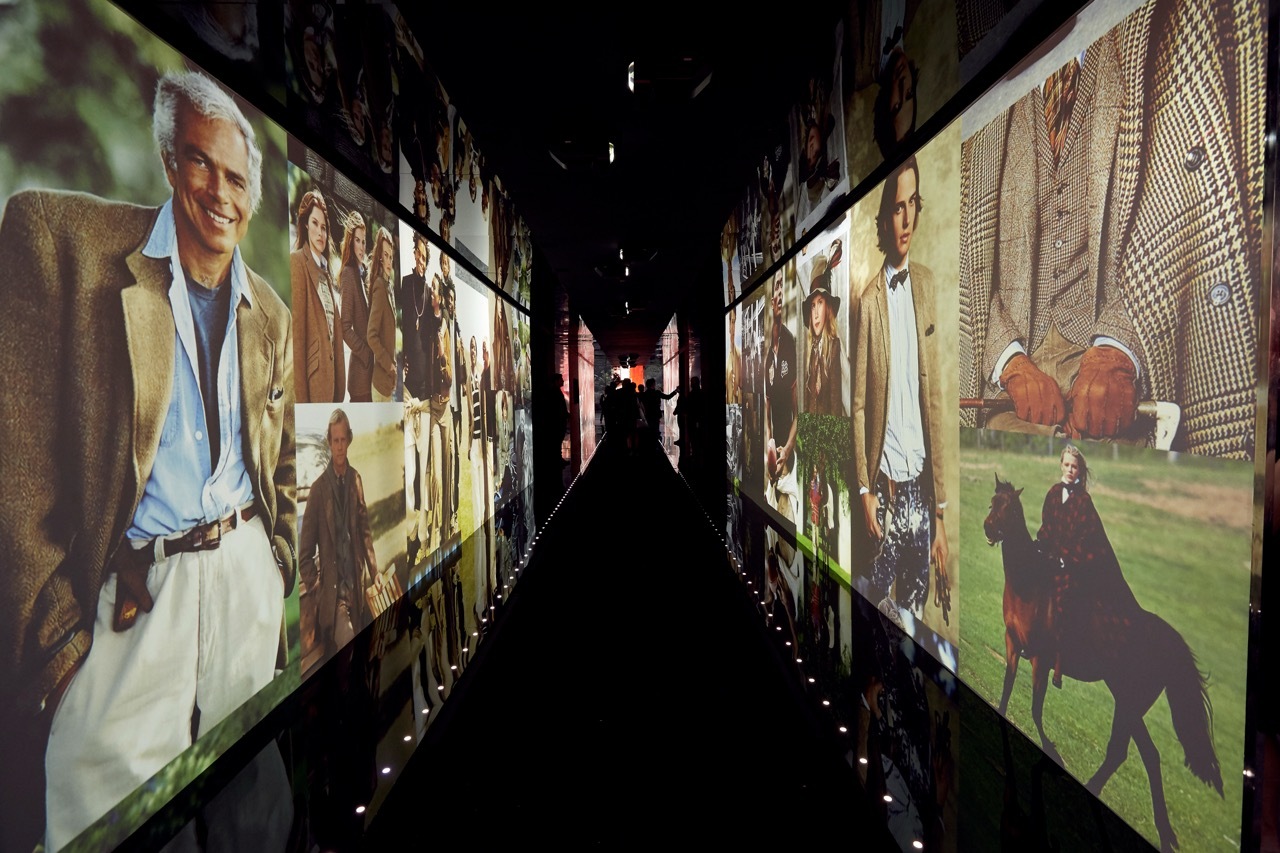
Three elements of Polo's later visual identity can be read directly out of the Gatsby commission. The first is heritage as primary register. Lauren chose to romance an earlier American period rather than design for the present, which became the dominant Polo move across the 1980s and 1990s campaigns photographed by Bruce Weber. The second is the lifestyle frame. The wardrobe in the film functioned as costumes for a class and a milieu, not as catalogue items, and Lauren would build his stores and advertising around that same logic. The third is the looseness of period reference. Polo would continue to layer 1920s collegiate, 1930s sporting, and 1950s ivy signals into single campaigns without insisting on archival fidelity. The Gatsby commission rehearsed all three positions before the brand itself had articulated them.
Aftermath
The Rhinelander Mansion flagship at 867 Madison Avenue opened in 1986 as the architectural extension of the Gatsby world view. The Bruce Weber campaign era from 1984 onwards translated the same nostalgia into a visual platform. The Polo Bear in 1991 added a heritage mascot to the same grammar. Each of these moves followed a logic the brand first found while dressing Robert Redford on a Long Island set. The 1974 film remains the moment Polo Ralph Lauren stopped being a New York menswear label and began functioning as an American style proposition.
Written with AI assistance, edited by a human. Find out more about our Use of AI.