A photographer hired to direct films on the page
Bruce Weber began working with Ralph Lauren in 1976, after the art director Sandy Carlson at Young and Rubicam showed Weber's portfolio to Lauren. Their first shoot together took place on Shelter Island for the men's collection. Through the late 1970s and across the entire 1980s, Weber became the principal photographer of Polo Ralph Lauren advertising. By 1984, with the Hawaii-shot safari campaign featuring the model Clotilde Holby, Weber had established a visual approach that defined what the wider industry would later call lifestyle advertising. Lauren himself often described the campaigns as his way of making movies. Weber translated that intent into still photography that read as cinematic narrative across multi-page magazine spreads of fifteen, twenty or thirty pages at a time.
Context replaces product
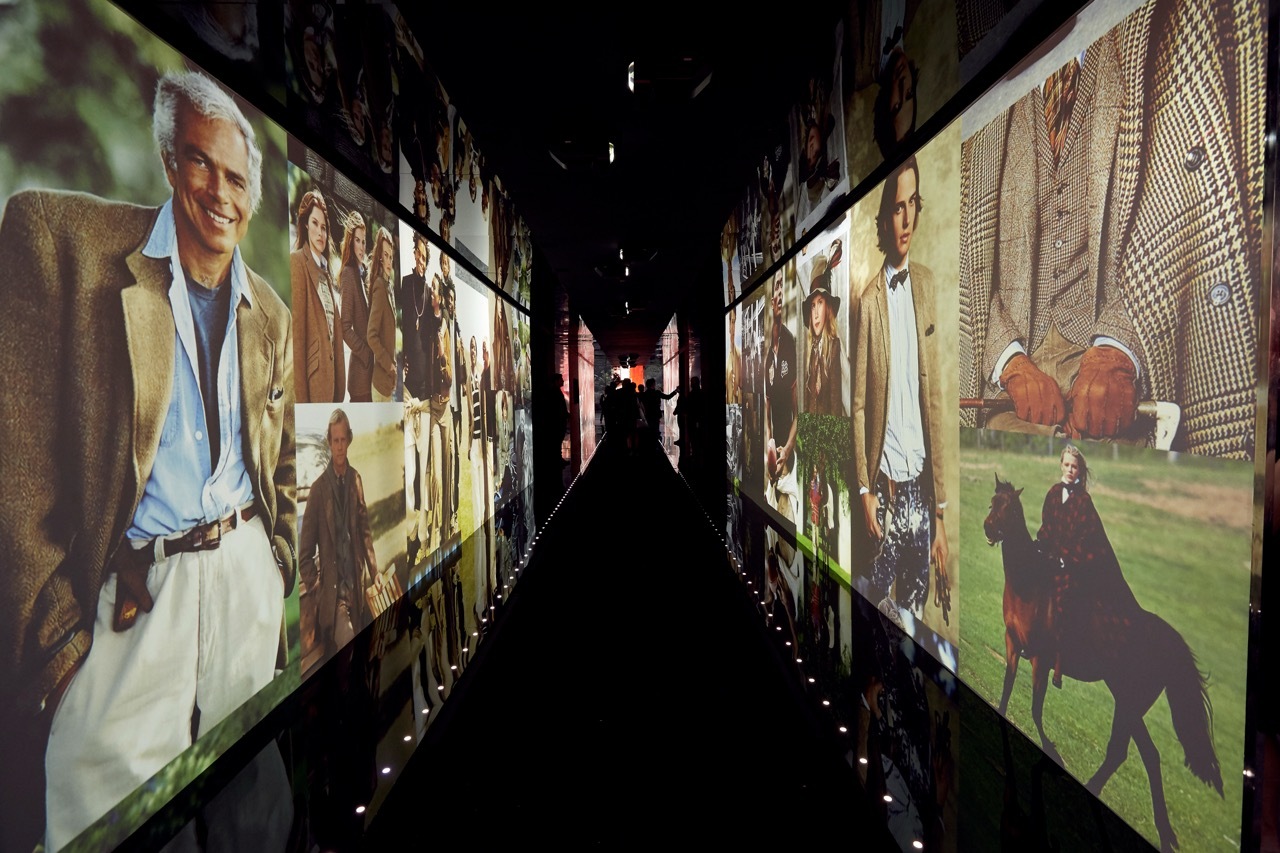
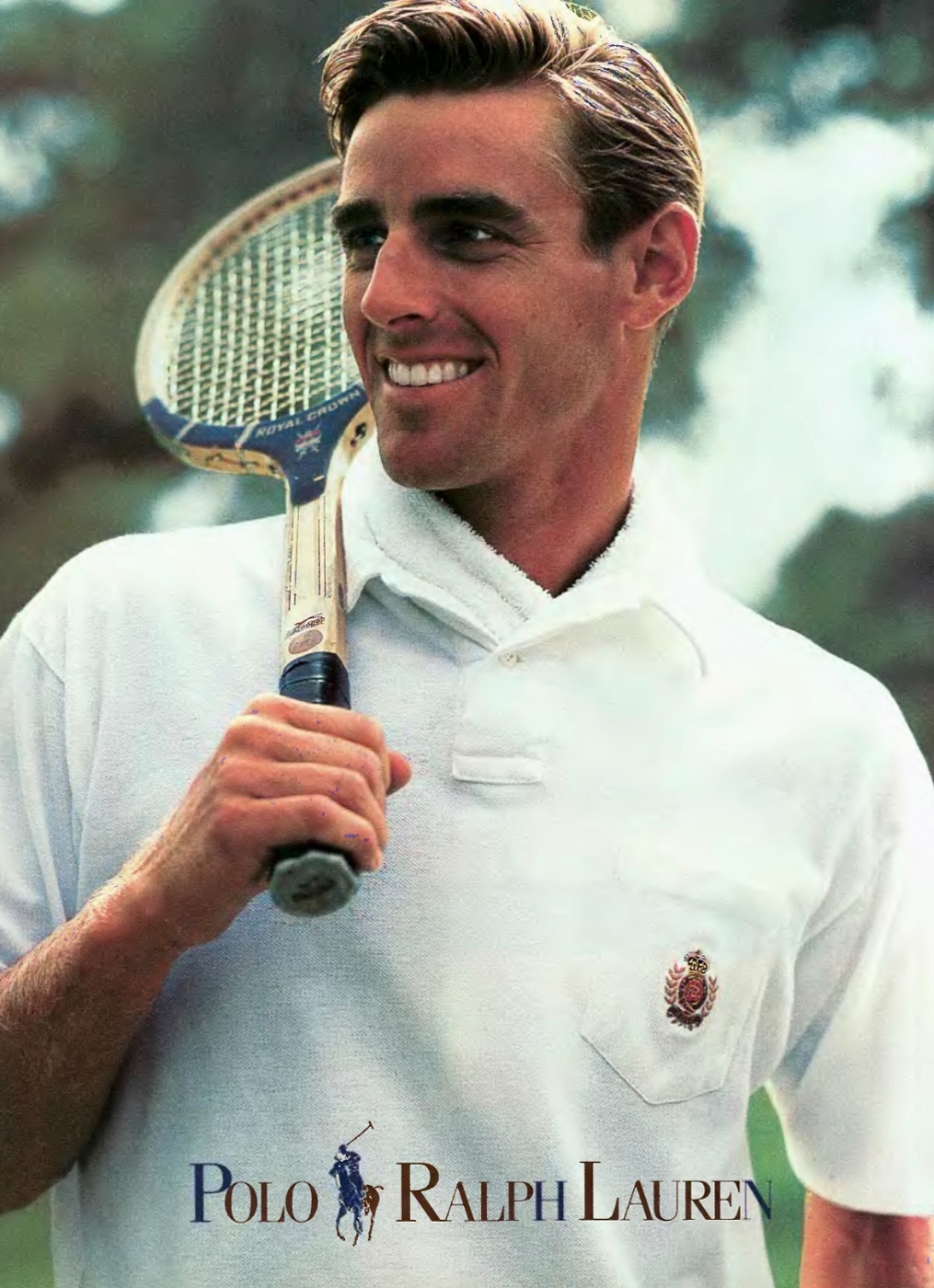
The decisive shift in the Bruce Weber Polo campaigns of the 1980s was the relegation of the garment to the role of a supporting character. Conventional fashion advertising of the period, in publications such as GQ, Vogue, Esquire and Architectural Digest, photographed the product as its own subject. Weber and Lauren placed the product inside a complete world. The world might be Wyoming ranch life, an English country house weekend, an East Coast prep-school summer, an African safari, a New England regatta, a Manhattan apartment in winter or a colonial-era Mediterranean retreat. Each setting was assembled from a deep and consistent set of cultural references that pre-existed the brand. The viewer was invited to enter the scene as much as to consider the clothing.
Cast as ensemble rather than face
Weber's approach to casting was one of the most distinctive aspects of the campaigns. Rather than deploying a single celebrity face, he assembled extended casts that read as families, friend groups or households. Children, dogs, horses, grandparents and athletes appeared alongside the principal models. Clotilde Holby became one of the longest-running Polo Ralph Lauren faces, alongside other recurring models drawn from a small, consistent ensemble. The choice of ensemble casting reinforced the central editorial proposition. Polo was not a wardrobe. It was an inhabited world. Subsequent campaigns by Versace, Calvin Klein, Tommy Hilfiger and Gucci adopted the same approach. The Polo Ralph Lauren campaigns of the 1980s are widely cited as its origin point.
The 1984 Hawaii safari shoot
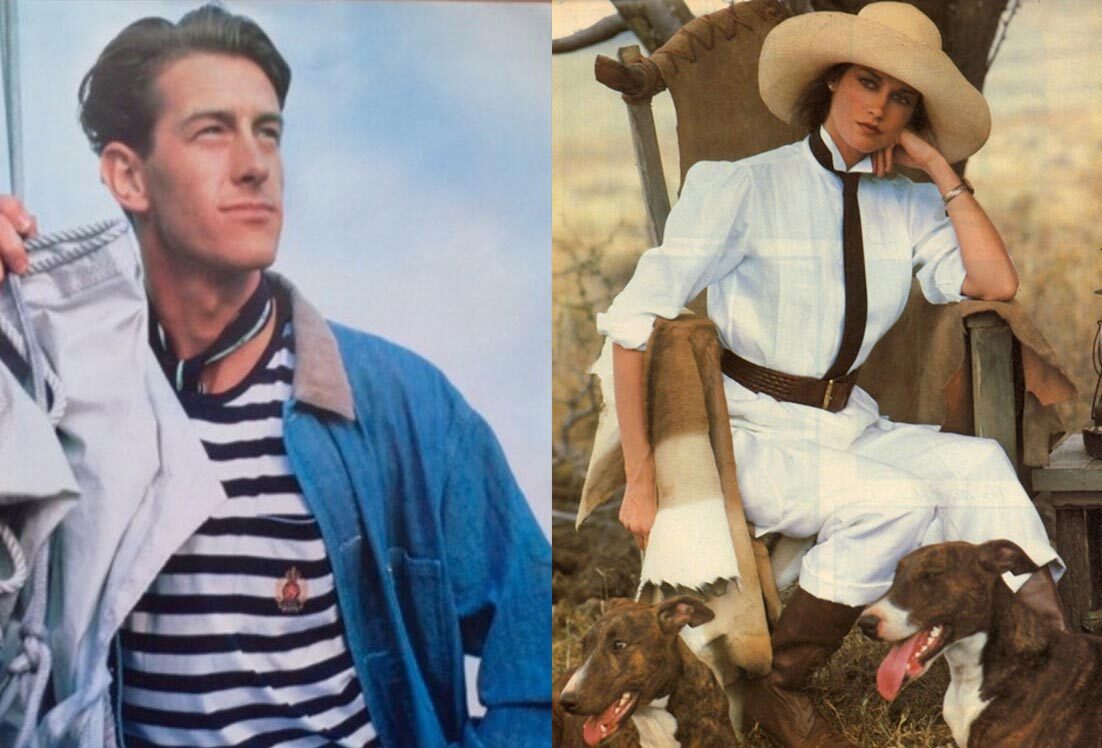
The 1984 safari campaign, photographed in Hawaii rather than Africa, became the most reproduced single set of Bruce Weber Polo images. The campaign featured Clotilde Holby in tailored cotton, linen and khaki, photographed against landscapes that read as African plains. The geographic substitution was explicit. Polo's vocabulary was cinematic, drawing on Out of Africa-era reference, on Hemingway, on early-twentieth-century travel photography. The campaign communicated the proposition that a wardrobe of Polo Ralph Lauren tailoring could carry the wearer into that imaginative space. The 1984 shoot proved that lifestyle advertising could turn even a substitute location into a fully realised brand world, provided the casting, costuming and editing were tightly controlled.
Long-form spreads as brand publishing
A characteristic feature of the Polo Ralph Lauren campaigns under Bruce Weber was their length. The brand purchased twenty or more consecutive pages in single magazine issues, particularly in GQ and Architectural Digest. The pages functioned as an editorial supplement rather than a sequence of advertisements. They had a rhythm, an opening, a development and a quiet close. The form prefigured what would later be described as branded content and brand publishing, in which media owned by the brand operates with the structure and pacing of editorial. The Polo Ralph Lauren spreads were among the earliest large-scale demonstrations of the format inside a paid magazine environment, and they established expectations that the wider industry then followed.
A vocabulary that the brand still owns
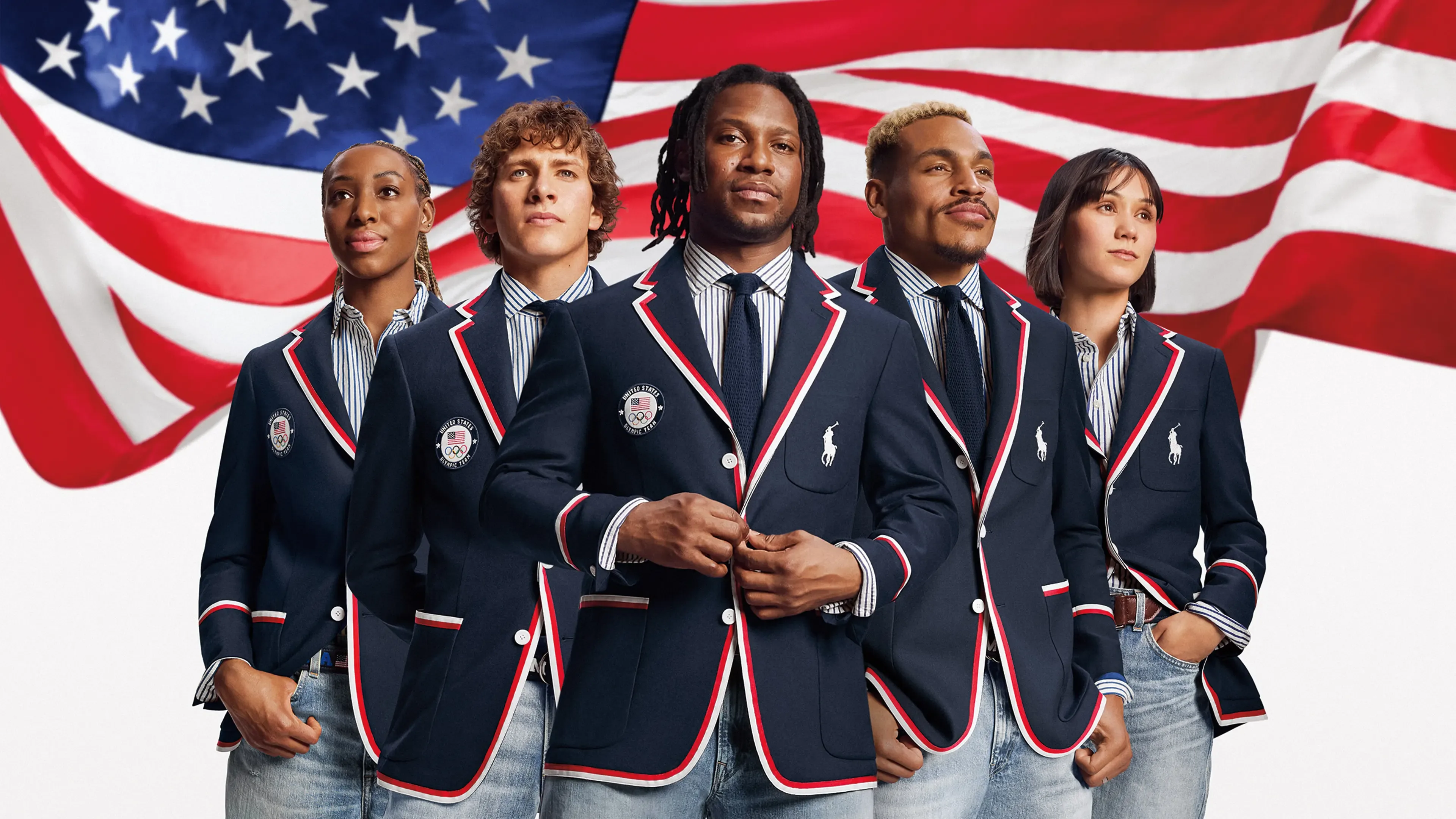
The visual vocabulary established by Bruce Weber and Ralph Lauren between the late 1970s and the early 1990s remains the dominant reference set for Polo Ralph Lauren imagery decades later. Subsequent campaigns by other photographers, including Carter Smith, Steven Pan, Cass Bird and Alasdair McLellan, work within the same syntax. The same locations, the same casting logic, the same colour palette and the same emotional register continue to appear. Within the wider category, the Bruce Weber Polo campaigns have become a reference point used in design briefs, art-direction decks and brand strategy presentations across luxury, beauty and hospitality. The work shaped how an entire generation of advertising professionals understood the meaning of lifestyle advertising.
Why the campaigns endured
Two factors explain the enduring weight of the Bruce Weber Polo Ralph Lauren campaigns. The first is consistency. Across more than a decade of major campaigns, the visual register did not drift. Each new shoot extended a coherent world rather than reset it. The second is restraint. The advertising rarely shouted. It set a scene, allowed the cast to occupy it, photographed the result with documentary clarity and let the viewer read the meaning. The brand did not need to assert its proposition because the proposition was already inside the image. That economy is the reason the campaigns continue to function as the textbook example of lifestyle advertising more than forty years after they began.
Written with AI assistance, edited by a human. Find out more about our Use of AI.