
A flagship that turned a townhouse into a brand stage
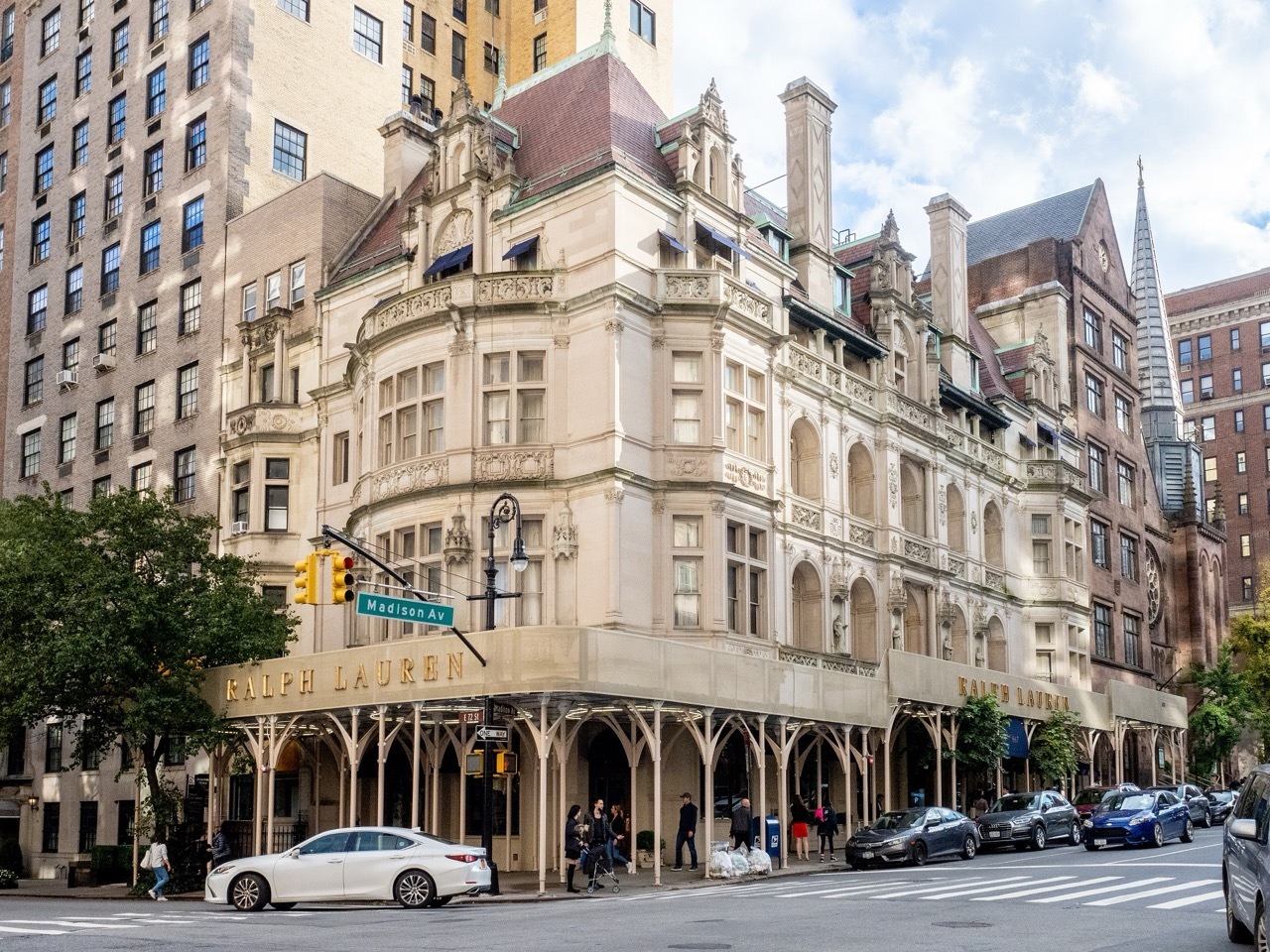
Ralph Lauren opened the Polo Ralph Lauren flagship store at 867 Madison Avenue on 21 April 1986, in the French Renaissance Revival mansion known as the Gertrude Rhinelander Waldo House. The building stands on the southeastern corner of Madison Avenue and East 72nd Street on the Upper East Side of Manhattan and was completed in 1898 to the design of the architectural firm Kimball and Thompson, with Alexander Mackintosh as the architect of record. It had been built for the heiress Gertrude Rhinelander Waldo, who commissioned the project in 1894 but never moved in. The house cycled through office and retail tenants over the eight following decades and stood largely unrestored when Ralph Lauren leased the property in 1984.
The decision to convert a Gilded Age townhouse into a flagship store was unusual at the time. American fashion retail in the mid-1980s was organised around department-store concessions, single-floor mid-block stores, and shopping-centre formats. The mansion stood outside all three. Ralph Lauren and his team treated the building not as a backdrop for the merchandise but as the brand expression itself, and the renovation became a parallel project to the merchandise system. The store opened roughly two years after the lease was signed, with reporting at the time placing the renovation budget between 14 and 30 million United States dollars.
The renovation and the editorial logic
The interior was restored to a level of detail more familiar from museum work than from retail design. Hand-carved mahogany balustrades were installed, oak floors were laid throughout, marble fireplaces were uncovered and repaired, and chandeliers were sourced as period pieces rather than as new fixtures. The reading was deliberate. The building was to look as if it had always served as a private house, and the merchandise was to look as if it belonged inside that house rather than as if it had been brought in for display. Five floors and roughly 20,000 square feet of selling space were organised in the manner of rooms in a residence, with men's tailoring, women's collections, home furnishings, and accessories arranged room by room rather than by category code.
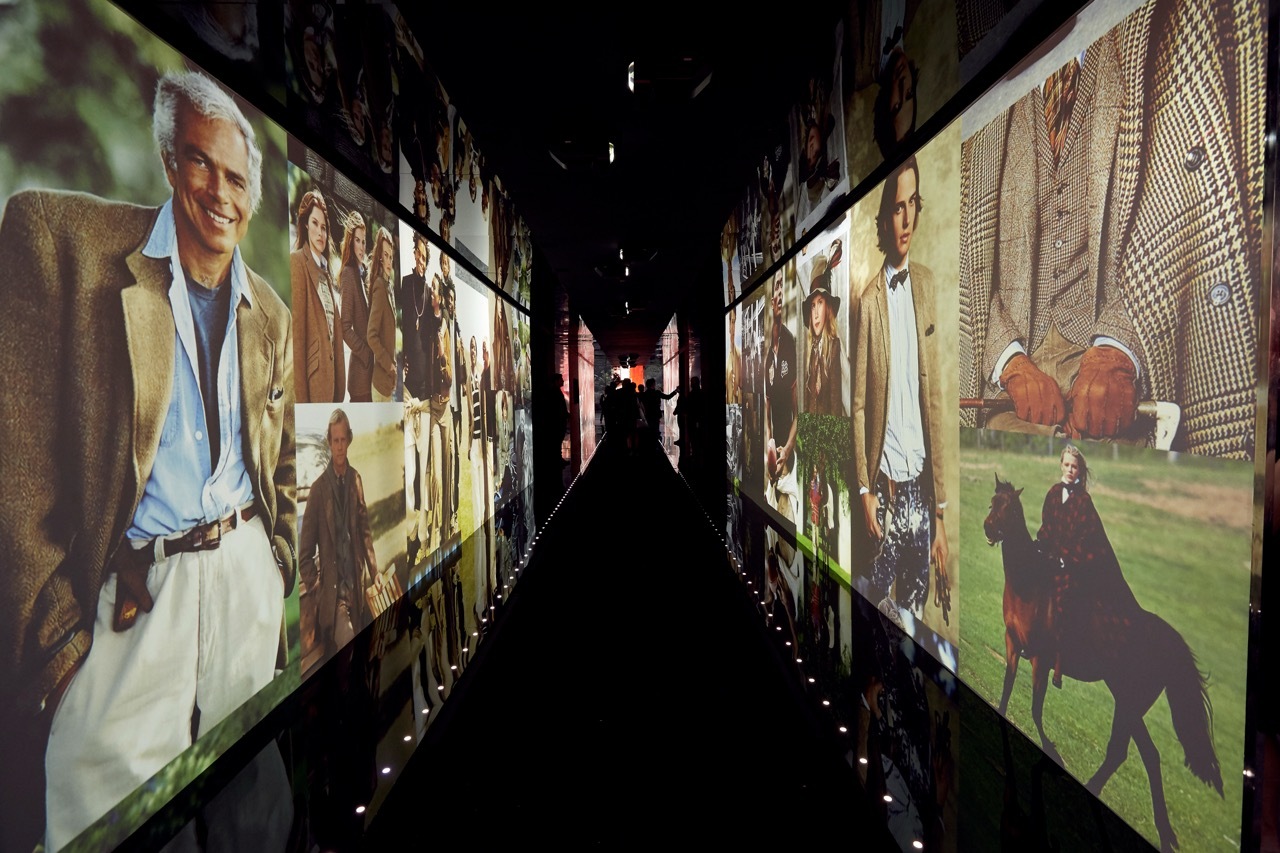
The result was a retail format that argued the brand by environment. A customer reading a Polo Ralph Lauren advertisement in Vogue or in The New York Times Magazine encountered a curated American world of mahogany, lacquer, country tweed, and equestrian props. A customer entering the Rhinelander Mansion encountered the same world in three dimensions. The advertising and the store stopped competing with one another and started carrying the same argument together. The mansion functioned as a long-form expression of the same editorial that the printed campaigns were running at smaller scale.
The opening day and the commercial result
The store opened to invited guests on 21 April 1986. Store records and later reporting placed first-day sales at approximately 100,000 United States dollars, a figure that was widely cited within the fashion trade as exceptional for a single store opening day in that period. The mansion quickly became one of the highest-grossing single-store retail locations in American luxury fashion. Polo Ralph Lauren remained the sole operator of the 867 Madison Avenue store, a structural difference from other Polo Ralph Lauren stores at the time, several of which were run under co-ownership agreements with licensed retailers.
The Rhinelander Mansion also reset the lease economics of upper Madison Avenue. The block immediately south of 72nd Street had not been the centre of luxury retail before the mansion opened. Within a decade, the corridor between East 57th and East 79th Streets had emerged as one of the most expensive retail locations in the world, and Ralph Lauren's commitment to the mansion is widely credited with accelerating the shift.
The architectural and brand context
The Gertrude Rhinelander Waldo House sits inside a category of late nineteenth century New York commissions that imitated French chateau forms for private American owners. Kimball and Thompson took cues from the chateaux of the Loire Valley in their design, with steeply pitched roofs, tall chimney stacks, and an elaborate facade in Indiana limestone. The architectural quotation suited Ralph Lauren's editorial position. The brand had built its case for an American luxury that drew freely on English, French, and East Coast colonial references, and the mansion supplied a building that already did the same thing.
The flagship also extended a strategic move the brand had made earlier in the 1980s. Ralph Lauren had introduced lifestyle photography under Bruce Weber from 1984, which had positioned the brand as a publisher of imagery as much as a designer of clothes. The mansion completed the system. Print images, advertising film, and physical retail now operated as a single editorial property. Customers who had only seen the Ralph Lauren world through a magazine could now enter that world through a door on 72nd Street.
The template that followed
The Rhinelander Mansion established a template that the wider luxury industry adopted over the following two decades. Houses including Louis Vuitton, Prada, and later Burberry built flagship stores in historic buildings or in purpose-built equivalents that prioritised brand experience over selling efficiency per square foot. The mansion also reframed what a flagship store was expected to do. Before 1986, a flagship was the largest selling unit of a chain. After 1986, a flagship was the brand's most ambitious physical statement, with selling efficiency treated as a secondary objective. Ralph Lauren made the move first, on the scale of a Manhattan townhouse, and the wider industry followed.
The mansion remains the brand's New York flagship today. Ralph Lauren renewed the lease in late 2023, while reducing the company's separate office footprint in Manhattan. The continuity of tenancy across nearly four decades is itself part of the argument the store has been making since opening day. The Rhinelander Mansion stands as the founding monument of the retail-as-brand-stage idea that now defines the global luxury sector.
Written with AI assistance, edited by a human. Find out more about our Use of AI.