
Fifty years of naming a single, growing perfume line
Loewe entered the fragrance business in 1972 with L de Loewe, its first women's perfume, more than a century after the house had been founded on saddlery and leather goods. The launch marked the beginning of a fragrance division, later formalised as the separate company Parfums Loewe, that the house would keep building for the next fifty years, releasing a new signature scent roughly once every five to ten years rather than attempting a dense annual release schedule.
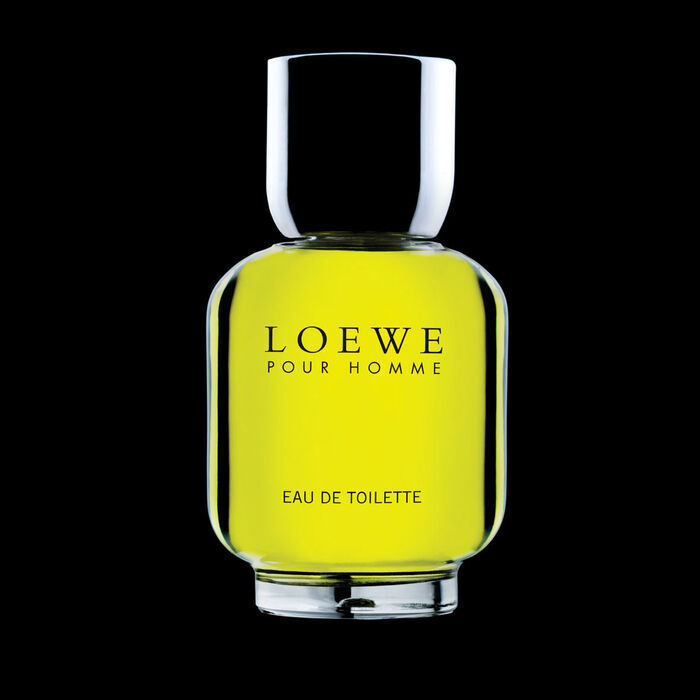
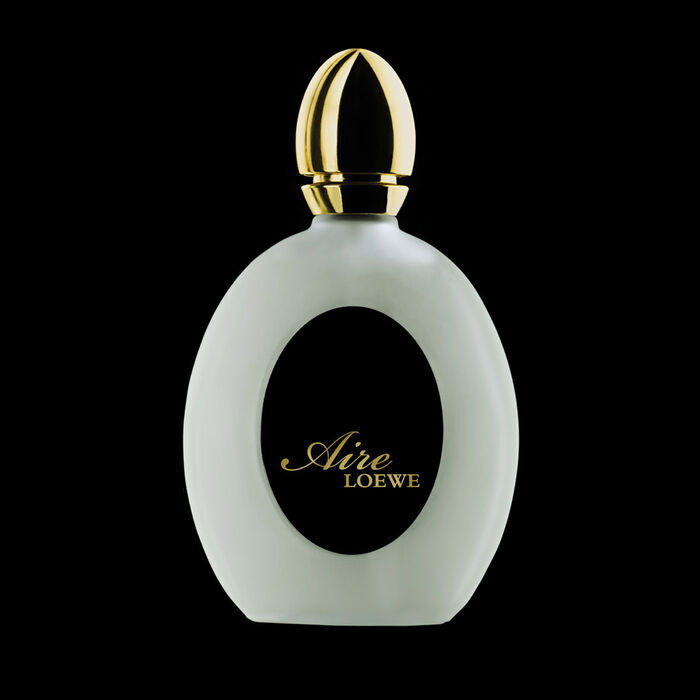
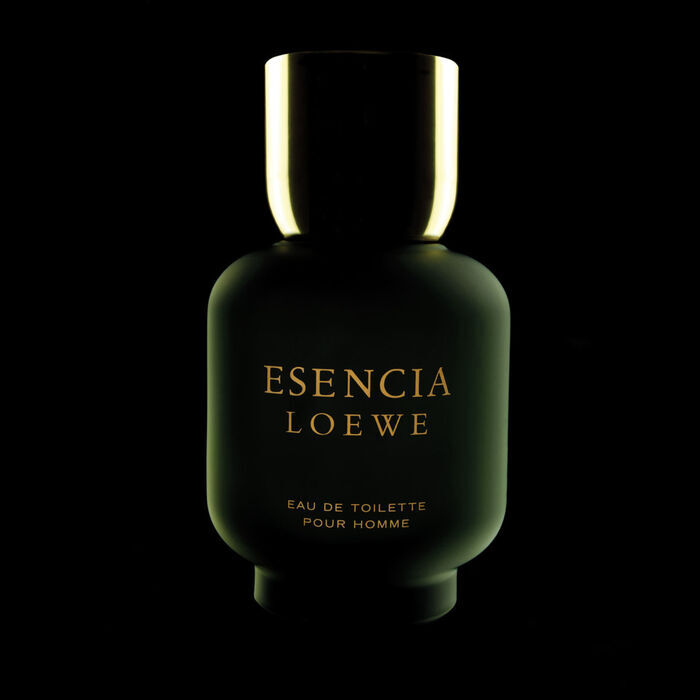
A men's counterpart followed in 1974 with Loewe Pour Homme, establishing the paired-gender launch pattern the house would return to repeatedly. Aire followed in 1985, Esencia in 1987, and Aura in 1994, each spaced widely enough apart that a given fragrance had years to establish itself in the market before the next major launch arrived to compete with it for the same customer's attention.
A naming pattern that stayed deliberately plain
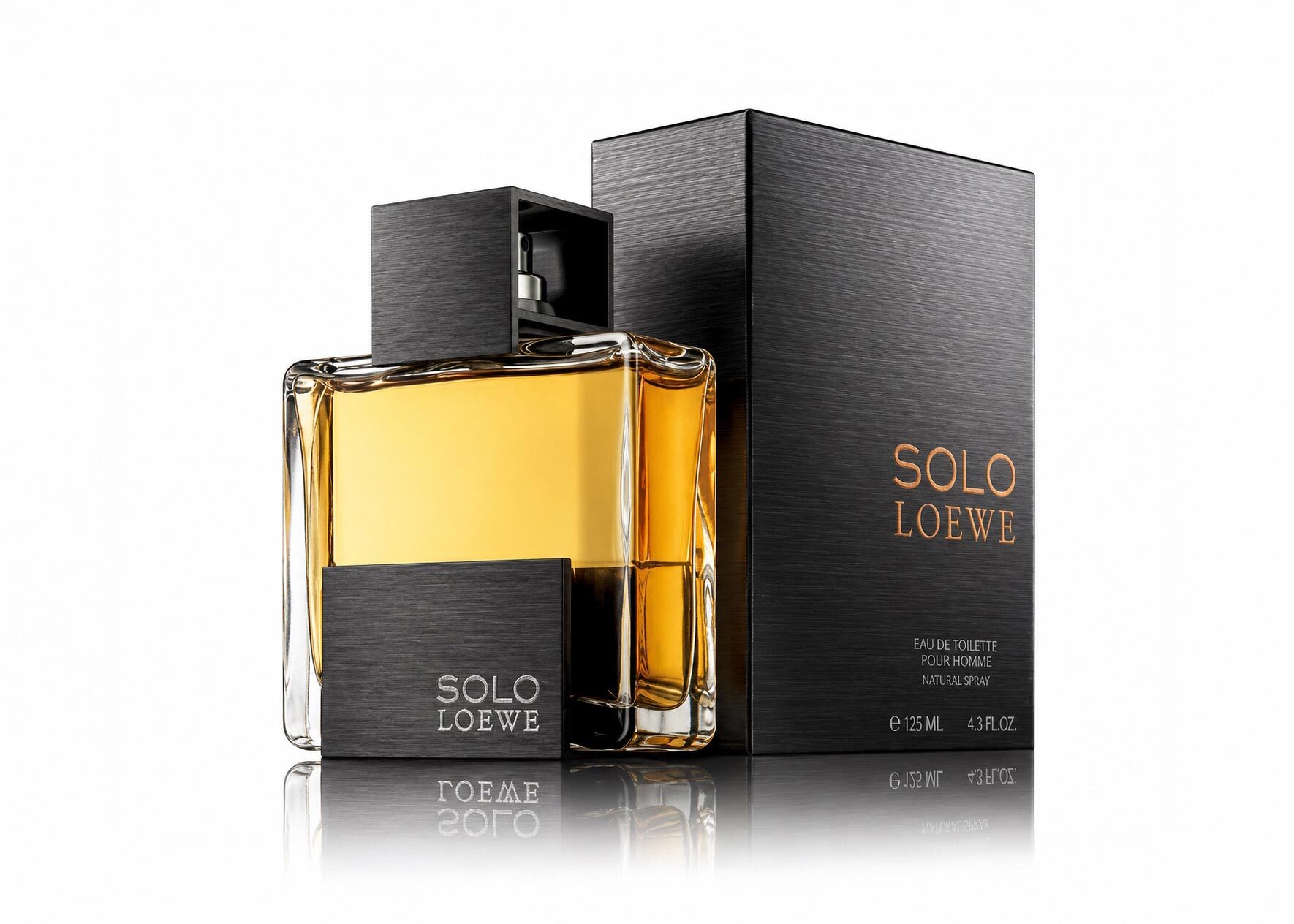
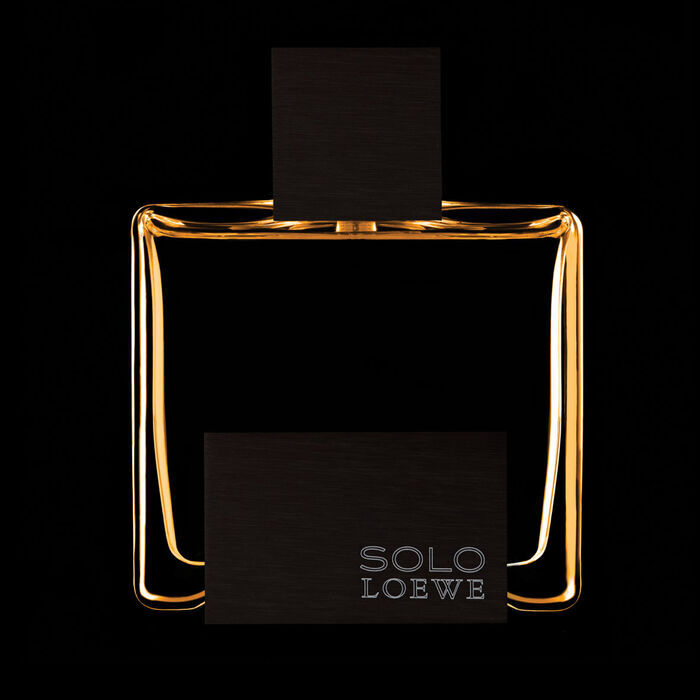
Across five decades, Loewe's fragrance names have stayed close to simple, often single Spanish or Latin-rooted words rather than reaching for the more elaborate, story-driven names common elsewhere in the perfume industry: Aire (air), Esencia (essence), Aura, Agua (water, launched 2000), Solo (2004), and later simply 7, launched in 2010 as a numeral rather than a word at all. That restraint previewed the logic Jonathan Anderson would use explicitly in 2016 when he named the house's first fully integrated fashion-and-fragrance release simply 001, treating the number itself as a statement about starting over rather than reaching for an evocative label.
The naming discipline also let each fragrance function as a fairly self-contained product without requiring a unifying platform name across the whole portfolio, unlike houses that build every fragrance launch under a single umbrella brand. Loewe's approach instead let each scent, Aire, Esencia, Solo, 7, 001, and Earth in 2022, stand as its own distinct release, connected by naming register and by the Loewe name itself rather than by a shared collection identity.
A slow-build category inside a leather house
Building a fragrance portfolio this gradually, roughly nine major signature releases across fifty years, reflects a category where Loewe has never tried to compete on release frequency with either mass-market perfume houses or fashion competitors that refresh fragrance lines annually. Instead, each launch has functioned as a discrete institutional event, occasionally, as with 001 in 2016, tied explicitly to a change in creative direction or a restructuring of how the fragrance business relates to the main fashion house, and at other times simply extending an existing, successful line with a new scent.
That pacing also means the fragrance category has quietly accumulated its own internal history independent of Loewe's much more visible leather goods and ready-to-wear lines. A customer encountering 7 or Earth today is buying into a naming lineage that stretches back to L de Loewe in 1972, even though the house's fashion identity has been reshaped by several different creative directors across the same fifty-year period, through Jonathan Anderson's 2013 to 2025 tenure to the current McCollough and Hernandez leadership.
Fragrance divisions inside fashion houses often function as the most commercially conservative part of the business precisely because they age more slowly than ready-to-wear, and Loewe's roughly decade-spaced release rhythm, essentially unchanged since 1972, has let Parfums Loewe build brand equity independent of whichever designer happened to be reworking the handbags and runway collections in any given season.
Not every entry in the line has stayed in continuous production. Some earlier formulations have been reformulated or quietly discontinued over the decades, while others, particularly Aire and Solo, have remained in the catalogue long enough to become the house's default, entry-level fragrances for customers encountering Loewe perfume for the first time. That uneven survival rate is typical of long-running fragrance portfolios, where a handful of scents become durable house staples while others serve their season and are retired without much public notice.
The eventual folding of Parfums Loewe into the main creative structure under Anderson in 2016 also meant that, for the first time since 1972, a single person held creative authority over the house's fragrances and its clothing simultaneously, ending more than four decades in which the two categories had developed along separate, only loosely coordinated tracks.
Seen as a full timeline, from L de Loewe in 1972 through Loewe Pour Homme, Aire, Esencia, Aura, Agua, Solo, 7, 001 and Earth by 2022, the fragrance line is one of the few Loewe product categories whose naming history can be read almost as a clean chronological ledger, largely untouched by the more visible rebranding moments that have periodically reshaped the house's handbags, ready-to-wear and visual identity.
Written with AI assistance, edited by a human. Find out more about our Use of AI.