
A board game becomes the house's first silk carré
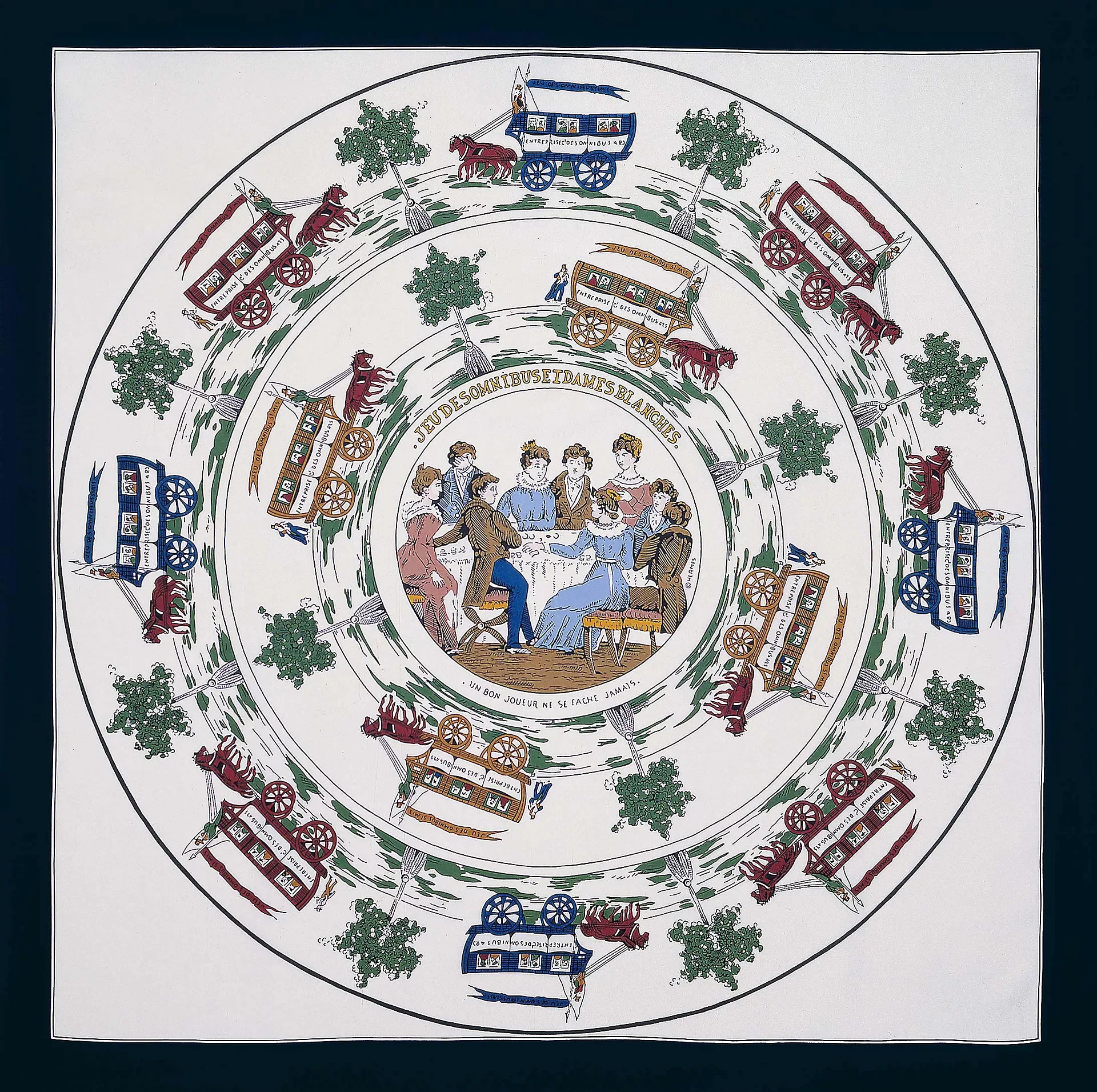
In 1937, Hermès produced its first silk square scarf, a format the house calls the carré, measuring ninety centimetres on each side. The design, titled "Jeu des Omnibus et Dames Blanches", depicted women playing a popular board game of the period while horse-drawn omnibuses from two competing nineteenth-century Parisian coach companies, Omnibus and Dames Blanches, circled around them. The motif was created by Robert Dumas, who had joined the family business through marriage, working with the artist Hugo Grygkar.
Grygkar, born in Germany in 1907 to a Czech family that moved to France in 1914, became the maison's first house artist and one of the most important names in the early history of the carré, contributing many of its earliest designs. He drew heavily on the private collection of Émile-Maurice Hermès for source material, and the omnibus scarf itself took its central image directly from an antique board game held in that collection, rather than from an original composition.
Establishing a template still in use today
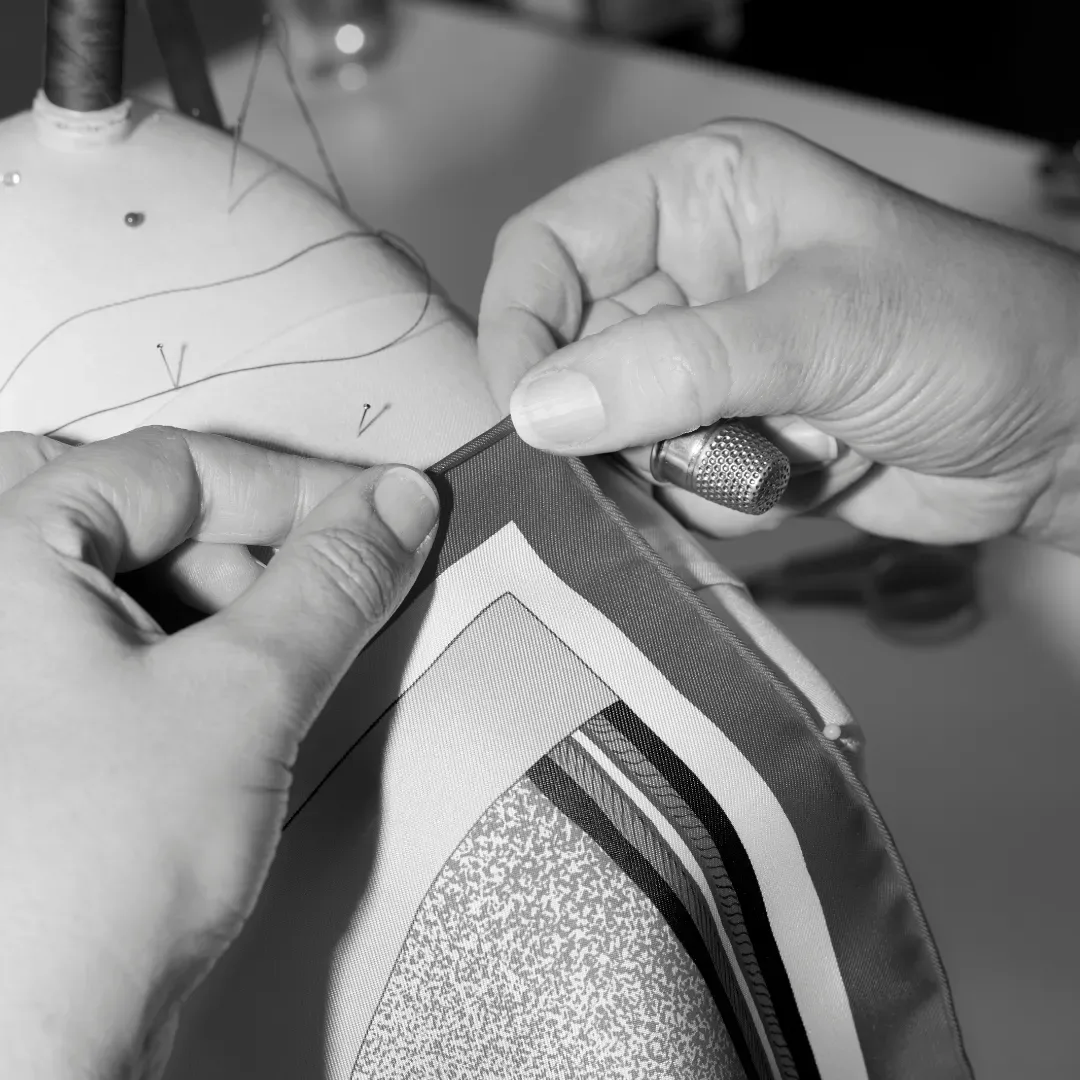
The 1937 carré set a template that Hermès has followed with only gradual variation ever since: a single square of printed silk, produced through a labour-intensive screen-printing process, developed in close collaboration between an outside or in-house artist and the maison's own design studio, and drawing on historical, decorative or narrative source material rather than abstract pattern work. Each new carré since 1937 has continued that method, whether the subject is equestrian, botanical, mythological or, in later decades, drawn from contemporary artists commissioned specifically for the format.
Since that first design, Hermès has produced more than two thousand different carré motifs, an output that has turned the scarf into one of the house's most collectible categories independent of its handbags or leather goods. Collectors and dedicated scarf societies now track individual designs by name, year and colourway, treating the carré catalogue much as a design historian would treat a body of prints, with the 1937 omnibus design generally cited as the founding work of the entire category.
A design revived for its own anniversary
Hermès marked the seventieth anniversary of the format in 2007 by reissuing "Jeu des Omnibus et Dames Blanches" in a new seventy-centimetre size, a smaller format the house had introduced for lighter, more versatile scarves decades after the original ninety-centimetre standard. The reissue let the house reintroduce its own founding design to a generation of customers who had not seen the original, while keeping the connection to the antique game and the Parisian coach rivalry that inspired Grygkar and Dumas in 1937 explicit in the accompanying story Hermès told around the relaunch.
The carré's origin also illustrates a working method that has stayed consistent through nine decades of Hermès design: outside artists and craftspeople are brought in to interpret material the house already holds or curates, rather than being asked to invent a Hermès identity from nothing. That approach, established with Grygkar's collaboration on the omnibus design, later extended to fine artists, illustrators and, more recently, contemporary designers invited to produce carrés under their own name alongside the house's in-house studio, each new design still measured against the standard the 1937 scarf set for what a Hermès carré should be.
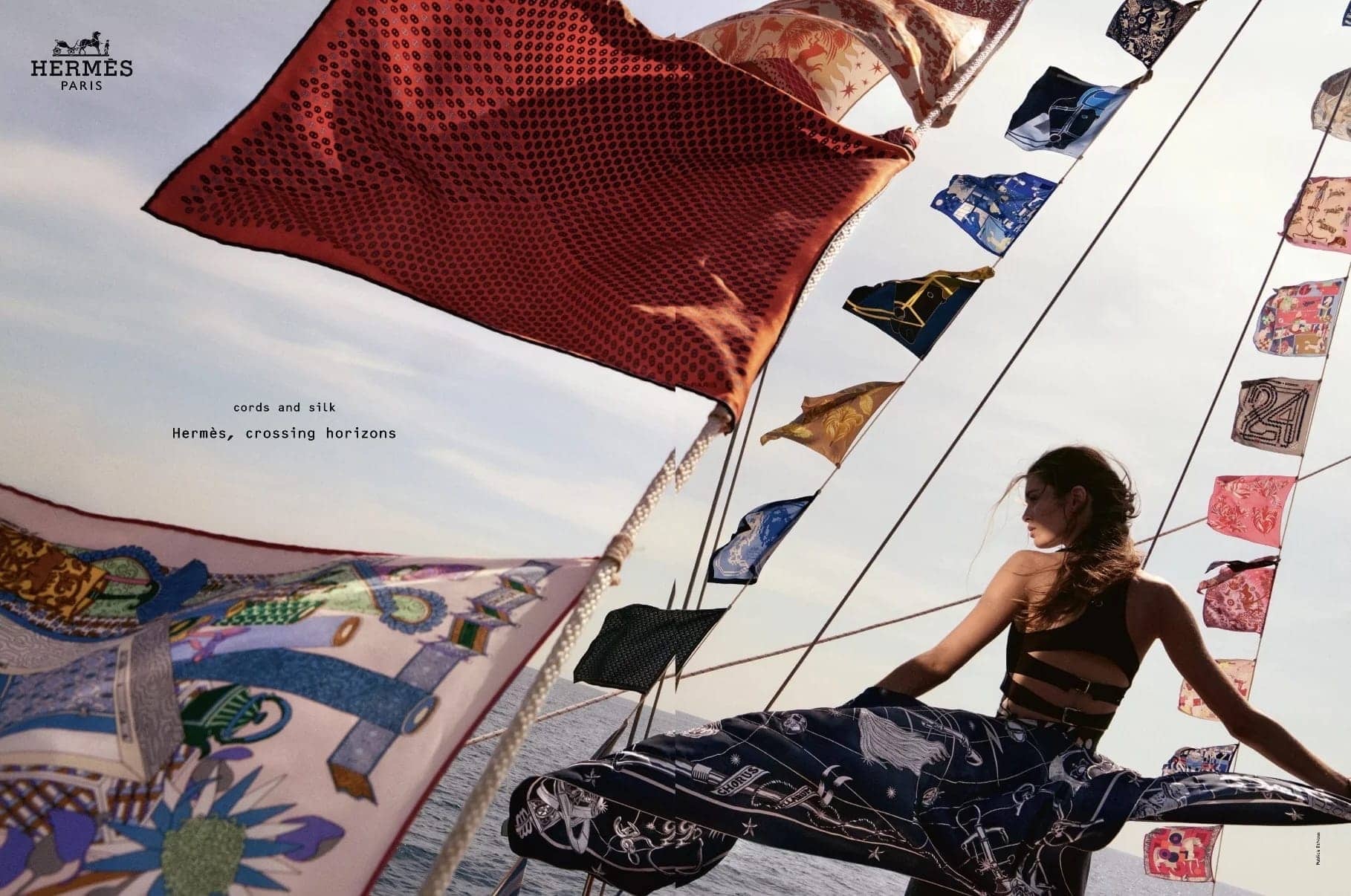
The format's discipline, always a square, always silk, always credited to a named designer working from a specific idea, has made the carré one of the clearest examples in luxury of a single product category acting as a running archive of the house's visual interests. Nine decades after Grygkar and Dumas printed a Parisian board game onto silk, the same square format still carries whatever story Hermès wants to tell that season, from equestrian sport to, most recently, sails and open water.
The production process itself has stayed almost as fixed as the format. A single carré can require dozens of separate screens, one for each colour in the design, and the printing, engraving and finishing are carried out largely by hand in workshops in France, a detail Hermès presents as inseparable from the value of the object. A single design can take many months to move from an artist's sketch to a finished, ready-to-sell scarf, a production timeline that has changed little since Grygkar and Dumas worked on the first omnibus motif in 1937.
That combination of a fixed format and a slow, hand-finished process has made the carré unusually well suited to being collected and studied after the fact. Dedicated collector communities and secondary-market specialists now catalogue carré designs by year, artist and colourway much as a stamp or coin collector would, treating the roughly ninety years of output since 1937 as a continuous, datable body of work rather than a rotating set of seasonal accessories.
Written with AI assistance, edited by a human. Find out more about our Use of AI.