
A London show watched in five cities at once
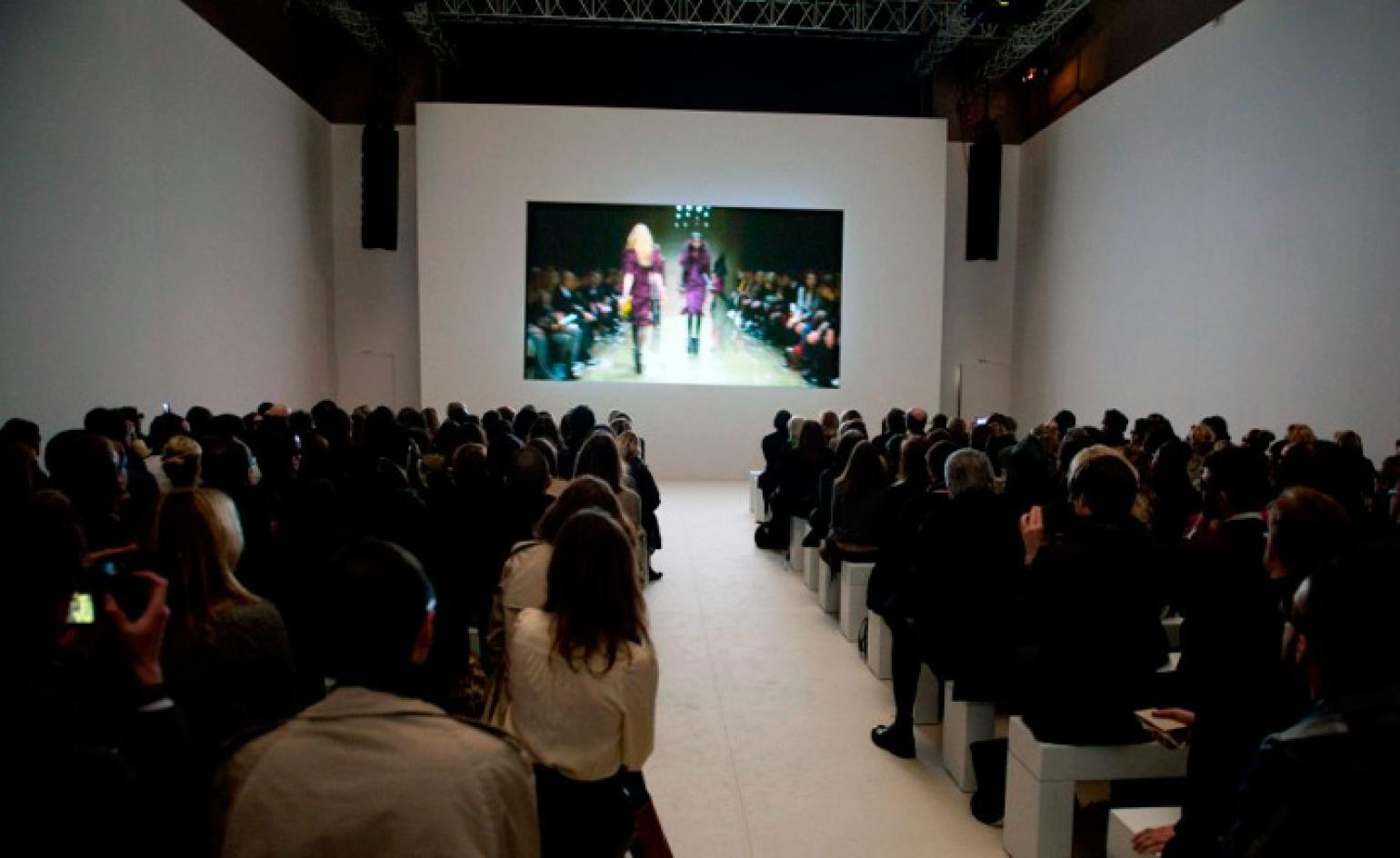
On 23 February 2010 Burberry presented its Autumn/Winter 2010 womenswear collection at Chelsea College of Art and Design in London and, at the same moment, broadcast the show in live three-dimensional video to private cinemas in New York, Paris, Dubai, Tokyo and Los Angeles.1, 2 Christopher Bailey, the British house's Chief Creative Officer, had spent months working with the broadcaster Sky and a specialist 3D production team to install the rigs, calibrate the cameras and synchronise the global feed.1, 3 No fashion brand had previously attempted a live 3D simulcast of a runway show.1, 4
The London audience of editors, buyers and celebrities watched the show in person. The audiences in the five remote cities watched in dedicated screening rooms designed by Burberry, with seating, lighting and pre-show content tuned to give the impression of front-row attendance.1 Bailey introduced the project in a YouTube address in the days preceding the show and made the technology a deliberate part of the storyline, framing it as a way to extend the audience for London Fashion Week beyond its physical capacity.1
Bailey's digital strategy in context
The 3D simulcast did not stand alone. Between 2009 and 2014, Burberry under Bailey moved through a deliberate sequence of digital initiatives that made the brand a frequently cited reference in industry literature.5 Art of the Trench, the user-generated photography platform launched in November 2009, opened the conversation.2, 6 Live streaming of runway shows on burberry.com followed in autumn 2009.7 The 3D global broadcast in February 2010 marked the next escalation. Within the same year Burberry would launch its Burberry Acoustic music platform and would make new collections available for pre-order online directly from the runway, a precursor to the see-now-buy-now model that the industry would adopt more broadly later in the decade.1, 3, 4, 8
The strategic logic was consistent. Burberry treated the runway show not as a trade event aimed at a small professional audience but as a media product capable of carrying brand meaning to consumers. The live 3D simulcast operationalised this view at scale. By placing the same show in front of audiences in six cities at the same time, the brand collapsed the traditional asymmetry between the front row and everyone else.
Why 3D, and why then
The choice of 3D in early 2010 was tied to a specific cultural moment. James Cameron's Avatar had been released in December 2009, and the technology was at the centre of the wider entertainment conversation.3 Sky was investing heavily in its 3D channel offering, and the rigs and post-production pipelines that supported live 3D capture were briefly in unusual abundance.1, 3 Burberry's project benefited from this short window in which the technology was both available and culturally relevant.
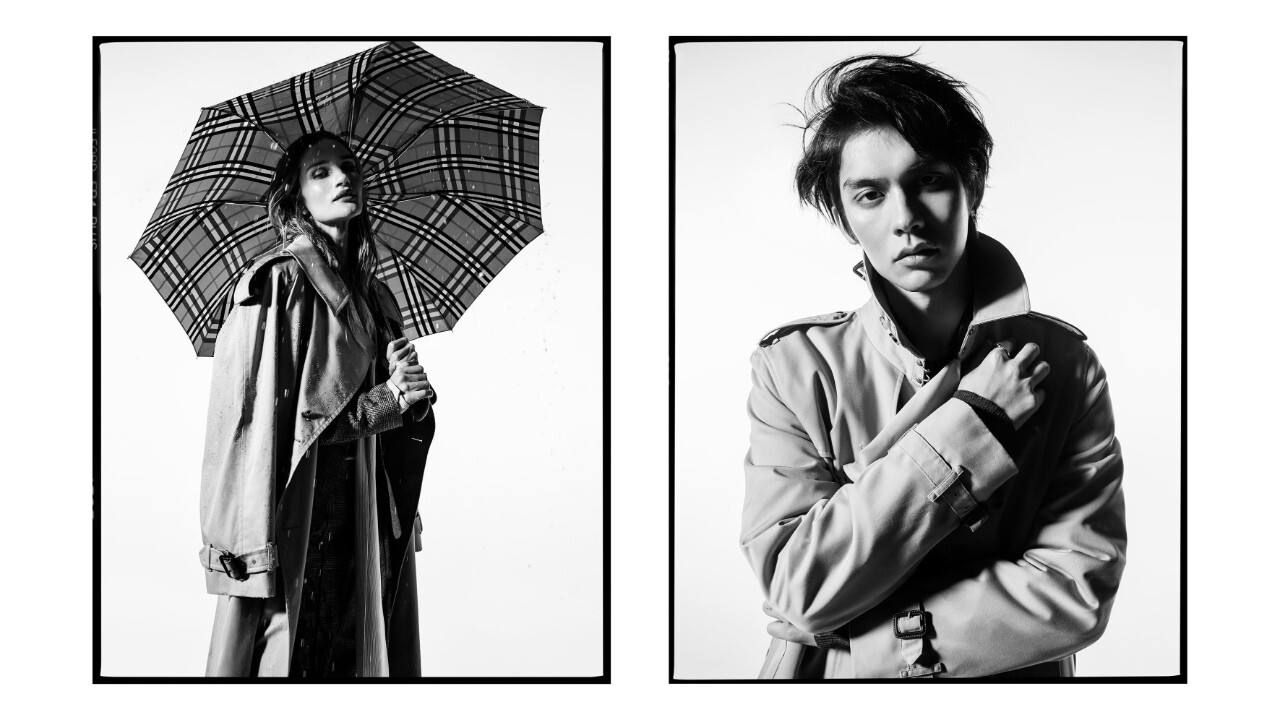
The decision also matched the texture of the collection itself. The Autumn/Winter 2010 show featured volumetric outerwear, military-tailored coats, knitwear with strong surface detail and accessories whose materiality was central to the proposition.1 Three-dimensional capture flattered the clothes by showing their depth and weight in a way that two-dimensional broadcast could not. For a brand whose product story was built around the trench coat, the format was unusually well aligned with the merchandise.
Reception and afterlife
Industry coverage in Wallpaper, Business of Fashion, Drapers and Wired recorded the broadcast as a milestone in fashion's relationship with broadcast media.1, 2, 4 Subsequent attempts by other houses to combine runway, broadcast and direct-to-consumer mechanisms drew on the template Burberry had built. The brand itself returned to live streaming in standard formats in subsequent seasons.2 The 3D simulcast was not repeated at the same scale, but its function within the Bailey-era narrative was secured.
For brandvelle's purposes, the February 2010 broadcast is interesting less for the technology itself than for the way it positioned Burberry against the rest of the luxury sector. While most heritage houses were still treating the runway as a private event, Burberry had begun to treat it as a media platform with global distribution. The 3D experiment crystallised the position. By the time the technology had been overtaken by other formats, the brand had already established the precedent that, in fashion, the show is for everyone.
Written with AI assistance, edited by a human. Find out more about our Use of AI.
1. Wallpaper*, Malaika Byng, "Burberry streams 3D fashion show", 23 February 2010, published on the day of the show (page last updated 10 October 2022), off whitelist and listed in the article's sources, for the Burberry Prorsum A/W 2010 show at Chelsea College of Art & Design during London Fashion Week, the live 3D broadcast to private locations in New York, LA, Paris, Tokyo and Dubai, Burberry as "the first of the fashion pack" to use the technology, Chief Creative Officer Christopher Bailey having custom designed the private screening rooms and announced his plans for the show in a YouTube message, the brand teaming up with Sky Television and using its 3D technology, the pre-show entertainment from behind the scenes and on the red carpet, the "Burberry Cadet Girls Collection" of naval reefer jackets and sheepskin aviator coats being available on Burberry.com straight after the show instead of the usual six-month wait, and the piece's own coverage of the broadcast. The months of preparation, the specialist production team, the seating and lighting of the screening rooms, the reading of the YouTube address as a way to extend London Fashion Week's audience, the knitwear and accessories, and the coverage in Wired named in the body are not in the piece. https://www.wallpaper.com/fashion/burberry-streams-3d-fashion-show
2. Drapers, "Timeline: Burberry's digital initiatives", undated (latest entry June 2013), off whitelist and listed in the article's sources, for Burberry having broadcast its Autumn Winter 2010/11 womenswear show in 3D live from London to simultaneous events in New York, Paris, Dubai, Tokyo and Los Angeles in February 2010, for the launch of Art of the Trench in November 2009, for Burberry streaming its shows in HD through Facebook from September 2011 and onto screens in London and on its Beijing store in February 2012, and for the timeline's own listing of the 3D broadcast among Burberry's digital milestones. https://www.drapersonline.com/timeline-burberrys-digital-initiatives/5052906.article
3. Wikipedia, articles "Christopher Bailey (fashion designer)", "Burberry", "Avatar (2009 film)" and "Sky 3D", consulted on 1 October 2026, a reference source under the Brandvelle whitelist: "Christopher Bailey (fashion designer)" for Bailey having become chief creative officer of Burberry in November 2009; "Burberry" for Bailey having established Burberry Acoustic during his tenure as Chief Creative Officer; "Avatar (2009 film)" for the film's London premiere on 10 December 2009 and its US release, partly in 3D, on 18 December 2009; "Sky 3D" for the channel's launch in pubs on 3 April 2010 and its availability to residential subscribers from 1 October 2010. The scale of Sky's investment and the availability of live 3D rigs are not in these articles. https://en.wikipedia.org/wiki/Christopher_Bailey_(fashion_designer) https://en.wikipedia.org/wiki/Burberry https://en.wikipedia.org/wiki/Avatar_(2009_film) https://en.wikipedia.org/wiki/Sky_3D
4. The Business of Fashion, Imran Amed, "Getting Immersed in Burberry's 3D Live Stream", February 2010, no date line on the page, off whitelist and listed in the article's sources, for the Autumn/Winter 2010 show at Chelsea College of Art on the penultimate day of London Fashion Week being beamed live in 3D to five global cities and streamed via 73 websites including Vogue, Grazia and CNN, for the show having been billed as "the world's first truly global fashion show", for the pre-recorded presentation by Chief Creative Officer Christopher Bailey, for the shearling jackets that could be bought straight off the runway for 72 hours after the show, and for the piece's own coverage of the broadcast. https://www.businessoffashion.com/articles/technology/digital-scorecard-burberry-3d-live-stream/
5. Ad Age, "Burberry's Christopher Bailey: Where Marketing, Dreaming and Digital Meet", off whitelist and listed in the article's sources as a profile of Bailey's digital strategy, cited for the sentence on the sequence of digital initiatives Burberry ran under Bailey. On 1 October 2026 the URL served an unrelated Ad Age page in place of the article, so author, date and wording could not be checked; page not reachable on 1 October 2026. https://adage.com/article/creative-profiles/burberry-s-christopher-bailey-marketing-dreams-digital-meet/238714
6. Burberry plc, "History", undated corporate timeline, consulted on 1 October 2026, the company page standing in for the newsroom index listed in the article's sources, which returned a 404 on 1 October 2026, for Burberry having launched Art of the Trench in 2009 as a website showcasing people around the world wearing their Burberry trench coats. The same timeline names the Autumn/Winter 2010 show as the first Burberry live streamed online and is not cited for a stream in autumn 2009. https://www.burberryplc.com/company/history https://www.burberryplc.com/company/news.html
7. Digiday, "How Burberry became the top digital luxury brand", 2 December 2015, off whitelist and used for corroboration only, for Burberry having live streamed its Spring/Summer 2010 show in 2009, the year Art of the Trench launched. The piece does not name burberry.com as the stream's platform. https://digiday.com/marketing/burberry-became-top-digital-luxury-brand/
8. Out.com, Noah Michelson, "Burberry Goes Acoustic", 18 June 2010, off whitelist and used for corroboration only, for the announcement of Burberry Acoustic in June 2010, a programme of acoustic sessions by emerging British musicians curated by Chief Creative Officer Christopher Bailey and released on Burberry.com alongside the live stream of the Spring Summer 2011 menswear show from Milan. https://www.out.com/entertainment/popnography/2010/06/burberry-goes-acoustic.html