
Apple turns privacy into a platform claim
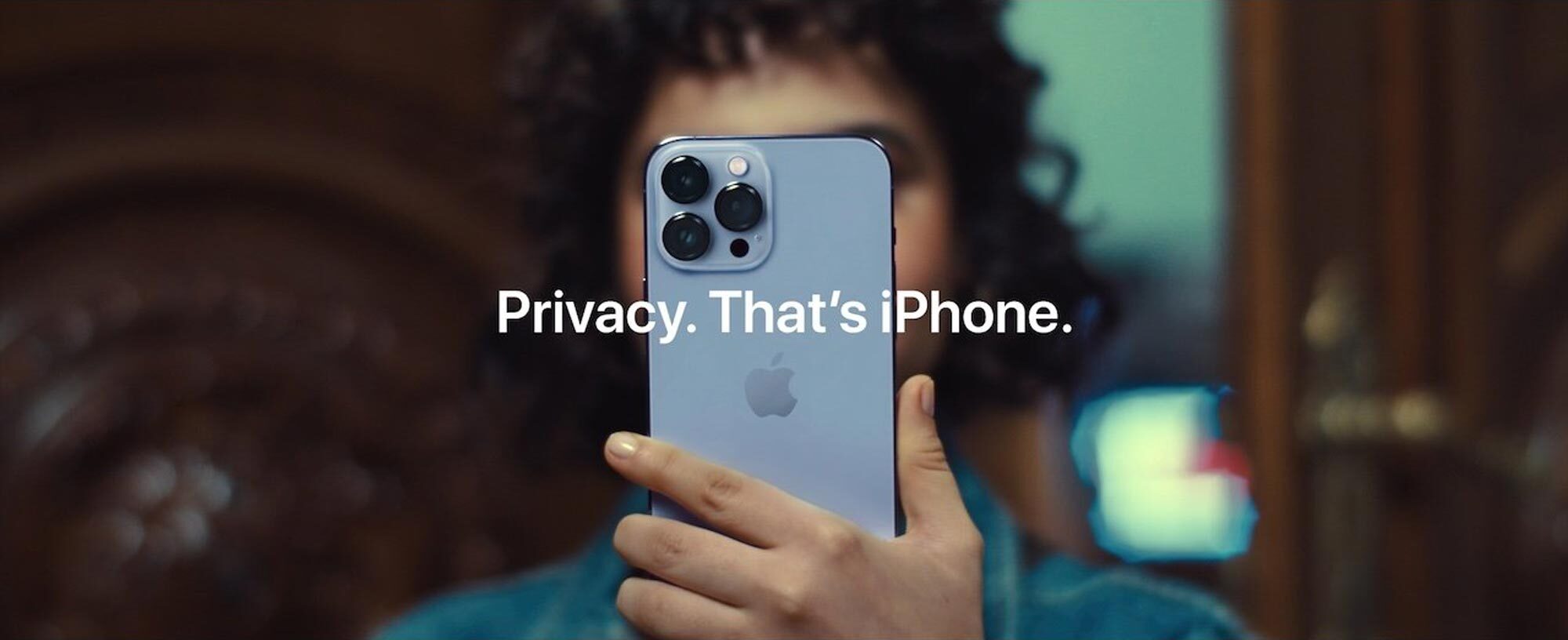
On 14 March 2019, Apple launched a global advertising campaign built around a single proposition: "Privacy. That's iPhone."1 Developed with TBWA\Media Arts Lab, the campaign was the first time Apple placed data privacy at the centre of its consumer marketing rather than treating it as a peripheral product attribute.2 The launch film, titled "Private Side," depicted a sequence of everyday gestures such as rolling up windows, breaking off conversations when others come near, and locking doors, and concluded with the line, "If privacy matters in your life, it should matter to the phone your life is on."1, 3
From principle to platform claim
The 2019 campaign represented the culmination of a strategic positioning that Apple's leadership had been building publicly for several years. In September 2014, Tim Cook had published an open letter on apple.com setting out the company's principles on customer data, writing that Apple sold products rather than user profiles and did not build a record of email content or web browsing habits to sell to advertisers.4 The letter was followed by a series of legislative and public-facing moments that consistently framed Apple's identity around the protection of user data, including the company's 2016 dispute with the FBI over the San Bernardino iPhone and Cook's public commentary on data brokerage in an October 2018 keynote to data protection regulators in Brussels.5, 6
Two months before the campaign launch, Apple installed a building-sized billboard on the side of a hotel overlooking the Consumer Electronics Show in Las Vegas.1 The board read, "What happens on your iPhone, stays on your iPhone."1 The placement, directly visible to the conference attendees and exhibitors of the industry where data is the principal commodity, served as a pre-launch statement of intent and was widely reproduced in the technology press.
Production and creative team
"Private Side" was directed by Alexander Payne, the filmmaker behind "Sideways" and "The Descendants," and produced by RadicalMedia.2, 7 The spot ran in heavy rotation across television, cinema, and digital channels in the United States, Europe, and major Asian markets through 2019 and 2020. Subsequent films in the same platform extended the proposition into more specific product capabilities.8 "Over Sharing" in 2020 showed people broadcasting the kind of personal details a phone holds, from card numbers to search history. "Tracked," released in 2021 to coincide with the introduction of App Tracking Transparency, dramatised the silent following of a coffee buyer through his day by a parade of advertising and data-broker characters.9 "Flock," produced in 2024, applied a similar framework to Safari.10
Repositioning the iPhone
The 2019 campaign achieved something more structural than a single advertising platform. By writing privacy into the product name itself, Apple repositioned the device in a manner that competing technology companies could not easily replicate. The major competitors in mobile technology, search, and advertising operated business models that depended on the collection and monetisation of user data. Apple's primary revenue came from hardware and services purchased directly by the customer, allowing the company to make a claim about its incentives that other platforms could not credibly counter.11
The strategic effect was to convert a long-running set of engineering and policy choices, including on-device processing, end-to-end encryption, and limits on third-party tracking, into a single legible brand promise. Privacy became less a feature than a category attribute that Apple owned in the public mind, and one that subsequent product introductions, from Apple Intelligence to Private Cloud Compute, would be expected to honour.
Beyond marketing
From 2020 onward, the privacy positioning was reinforced through technical changes with industry-wide consequences. App Tracking Transparency required apps to obtain explicit user permission before tracking activity across other apps and websites and is widely credited with reshaping the mobile advertising market.11, 12, 13 Privacy nutrition labels in the App Store, Mail Privacy Protection in iOS 15, and Advanced Data Protection for iCloud all extended the position into product mechanics rather than communication alone.13 The 2019 campaign remains the moment at which Apple formalised privacy as the central claim of its consumer technology brand, and the work continues to define how the company is understood by competitors, regulators, and customers.
Source: Dose of Good Ads Youtube
Written with AI assistance, edited by a human. Find out more about our Use of AI.
1. AppleInsider, Mike Wuerthele, "'Privacy. That's iPhone' ad campaign launches, highlights Apple's stance on user protection", 14 March 2019, off whitelist and used for corroboration only, for the debut of the "Privacy. That's iPhone" campaign on 14 March 2019, for the everyday precautions the film shows, "rolling up windows, stopping conversations when people are near, and locking doors", for the film's closing line "if privacy matters in your life, it should matter to the phone your life is on", and for the separate billboard Apple hung on 4 January 2019, just prior to the Consumer Electronics Show, on the side of a hotel overlooking the conference center and reading "what happens on your iPhone, stays on your iPhone". https://appleinsider.com/articles/19/03/14/privacy-thats-iphone-ad-campaign-launches-highlights-apples-stance-on-user-protection
2. Adformatie, Juul Schepens, "Apple maakt ronkende commercial over privacy, maar kijkt het merk wel in de spiegel?", 19 March 2019, off whitelist and used for corroboration only, for the launch film having been made by TBWA\Media Arts Lab and directed by Alexander Payne, in the original Dutch "Het spotje, gemaakt door TBWA\Media Arts Lab en geregisseerd door Alexander Payne, laat allerlei situaties zien waarin mensen belang hechten aan hun privacy." https://www.adformatie.nl/campagnes/apple-maakt-tegenstrijdige-commercial-over-privacy
3. Ad Age, Ann-Christine Diaz, "Everyday intrusions highlight Apple's respect for privacy in new iPhone ad", 18 March 2019, off whitelist and used for corroboration only, for the launch film "Private Side", named in the article's address, and for its premise of everyday intrusions on privacy. The article text is behind a paywall; only the headline, byline, date and address could be verified on 25 September 2026. https://adage.com/creativity/work/apple-privacy-iphone-private-side/1417306
4. AppleInsider, Mikey Campbell, "Tim Cook touts new Apple privacy policies in open letter to customers", 17 September 2014, off whitelist and used for corroboration only, for the open letter Tim Cook published on Apple's privacy pages in September 2014 and for its wording "Our business model is very straightforward: We sell great products. We don't build a profile based on your email content or web browsing habits to sell to advertisers." https://appleinsider.com/articles/14/09/17/tim-cook-touts-new-apple-privacy-policies-in-open-letter-to-customers
5. Apple, Tim Cook, "A Message to Our Customers", 16 February 2016, for the 2016 dispute with the FBI over the iPhone connected to the San Bernardino attack, in which Cook wrote that "the FBI wants us to make a new version of the iPhone operating system, circumventing several important security features". https://www.apple.com/customer-letter/
6. TechCrunch, Natasha Lomas, "Apple's Tim Cook makes blistering attack on the 'data industrial complex'", 24 October 2018, for Cook's public criticism of the trade in personal data, delivered as a keynote to the 40th International Conference of Data Protection and Privacy Commissioners in Brussels, held in the European Parliament's Hemicycle, including the words "These scraps of data, each one harmless enough on its own, are carefully assembled, synthesized, traded and sold." https://techcrunch.com/2018/10/24/apples-tim-cook-makes-blistering-attack-on-the-data-industrial-complex/
7. RadicalMedia, "Alexander Payne : Commercial Reel (US)", accessed 25 September 2026, off whitelist and used for corroboration only, for "Apple Private Side" in the commercial reel RadicalMedia publishes for Alexander Payne, which supports Payne's direction of the film and its production through RadicalMedia. https://www.radicalmedia.com/us/directors/alexander-payne?reel=commercial
8. Ad Age, Ann-Christine Diaz, "Apple's new iPhone privacy ad shows your data on the auction block", 19 May 2022, off whitelist and used for corroboration only, for a later film in the iPhone privacy platform, built around personal data put up for auction. The article text is behind a paywall; only the headline, byline and date could be verified on 25 September 2026. https://adage.com/article/marketing-news-strategy/apple-iphone-privacy-ad-shows-personal-data-auction-block/2417771/
9. Campaign US, "Apple 'Tracked' by TBWA\Media Arts Lab", 21 May 2021, for the 2021 film showcasing the App Tracking Transparency feature on iOS, which follows a man through his daily routine, from the coffee shop to taking a taxi, as more and more businesses track him until he is surrounded by a large group of people all vying for his data, and for the credits TBWA\Media Arts Lab (agency) and MJZ (production). https://www.campaignlive.com/article/apple-tracked-tbwa-media-arts-lab/1716844
10. MacDailyNews, "Apple champions user privacy in new Safari ad campaign", 16 July 2024, off whitelist and used for corroboration only, for "Flock", the 2024 film on the privacy protections built into Safari, including Intelligent Tracking Prevention, which carries the tagline "Privacy. That's iPhone." https://macdailynews.com/2024/07/16/apple-champions-user-privacy-in-new-safari-ad-campaign/
11. Wikipedia, "Apple Inc.", accessed 25 September 2026, for Apple's revenue coming from iPhone, Mac, iPad, wearables and services, with services at 109 billion dollars of a 416 billion dollar total in fiscal 2025, and for App Tracking Transparency, introduced with an update to iOS 14, requiring all developers of iPhone, iPad and iPod Touch applications "to directly ask iPhone users permission to track them". https://en.wikipedia.org/wiki/Apple_Inc.
12. Wikipedia, "Privacy", accessed 25 September 2026, for the statement that "Apple has received some reactions for features that prohibit advertisers from tracking a user's data without their consent." https://en.wikipedia.org/wiki/Privacy
13. Apple, "Privacy - Features - Apple", accessed 25 September 2026, for iOS 14.5 and later requiring developers to get permission before tracking activity across other companies' apps and websites, for the self-reported Privacy Nutrition Labels on App Store product pages, for Mail Privacy Protection hiding the user's IP address and whether an email has been opened, and for Advanced Data Protection applying end-to-end encryption to iCloud data. The page does not name the iOS release that introduced Mail Privacy Protection. https://www.apple.com/privacy/features/