
A computer that greeted you
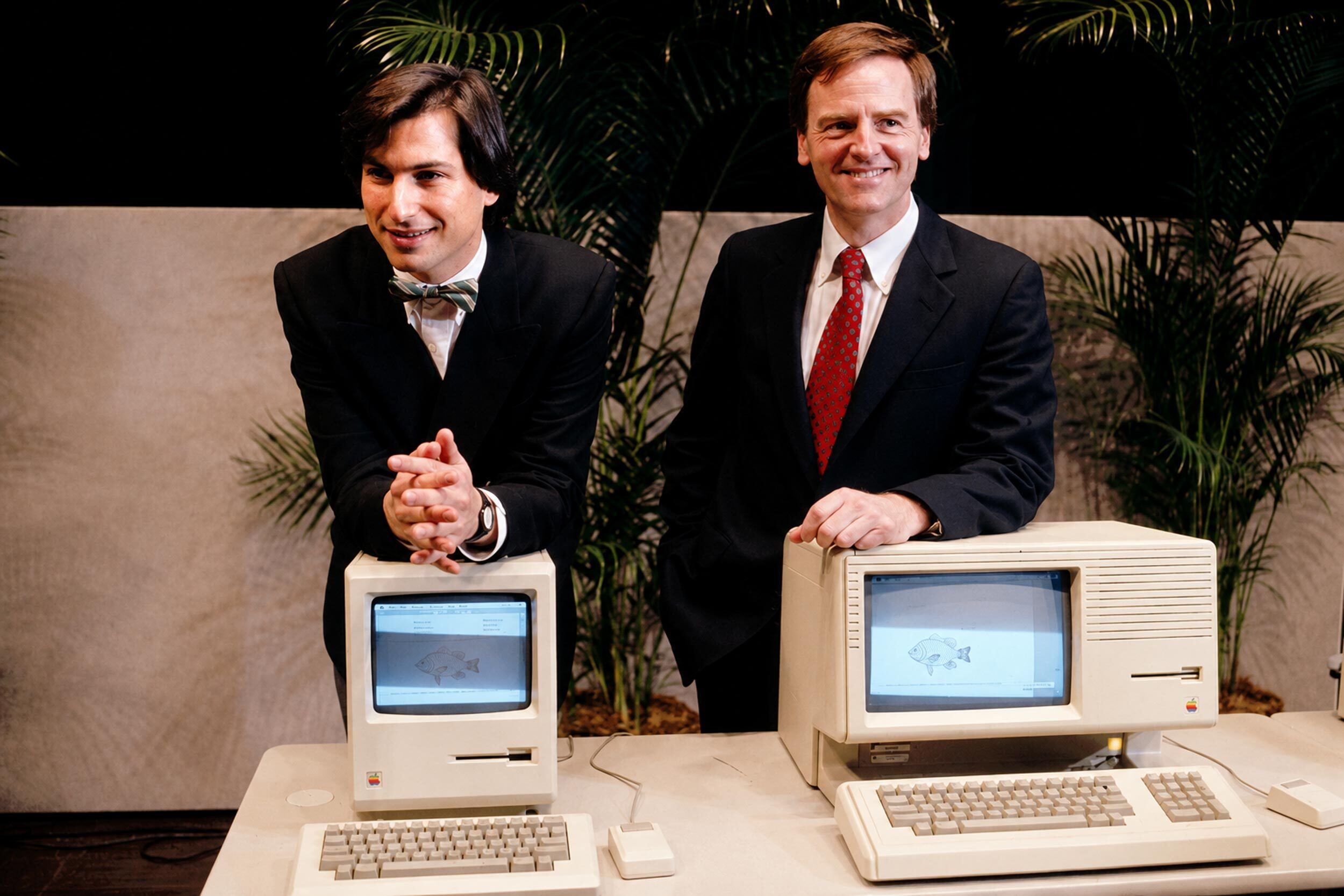
On 24 January 1984, Steve Jobs walked onto the stage at the Flint Center in Cupertino, pulled a small beige machine from a bag, and let it introduce itself. The Macintosh displayed a smiling screen, ran a demo, and, through a speech synthesiser, spoke its own first words. Two days earlier, during Super Bowl XVIII, Apple had aired the "1984" commercial that announced the launch to millions who had never seen a computer. The product and the advertisement together formed one of the most studied launches in branding history.
The Macintosh sold for 2,495 dollars and offered something no mainstream computer had made approachable before: a graphical user interface operated with a mouse. Instead of typing commands, a person pointed at pictures. Folders looked like folders and a trash can looked like a trash can. The machine did not ask the user to learn its language. It learned theirs. That single decision defined the positioning that Apple has restated in every product since.
Positioning against the machine
In 1984 the computer industry meant IBM, and IBM meant business, beige rooms, and command lines. Apple chose to stand for the opposite. The Macintosh was framed as the computer "for the rest of us," a phrase that turned a product limitation, its consumer focus, into a rallying cry. Where competitors sold power and specifications, Apple sold access. The brand's argument was that technology should serve ordinary people, not intimidate them.
The "1984" commercial dramatised this stance. It cast the dominant computer maker as an oppressive authority and Apple as the runner who shatters conformity. The film ran nationally only once, yet it fixed Apple's identity as the challenger, the humane alternative, the brand that sided with the individual against the system. That role has proved durable. Decades later the "Think different" campaign and the company's design language still trade on the same underdog conviction.
Design as the message
The Macintosh also introduced the idea that how a product looks and feels is the brand. The all-in-one case, the friendly typography, the rounded corners on screen, and the care taken over the boxes and manuals all carried a consistent voice. Jobs insisted that even parts no customer would see should be beautiful. This was not decoration. It was the belief that craft communicates values, and that a well-made object tells the buyer the company respects them.
That principle became the foundation of Apple's entire identity. The commercial spirit of the "1984" launch, explored more fully in our verse on the Apple "1984" advertisement, gave the brand its attitude. The Macintosh itself gave the brand its aesthetic. Simplicity, restraint, and a refusal to expose complexity to the user are the through line from the first Mac to the iPhone and beyond.
A commercial struggle, a brand triumph
As a business, the first Macintosh was not an immediate success. It was slower and more limited than early buyers hoped, sales cooled after the initial surge, and the internal conflict it caused contributed to Jobs leaving Apple the following year. For a branding journal the honest record matters. The Macintosh did not win the market in 1984. What it won was something harder to measure and longer lasting: a reputation.
The machine established Apple as the company that made computing personal and humane, and that reputation carried the brand through the difficult years that followed. When Jobs returned in the late 1990s, he did not invent a new identity. He recovered the one the Macintosh had created and sharpened it. The creed was already written. The task was to live up to it again.
The template for every launch since
Seen from today, the 1984 launch reads like a blueprint. A single flagship product, a clear enemy, a human-centred promise, and a piece of communication bold enough to become culture. Apple has repeated that pattern with the iMac, the iPod, the iPhone, and the Watch. The Macintosh was the first time the company aligned product, design, and story into one argument about what technology should be. Everything the brand has done since has been a variation on that first sentence.
Source: Techgarage Youtube
Written with AI assistance, edited by a human. Find out more about our Use of AI.