
One device, three promises
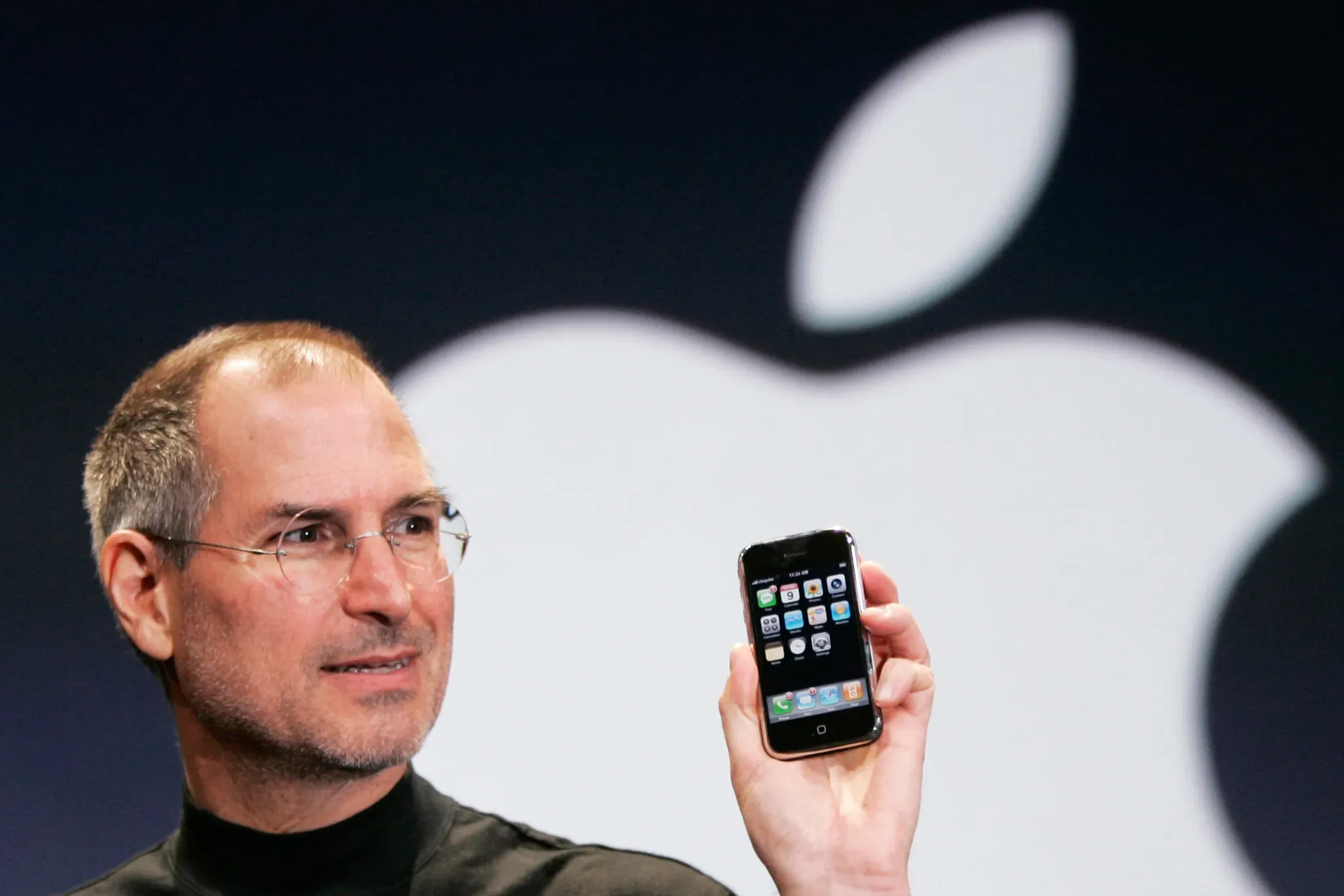
On 9 January 2007, at the Macworld convention in San Francisco, Steve Jobs told the audience that Apple would introduce three products: a widescreen iPod with touch controls, a revolutionary mobile phone, and a breakthrough internet communicator. He repeated the list until the room understood the punchline. These were not three devices but one, and its name was iPhone. The framing was pure Apple. Rather than describe a feature set, the company defined a category by folding three familiar ideas into a single object that felt inevitable in hindsight.
The product went on sale in the United States on 29 June 2007, priced at 499 dollars for the 4GB model and 599 dollars for the 8GB model, sold on a two-year carrier contract. The hardware mattered, but the positioning mattered more. Apple was not entering the phone market as one competitor among many. It was arguing that the existing category had been built wrong, and that a phone should be a small computer with software at its center rather than a fixed set of buttons.
From computer company to platform company
The iPhone arrived at a moment when Apple was still, in the public mind, the company that made the Mac and the iPod. The launch began a slow but decisive shift in what the brand represented. Later that year the corporate name changed from Apple Computer to Apple, a small edit that signalled a large idea. The company no longer defined itself by the desktop. It defined itself by the experience of computing wherever a person happened to be.
That shift reframed every part of the brand. The multi-touch screen removed the physical keyboard and let software redraw the interface for each task, which meant the product could change without changing shape. When the App Store followed in 2008, the iPhone stopped being a finished object and became a platform that other people extended. Apple had sold hardware for three decades. Now it was selling a place where software lived, and it took a share of everything that passed through.
Source: Mac History Youtube
A positioning built on restraint
What made the iPhone a branding case study, rather than only an engineering one, was the discipline of the presentation. Apple did not lead with specifications. It led with gestures: pinch to zoom, a list that bounced when it reached the end, a photograph that turned when the device turned. The message was that the technology should disappear behind the experience. This was the same idea the company had carried since the first Macintosh, now expressed in a pocket.
The single home button reinforced the point. In a market crowded with keys, dials, and styluses, Apple offered one physical control and a slab of glass. The restraint became the identity. Competitors spent the following years removing buttons of their own, which is the clearest evidence that the iPhone had reset the category's visual grammar. When rivals imitate a form, they confirm who set the terms.
The halo that followed
The iPhone also changed how the wider brand was valued. It pulled new customers toward the Mac, gave the retail stores a reason to be crowded, and turned the annual keynote into a cultural event watched far beyond the technology press. The device became the front door to Apple, and the company organised the rest of its portfolio around it. The iPad, the Apple Watch, and the services business all trace their logic back to the platform the iPhone established.
Financially, the effect was profound. Within a few years the iPhone accounted for the majority of Apple's revenue, and the company that had once fought for survival became one of the most valuable in the world. For a branding journal the lesson is not the sales figure but the reposition behind it. Apple had used a single product launch to move its meaning, from a maker of admired computers to the operator of the most widely used personal platform on the planet.
A launch that defined a decade
Seen from today, the 2007 keynote reads less like a product announcement and more like a statement of identity. Apple told the world what a phone should be, and in doing so told the world what Apple had become. The iPhone did not simply add a category to the portfolio. It rewrote the brand's centre of gravity, and every product and campaign since has been built on the ground it claimed.
Written with AI assistance, edited by a human. Find out more about our Use of AI.