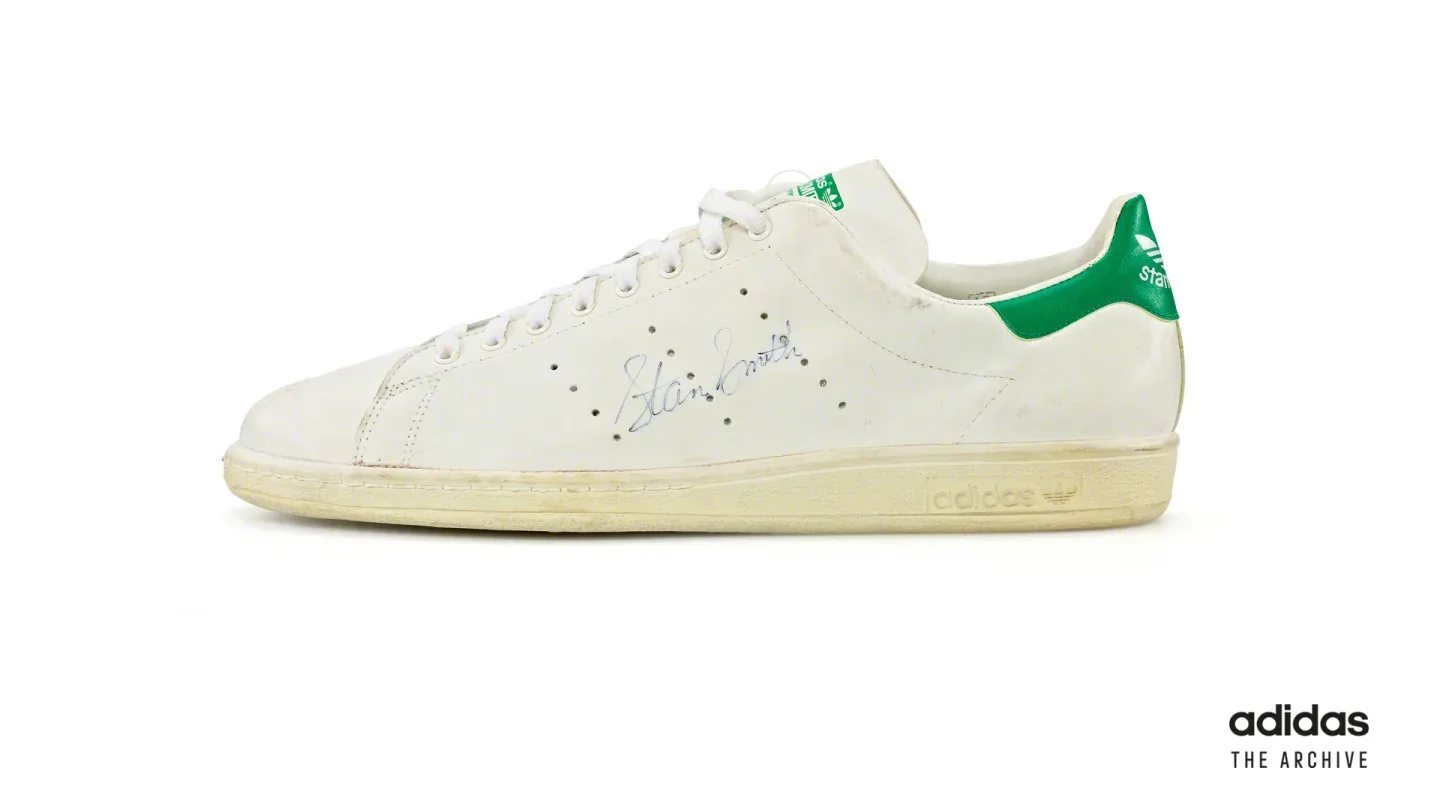
A shoe named after a champion
The adidas Stan Smith is one of the best selling sneakers of all time, and its modern history is a case study in how to relaunch a classic.1, 2 The shoe began as a tennis model in the mid-1960s and was later named after the American tennis player Stan Smith, whose face and signature appeared on the tongue.2, 3 The naming turned a piece of sports equipment into a personal brand, and the minimalist white design aged into a timeless silhouette. By the 2010s, however, the shoe had become so ubiquitous that it risked losing its appeal.
adidas responded with an unusual decision: rather than keep selling a familiar product, it deliberately took the Stan Smith off the market. Around 2011 and 2012 the company wound down availability, removing the shoe from shelves and allowing demand to build in its absence.1, 3 It was a calculated pause before a planned return.
Engineering scarcity
The withdrawal was a scarcity strategy.1 By making a widely available shoe suddenly hard to find, adidas rebuilt desire for a product that had become too common to feel special. When something familiar disappears, its perceived value can rise, and the company used that psychology deliberately. The absence created anticipation that a continuous supply never could.
The relaunch in early 2014 was staged rather than simply switched back on.1, 4 adidas reintroduced the Stan Smith gradually, seeding it through select partners and figures before a broader release, so that its return felt like an event.3, 5 The controlled reintroduction turned an ordinary restock into a cultural moment and reframed a decades-old shoe as newly desirable.
The reintroduction leaned on fashion credibility rather than sport. adidas placed the shoe with designers, boutiques and influential figures before the mass release, so that it re-entered the market already endorsed by tastemakers.4, 5 That sequencing mattered: the Stan Smith returned not as a restocked classic but as a shoe the fashion world had chosen to embrace again.


The results
The strategy worked on a large scale. Following the relaunch, adidas sold millions of pairs, with reported sales of around 8 million pairs in 2015 and even higher numbers in the years after.5 A shoe that had been withdrawn for being too ordinary returned as one of the most sought-after sneakers in the market, worn well beyond the tennis context in which it originated.
The revival also repositioned the Stan Smith as a fashion item rather than a sports shoe. Its clean, logo-light design suited a market that increasingly valued minimalism, and the relaunch aligned the product with that taste. The shoe moved from the sports aisle to the fashion conversation, extending its audience and its price potential.
Personalisation extended the appeal further. adidas released the Stan Smith in countless colourways and collaborations while keeping the core white silhouette constant, allowing endless variation without diluting the recognisable base.1, 3 That balance of consistency and novelty is difficult to strike, and it let the shoe stay fresh across years of releases rather than exhausting its welcome a second time.
The lesson in managed demand
The Stan Smith relaunch is frequently cited as a lesson for any brand sitting on a popular product: sometimes restricting supply makes a product more desirable than flooding the market. The value of a heritage item can be actively managed, and controlled scarcity, used carefully, can renew demand that continuous availability would erode. The approach requires confidence and patience, since a brand must forgo near-term sales in the hope of a stronger return.
The episode also shows how adidas treats its archive as an asset to be curated rather than simply sold. The Stan Smith already carried heritage and a recognisable design; the company added value not by changing the product but by changing how and when it was available. That is a different kind of brand work, focused on timing and perception rather than on the object itself.
The approach carries risk, since withdrawing a profitable product forfeits guaranteed sales and depends on demand returning. adidas judged that the long-term gain in desirability outweighed the short-term loss, and the result vindicated that bet. Not every brand can afford such patience, which is part of why the Stan Smith case is studied rather than simply copied.
The Stan Smith remains a fixture of the adidas range and a reference point in discussions of sneaker marketing. Its relaunch demonstrated that a classic can be renewed without redesigning it, provided the brand manages demand with discipline. By pulling back before pushing forward, adidas turned an over-familiar shoe into one of its most valuable modern successes.



Source: The Good Will Out Youtube
Written with AI assistance, edited by a human. Find out more about our Use of AI.
1. Bloomberg, "Adidas Pulls the Pseudo-Scarcity Trick With Stan Smith Sneakers", 23 January 2014, for the Stan Smith being "one of its best-selling shoes of all time", for adidas having "yanked the model from shelves in 2012", a move that "primed the market with a sense of scarcity", which is the scarcity reading the verse adopts, for the model having been re-released by the date of the piece, which places the relaunch in early 2014, and for the returning shoe coming in three different colour accents with a "Stan Yourself" option that puts the buyer's own illustration on the tongue where Stan Smith's image had traditionally appeared. Off whitelist and used for corroboration only. https://www.bloomberg.com/news/articles/2014-01-23/adidas-pulls-the-pseudo-scarcity-trick-with-stan-smith-sneakers
2. Wikipedia, "Adidas Stan Smith", consulted 25 September 2026, for the model being "the biggest-selling tennis shoe ever", for its origin in 1965 as a tennis shoe named the adidas Robert Haillet after the French professional, for the word "Haillet" having been removed from the tongue in 1978, when the shoe was endorsed by Stan Smith and officially renamed after him, and for the tongue carrying "Stan Smith's sketched portrait and his signature". https://en.wikipedia.org/wiki/Adidas_Stan_Smith
3. adidas, "Half a Century of Classic Style: The History of the adidas Stan Smith", 4 April 2023, published in the adidas Group magazine and carried in the same wording, undated, on the adidas newsroom, for the shoe having been "originally developed with the French player Robert Haillet in the mid-60s", for the first shoes featuring Stan Smith's name having been released in 1973 with the names of both players and Stan's image on the tongue, for adidas having decided in 2011 "to remove the iconic shoe from the market", for the relaunch of 2013, the shoe's 40th anniversary, with "100 limited editions 'endorsed by' celebrities to tell their Stan Smith story", and for the collaborations the shoe has carried since, among them Raf Simons, Pharrell Williams and Stella McCartney. https://www.adidas-group.com/en/magazine/innovation/half-a-century-of-classic-style-the-history-of-the-adidas-stan-smith https://news.adidas.com/timeline/half-a-century-of-classic-style--the-history-of-the-adidas-stan-smith/s/f6061bfc-b9e6-43a0-b7d7-caac2e184126
4. The Branding Journal, Marion Andrivet, "How Adidas Brought Back Its Iconic Stan Smith Shoe to the Global Market", 27 May 2014, for the premium and limited editions adidas offered from September 2013 through "a selection of exclusive retailers across the globe", each adapting the "Endorsed by Stan Smith" graphic with the face of the partner, for the online build up from December 2013 with a documentary style interview of Stan Smith and a video featuring fans of the shoe such as tennis player Andy Murray, designers Lucio Castro and Louis-Marie Castelbajac, and singers Sky Ferreira and Momo Wu, and for the relaunch arriving in "an initial wave in January 2014 and again in July 2014". Off whitelist and used for corroboration only. https://www.thebrandingjournal.com/2014/05/adidas-brought-back-iconic-stan-smith-shoe-global-market/
5. The Business of Fashion, Bloomberg, "Can Adidas Repeat its Stan Smith Success Story?", 3 May 2017, added during the retrofit for the staged reintroduction and the sales figure: Stan Smiths "almost impossible to find" by mid-2013, new versions shipped late that year to dozens of celebrities, among them A$AP Rocky, Alexander Wang and Ellen DeGeneres, reports of Phoebe Philo, creative director of Céline, wearing the shoe at her shows, ten pairs hand-painted by Pharrell Williams and sold at the Colette boutique in Paris, shipments from early 2014 "to shops catering to hardcore sneaker fans, followed by specialty footwear retailers and, months later, department stores and big-box outlets", the aim set out by Arthur Hoeld, who headed adidas brand strategy and business development, "to position it anew with fashion designers and trendsetters", and sales that "jumped dramatically, to 8 million pairs, in 2015", taking the total across four decades past 50 million. Off whitelist and used for corroboration only. https://www.businessoffashion.com/news/news-analysis/adidas-hits-marketing-gold-with-stan-smith-shoes/