
The end of a multibrand bet
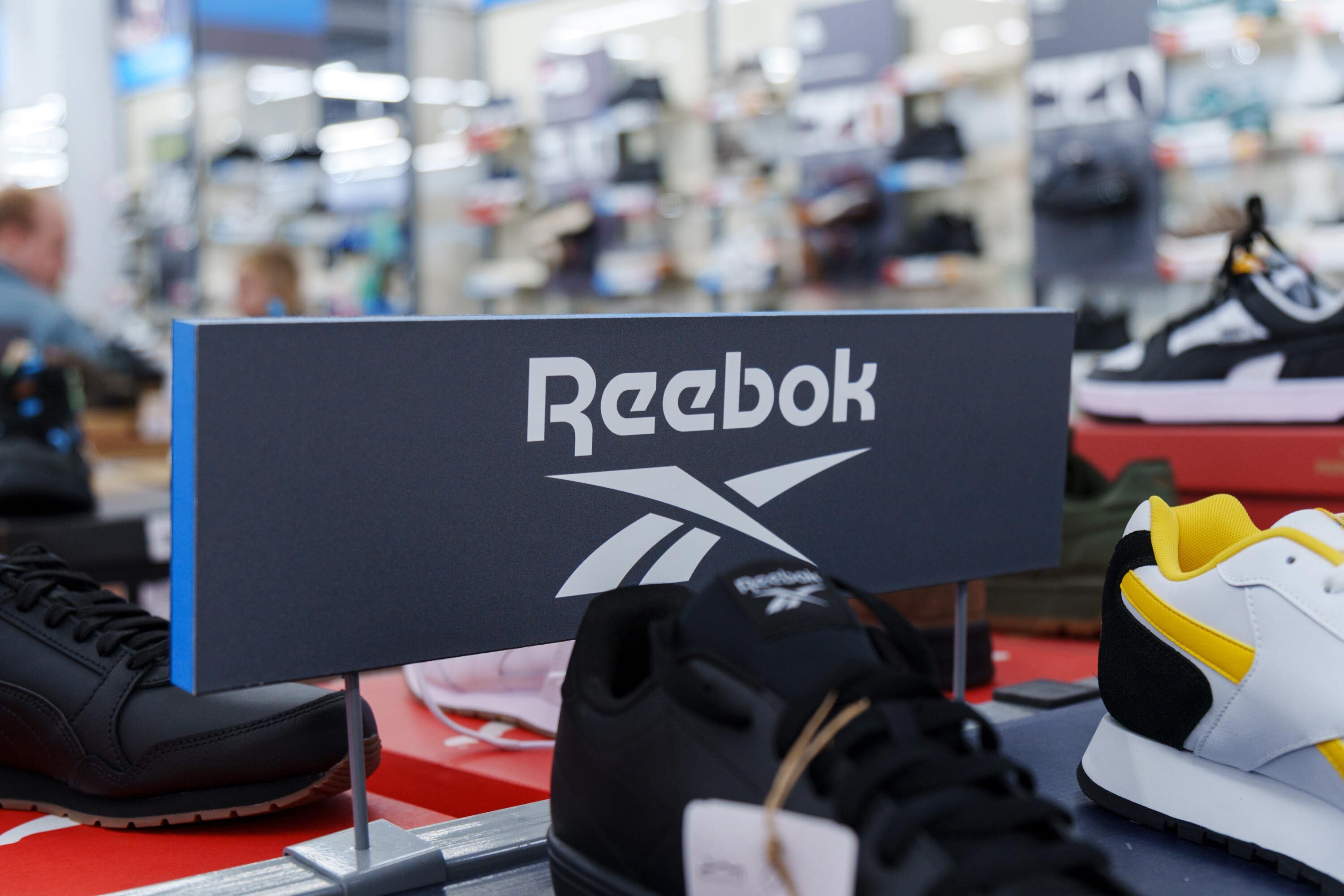
In August 2021 adidas agreed to sell Reebok to the Authentic Brands Group, closing a chapter that had begun with high ambition 15 years earlier.1 The German company had bought Reebok in 2006 to build a two-brand portfolio capable of challenging Nike, particularly in the United States.2 The sale, for a price well below what adidas originally paid, marks a clear verdict on that strategy and a decision to concentrate on the core adidas brand.2
The figures tell the story of the reversal. adidas acquired Reebok for roughly 3.1 billion euros in 2006 and agreed to sell it for a total consideration of up to 2.1 billion euros in 2021.1, 3, 4 Beyond the headline loss, the outcome reflects years in which Reebok never delivered the competitive scale adidas had envisioned, even after significant investment and repositioning.
Why adidas bought Reebok
The logic in 2006 was strategic geography. Nike dominated the American market, and adidas, strong in Europe and in football, wanted a larger presence in the United States and in categories where Reebok was established.2, 3 Owning two brands promised the combined shelf space, licensing reach and consumer coverage to close the gap with the market leader.3 The acquisition also brought other assets, including Rockport and hockey and golf brands, which adidas later divested.1, 3, 4
On paper the portfolio approach was sound. Two brands could address different consumers and price points without cannibalising each other, and the enlarged group would negotiate from greater strength. The difficulty lay in execution: running two athletic brands well, each with its own identity and marketing, proved harder and more expensive than the strategy assumed.
The American ambition was central. adidas judged that it could not close the gap with Nike on its rival's home ground without a larger domestic footprint, and Reebok, with its United States heritage and retail relationships, promised exactly that.2, 3, 5 The premium adidas paid reflected how strategically important that market access seemed at the time.3
Why the strategy struggled
Reebok's position was never fully resolved under adidas ownership. The brand shifted between sport, fitness and lifestyle, associating at various points with categories such as CrossFit, but it did not establish a durable identity strong enough to grow at the pace required.2, 6 Meanwhile the two brands competed for the same internal resources and attention, and the effort spent supporting Reebok arguably diluted focus on adidas itself.
The wider industry had also changed. The value of a distinctive, well-managed single brand rose as consumers gravitated toward clear identities and archive credibility, areas where adidas was strongest under its own name. In that environment, a second brand that lacked a sharp position became a burden rather than a lever, and the case for concentration grew.
Investors increasingly shared that view. As Reebok's contribution to group performance lagged, pressure built to simplify the portfolio and release the capital tied up in a brand that was not delivering.2, 4 A sale that once would have looked like an admission of failure came to be seen as a rational reallocation of resources toward the stronger asset.
Refocusing on one identity
Selling Reebok let adidas simplify. The company framed the decision as a move to concentrate fully on the adidas brand and its own growth strategy, directing capital and management attention to a single identity rather than splitting them.1 The sale to Authentic Brands Group, a specialist in licensing and managing brands, gave Reebok an owner suited to running it as a standalone label.7
The buyer profile mattered too. Authentic Brands Group specialises in licensing and operating brands rather than manufacturing, a model well suited to extracting value from Reebok's name across categories.7 For adidas, placing Reebok with such an owner offered a cleaner exit than a sale to a direct competitor would have allowed.
The episode illustrates a broader lesson in brand architecture. Acquiring a second brand to buy market share can look compelling, but two brands are far harder to steward than one, and the return depends on giving each a genuinely distinct and well-supported position. When that is not achieved, the portfolio adds cost and complexity without the intended competitive gain.
For adidas, the Reebok years functioned as an expensive strategic test. The company entered a multibrand model to attack Nike and exited it having concluded that its strength lay in the focus, heritage and cultural equity of its own mark. The 2021 sale, though a financial loss on the original purchase, aligned the business with that conclusion and returned adidas to competing as a single, clearly defined brand.
Written with AI assistance, edited by a human. Find out more about our Use of AI.
1. adidas, "adidas to sell Reebok to Authentic Brands Group", press release, Herzogenaurach, 12 August 2021, for the agreement announced that day to sell Reebok to Authentic Brands Group, for the total consideration of up to €2.1 billion, the majority to be paid in cash at closing and the remainder deferred and contingent, with closing expected in the first quarter of 2022, for adidas having bought Reebok in 2006 together with the Rockport, CCM Hockey and Greg Norman brands, which it later divested for a total consideration of €0.4 billion, and for the company's decision, after announcing a formal divestment process in February 2021, to focus its efforts on further strengthening the leading position of the adidas brand and on executing its "Own the Game" strategy. https://www.adidas-group.com/en/media/press-releases/adidas-to-sell-reebok-to-authentic-brands-group
2. CNN Business, Nathaniel Meyersohn, "Adidas is selling Reebok for less than it originally paid", 12 August 2021, for adidas having bought Reebok for $3.8 billion in 2006 to expand its reach in the United States and take on Nike in its home market, and selling it for up to $2.5 billion, for adidas's stated aim of focusing on strengthening its own brand, for the view of Neil Saunders, managing director of GlobalData Retail, that "part of the issue was a lack of clarity around what Adidas wanted Reebok to be", leaving it the go-to brand neither for sporting professionals nor for athleisure, and for Reebok's share of adidas sales falling from about 18 percent in 2010 to roughly 7 percent at the end of 2020; off whitelist and used for corroboration only. https://www.cnn.com/2021/08/12/business/adidas-reebok-authentic-brands-group
3. adidas-Salomon AG and Reebok International Ltd., "adidas-Salomon to combine with Reebok and create €9 billion footprint in global athletic footwear, apparel and hardware markets", joint press release, Herzogenaurach and Canton, Massachusetts, 3 August 2005, as filed with the US Securities and Exchange Commission, for the purchase price of $59.00 per Reebok share in cash, a transaction valued at €3.1 billion ($3.8 billion) and a premium of 34.2 percent over Reebok's closing share price on 2 August 2005, for North America representing about half of the global sporting goods market and adidas's North American sales set to more than double, for the pairing of adidas, a leader in sports performance with a European heritage, with Reebok, an American leader in sports and lifestyle products, in a more complete portfolio of brands with licences including the NFL, NBA, NHL, MLB and MLS, and for the combined portfolio including Rockport, the Greg Norman Collection and the hockey brands CCM, Jofa and Koho. https://www.sec.gov/Archives/edgar/data/770949/000110465905036104/a05-14229_1ex99d2.htm
4. CNBC, Melissa Repko, "Adidas strikes deal to sell off struggling Reebok to Authentic Brands Group", 12 August 2021, for the sale price of up to 2.1 billion euros, or roughly $2.5 billion, for adidas having previously divested Rockport, CCM Hockey and Greg Norman, and for Reebok having limped along as adidas's own core business grew, prompting pressure from investors to dump the lagging brand; off whitelist and used for corroboration only. https://www.cnbc.com/2021/08/12/adidas-strikes-deal-to-sell-reebok-to-authentic-brands-group.html
5. Wikipedia, "Adidas", accessed 25 September 2026, for the Reebok acquisition bringing adidas's business sales closer to those of Nike in North America. https://en.wikipedia.org/wiki/Adidas
6. Wikipedia, "Reebok", accessed 25 September 2026, for Reebok repositioning itself as a fitness oriented brand as it lost contracts to make sportswear for professional and college teams, and for the ten year partnership with CrossFit that Reebok announced in 2010 under adidas ownership, becoming the official footwear and apparel provider of the CrossFit Games. https://en.wikipedia.org/wiki/Reebok
7. Authentic Brands Group, "ABG to Acquire Reebok", press release, 12 August 2021, for the buyer's stated plan to apply its core playbook of connecting strong brands with best-in-class licensees and a network of partners that seek to optimize value in the marketplace, with Reebok's world headquarters remaining in Boston as the brand moved to ABG's platform. https://corporate.authentic.com/press-releases/abg-to-acquire-reebok