
A boot with a name of its own
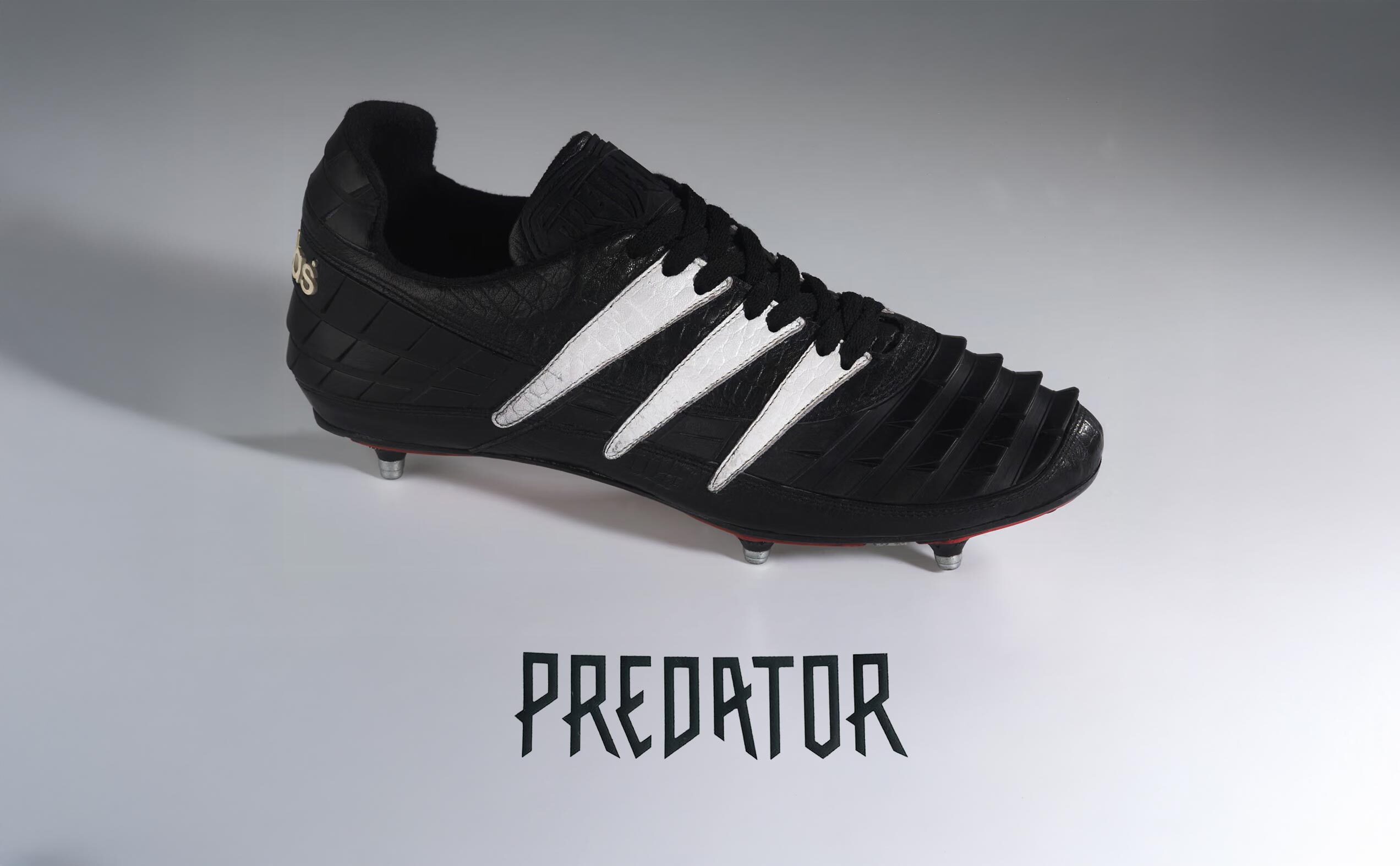
In 1994 adidas introduced the Predator, a football boot that would grow into one of the most recognised product brands in the sport.1 What set it apart was not only its design but the idea that a boot could carry a distinct name, identity and story rather than being a generic piece of equipment. The Predator turned a category of product into a branded franchise, and it did so at a moment when adidas needed a revival.2
The concept came from outside the company. The Australian former footballer Craig Johnston developed the prototype, built around rubber patches on the upper designed to increase friction between boot and ball, improving control, swerve and power.1, 3, 4 adidas launched the boot in Las Vegas in 1994, ahead of the World Cup in the United States, and it quickly became a commercial phenomenon.2, 3
Function as the story
The Predator's branding worked because it was rooted in a genuine functional claim. The rubber elements were a visible, tangible feature that players could see and that could be explained simply: more grip on the ball meant more control and more swerve. That concrete benefit gave the boot a story to tell, and it distinguished the Predator from rivals whose boots were harder to differentiate.
The design was also distinctive enough to be instantly recognisable. The ribbed upper became a visual signature, so that the Predator could be identified at a glance, much as the three stripes identified the brand. A product that looks unmistakable and makes a clear performance promise is far easier to build into a lasting brand than one that competes on specification alone.
Building a franchise through players
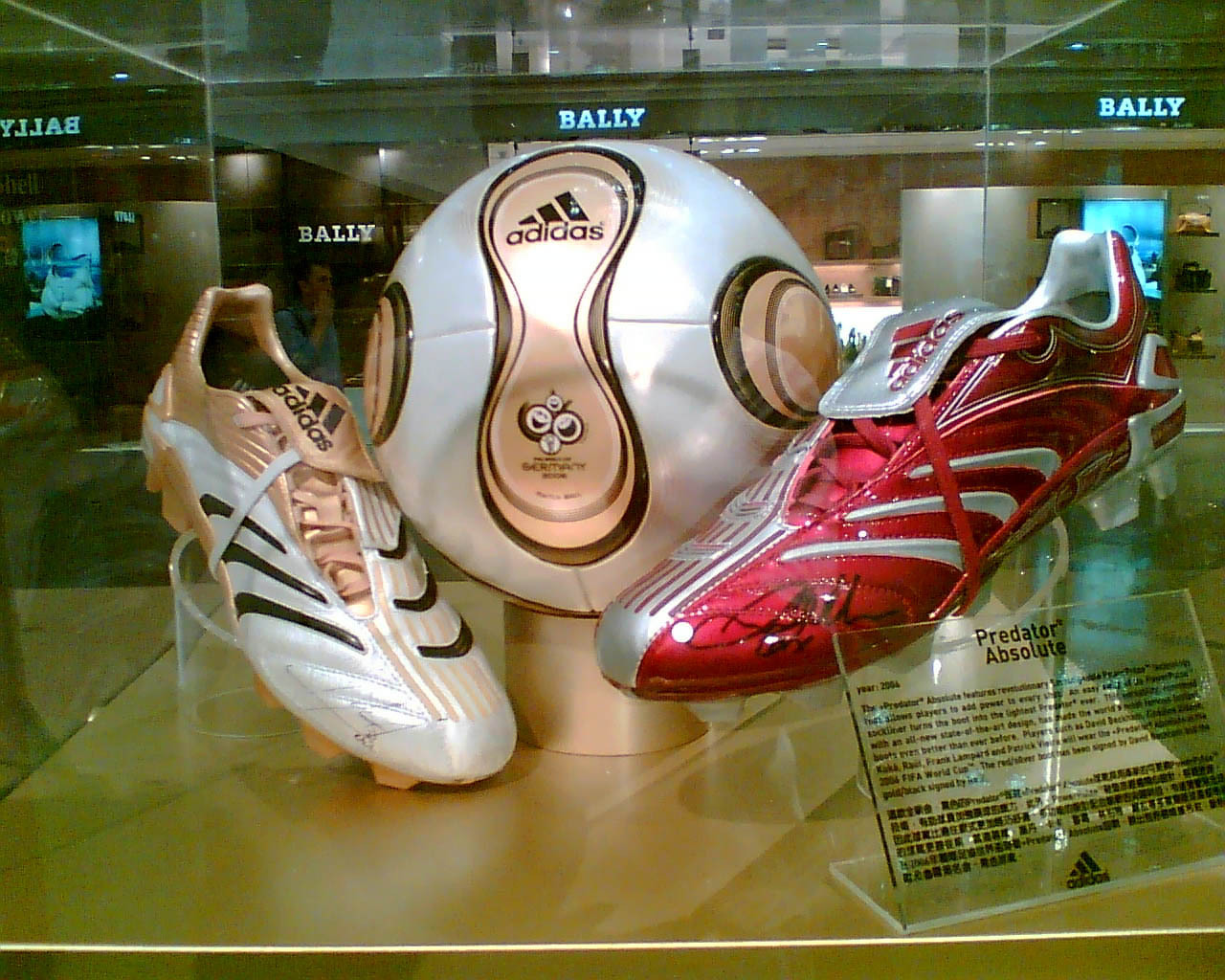
adidas grew the Predator by associating it with elite footballers over successive generations. The boot became linked to players known for passing and technique, and each new version renewed the association with the current stars of the game.1, 4 This turned the Predator into a continuing franchise, refreshed regularly while retaining its core identity, in much the same way a car maker updates a flagship model.
That model gave adidas a durable asset in football. Rather than selling boots as undifferentiated gear, the company could market a named product with heritage, recognisable design and a roster of associated players. The Predator name carried value across decades, allowing adidas to command attention and loyalty in a fiercely competitive category dominated by its rivalry with Nike.
The naming was central to that durability. By calling the boot the Predator and keeping the name across many redesigns, adidas built a franchise that consumers could follow, much as film studios sustain a series.1 Each new Predator could change materially while still trading on the recognition and expectation the name carried, which made every launch easier to market than a wholly new product would have been.
A template for product branding
The Predator demonstrated how a single product could be elevated into a brand within a brand. It showed that equipment could be given a name, a design signature and an ongoing narrative, and that doing so created loyalty and premium value beyond what a plain product could achieve. The approach influenced how sportswear companies treated their flagship products across football and beyond.
The boot also mattered commercially at a crucial time. adidas had been under pressure, and the Predator, alongside the wider revival of the brand in the 1990s, provided both revenue and renewed credibility in football, the sport most central to the company's identity.2 It reconnected adidas with the professional game at the highest level.
The boot also reshaped what players expected from equipment. Once a boot could promise a specific effect on the ball, footwear became something to choose deliberately rather than accept, and marketing shifted toward performance claims and named technologies. adidas had helped turn the football boot from a commodity into a branded, aspirational product. Rivals were compelled to respond in kind, and the arms race that followed only reinforced the Predator's status as the boot that had started it.
Decades after its launch, the Predator remains one of the defining sub-brands in football, repeatedly updated and relaunched while keeping the essential idea intact.1, 5 It stands as a clear example of how adidas turns a product into a lasting brand: start with a real functional advantage, express it through unmistakable design, and sustain it across generations of players. The 1994 boot invented by a former professional became a franchise that has outlived the careers of the stars who first wore it.
Source: thaisgms Youtube
Written with AI assistance, edited by a human. Find out more about our Use of AI.
1. Wikipedia, "Adidas Predator", accessed 2 October 2026, a reference source under the Brandvelle whitelist, for the Predator as a range of football boots "introduced in 1994"; for the boots being "based on a prototype concept from the Australian former footballer Craig Johnston", who hit on rubber ridges on the top of the boot to "aid control of the ball", and for the "rubber patches or strips on the top of the shoe, designed to increase friction between the boot and the ball", with the early commercials focused on "shooting strength" and later on "ball spin and precision"; for the successive versions sold under the one Predator name, from the Accelerator of 1998 and the Mania of 2002 to the Predator 25, each worn by leading players of its time, among them Alessandro Del Piero, Zinedine Zidane, David Beckham, Steven Gerrard, Raúl and Xavi; and for the line having been discontinued in May 2015 and brought back in November 2017. The entry mentions neither Las Vegas nor the World Cup in the United States. https://en.wikipedia.org/wiki/Adidas_Predator
2. Newcastle Herald, Damon Cronshaw, "Craig Johnston's Predator boot saved Adidas", 16 March 2019, added during the retrofit, off whitelist and used for corroboration only, for the adidas board having "been discussing bankruptcy" when Johnston forced his way into its meeting, which carries the company under pressure and in need of a revival; for "Johnston and Adidas launched the boot in Las Vegas in 1994 ahead of the World Cup in the US", the only source found for the Las Vegas launch; and for "The boot became a phenomenon, making Adidas hundreds of millions", which covers the commercial phenomenon and the revenue. The piece does not cover the wider revival of the brand in the 1990s or its standing in football. https://www.newcastleherald.com.au/story/5955405/how-craig-johnston-and-madonna-saved-adidas/
3. LFChistory.net, Alan Spencer, "Aussie Craig Johnston: The Man Behind Football Boots", 17 November 2020, off whitelist and used for corroboration only, for Johnston, the Australian who had moved to Liverpool in the 1980s, having built the prototype himself, first "taking the rubber off his tennis bat and putting it around his existing boots with an elastic band" after players "complained about how the leather boots slipped on the grass"; for his first presentation, which "did not impress Adidas at all", before the Bayern Munich players Beckenbauer, Rummenigge and Breitner helped him win the company over; and for the boot, "Released in 1994", having become "the biggest choice of footwear in the industry". https://www.lfchistory.net/articles/4512
4. Unisport, "The adidas Predator History: A journey through the iconic football boots from 1994 to 2025", latest update January 2025, off whitelist and used for corroboration only, for the original Predator of 1994 and its "innovative rubber fins, inspired by table tennis technology", a concept Craig Johnston developed "to enhance ball control and swerve"; and for the players tied to successive generations: David Beckham in the Predator Touch, Zinedine Zidane in the Accelerator, "The Spanish playmaker Xavi", who wore the Predator for most of his career, Steven Gerrard, Mesut Özil as "one of the main figures of adidas Predator" in the LZ II era, and Paul Pogba since the comeback in 2018. https://www.unisportstore.com/stories/the-adidas-predator-history-a-journey-through-the-iconic-football-boots-from-1994-to-today/
5. adidas, "adidas Recodes a 30-year Icon with New Predator Pack Crafted for Goals", press release, Herzogenaurach, 16 January 2024, resolved from the newsroom root listed in the sources, for the Predator 24 as "the latest member of the Predator franchise", "A nod to the boot that started it all three decades ago", carrying the original black, white and red colourway and rubber fins placed in the strike zones "to support ball grip", which covers the franchise updated and relaunched over three decades around the same idea; and for Sam Handy, VP of Product and Design at adidas, calling the Predator 1994 "the silhouette that started it all". https://news.adidas.com/football/adidas-recodes-a-30-year-icon-with-new-predator-pack-crafted-for-goals/s/d26bb432-a2c2-4f28-aa64-890574b1f26f