
A new mark for a focused strategy
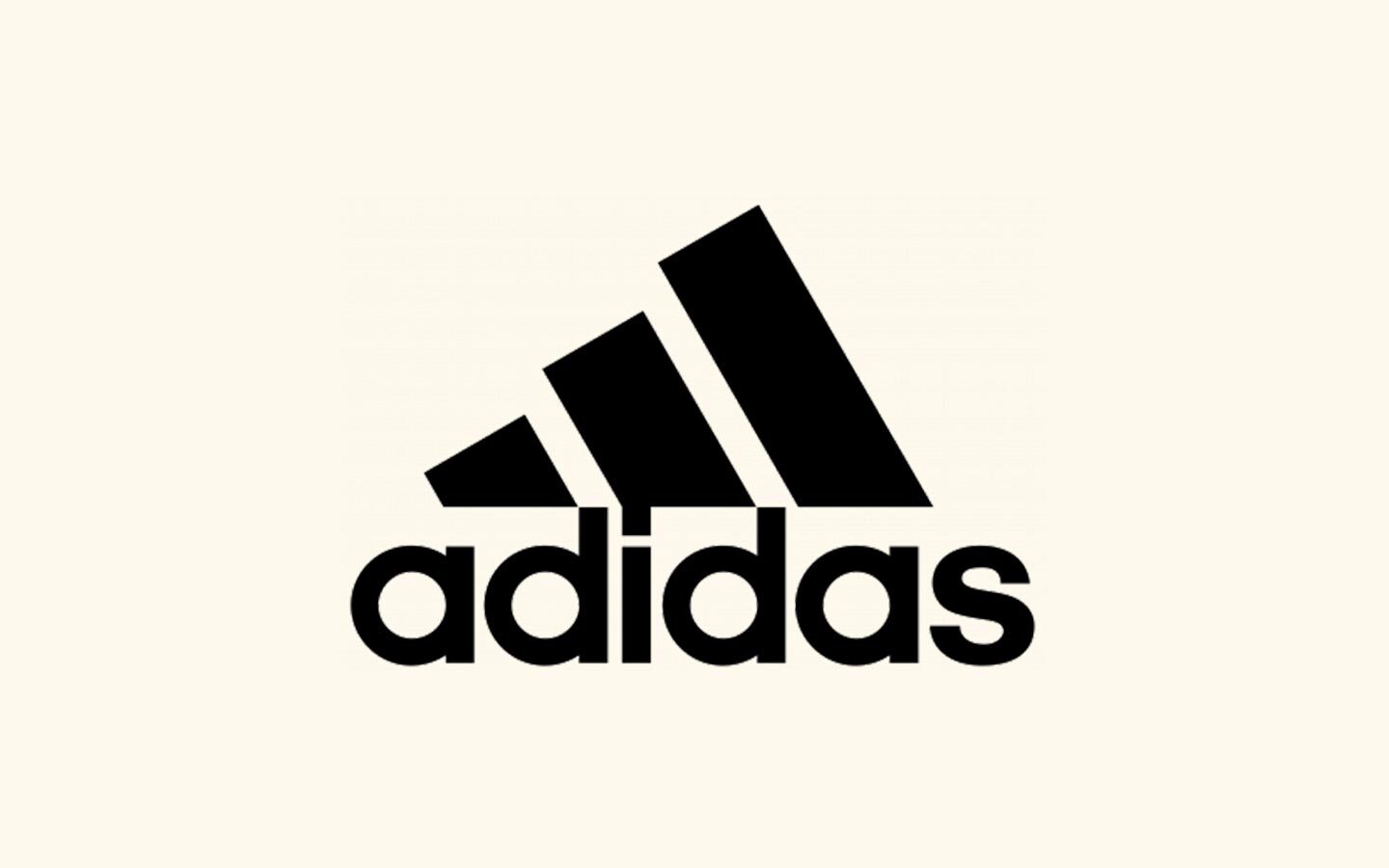
In 1991 adidas presented the three-bar mark, the angled stripes that rise to form a mountain and that still identify the brand's performance products.1, 2 The logo arrived with Equipment, a product range built on a simple proposition: strip away excess and give athletes only the gear they needed.3, 4 The mark and the range were designed together, and the logo carried the argument. Where the Trefoil had come to stand for the brand's breadth and heritage, the new symbol stood for function.
The change followed a difficult period. By the late 1980s adidas had lost ground to newer competitors, and the company set out to sharpen its performance credentials.5 The Equipment line, launched at the start of the 1990s, was the product expression of that effort, and it needed an identity distinct from the increasingly nostalgic Trefoil.4 The three-bar mark provided it.
The mountain and its meaning
The design took the three stripes and tilted them, cutting each bar to a different length so that together they climbed to a peak. The result read as a mountain, commonly interpreted as the challenges athletes face and the obstacles they set out to overcome.2, 6 The idea was deliberately aspirational, but the execution stayed close to the brand's core asset. As with the Trefoil two decades earlier, the new logo grew out of the three stripes rather than replacing them.1
Accounts of the design credit the work to the company's creative leadership at the time, with Peter Moore, then a senior creative figure at adidas, closely associated with the concept.3, 7, 8 Moore had shaped influential sports branding earlier in his career, and the three-bar mark bore the same instinct for turning a simple geometric idea into a memorable symbol.8 One frequently repeated description traces the angled bars to the way the three stripes appear when seen from inside an adidas shoe, grounding the abstract mountain in a concrete product detail.1
From product logo to brand identity
The three-bar mark did not stay confined to the Equipment range. Over the 1990s it rose to become the primary performance logo for adidas, appearing on football boots, running shoes and team kit, and eventually functioning as the corporate mark for the sporting side of the business.2, 5, 7 Its promotion completed a clear division of labour: the three-bar mark for competition and progress, the Trefoil for heritage and lifestyle.1
That split gave adidas a coherent brand architecture at a moment when it needed clarity. Each logo carried a single, well-defined message, and consumers learned to read them accordingly. A shoe wearing the three-bar mark signalled sport and technology; a shoe wearing the Trefoil signalled the archive. The two marks reinforced rather than diluted each other, and the arrangement has held for more than three decades.
A design built to last
The three-bar mark endured because it solved a strategic problem with a durable form. It reconnected adidas to performance at a time when that reputation was under pressure, and it did so without discarding the three stripes that anchored the brand. The mountain gave the stripes forward motion, a sense of effort and ascent that suited competitive sport, while remaining abstract enough to work across every product category and market.
Later refinements kept the mark contemporary without altering its essential shape, a sign of how well the original design was resolved. The logo has appeared in flat and dimensional treatments, in single colours and in combination with the wordmark, yet the climbing bars remain instantly legible.2, 3 For a company whose identity rests on three stripes, the 1991 mark demonstrated how much could be built from that one element.
The mark's introduction also coincided with a broader reset of the adidas business. The Equipment philosophy of essential, high-performance gear gave the company a clear story to tell retailers and athletes at a moment when it needed to reassert relevance, and the logo made that story visible on the shelf. In that sense the three-bar mark was as much a strategic instrument as a graphic device, signalling a return to the brand's core purpose of equipping competition.
Seen in the wider arc of the adidas identity, the three-bar mark completed a system that had been decades in the making. The stripes provided the raw material, the Trefoil turned them into a heritage emblem, and the mountain turned them into a symbol of performance. Together the two logos let a single brand speak convincingly to sport and to culture at once, and the 1991 introduction of the three-bar mark supplied the piece that made that dual identity work.
Written with AI assistance, edited by a human. Find out more about our Use of AI.
1. adidas, "adidas Logos: History and Meaning", September 2022, for the Equipment logo having been developed from 1989 "with the help of a visionary designer and creative consultant" and "released to the public in 1991", for its origin in "sketching those famous three stripes the way they're seen from the inside of an adidas shoe", for the Trefoil having been added in 1972 with the three stripes running through its three leaves, for the Trefoil having been "reserved for all Originals products" since 2000, and for the Performance logo being used today "as the main brand mark of adidas". The page explains the Equipment logo by the brand's commitment to "equipping athletes with the best gear possible"; it neither names the designer nor mentions a mountain. https://www.adidas.com/us/blog/932571-adidas-logos-history-and-meaning
2. Logos World, "Adidas Logo", updated 16 September 2026, for the symbol of "three slanted black rectangles arranged at an angle to form a pyramidal figure", called "the mountain", whose lines suggest "an ascent along a slope or staircase" and evoke "associations with overcoming obstacles and sport"; for Peter Moore having introduced it in October 1991 "as the mark for the Equipment sports line"; for the mountain having replaced the Trefoil "as the company's primary mark" on 1 January 1996 and having been used within the adidas Performance line after the Equipment name was dropped in 1998; and for the adidas wordmark set below the symbol. https://logos-world.net/adidas-logo/
3. Sneaker Freaker, Minh Vuong, "The Story Behind Iconic adidas Logos", 8 September 2022, off whitelist and used for corroboration only, for adidas having employed Peter Moore in 1989 "to design a new logo to help launch the adidas Equipment line in 1991", and for the angled "Three-Bar" logo later being combined with the adidas wordmark, a version the article dates to 1996 under the name "Badge of Sport". https://www.sneakerfreaker.com/news/adidas-three-stripe-equipment-trefoil-logo-history
4. adidas News, "Celebrating 30th Birthday of Equipment with Never-Before-Seen Model", 28 October 2021, resolved from the newsroom homepage listed in the sources, for adidas marking the 30th birthday of Equipment in 2021, which places the launch of the range at the start of the 1990s, and for Peter Moore's account of the idea behind it: "Equipment is a no bullshitword, you dont have a piece of equipment to have fun with, you have a piece of equipment to make you better." (spelling as printed). https://news.adidas.com/originals/celebrating-30th-birthday-of-equipment-with-never-before-seen-model/s/0ba28dc0-e793-4e09-a56a-f07a820c7859
5. Wikipedia, "Adidas", accessed 2 October 2026, for adidas having started "to fall behind then-upstart Nike in the early 1980s" and for "a period of trouble following the death of Adolf Dassler's son Horst Dassler in 1987"; for the three bars logo, "originally designed for the Equipment line, then adopted as the corporate emblem"; and for the division of the brand in the mid to late 1990s, in which "Adidas Performance was designed to maintain their devotion to the athlete". https://en.wikipedia.org/wiki/Adidas
6. Creative Bloq, "How the Adidas logo earned its stripes", 3 February 2014, added during the retrofit, off whitelist and used for corroboration only, for the reading of the logo as a mountain: the three stripes "form the shape of a mountain, which represents the challenges athletes face". The piece attributes this reading to no adidas statement. https://www.creativebloq.com/logo-design/how-adidas-logo-earned-its-stripes-11135390
7. Wikipedia, "Three stripes", accessed 2 October 2026, for the "three bars" logo having been "designed by then Creative Director Peter Moore" and "initially used on the Equipment range of products", and for its introduction as the company's logo, which this source dates to 1997. https://en.wikipedia.org/wiki/Three_stripes
8. Wikipedia, "Peter Moore (shoe designer)", accessed 2 October 2026, added during the retrofit, for Moore as the designer of "the Air Jordan ball-and-wings logo, the Jumpman logo, and the Adidas mountain logo", and for his earlier work at Nike, where he "is credited as the creator of the Air Jordan 1 silhouette and Nike Dunk silhouette". https://en.wikipedia.org/wiki/Peter_Moore_(shoe_designer)