
Private space transportation company founded by Elon Musk, building reusable rockets and the Starlink satellite internet service, with a stated goal o…
12 Articles
The electric vehicle company repositioning itself as an autonomous technology and robotics platform, with ambitions extending from mobility to humanoi…
11 ArticlesA sports car as a payload
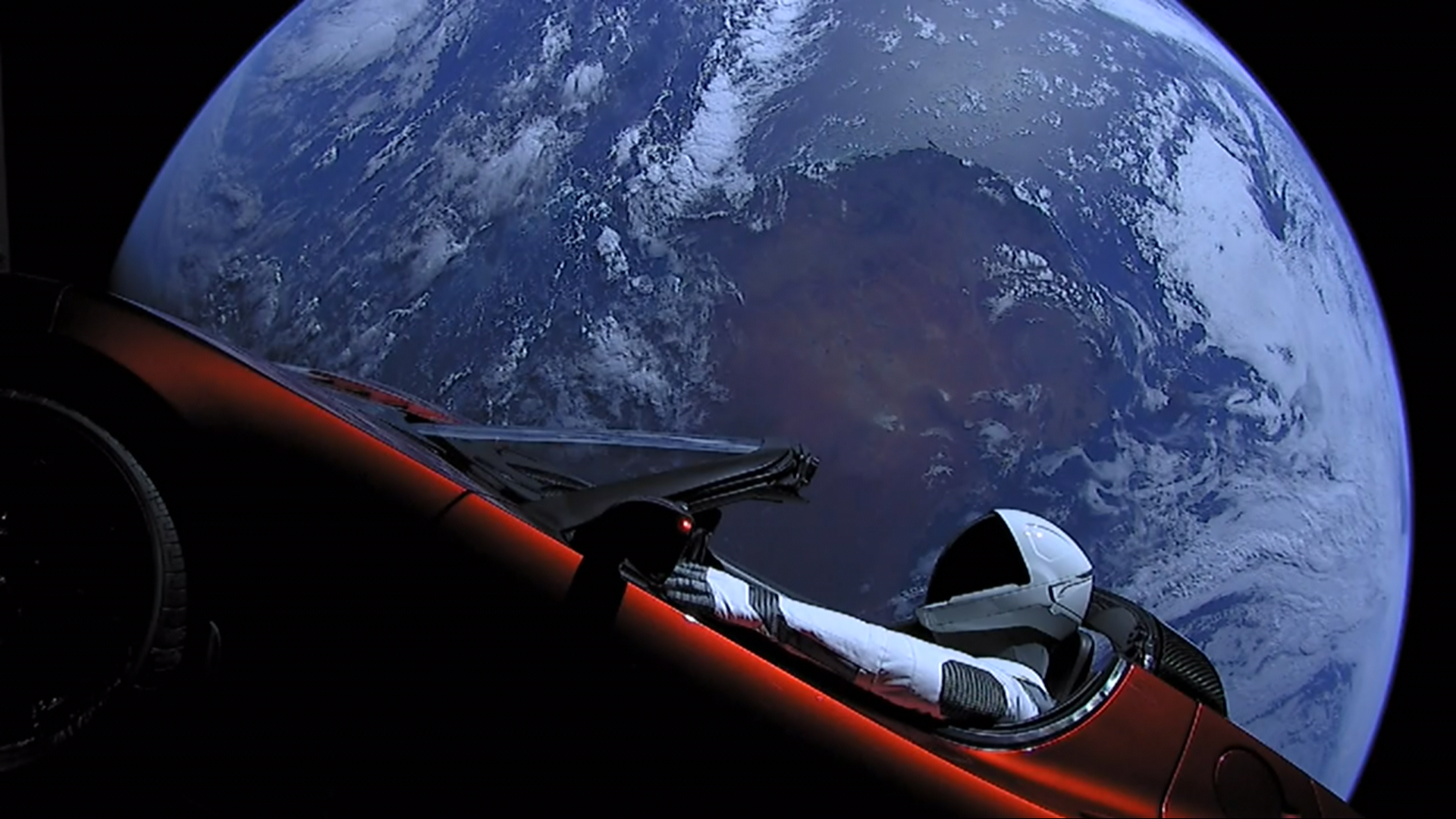
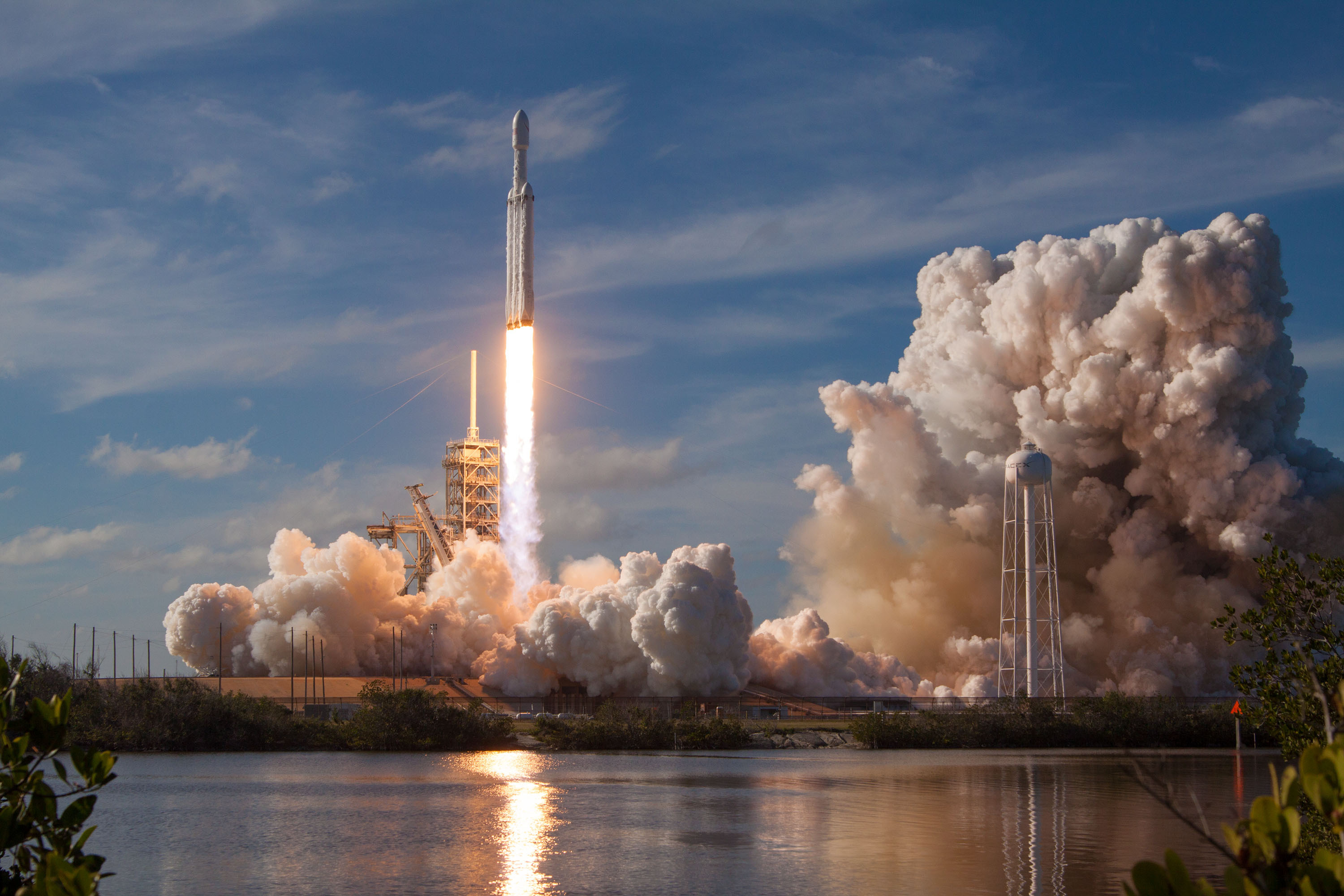
On 6 February 2018, SpaceX launched the first flight of its Falcon Heavy rocket, at the time the most powerful operational launch vehicle in the world. Test flights usually carry an inert mass to simulate a payload, often a block of concrete or metal. SpaceX chose instead to launch a cherry-red Tesla Roadster, the personal car of the company's founder Elon Musk, with a mannequin in a SpaceX spacesuit seated at the wheel. The figure was named Starman, after the David Bowie song, and the car's sound system was set to play Bowie's music.
The decision turned a routine engineering milestone into a global media event. Cameras mounted on the car streamed footage of the Roadster and its driver against the curve of the Earth, with the words Don't Panic, a reference to The Hitchhiker's Guide to the Galaxy, displayed on the dashboard screen. The images circulated worldwide and became some of the most widely shared visuals the company had produced.
Engineering milestone as marketing moment
The Falcon Heavy demonstration had a serious technical purpose. It proved the rocket could fly and tested the simultaneous landing of its two side boosters, which returned to land in a synchronised descent that was itself widely broadcast. The payload choice did not change the engineering, but it transformed how the flight was received. A successful but otherwise unremarkable test of a heavy-lift rocket became a cultural event that reached audiences far beyond those who follow spaceflight.
The choice also linked two of Musk's companies in a single image. The Tesla Roadster placed an electric car brand at the centre of a space launch, and the visual of a Tesla in orbit connected the two ventures in the public imagination. For both Tesla and SpaceX, the launch generated enormous attention at no conventional advertising cost, an outcome that traditional marketing budgets would struggle to match.
Branding without an advertising budget
SpaceX has never relied on conventional advertising. It builds its public profile through the events it stages, the live streams it produces and the imagery it releases, and the Starman launch is the clearest example of that approach. By giving a test flight a memorable, shareable identity, the company generated the kind of reach normally associated with a major campaign, while presenting it as an expression of the founder's personality and sense of humour rather than as marketing.
The episode demonstrates how a brand can convert an operational event into a brand asset. The Roadster, the spacesuit, the Bowie soundtrack and the Don't Panic message were not necessary for the rocket to fly, but together they created a story and a set of images that the public connected directly to SpaceX. The launch communicated the company's character, ambitious, unconventional and confident, more effectively than a statement of values could.
It is worth noting how much of the effect came from cultural references rather than technology. Bowie's Starman, the borrowed line from a science-fiction novel and the everyday object of a sports car all gave audiences a familiar way into an otherwise abstract engineering achievement. By translating a rocket test into images and references people already understood, SpaceX made the event accessible and memorable, which is precisely what a marketing campaign sets out to do.
A lasting image for the company
Starman entered an orbit around the Sun that carries it beyond the orbit of Mars, and the company periodically noted its position in the years that followed. The car became a long-running reference point for SpaceX, a piece of the brand now physically located in space. The stunt drew some criticism as an act of self-promotion, but it also achieved a rare feat in branding, producing an image instantly associated with a single company and unlikely to be forgotten.
For a company whose stated purpose is to extend human presence beyond Earth, the launch of a car and its driver into space served as a compact expression of ambition. It signalled that SpaceX intended to operate on a scale, and with a sense of spectacle, that set it apart from established aerospace organisations. The Falcon Heavy flight proved the rocket, and Starman gave the company one of the most recognisable marketing moments in its history.
The moment also set a template the company would return to. In the years that followed, SpaceX continued to treat its launches as broadcasts, with polished live streams, branded mission patches and carefully framed imagery, building an audience that follows the company much as it would a media property. Starman was the point at which that approach announced itself to the wider world, showing that a launch could be both an engineering test and a piece of brand storytelling at the same time.
Written with AI assistance, edited by a human. Find out more about our Use of AI.