
A Japanese sportswear company whose corporate name is an acronym of a Latin sentence about a sound mind in a sound body, which it has turned from a fo…
19 Articles
Nike is the world's largest athletic footwear and apparel company, building the brand around elite performance, athlete partnerships, and a long-runni…
12 ArticlesThe years Blue Ribbon Sports sold Onitsuka shoes
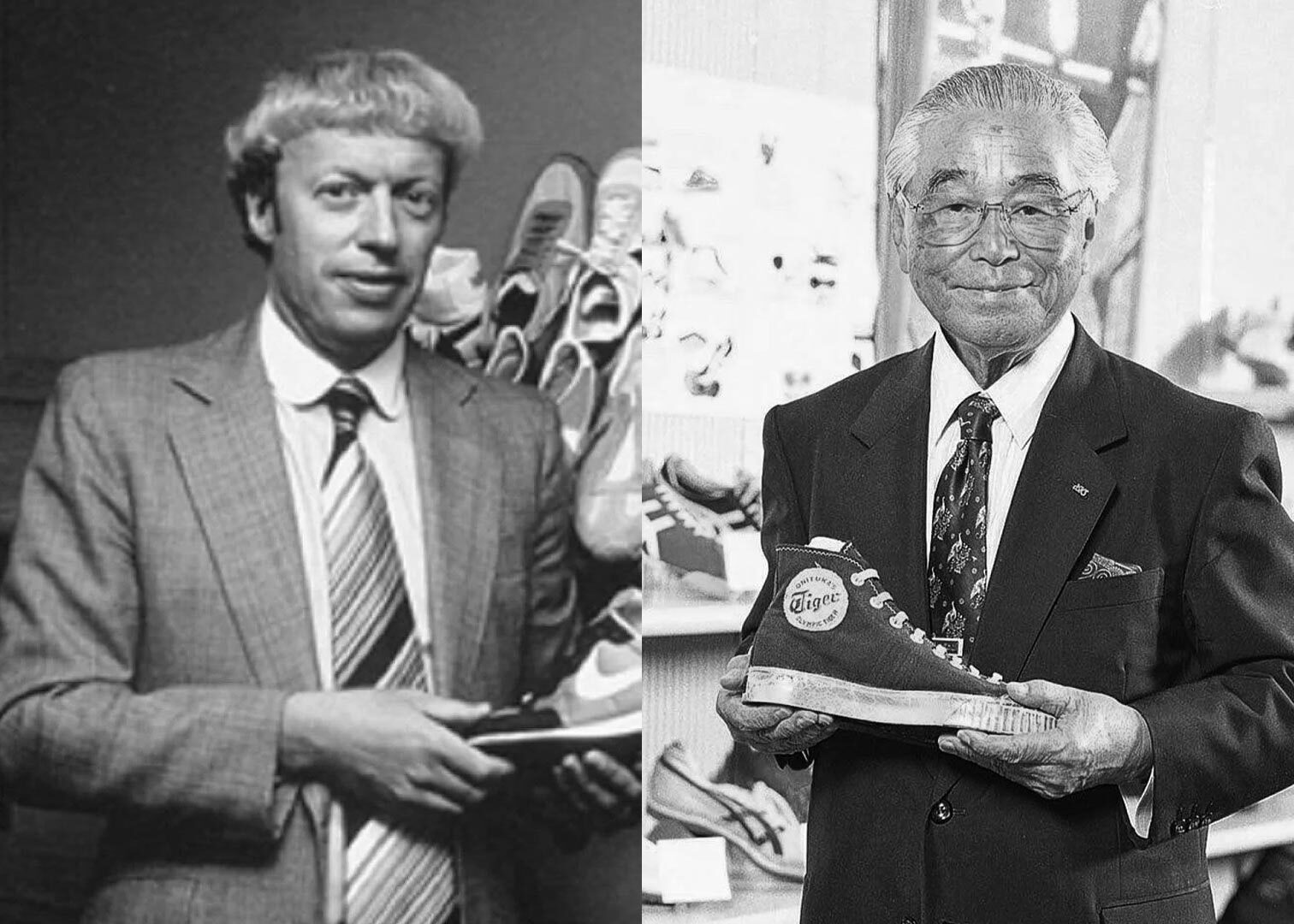
Nike and ASICS share a starting point. On 22 November 1962 Nike's Founder Phil Knight flew to Tokyo and travelled on to Kobe to ask the Onitsuka company for the right to sell its running shoes in the United States.1 He had no company of his own. By the accounts of the meeting he named one in the room, presenting himself as the representative of Blue Ribbon Sports, and ordered samples of the Limber Up.2 Onitsuka took the name ASICS after a merger in 1977.3
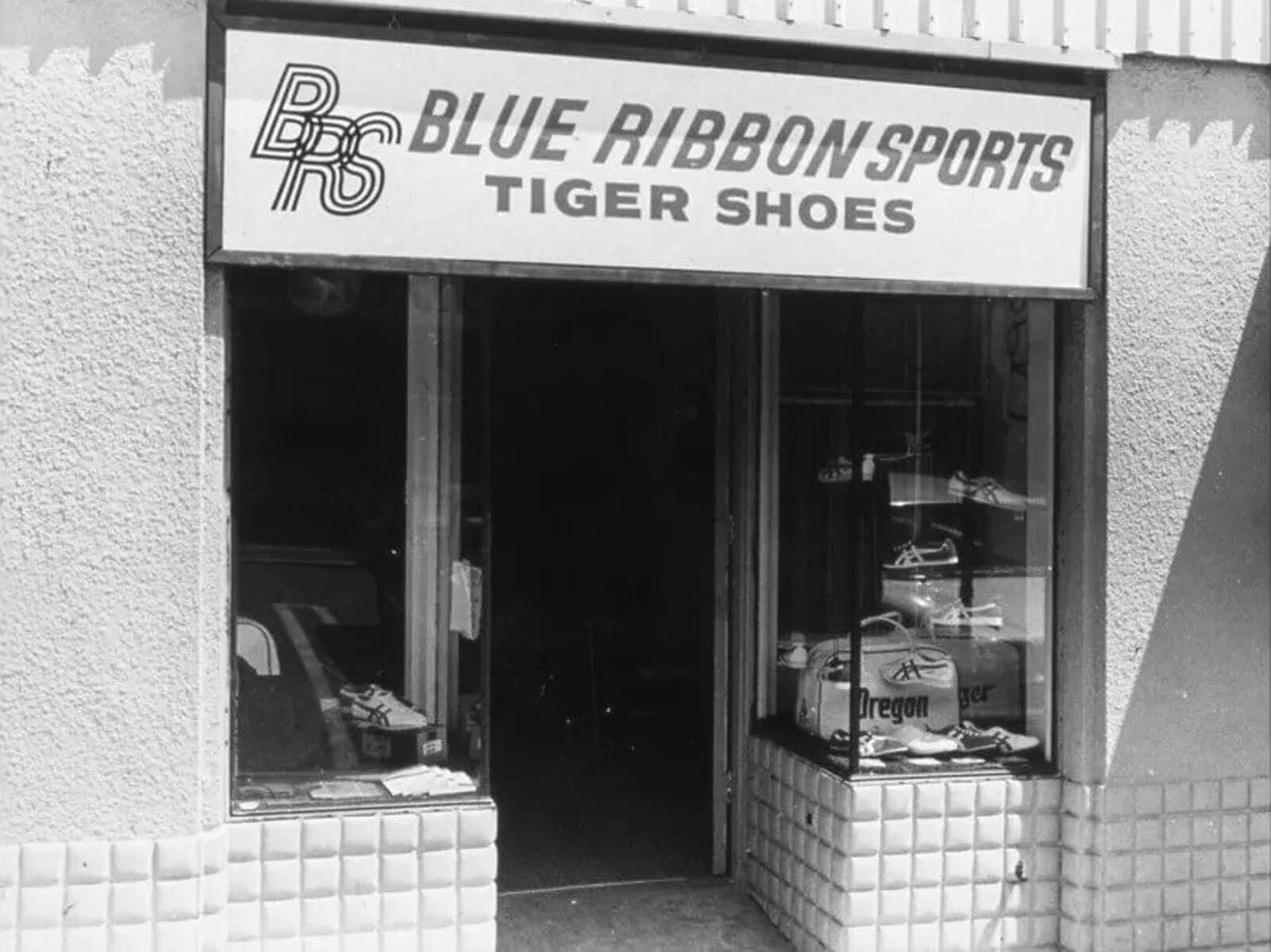
Blue Ribbon Sports was founded on 25 January 1964 in Eugene, Oregon, by Knight and his University of Oregon coach Bill Bowerman as equal partners.2,3 In its first year the company sold 1,300 pairs of Onitsuka shoes, grossing 8,000 dollars, and reached 20,000 dollars in 1965.3
In 1966 Knight secured exclusive United States distribution of the Onitsuka track and field line.2 A legal analysis of the arrangement records that the contract barred the distributor from importing other Japanese made products and was renewed for a further three years.4 By 1971 Blue Ribbon Sports was turning over 1.3 million dollars on Japanese shoes.2
The shoe the partnership made
Sneaker Freaker's account of the build is that Bill Bowerman took the midsole of one Onitsuka model, the Spring Up, and the outsole of another, the Limber Up, held the prototype together with horse pins, and that Onitsuka approved it and manufactured it.5
The first working name was Aztec, after the host city of the 1968 Mexico City Games. Adidas objected, because it sold a track shoe called the Azteca Gold. Knight's account of what followed, given to NPR, is that he asked who had defeated the Aztecs and answered his own question with Cortez.6 The name went on an Onitsuka Tiger product first. Onitsuka Tiger's own history records Cortez training shoes released in the United States in 1969.7
The year the design was finished is not settled. Third party accounts give 1967 and 1968.5 Onitsuka Tiger dates the American release to 1969.7 Nike's product pages date the design to 1972.8 No source consulted here fixes it.
The split
Tension rose in 1971.3 Onitsuka approached other American distributors while the agreement was still running,4 and Blue Ribbon Sports prepared a line of its own, ordering 20,000 shoes of which 6,000 carried a new logo and a new name. Carolyn Davidson was paid 35 dollars for the logo.3
Two actions followed, one in Japan and one in the United States. Legalmondo dates the dispute to 1972 and Complex dates the American filing to 1973.4,9 The American case ended in 1974. Both companies were allowed to keep selling the shoe and Nike kept the Cortez name, with the sources describing both a ruling in the distributor's favour and a settlement.4,9 Onitsuka's version was renamed the Corsair, a renaming recorded only in secondary sources, since neither Onitsuka Tiger nor ASICS mentions it on its own pages.10 Doug Houser, the lawyer who handled the case for Nike and later sat on its board, declined to say what the settlement was worth.9
Two accounts, both of them live
Nike's Cortez product pages state: "The Nike Cortez was designed in 1972 by Nike cofounder Bill Bowerman to be lighter and more comfortable than any other."8 Nike's own history of the shoe, published by its archives department, calls it "the first Nike running shoe to reflect the design genius of Bill Bowerman". The words Onitsuka, Tiger, Japan, Japanese and Blue Ribbon do not appear on that page.11
Onitsuka Tiger's brand history carries the other half. Under 1969 it states that Phil Knight "met with Mr. Onitsuka", that he "was inspired to set up Blue Ribbon Sports" and that "The company was soon to become Nike, while Onitsuka Tiger later created the TIGER CORTEZ in response to a request from Blue Ribbon Sports."7 The entry does not name Bowerman as the designer, and it does not mention the litigation or the Corsair. It places the meeting under 1969, five years after the 25 January 1964 incorporation of the company it says the meeting produced.3,7
The two accounts diverge on year and on author. Nike dates the design to 1972, Onitsuka Tiger records the shoe on sale in 1969. Nike names Bowerman, Onitsuka Tiger names itself. Each is silent where the other is not: Nike's page omits the Onitsuka version, Onitsuka Tiger's omits the renaming.
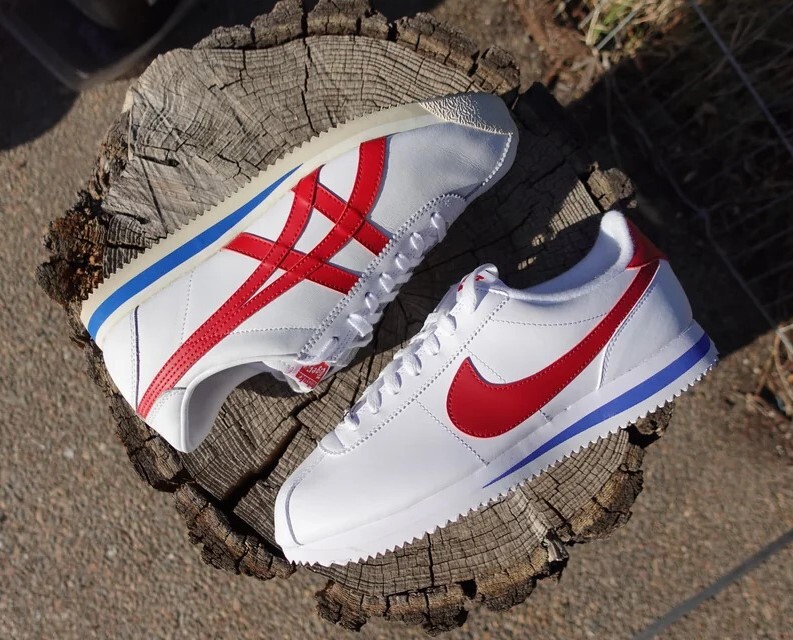
Both shoes are still in the line
The Nike Cortez sells in leather and textile versions at 95 dollars.8 The Tiger Corsair remains a named Onitsuka Tiger model, and its product copy traces it to an original Onitsuka Tiger trainer that it says "kick-started the jogging boom of the 1970's", with no reference to Nike, to the Cortez or to the renaming.12
The two shoes carry the same wedge sole and the same saw tooth toe cap, and the Swoosh sits where the Tiger stripe sits.5
Written with AI assistance, edited by a human. Find out more about our Use of AI.
1. Japan Today, Patrick Parr, "How Phil Knight used Japan to launch Nike", 9 December 2022, updated 14 February 2023, off whitelist and used for corroboration only, for the flight to Tokyo on 22 November 1962 and the onward train journey to Kobe. https://japantoday.com/category/features/japan-yesterday/how-phil-knight-used-japan-to-launch-nike-1
2. Sneaker Freaker, Jessica Staheli, "How Blue Ribbon Sports turned into Nike", 25 January 2024, off whitelist and used for corroboration only, for Knight naming Blue Ribbon Sports in the meeting and ordering Limber Up samples, for the fifty fifty partnership with Bill Bowerman, for the 1966 exclusive United States distribution of the Onitsuka track and field line, for 1971 turnover of 1.3 million dollars, and for Nike absorbing Blue Ribbon Sports in 1976. https://www.sneakerfreaker.com/features/how-blue-ribbon-sports-turned-into-nike
3. Wikipedia, "Nike timeline", "Nike, Inc." and "Asics", for Onitsuka taking the name ASICS after the 1977 merger, for the founding of Blue Ribbon Sports on 25 January 1964 in Eugene, Oregon, for first year sales of 1,300 pairs grossing 8,000 dollars and 20,000 dollars in 1965, for tension between the two companies rising in 1971, for the order of 20,000 shoes of which 6,000 carried the new logo, and for Carolyn Davidson being paid 35 dollars for that logo. https://en.wikipedia.org/wiki/Nike_timeline
4. Legalmondo, Roberto Luzi Crivellini, "International distribution agreements: 7 lessons from the history of Nike", posted February 2023, off whitelist and used for corroboration only, for the non competition clause barring the distributor from importing other products manufactured in Japan, for the three year renewal of the exclusive right, for Onitsuka approaching alternative American distributors while the agreement was in force, for the two parallel actions in Japan and the United States, for the 1972 dating of the dispute, and for the American judge ruling in favour of the distributor with the matter closing in a settlement. https://www.legalmondo.com/2023/02/international-distribution-agreements-7-lessons-history-nike/
5. Sneaker Freaker, "Onitsuka Tiger Corsair vs. Nike Cortez", 26 February 2013, off whitelist and used for corroboration only, for Bowerman combining the midsole of the Spring Up with the outsole of the Limber Up, for the prototype being held together with horse pins, for Onitsuka approving it for production, for the third party dating of the design work to 1967 and 1968, and for the shared wedge sole and saw tooth toe cap with the Swoosh occupying the position of the Tiger stripe. https://www.sneakerfreaker.com/news/chicken-or-the-egg-corsair-or-cortez
6. NPR, Sean Saldana, "An oral history of the Nike Cortez, 50 years after its release", 15 February 2022, off whitelist and used for corroboration only, for the Aztec working name and its reference to the 1968 Mexico City host city, for the Adidas objection based on its own Azteca Gold, and for Knight's quoted account of arriving at the name Cortez. https://www.npr.org/2022/02/15/1077040201/nike-cortez-50-anniversary-history-los-angeles
7. Onitsuka Tiger, brand history, the entry under 1969 headed "An athletic forerunner", identical in wording across the US, GB and IN sites, accessed 16 September 2026, for the quoted passage naming Blue Ribbon Sports, Nike and the TIGER CORTEZ, for the statement that Onitsuka Tiger created the shoe at the request of Blue Ribbon Sports, for the 1969 dating of the meeting, and for the absence from that entry of Bowerman as designer, of the litigation and of the Corsair. The five year gap is the difference between that 1969 dating and the 25 January 1964 incorporation recorded in footnote 3. The brand's 75th anniversary history, at https://www.onitsukatiger.com/jp/en-gl/brand/75th-anniversary/history-1st, is the source for Cortez training shoes released in the United States in 1969. https://www.onitsukatiger.com/us/en-us/brand/history
8. Nike, Cortez Leather and Cortez Textile product pages, accessed 16 September 2026, for the quoted sentence dating the design to 1972 and attributing it to Bill Bowerman, and for the 95 dollar retail price of both versions. https://www.nike.com/t/cortez-leather-mens-shoes-SxhPXX
9. Complex, Brendan Dunne, "Nike veteran speaks on the lawsuit that could've killed the company", 9 October 2015, off whitelist and used for corroboration only, for the 1973 filing date of the American action, for the outcome permitting both companies to sell the shoe while Nike retained the Cortez name, and for Doug Houser, the lawyer who handled the case and later sat on the Nike board, declining to state the settlement figure. Complex presents Houser as the only participant speaking on the record. https://www.complex.com/sneakers/a/brendan-dunne/nike-cortez-lawsuit-onitsuka-tiger-asics
10. Wikipedia, "Onitsuka Tiger Corsair" and "Nike Cortez", for the renaming of the Onitsuka version to Corsair following the 1974 decision. Neither Onitsuka Tiger nor ASICS records the renaming on its own pages, so this rests on secondary sources only. https://en.wikipedia.org/wiki/Onitsuka_Tiger_Corsair
11. Nike, "The History of the Cortez", credited to the Department of Nike Archives, published 5 April 2024 and updated 28 May 2024, for the description of the shoe as the first Nike running shoe to reflect Bill Bowerman's design, and for the checked absence of the words Onitsuka, Tiger, Japan, Japanese and Blue Ribbon from the page. https://www.nike.com/a/cortez-history
12. Onitsuka Tiger, Tiger Corsair product pages in GB and ES, accessed 16 September 2026, for the model remaining in the current range and for the product copy tracing it to the original Onitsuka Tiger trainer that started the jogging boom of the 1970s, with no reference to Nike, to the Cortez or to the renaming. https://www.onitsukatiger.com/gb/en-gb/tiger-corsair/p/d747n-400.html