
A simple insight turned into a powerful demonstration
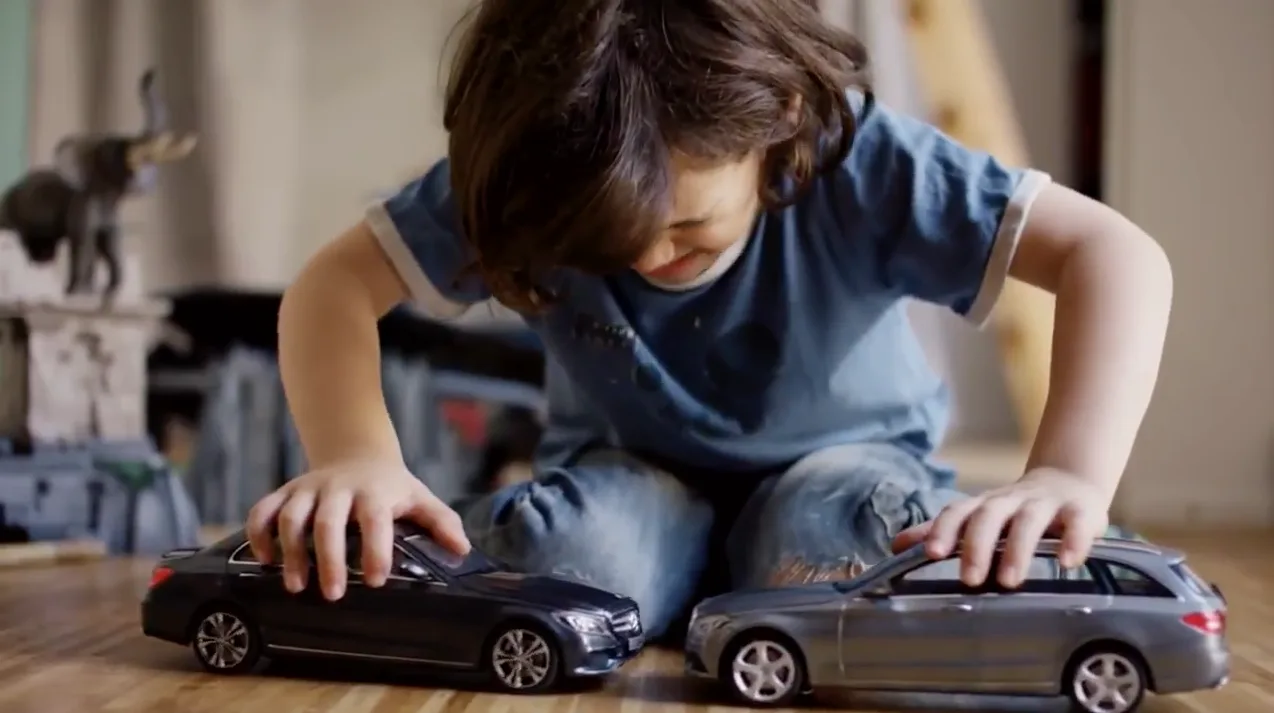
The campaign was built on a universal truth, children instinctively crash toy cars into each other. It’s part of how they play. Mercedes-Benz used this behavior as the foundation for its idea. The toy cars were secretly equipped with strong magnets, making collisions physically impossible. No matter how hard the children tried, the cars would repel each other at the last moment.
What followed was not delight, but confusion and frustration. The absence of impact removed the core element of play.
Turning frustration into a message
This reaction was the key to the campaign. By removing the possibility of crashes, Mercedes-Benz demonstrated, through contrast, how essential collisions are to both play and, more importantly, how undesirable they are in real life.
The experiment was designed to promote the brand’s Brake Assist System PLUS, a radar-based safety technology that detects potential collisions and automatically increases braking force to prevent or mitigate impact.
In essence, the toy cars became a metaphor: what frustrates children in play is exactly what drivers want to avoid on the road.
A deliberately “mean” but effective execution
The campaign stood out because of its tone. It wasn’t emotional or dramatic in the traditional sense, it was slightly ironic, even described as “amusingly mean,” because it knowingly disrupted children’s expectations.
But this creative decision made the message more memorable. Instead of explaining safety features through technical language, Mercedes-Benz created a physical experience that made the benefit instantly understandable.
Reframing safety communication
At a time when automotive advertising often relied on statistics or fear-based messaging, this campaign introduced a different approach: experiential storytelling. It translated a complex technological function into a simple, visual idea that anyone could grasp—regardless of technical knowledge.
Lasting significance
The “Uncrashable Toy Cars” campaign is a strong example of how brands can communicate functional innovation through human behavior rather than product demonstration. By turning a basic childhood instinct into a storytelling device, Mercedes-Benz managed to make an invisible safety system tangible—and, more importantly, memorable.
Written with AI assistance, edited by a human. Find out more about our Use of AI.