
One icon, six interpreters
In October 2014 Louis Vuitton released "Celebrating Monogram: The Icon and the Iconoclasts," a project that commissioned six internationally recognised designers and artists to reinterpret the Monogram canvas for the Maison's 160th anniversary. Karl Lagerfeld, Frank Gehry, Cindy Sherman, Marc Newson, Christian Louboutin and Rei Kawakubo were invited by Delphine Arnault, Executive Vice President of Louis Vuitton since September 2013, and Nicolas Ghesquière, the Maison's Artistic Director of Women's Collections since November 2013. Each Iconoclast produced one piece, conceived as a single object rather than as a collection. The six pieces went on sale in selected Louis Vuitton flagships globally from mid-October 2014.
The framing of the project mattered. The Monogram, drawn by Georges Vuitton in 1896 as an anti-counterfeiting response to the imitation of the earlier Damier (1888) and rayé (1872) canvases, had stood untouched for one hundred and seventeen years before Marc Jacobs commissioned Stephen Sprouse to inscribe a graffiti tag over it in 2001 and Takashi Murakami to recolour it in 2003. The 2014 project sat in that lineage but inverted the brief. Where Sprouse and Murakami had been asked to redraw the canvas, the Iconoclasts were asked to interpret what the Monogram meant as an icon and to produce a single object that registered that interpretation in three dimensions. The canvas was permitted on each piece but was not the structural condition of the brief.
The six pieces
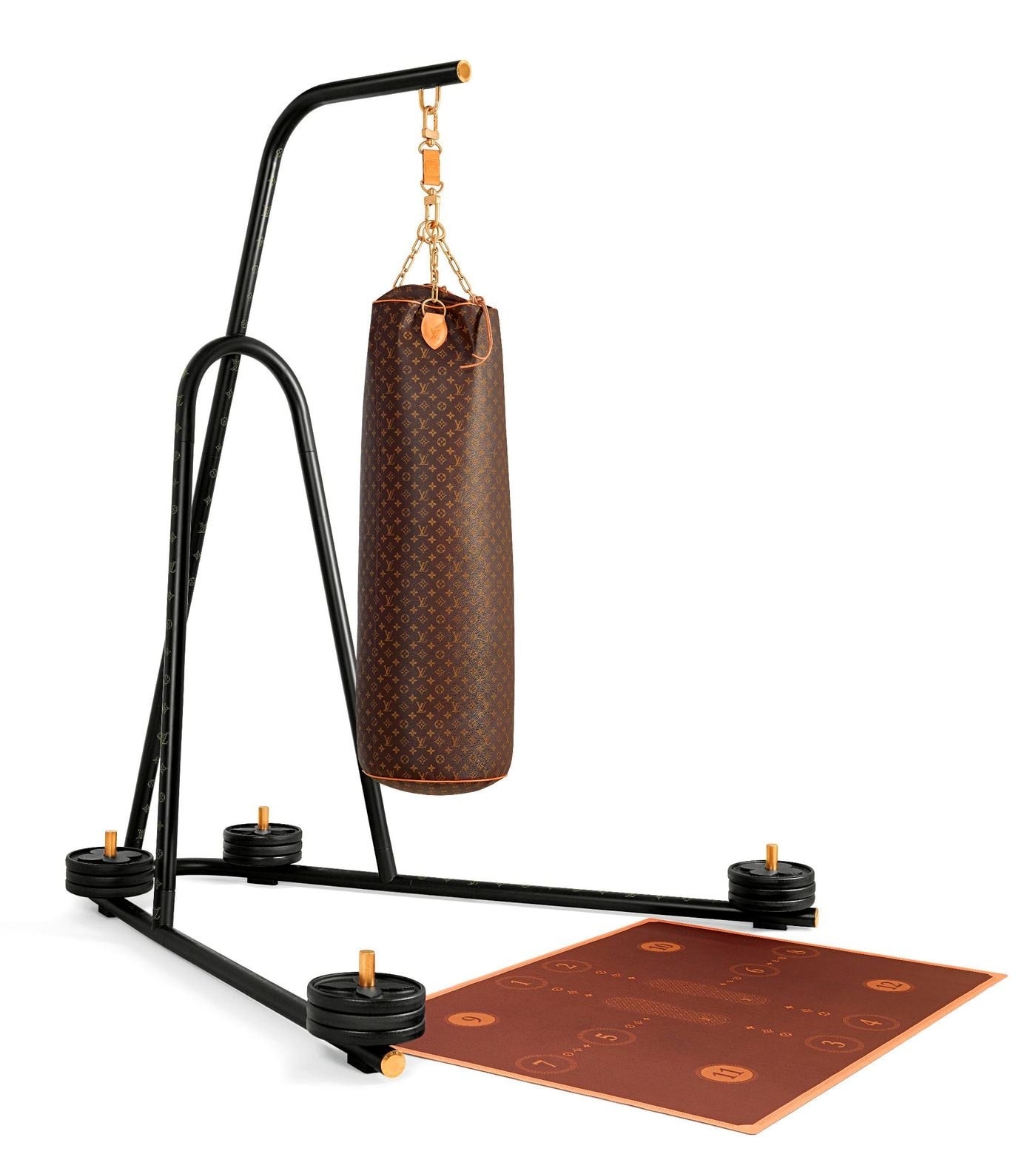
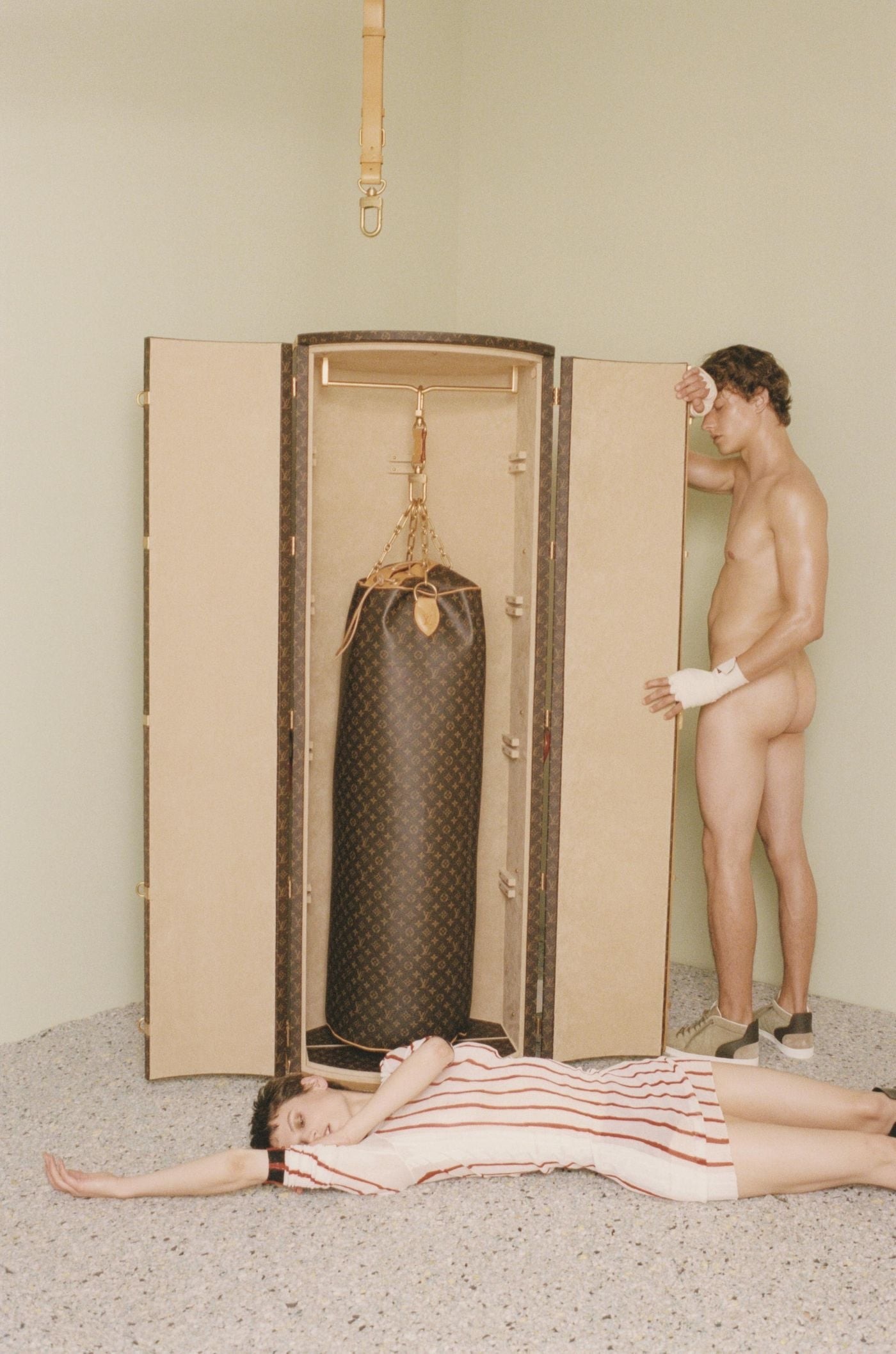
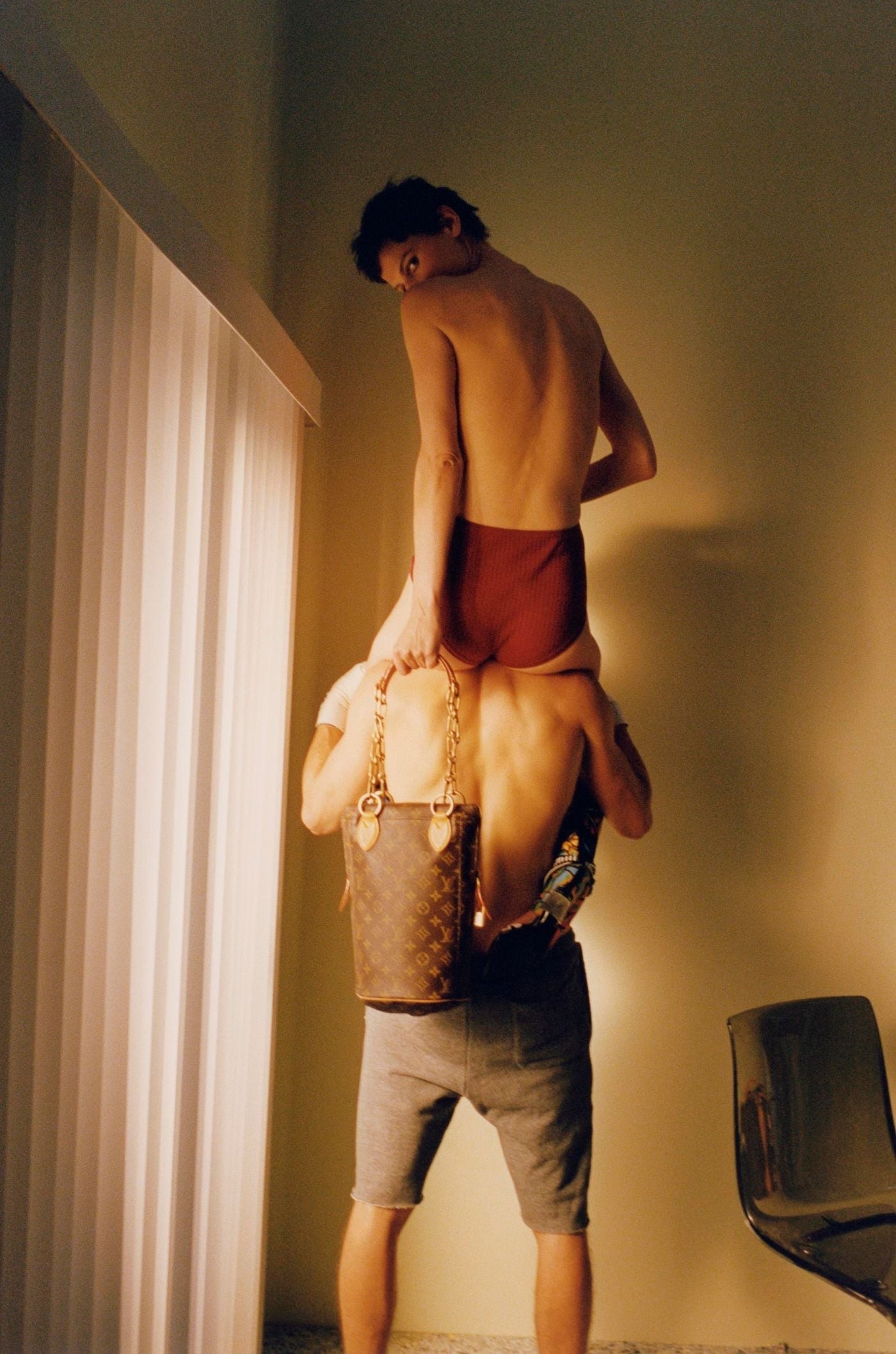
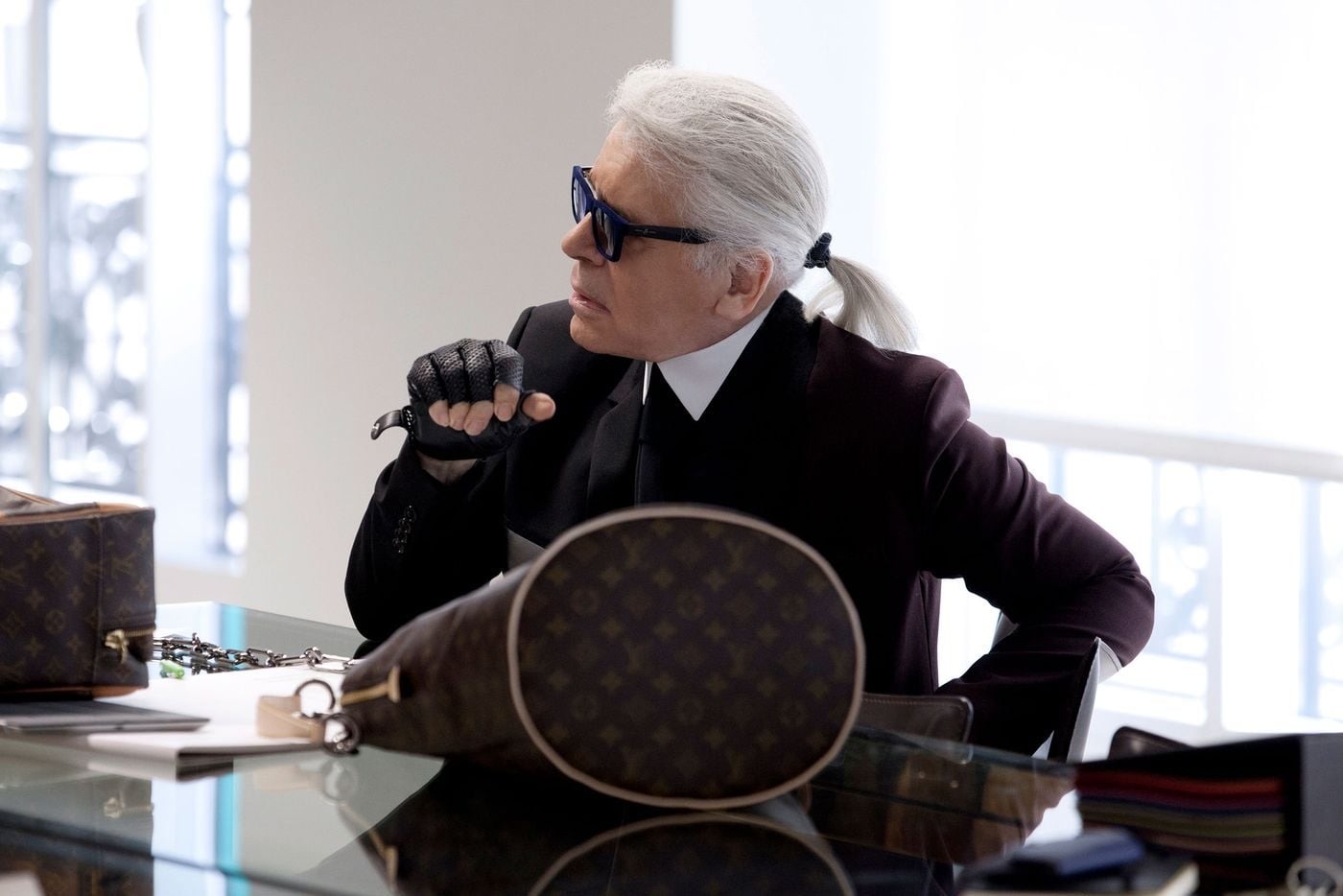
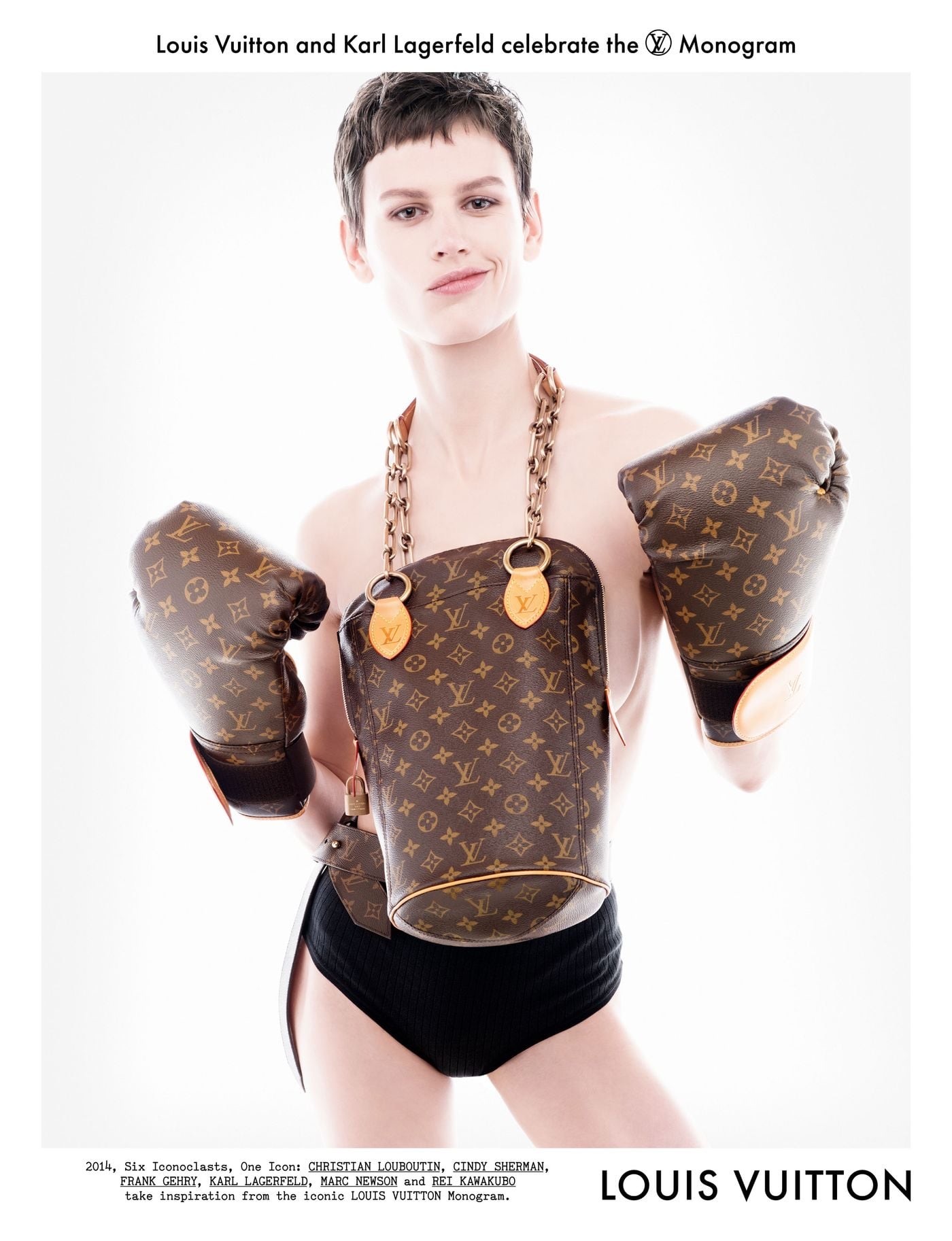
Karl Lagerfeld produced the project's largest single piece: a punching-bag-and-stand set in Monogram canvas, accompanied by a leather trunk that opened to reveal a pair of boxing gloves and a Monogram-stitched workout mat. Lagerfeld also photographed each of the other five Iconoclasts and their finished pieces in his Paris studio for an editorial spread in Harper's Bazaar's October 2014 issue. The double role placed him both inside the project as a participant and above the project as its visual chronicler.
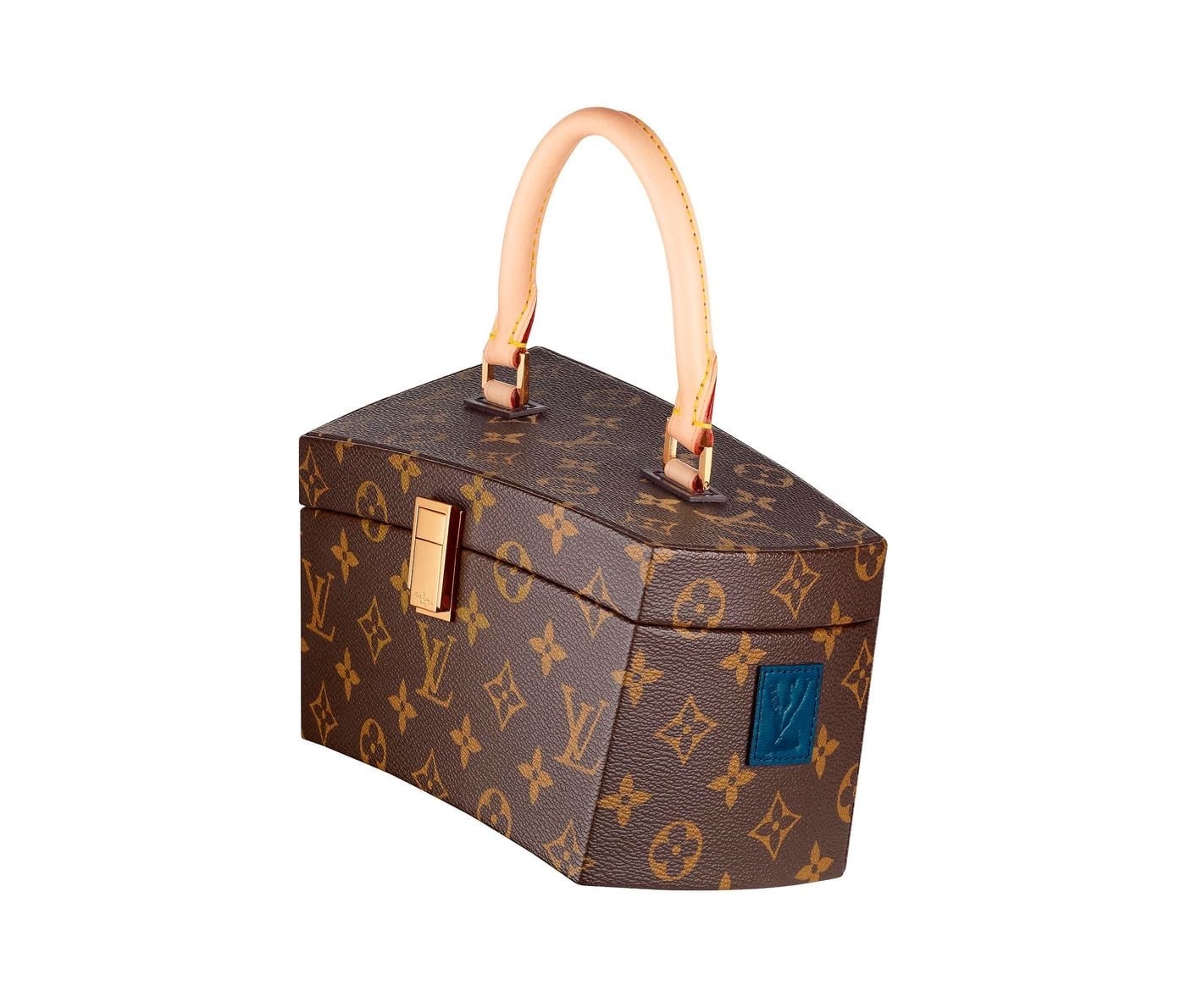
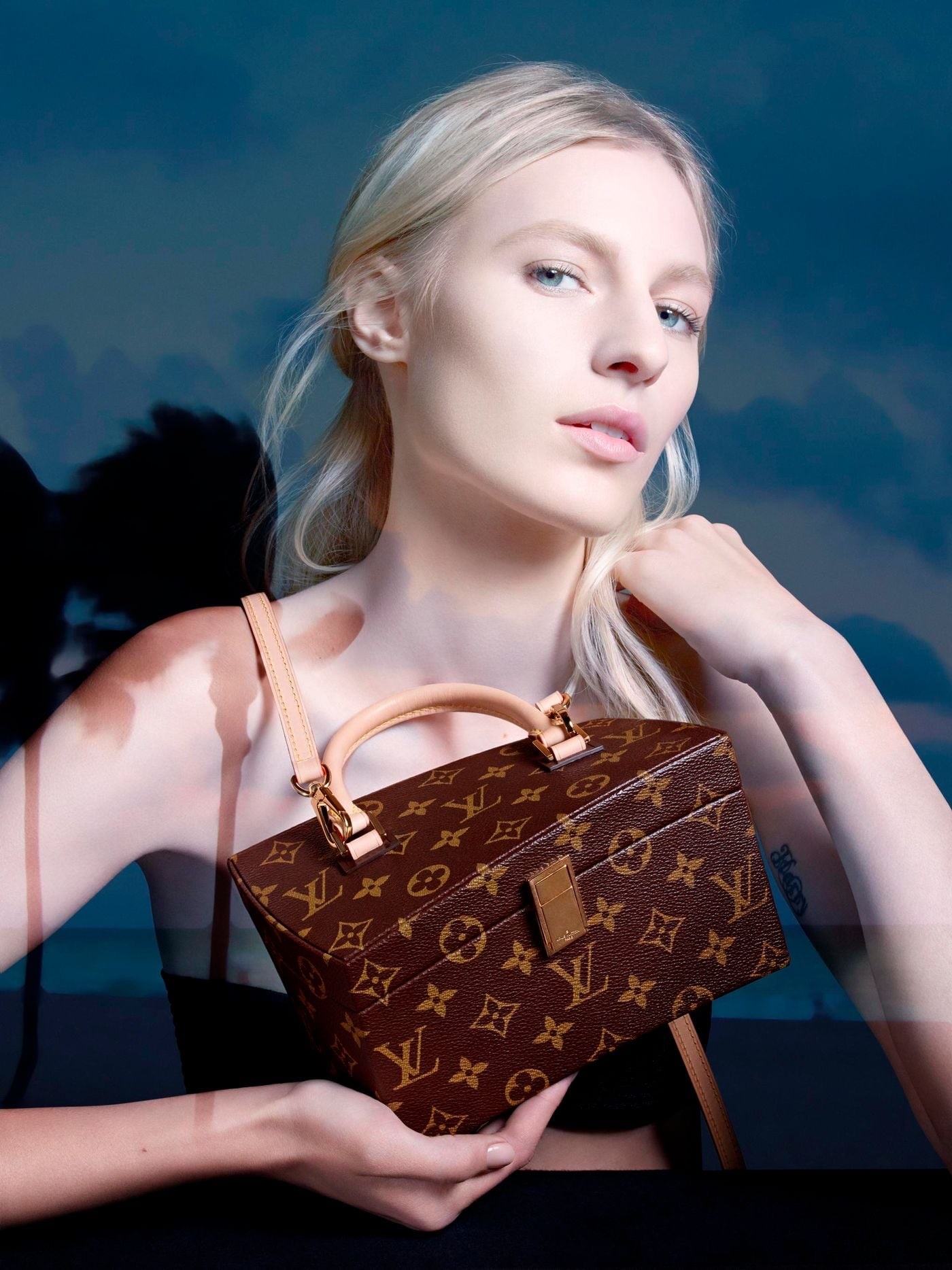
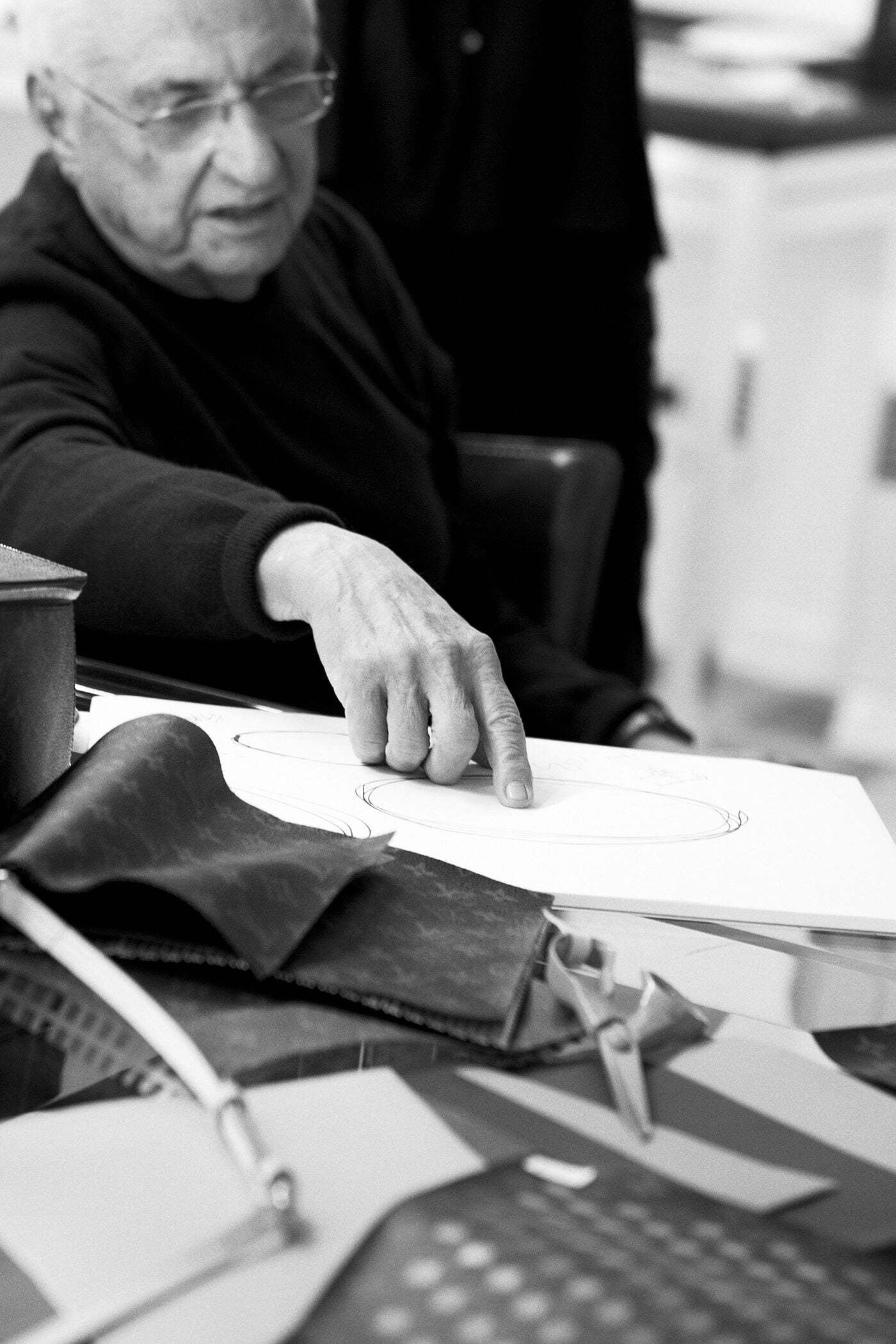
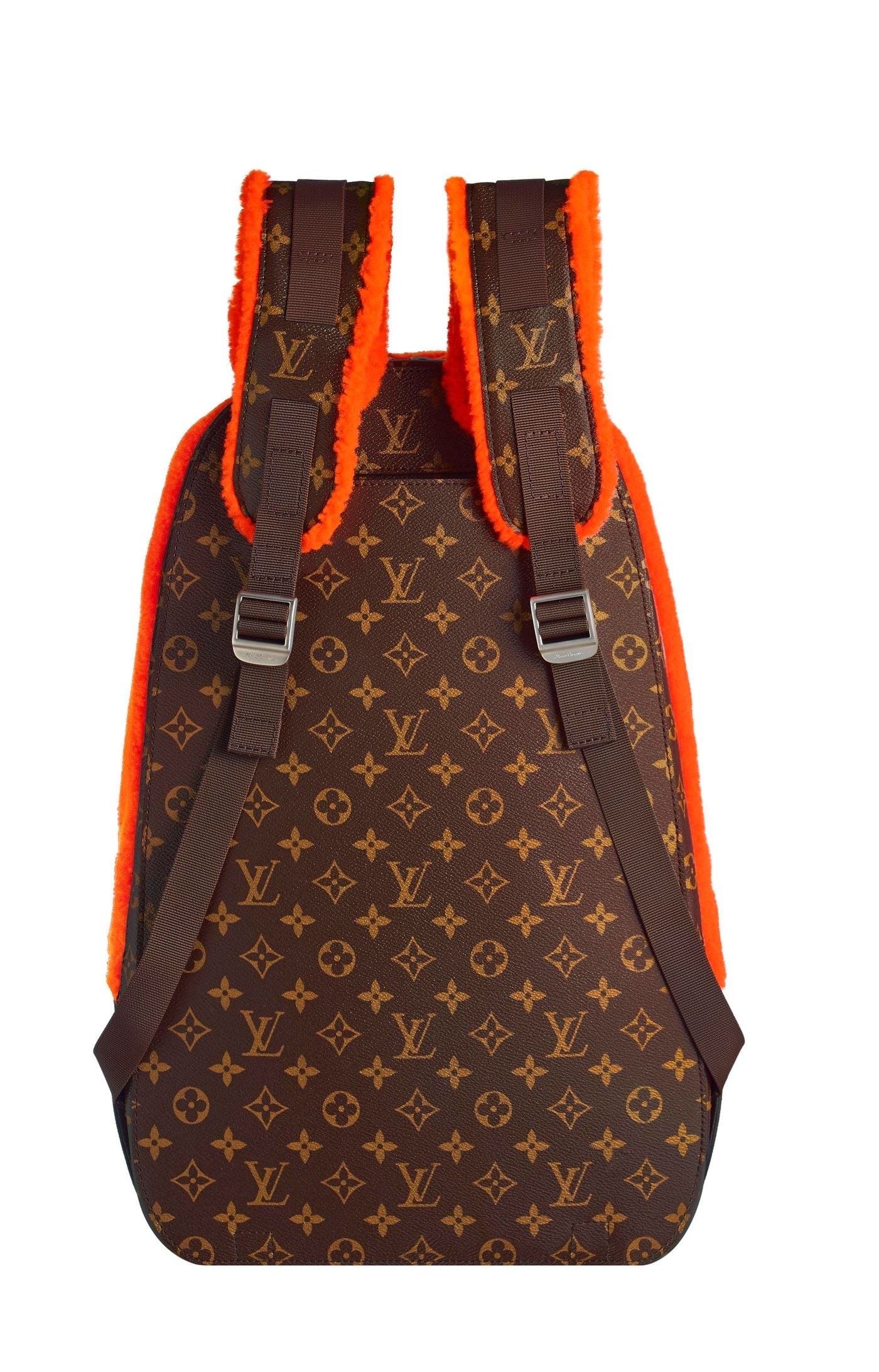
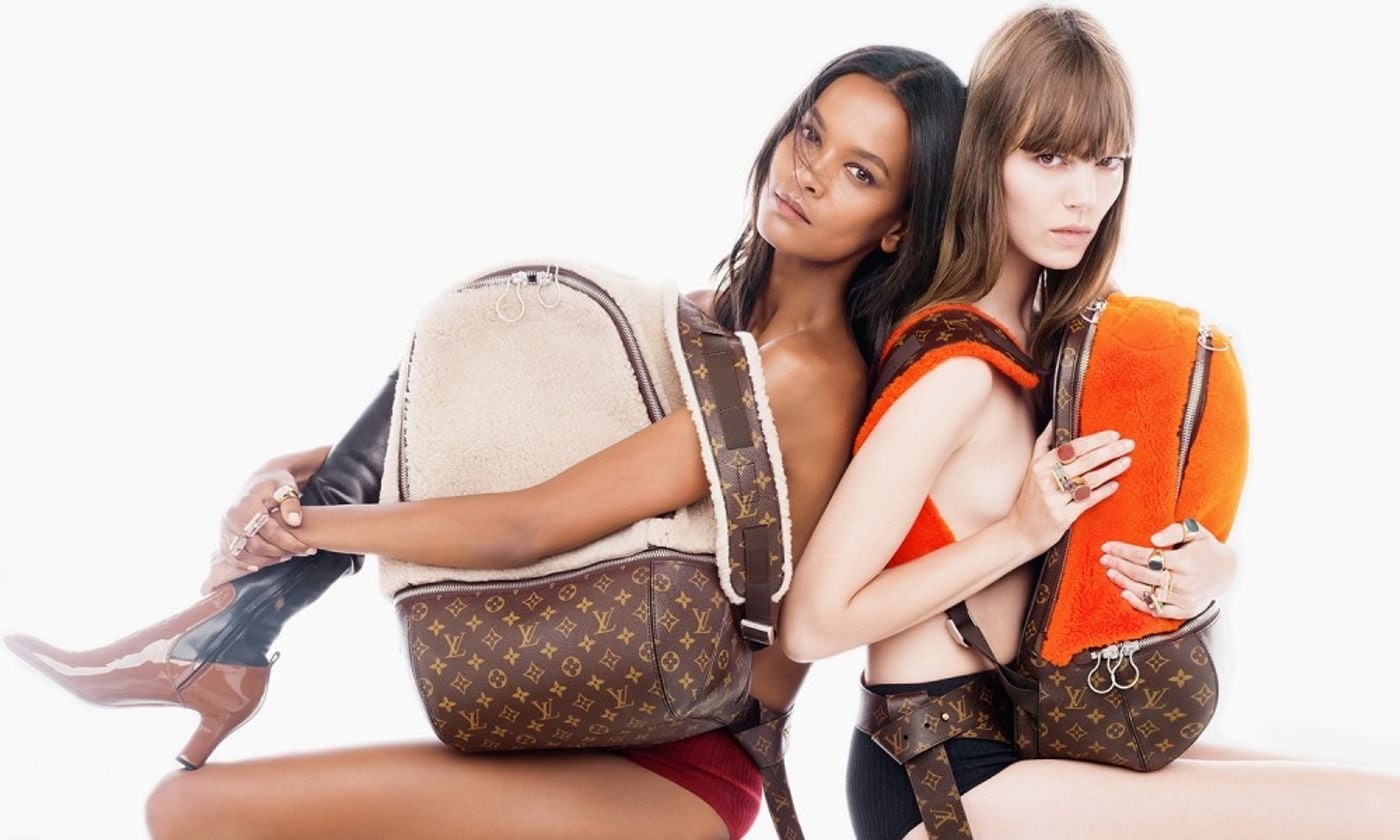
Frank Gehry, whose Fondation Louis Vuitton opened on 20 October 2014 five days after the Iconoclasts release, produced a Twisted Box: a small rigid case in Monogram canvas with the silhouette deformed along Gehry's signature curving sail geometry. The piece read as a wearable miniature of the architecture that was about to open in the Bois de Boulogne. Marc Newson produced a sculpted backpack with a single rigid handle and a pulley-and-strap system that allowed the bag to be carried as a backpack or as a hand-held briefcase. The piece used Newson's Lockheed Lounge industrial-design vocabulary applied to the Monogram canvas.
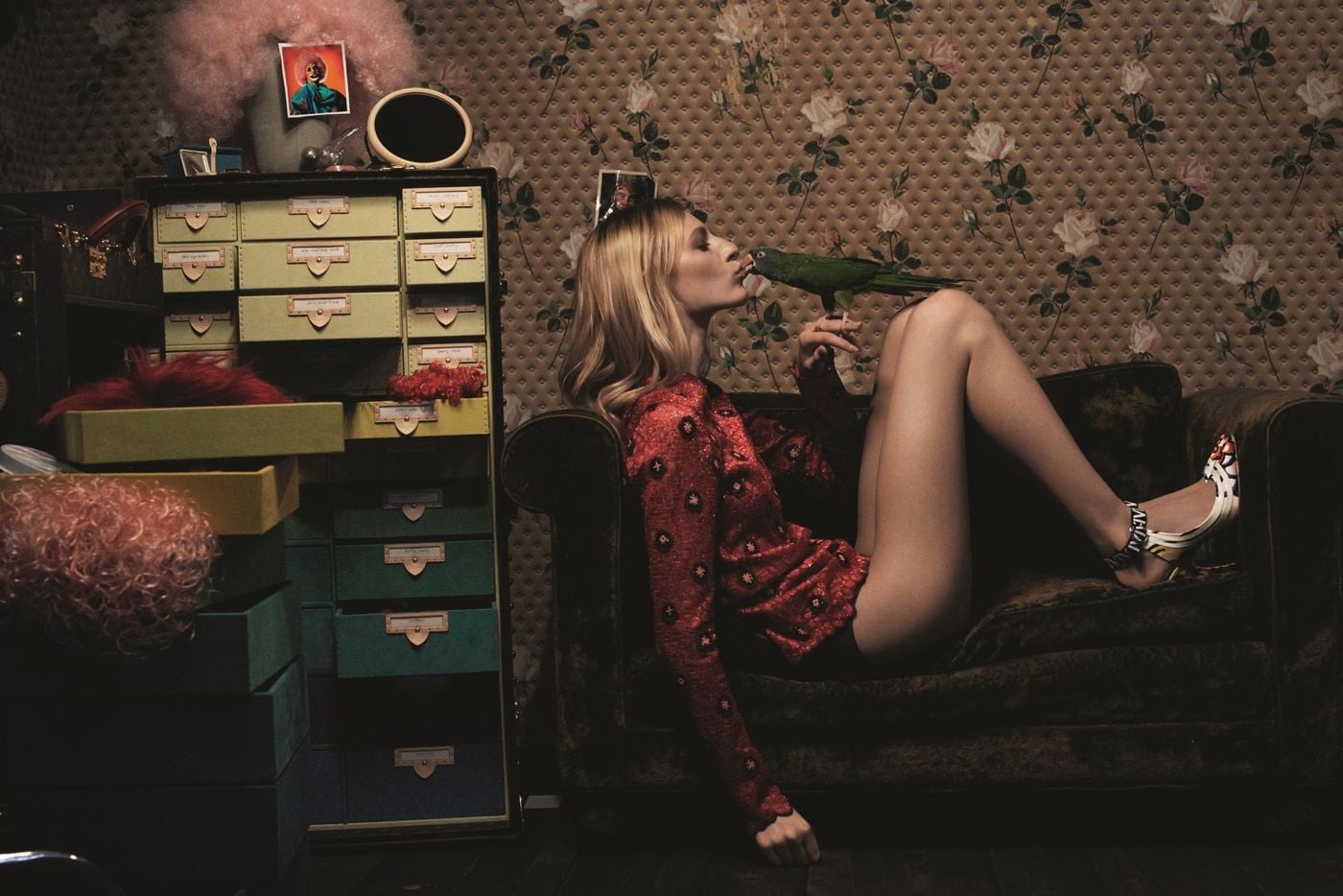
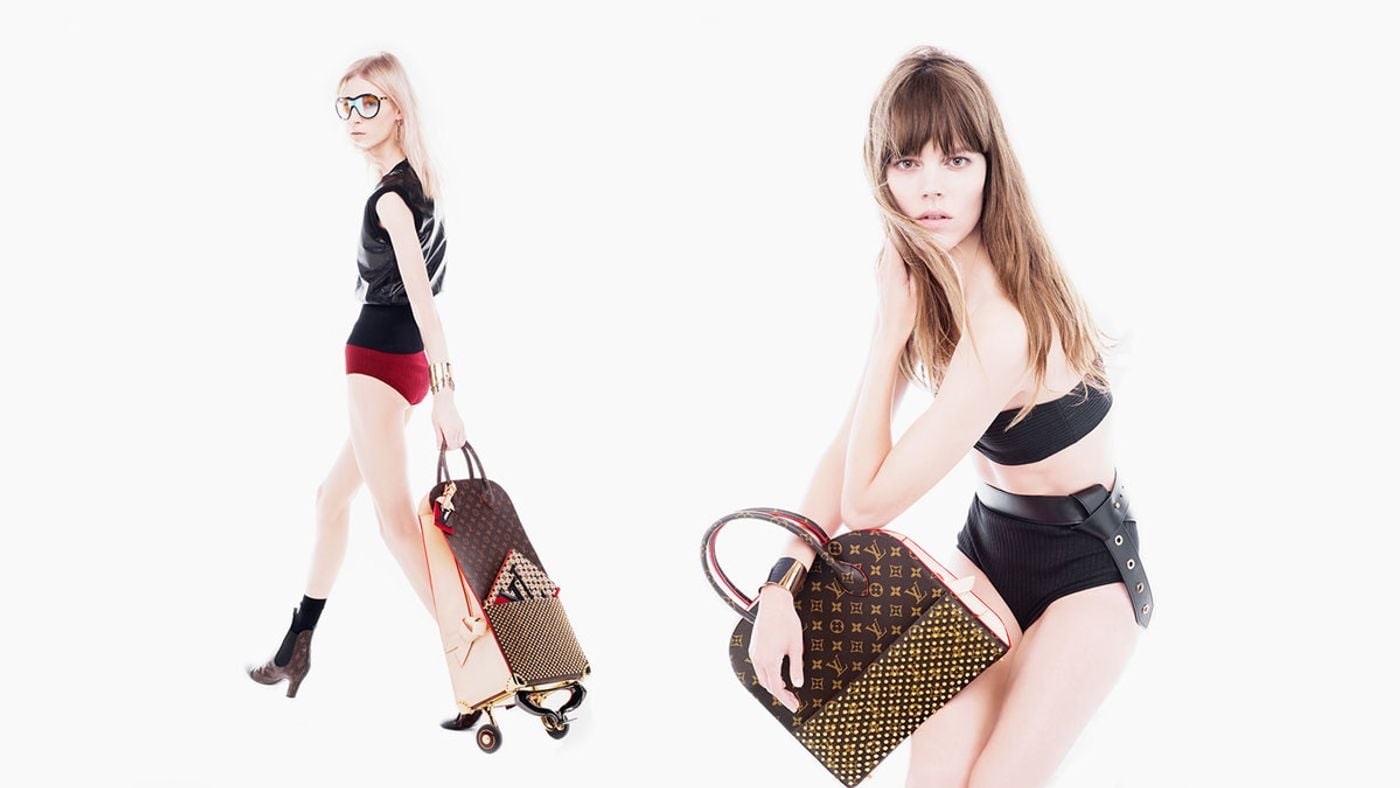
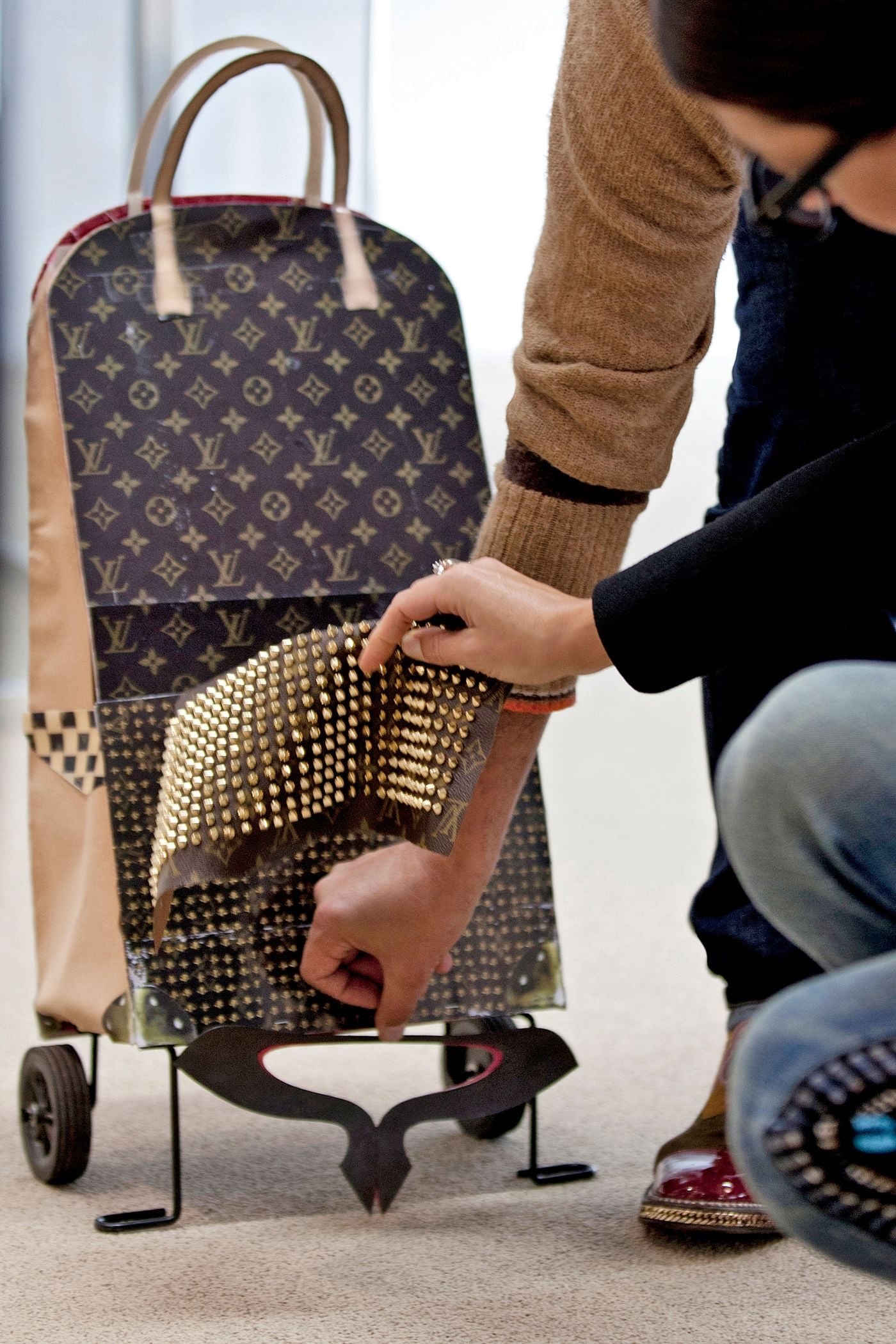
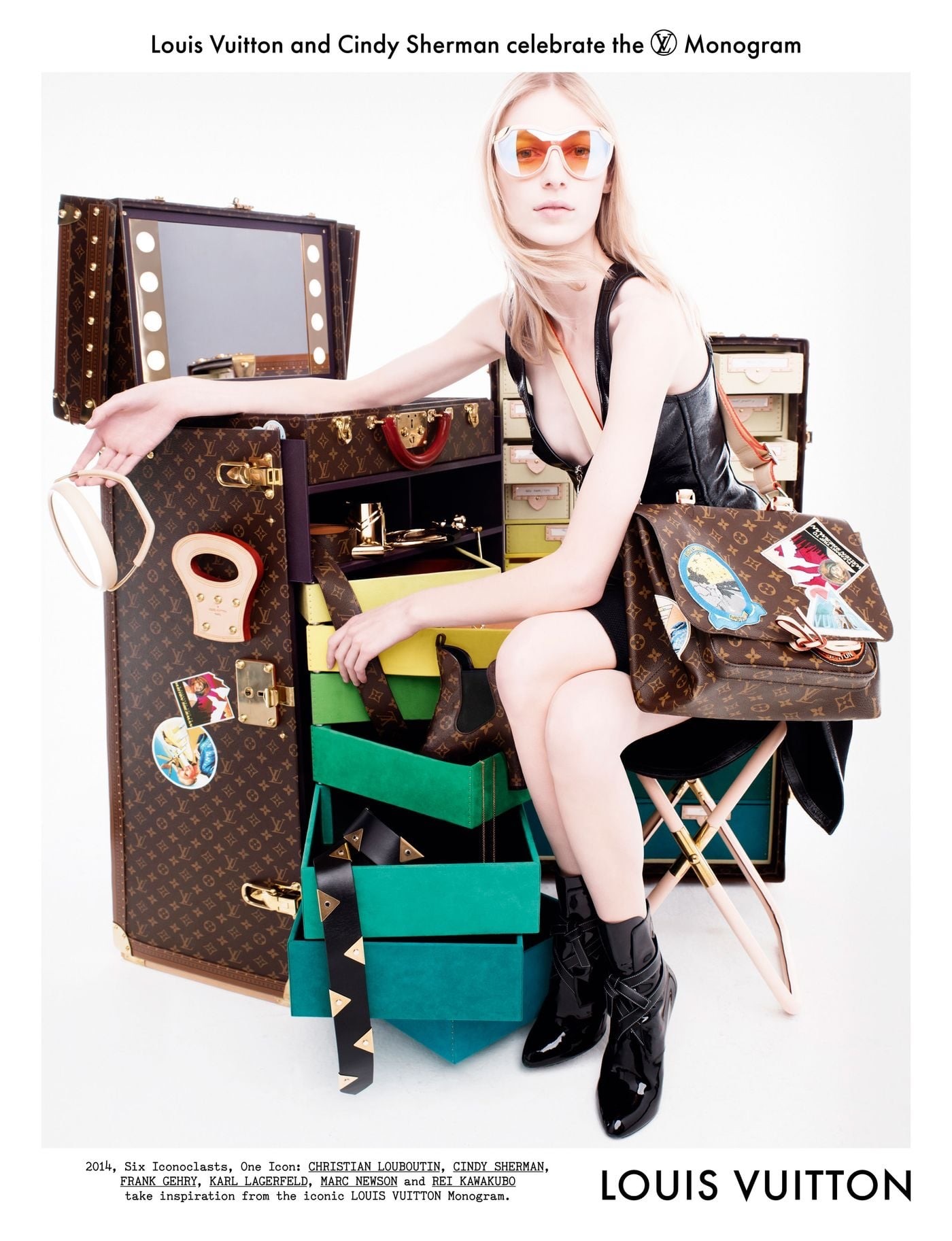
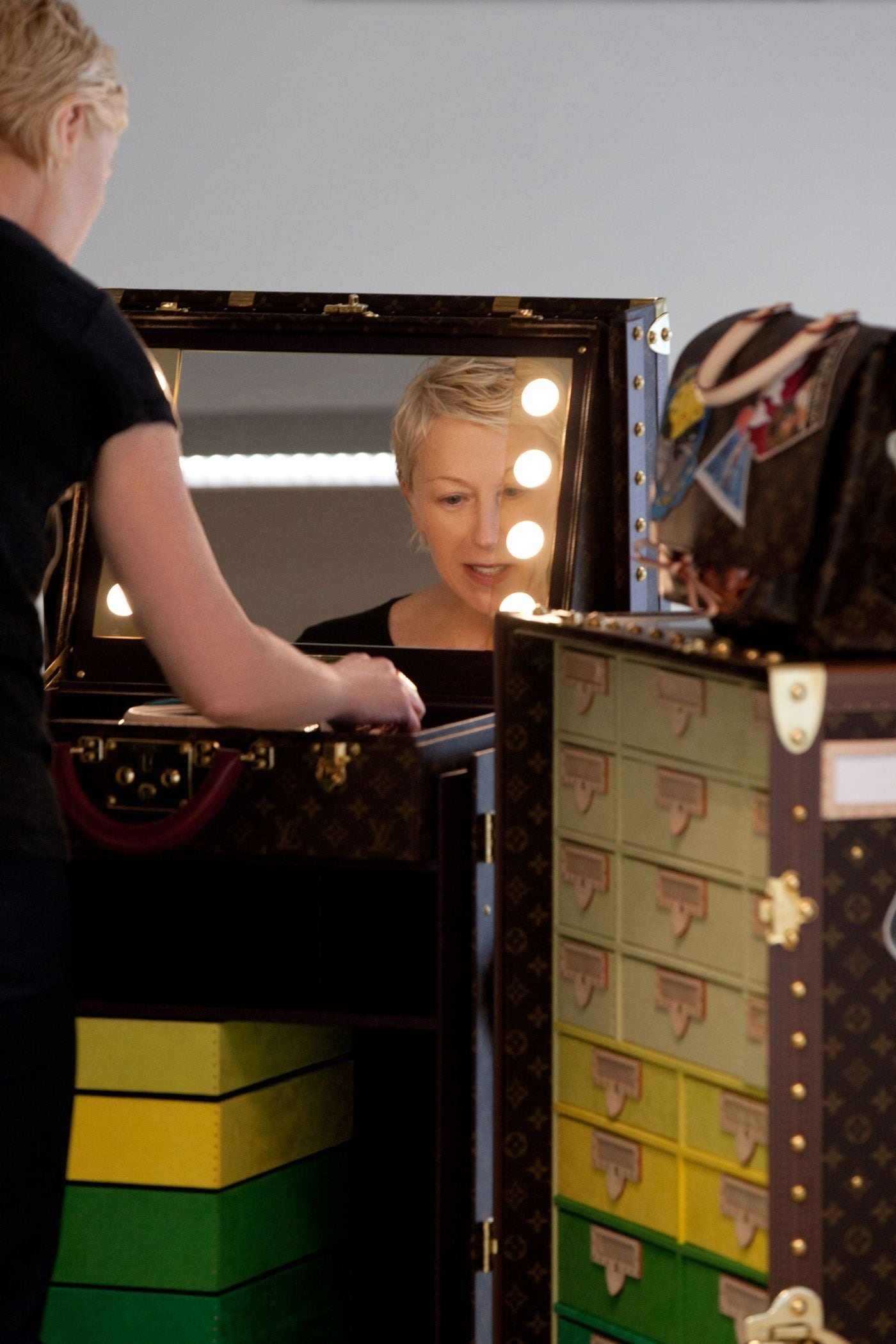
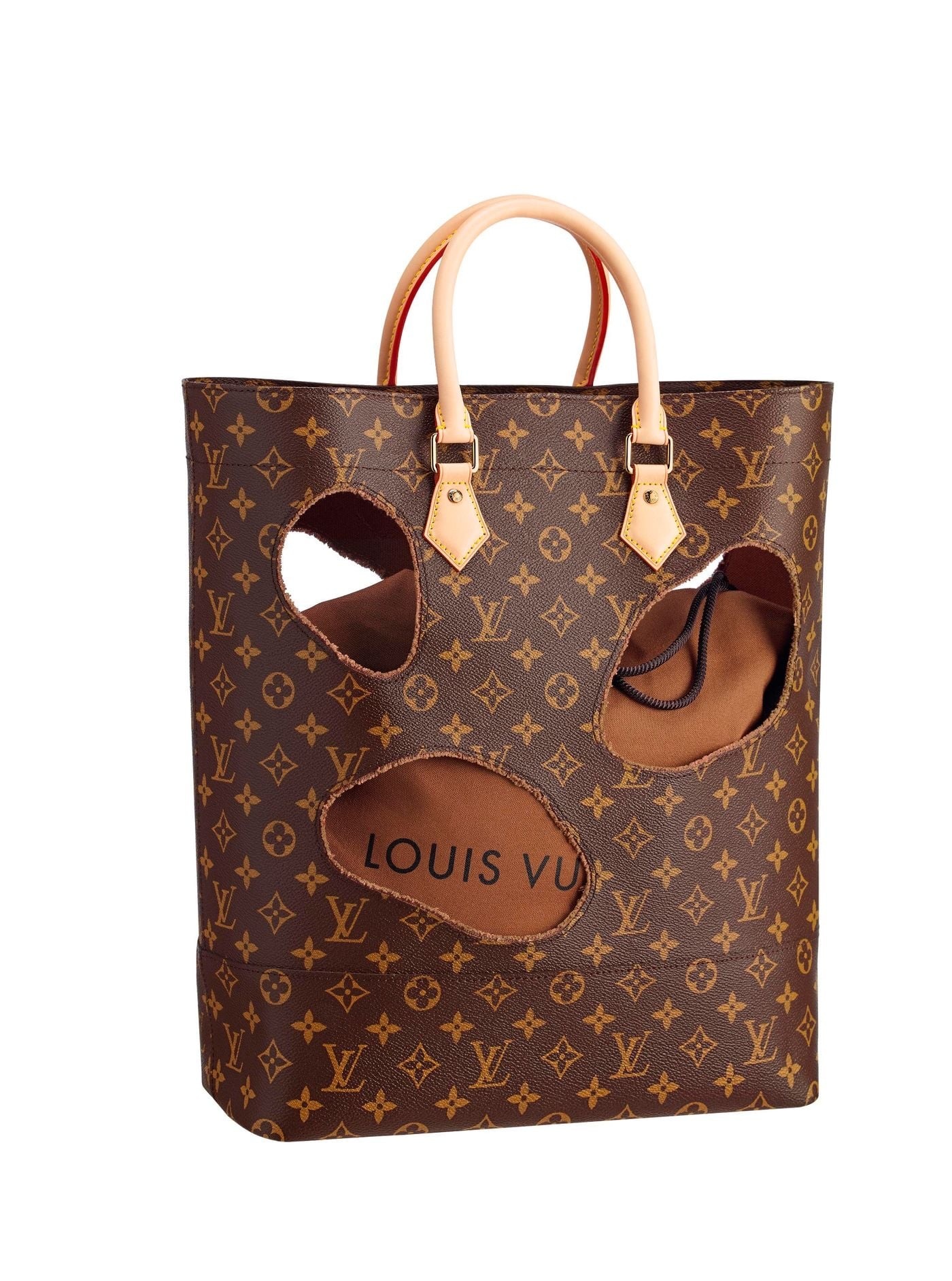
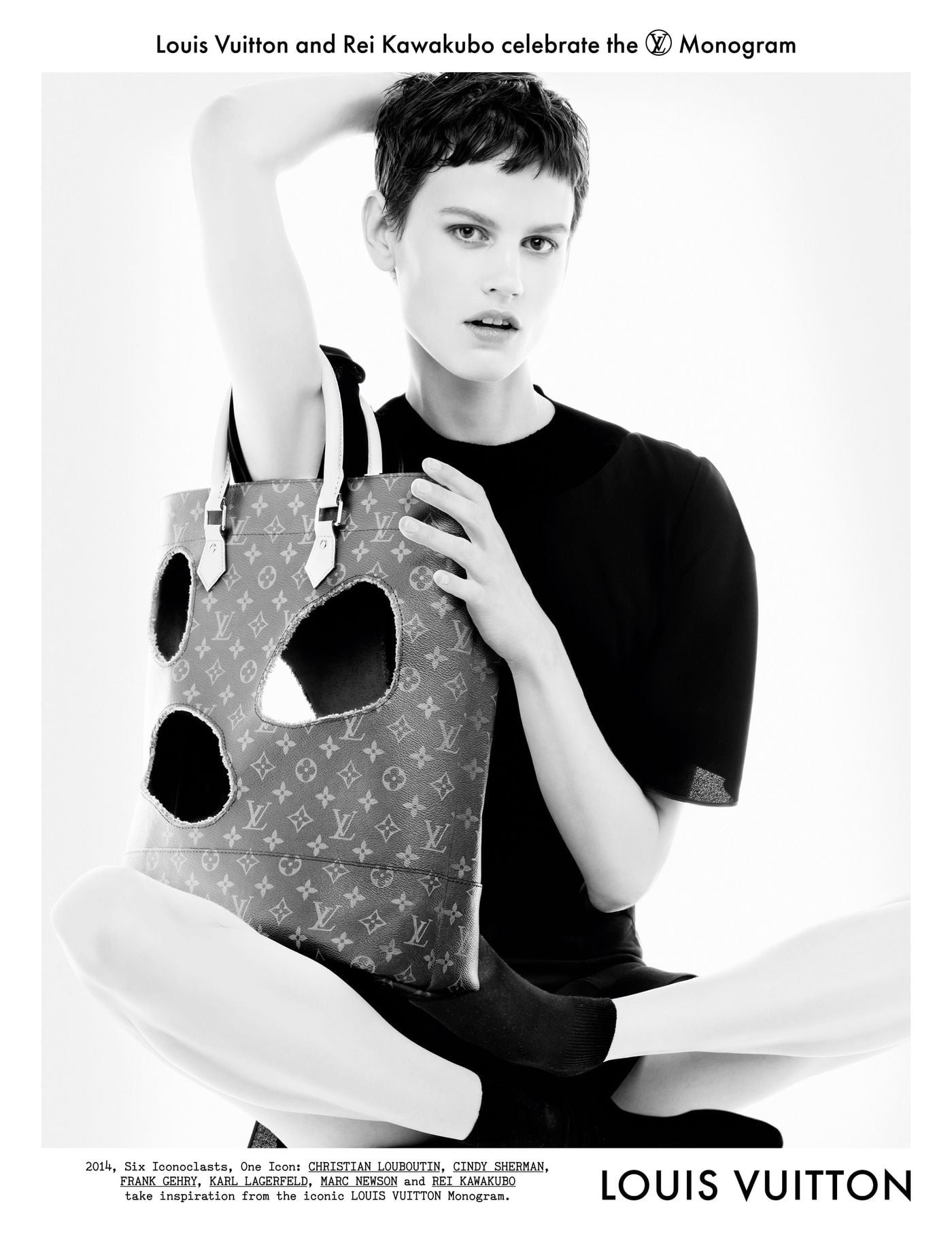
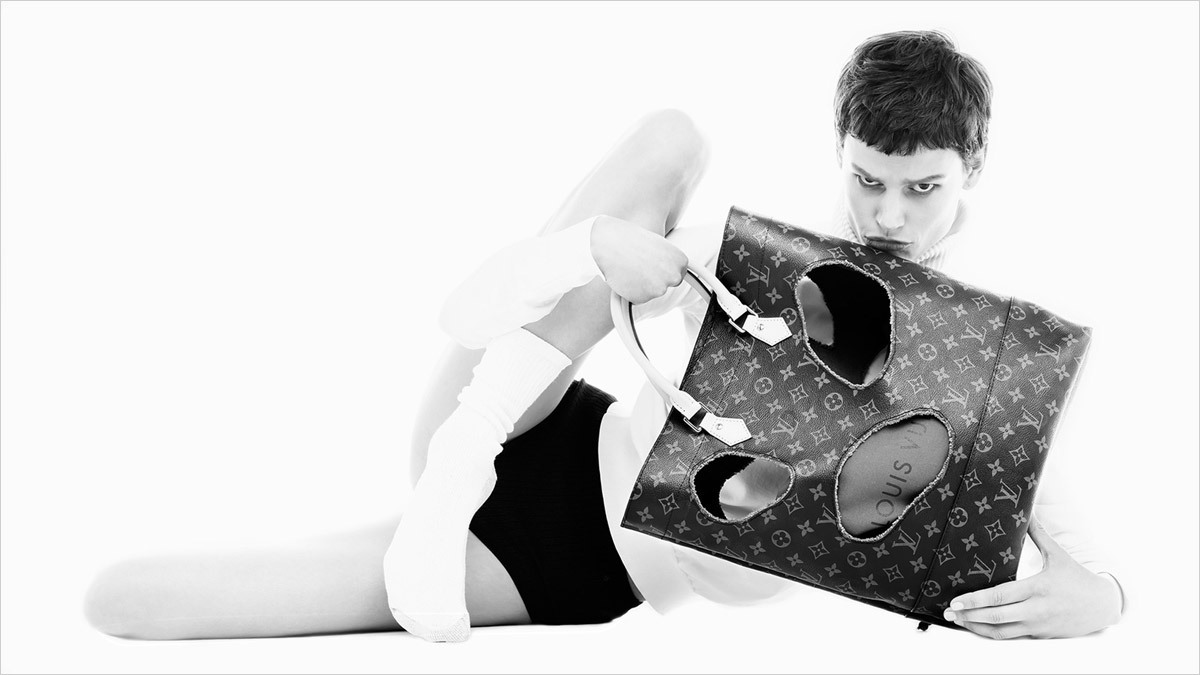
Cindy Sherman produced a trunk faced with a leather curtain printed with photographs of her own film-still characters, with travel stickers from invented destinations layered across the surface. The interior compartments contained miniature replicas of objects from her studio. Christian Louboutin produced a soft-sided shopper in Monogram canvas with a red-lacquered leather sole running across its base, quoting the red sole the designer registered as a trademark for his footwear. Rei Kawakubo, founder of Comme des Garçons, produced a tote in Monogram canvas with a series of bored holes cut through the body, exposing the interior compartments and the carrier's possessions to the street.
The brief and its limits
The Iconoclasts were given full creative latitude inside three constraints: the piece had to register the Monogram as an icon, the piece had to be physically produceable in the Asnières workshop, and the piece had to ship in a commercial quantity rather than as a one-off. Each piece was produced in an edition that varied by Iconoclast and by silhouette: Lagerfeld's punching bag in single digits, Gehry's Twisted Box in a numbered series of two hundred, Newson's backpack in a non-limited regular-production run, Sherman's trunk in a numbered series of one hundred, Louboutin's shopper in a regular-production run, and Kawakubo's bored tote in a numbered limited edition.
Retail allocation was concentrated at the Champs-Élysées Paris flagship, the Bond Street London store, the Fifth Avenue New York store, the Omotesandō Tokyo store and the IFC Hong Kong store. The pricing was tiered. Newson's backpack and Louboutin's shopper sat in the regular Louis Vuitton accessory price band; Lagerfeld's punching-bag set, Gehry's Twisted Box, Sherman's trunk and Kawakubo's bored tote were priced as collector pieces in the five-figure range. Resale prices on the limited-edition pieces stabilised above retail within their first year.
The visual programme
Karl Lagerfeld's editorial for Harper's Bazaar October 2014 ran across twenty-eight pages and photographed each Iconoclast in their working environment alongside their finished piece. The accompanying interview, conducted by Bazaar editor-in-chief Glenda Bailey, asked each designer to define what the Monogram represented in 2014. The answers were uneven and unrehearsed and were widely quoted in the design press of the period. A separate book, "Louis Vuitton: The Icon and the Iconoclasts: Celebrating Monogram," was published by Rizzoli on 14 October 2014, with photography by Lagerfeld and short essays by Pierre Léonforte, Éric Pujalet-Plaà and Florence Müller. The book remained in print and entered the standard Louis Vuitton archive reference list.
The project's place in the anniversary architecture
The Iconoclasts release sat inside a broader 160th anniversary programme that included the Asnières family workshop opening to selected press, the Volez Voguez Voyagez exhibition at the Grand Palais in Paris in 2015, and the Fondation Louis Vuitton opening on 20 October 2014. The project's logic was strategic. By commissioning six designers from architecture (Gehry), fashion (Lagerfeld, Kawakubo, Louboutin), industrial design (Newson) and contemporary art (Sherman), the Maison registered the Monogram as a cultural object that crossed disciplines and resisted reduction to a single creative field. The format was repeated, on smaller scale, in the Monogram artist editions of the following decade and in the 2022 "200 Trunks, 200 Visionaries" anniversary exhibition that marked the founder's 200th birthday.

Written with AI assistance, edited by a human. Find out more about our Use of AI.