From print posters in Paris to computer-animated television
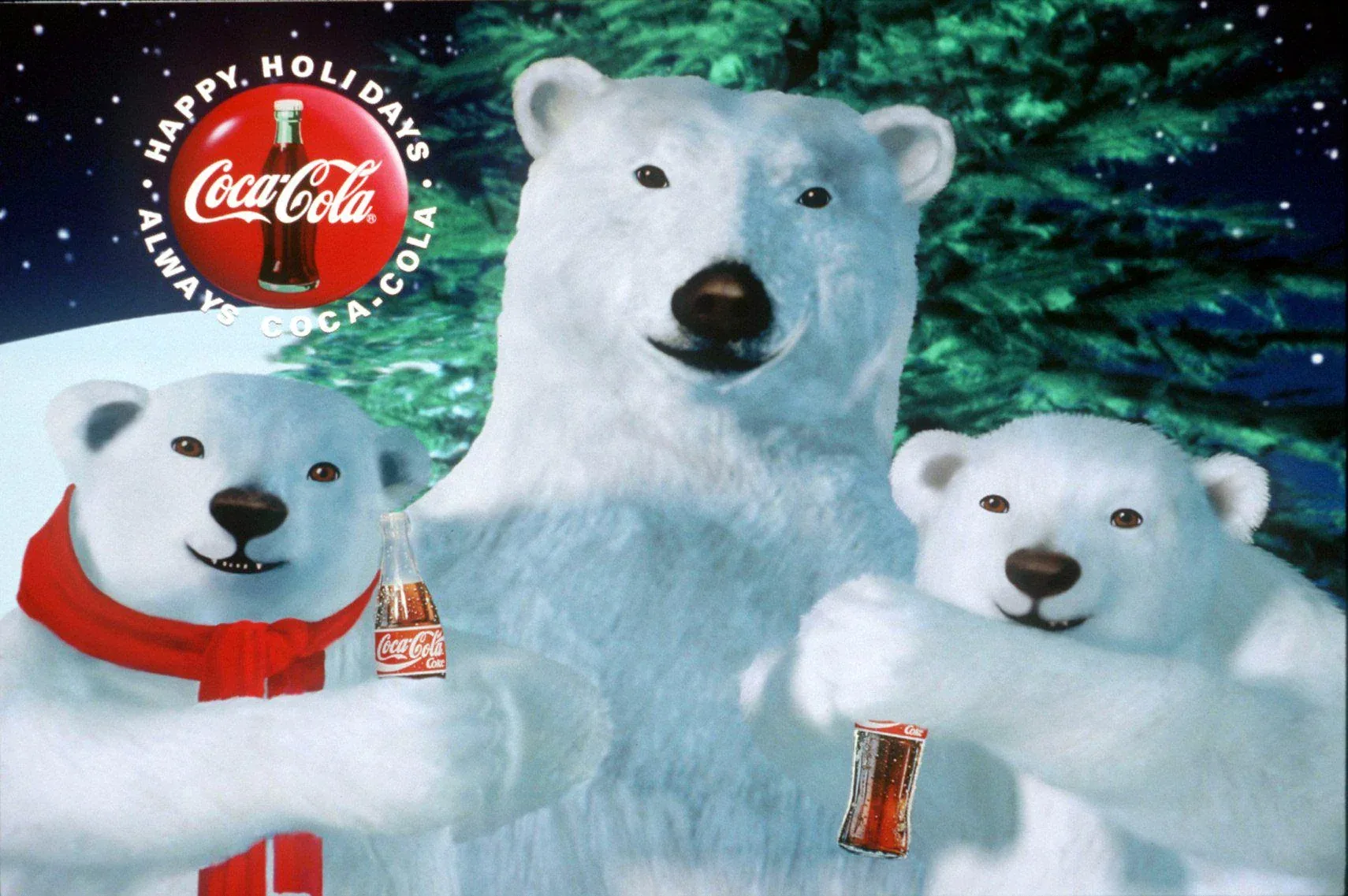
Coca-Cola elevated its polar bear into one of its most recognised characters in 1993, when Northern Lights premiered as part of the Always Coca-Cola campaign. The bear had quietly accompanied the brand for decades. Coca-Cola's first polar bear print advertisement appeared in France in 1922, and for the next 70 years polar bears surfaced sporadically in posters and seasonal print work. The shift in 1993 brought the bear into a different visual register through computer animation, anchoring a campaign that would set the tone for Coca-Cola advertising through the rest of the decade.
The CAA campaign that introduced 27 spots
Always Coca-Cola was developed by Creative Artists Agency and later by Edge Creative, comprising an initial run of 27 commercials targeted at distinct audiences. The campaign deliberately used a wide range of techniques across its films, with computer animation positioned as one of the more conspicuous innovations. Northern Lights set the bears against an Arctic night sky to watch the aurora borealis as their "movie," drinking glass bottles of Coca-Cola in unison. The film's visual ease concealed a 12-week production cycle.
Creator Ken Stewart described the spark as personal. He had been thinking about drinking Coca-Cola at the cinema, and noticed that his Labrador Retriever puppy resembled a polar bear; the analogue suggested a scene of bears watching the lights together. Animation studio Rhythm & Hues built the bears in three dimensions, beginning with a clay sculpture of a bear's head that was scanned and translated into a wireframe. Animators studied film and photographs of real polar bears to capture how the head, body and limbs moved. Storyboards by illustrator Eugene Yelchin governed each second of action.
A character built without dialogue
The films contained almost no spoken dialogue, only the occasional grunts, oohs and ahs that Stewart performed himself on a sound stage and altered through a computer to give them their bear-like timbre. Original music for the world of the bears was composed by Glenn Rueger at Outside Music, with sound effects by Weddington Productions. Stewart kept music to a minimum to preserve the magical and ethereal quality of the bears, restricting it to punctuation rather than narrative.
Several spots followed the 1993 debut. Two commercials produced for the 1994 Lillehammer Olympic Games sent the bear down a luge track and off a ski jump; a holiday film introduced bear cubs choosing a Christmas tree. The polar bear extended Coca-Cola's repertoire of recurring brand characters and offered an animated companion to the contour bottle, subsequently appearing in print, in retail, and across seasonal communications.
Source: Mackenzie Rough Youtube
Written with AI assistance, edited by a human. Find out more about our Use of AI.