A bottle, a jersey and a tunnel
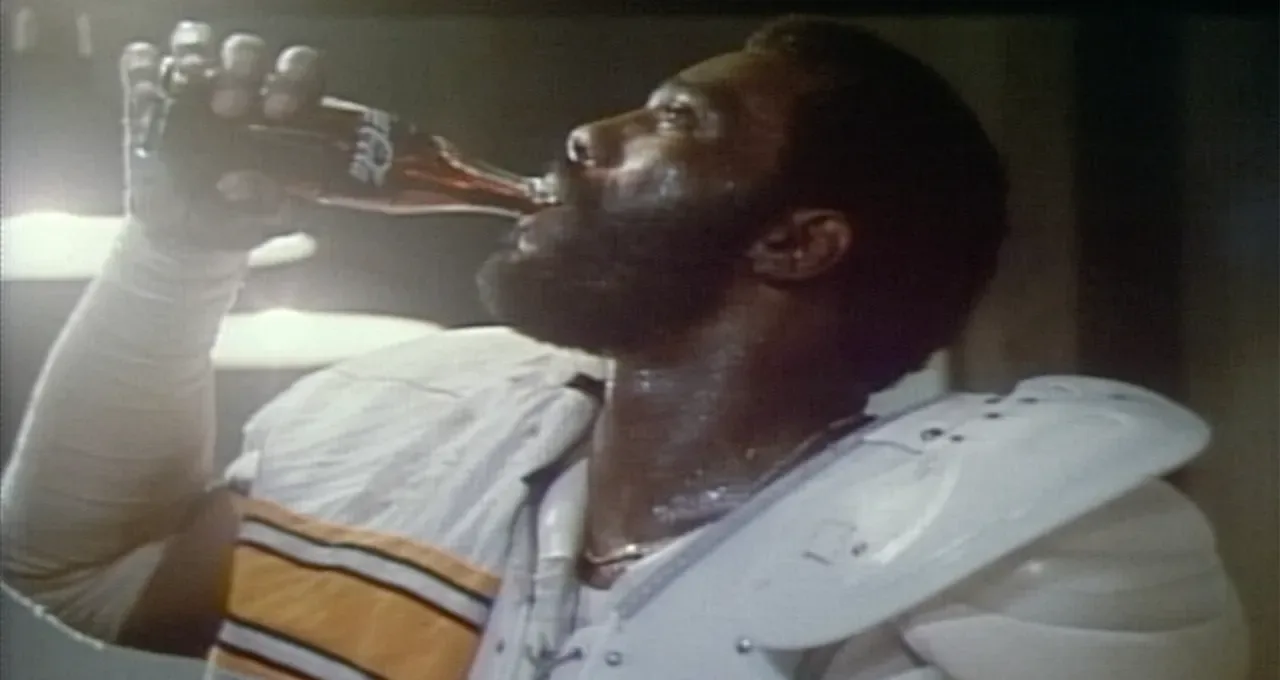
On 1 October 1979 the Coca-Cola Company and the McCann Erickson agency released a 60 second commercial titled Hey Kid, Catch, built around the Pittsburgh Steelers defensive tackle Charles Edward Joe Greene. The cut opened on Greene limping into a stadium tunnel after a punishing game. A young fan, played by the child actor Tommy Okon, approached and offered him a Coca-Cola. Greene declined twice. The boy insisted and added the line, I think you're the best ever. Greene took the bottle, drained it in a single long pull, then turned at the tunnel mouth, smiled and tossed the boy his game jersey with the four words that gave the film its title.
The brief and the creative team
The commercial was made under McCann Erickson's Have a Coke and a Smile platform, which the agency had introduced for the Coca-Cola brand earlier in 1979. The director was N. Lee Lacy, a Los Angeles based commercial director who had built a reputation in the 1970s for spots that placed athletes in unscripted, emotionally weighted moments. The art direction was by Roger Mosconi. The copy was written by Penny Hawkey. The internal working title at McCann had been Mean Joe Greene, but the on screen title and the eventual cultural shorthand became Hey Kid, Catch.
The brief that the agency answered was strategic rather than tactical. Coca-Cola's principal carbonated soft drink competitor, Pepsi-Cola, had taken share through the late 1970s with the Pepsi Generation campaign and with the Pepsi Challenge blind taste test, which had begun in Texas in 1975 and had expanded nationally by 1977. The Coca-Cola Company needed a creative move that re anchored the brand in a space Pepsi could not match. McCann Erickson chose human warmth at the close of a difficult day, rather than youth energy at the start of one, and built the platform around the proposition that the act of opening a Coca-Cola was an act of care between two people.
The production and the casting
The production was unusually involved for a single 60 second spot. Joe Greene was cast directly. He had won four Super Bowl rings with the Pittsburgh Steelers between 1974 and 1978, was the cornerstone of the team's Steel Curtain defensive line and was a familiar face in American televised sport. The casting decision committed the commercial to a specific identity. Greene was widely understood to carry the on field nickname Mean Joe, a phrase the team's defensive coordinator had used after a particularly aggressive 1969 rookie season. The advertisement therefore had to invert that public reputation in a single minute and reveal an entirely different register without contradicting it.
The shoot took place over two days at a vacant stadium in New Rochelle, New York, after the agency had been unable to secure shooting access to the actual Three Rivers Stadium in Pittsburgh. The tunnel sequence required 18 takes, primarily because Greene struggled to drink the contents of a full Coca-Cola bottle in the single pull that the script required. The closing toss of the jersey was filmed in three takes and was kept on the third, which carried the natural laugh from Tommy Okon that subsequently became the defining emotional beat of the film.
Source: stiggerpao Youtube
Why the cut worked
The 60 second cut was constructed around a piece of conventional dramatic geometry. The opening shot positioned Greene as a closed and unapproachable figure. The first refusal of the Coca-Cola confirmed that closure. The second refusal raised the stakes. The boy's line broke the geometry by acting as a small admission of admiration that did not ask for anything in return. Greene's acceptance of the bottle then carried the entire emotional reversal of the piece, with the long drink functioning as the central piece of pantomime. The jersey toss landed as a punctuation rather than as a payoff. The closing card with the Have a Coke and a Smile line tied the moment to the platform.
The commercial premiered on US television on 1 October 1979 and was re aired through the autumn of that year. Its most prominent placement came during Super Bowl XIV in January 1980, where it ran in the second quarter break. The Super Bowl placement is the moment that subsequent retrospective coverage tends to remember, but the spot was already in heavy rotation by the time it reached the Super Bowl audience and had already begun the cultural conversation that the Super Bowl placement amplified.
The recognition and the long tail
Hey Kid, Catch won a Clio Award for advertising in 1979 and was subsequently inducted into the Clio Hall of Fame. Joe Greene received an Emmy nomination for his on screen performance, an unusual outcome for a 60 second commercial and an outcome that no other professional athlete had received for advertising work to that point. McCann Erickson re cut the film for international markets in 1980, with Brazilian footballer Branco, Argentine footballer Diego Maradona and several other regional sports figures replacing Greene for adapted versions, none of which reached the cultural saturation of the original American cut.
The commercial became the reference point for the modern American sports advertisement. Subsequent work by Nike, by Gatorade and by other Coca-Cola creative teams continued to cite the structural logic of the 1979 spot. The Have a Coke and a Smile platform ran for three years and was succeeded by Coke Is It in 1982, but the Hey Kid, Catch cut continued to be used by the Coca-Cola Company in retrospective communications, in heritage activations and in the 2009 Super Bowl XLIII parody in which the Pittsburgh Steelers offensive linemen Troy Polamalu and a young fan re staged the closing exchange for an internal Coca-Cola promotion.
The 1979 spot retains its position in trade rankings of the best American advertising of the second half of the twentieth century. The Drum has placed it at the head of its all time Super Bowl ranking. The American Association of Advertising Agencies includes the film in its timeline of foundational moments in the medium.
Youtube: CBS
Written with AI assistance, edited by a human. Find out more about our Use of AI.