A campaign film about flight
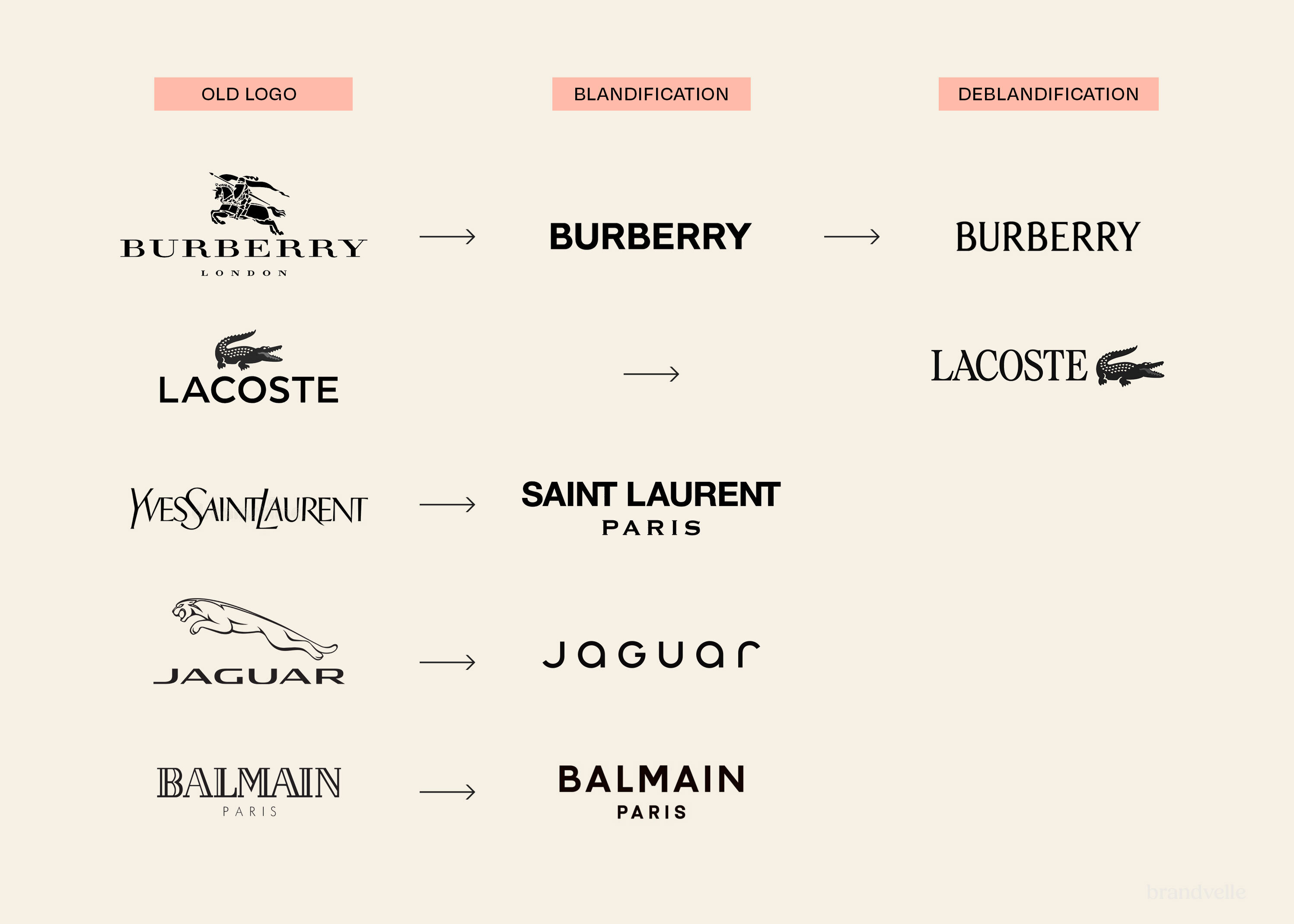
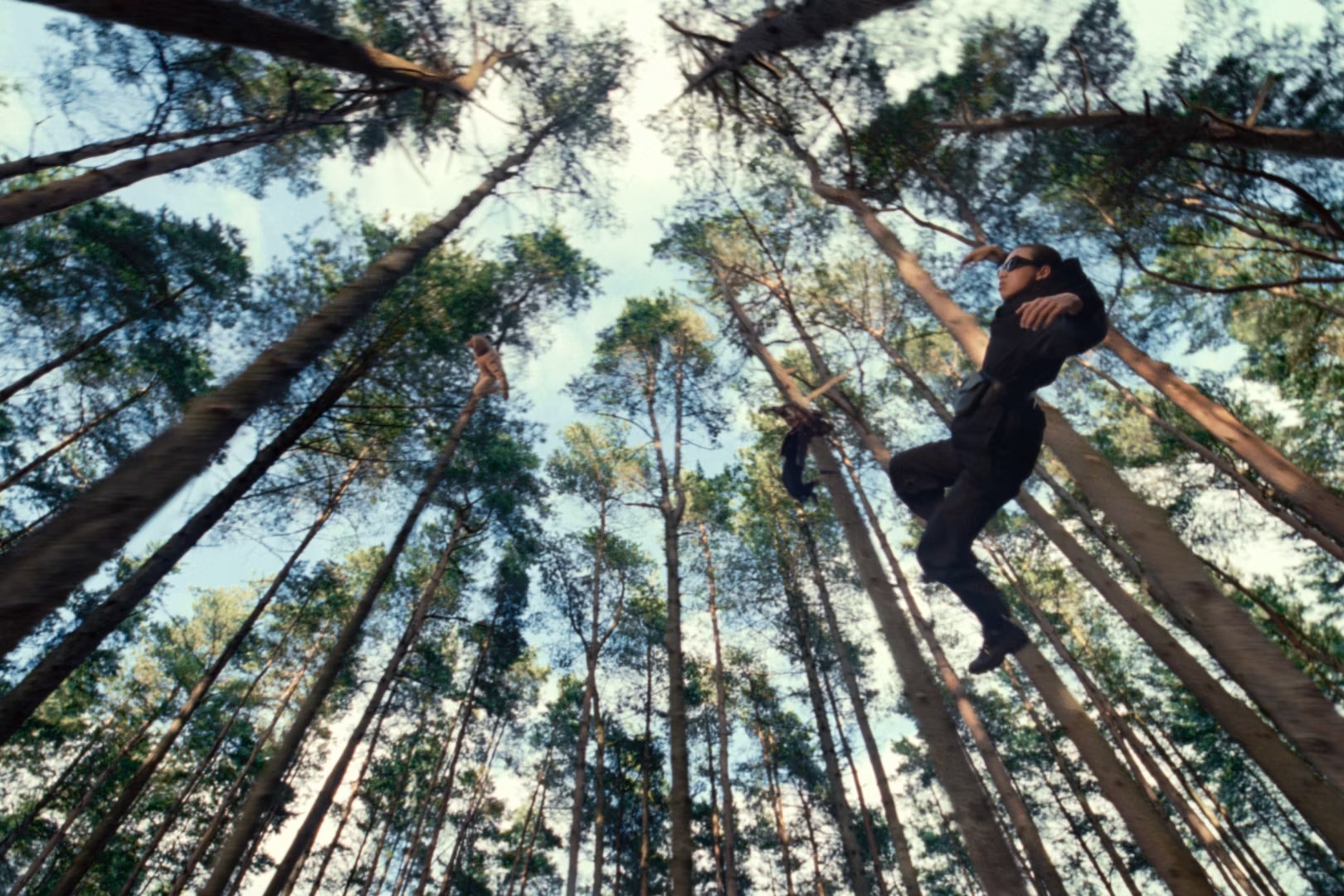
In October 2021 Burberry releases Open Spaces, a 90-second campaign film directed by the French collective Megaforce through Riff Raff Films and produced for the brand's outerwear-led season.1, 2 Four figures in Burberry coats run, leap and then take to the air across British landscapes, drifting over fields, lakes and a coastal cliff before joining together in the sky.2, 3, 4 The film carries no voice-over, no on-screen product callouts and no explicit selling line. The action is set to a propulsive score and ends with the Burberry wordmark and the brand's Equestrian Knight, in their Tisci-era sans-serif treatment.
Megaforce, working again with choreographer Marine Brutti and the (La)Horde collective, build the film from a sequence of practical effects, wirework and CGI augmentation by London-based MPC.4, 5 The choreographic vocabulary is the same that the same collaborators developed for the Burberry Festive 2020 film Singin' in the rain, in which dancers sidestepped giant falling blocks of ice down London's Petticoat Lane.6, 7 Open Spaces moves the vocabulary outdoors, expanding it across the British countryside.
Where the film sits in the Tisci era
Riccardo Tisci is in his third year as Chief Creative Officer when the campaign drops.8 His tenure has so far balanced a re-engineered visual identity, designed in 2018 with Peter Saville, against a series of cinematic campaign films that have repositioned Burberry's storytelling away from fashion-photographic still imagery and toward set-piece moving image work.9 Megaforce becomes the recurring directorial voice for this shift.6 The Festive 2019 film, the Hero fragrance film and the Festive 2020 film all share the same emphasis on physical performance, choreography and ambition of scale.
Open Spaces extends this logic to a non-festive moment in the calendar. Where Festive films historically carry a defined narrative anchor, Christmas, Open Spaces uses the absence of that anchor to make a more abstract claim: the Burberry coat, in its functional inheritance, is a garment for movement through landscape. The film's choice to lift the figures into the air is a literalisation of the brand's heritage of weatherproof outerwear. If gabardine made the wearer impervious to rain in 1879 and the trench coat survived the Western Front, the campaign suggests that the brand's coats now carry their wearers, quite literally, above the constraints of gravity and weather alike.9
Production and craft
The visual effects team at MPC integrate wire rigs, drone footage and digital extensions to produce flight that feels physical rather than animated.5 Trade press coverage credits the Riff Raff Films production team for managing more than thirty distinct setups across Cumbria and the Yorkshire Dales. The wardrobe is drawn from Burberry's runway and outerwear ranges, with neutral palettes that read clearly against grass, water and sky. No accessories or detail close-ups interrupt the choreography.
The score, composed for the film, is industrial in texture and orchestral in build. There is no voice-over. The closing card is short. This is a piece of branded entertainment whose primary persuasive mechanism is craft, not argument.
Why this campaign matters
Open Spaces appears at a particular moment for the luxury sector. The pandemic has compressed the global advertising economy, the social-media-first campaign has become a default, and many luxury houses have moved toward shorter, faster-turnaround content. Burberry's decision to commit to a longer, more elaborate film, with full choreography and large-scale visual effects, is a deliberate counter-position. The brand argues, by example, that long-form cinematic work still has a role in luxury communication.
The reception in trade press supports the position. Campaign, Creative Review and LBB Online cover the film at length.1, 2, 4 Industry awards in subsequent quarters recognise the production.4 The case becomes a frequently cited example of how cinematic ambition can carry brand meaning during a period in which most categories trim their advertising spend.
For brandvelle, Open Spaces is interesting as a continuation of an editorial line that Burberry has held since the early 2000s. The brand treats the campaign film as a primary surface, not as a derivative. From Christopher Bailey's runway live streams to Tisci's Megaforce films, the underlying decision is the same: the audience for a Burberry campaign is the same audience as for a Burberry coat, and the film should be made with the same level of ambition as the garment.
Source: Megaforce Vimeo
Written with AI assistance, edited by a human. Find out more about our Use of AI.
1. Campaign, "Burberry 'Open spaces' by Megaforce", 19 October 2021, for the campaign's launch in October 2021, for the campaign film having been directed by Megaforce through Riff Raff Films, and as one of the Campaign pieces covering the film. The UK page sits behind a sign-in wall on 25 September 2026; the date, text and credit block were read from the same article, number 1730871, on Campaign's US site. https://www.campaignlive.co.uk/article/burberry-open-spaces-megaforce/1730871 https://www.campaignlive.com/article/burberry-open-spaces-megaforce/1730871
2. LBBOnline, "Ride the Wind in This Dreamlike Burberry Film from Megaforce", 19 October 2021, off whitelist and used for corroboration only, for the film's title, Open Spaces, and for its having been created and directed by Riff Raff Films' Megaforce, for its four individuals bounding weightlessly through fields, taking flight, twisting through forests and floating across a lake in the British countryside before coming together as one entity flying through the sky, and as one of the trade titles covering the film. https://lbbonline.com/news/ride-the-wind-in-this-dreamlike-burberry-film-from-megaforce
3. Campaign, Imogen Watson, "How Burberry's dreamlike dance defied gravity", no date shown, for four models defying gravity and bounding weightlessly through the British countryside. The page sits behind a sign-in wall on 25 September 2026 and only its headline, byline and standfirst are readable, so the production analysis it contains could not be checked. https://www.campaignlive.co.uk/article/burberrys-dreamlike-dance-defied-gravity/1731694
4. Creative Review, "Burberry: Open Spaces commercial", 7 January 2022, for Megaforce having been reunited with Burberry and Riccardo Tisci after their Festive ad released for Christmas 2020, for the choreography by (La) Horde, for the group of friends flying through the British countryside, crossing fields, forests and a lake before coming together as one in the sky above a cliff edge, for the film's Honourable Mention in Commercials in Creative Review's Annual Awards and its Directing entry by Riff Raff Films, and as one of the trade titles covering the film. https://www.creativereview.co.uk/burberry-open-spaces-commercial-2/
5. befores & afters, Ian Failes, "Go behind the scenes of that insane Burberry 'Open Spaces Film'", 21 October 2021, off whitelist and used for corroboration only, for the performers' flight having been made possible by crane and wire work and visual effects, and for MPC having handled the visual effects. https://beforesandafters.com/2021/10/21/go-behind-the-scenes-of-that-insane-burberry-open-spaces-film/
6. Campaign, Imogen Watson, "Burberry defies gravity in dreamlike film where models fly through nature", no date shown, for chief creative officer Riccardo Tisci collaborating once again with Megaforce, and for Megaforce as the director collective behind the street dance film Singin' in the rain. The page sits behind a sign-in wall on 25 September 2026 and only its headline, byline and standfirst are readable. https://www.campaignlive.co.uk/article/burberry-defies-gravity-dreamlike-film-models-fly-nature/1730940
7. Creative Review, Rebecca Fulleylove, "Burberry's choreographed ad sidelines the Christmas schmaltz", 11 November 2020, for the Burberry festive film of 2020 made with Megaforce, produced by Riff Raff Films and choreographed by (La)Horde, for the film as a nod to Singin' in the Rain, and for its dancers sidestepping giant falling blocks of ice down London's Petticoat Lane, Megaforce having transformed the rain into ice blocks. https://www.creativereview.co.uk/burberry-riffraff-megaforce-advertising/
8. Wikipedia, "Riccardo Tisci", consulted on 25 September 2026, a reference source under the Brandvelle whitelist, for Tisci having been named by Burberry in 2018 to replace Christopher Bailey as the brand's chief creative officer. https://en.wikipedia.org/wiki/Riccardo_Tisci
9. Wikipedia, "Burberry", consulted on 25 September 2026, a reference source under the Brandvelle whitelist, for Tisci having been named chief creative officer in March 2018 and having presented a few months later a new logo and monogram designed by Peter Saville, for Burberry having introduced gabardine in 1879, and for the trench coat having been born during the First World War and worn by British officers in the trenches. https://en.wikipedia.org/wiki/Burberry