The bear takes the lead
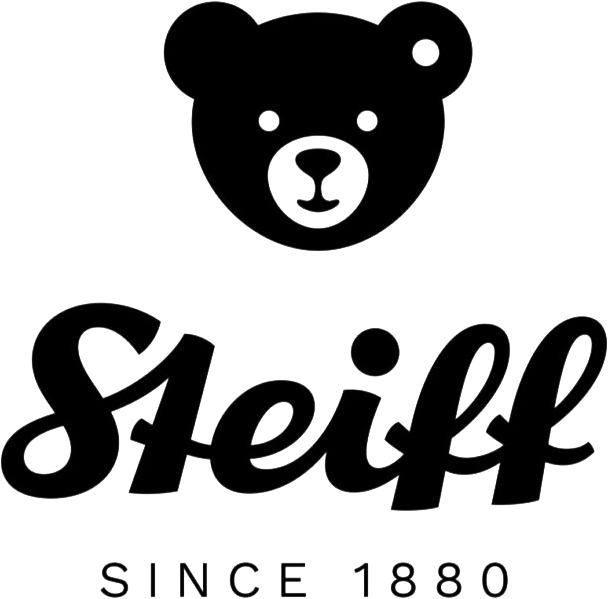
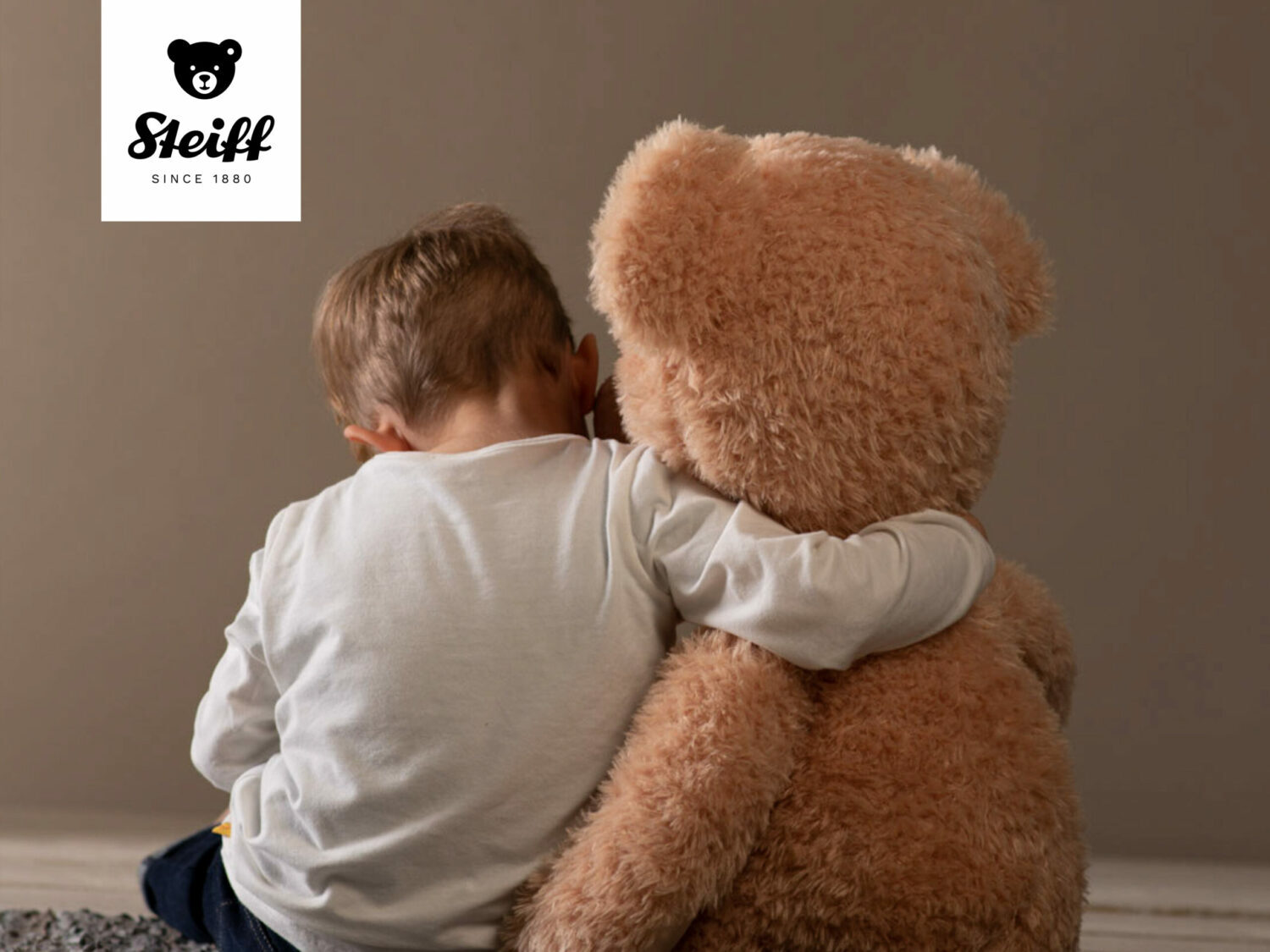
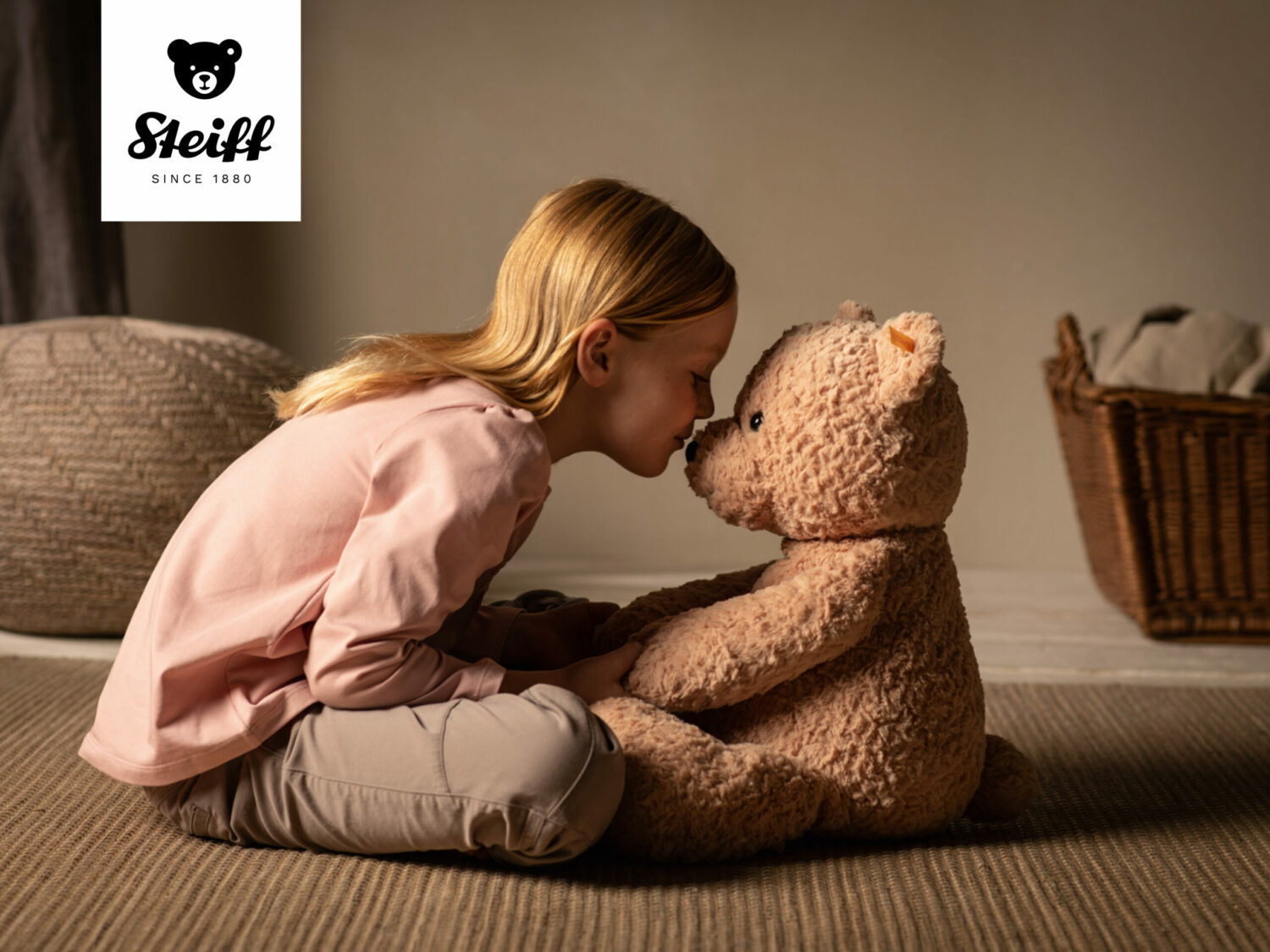
In May 2022 Steiff presents a new brand identity for the 120th anniversary of the teddy bear.1 The Hamburg brand and design agency Peter Schmidt Group leads the design work, with strategic consultancy Batten and Company in support.1 The headline change is structural. The Steiff wordmark is now accompanied by an iconic teddy bear head as a separate bildmarke, and the long running claim Knopf im Ohr is removed from the lockup.1 The argument the company makes for the move sits in a single line from CEO Dirk Petermann: the teddy bear stands for Steiff like no other plush animal, and the new logo brings together what unmistakably belongs together.1, 2, 3
The research that anchors the move
Batten and Company's positioning work produced the empirical case for the rebrand. Large scale market research found that almost all respondents associate the name Steiff with the teddy bear automatically and immediately.1, 2 The new identity makes that association the central asset of the visual system rather than treating it as one of many possible expressions. The decision aligns the logo with the bond that the brand's research already documented, on the principle that the visible signal should match the mental signal a buyer already carries.
The bear head and the white circle
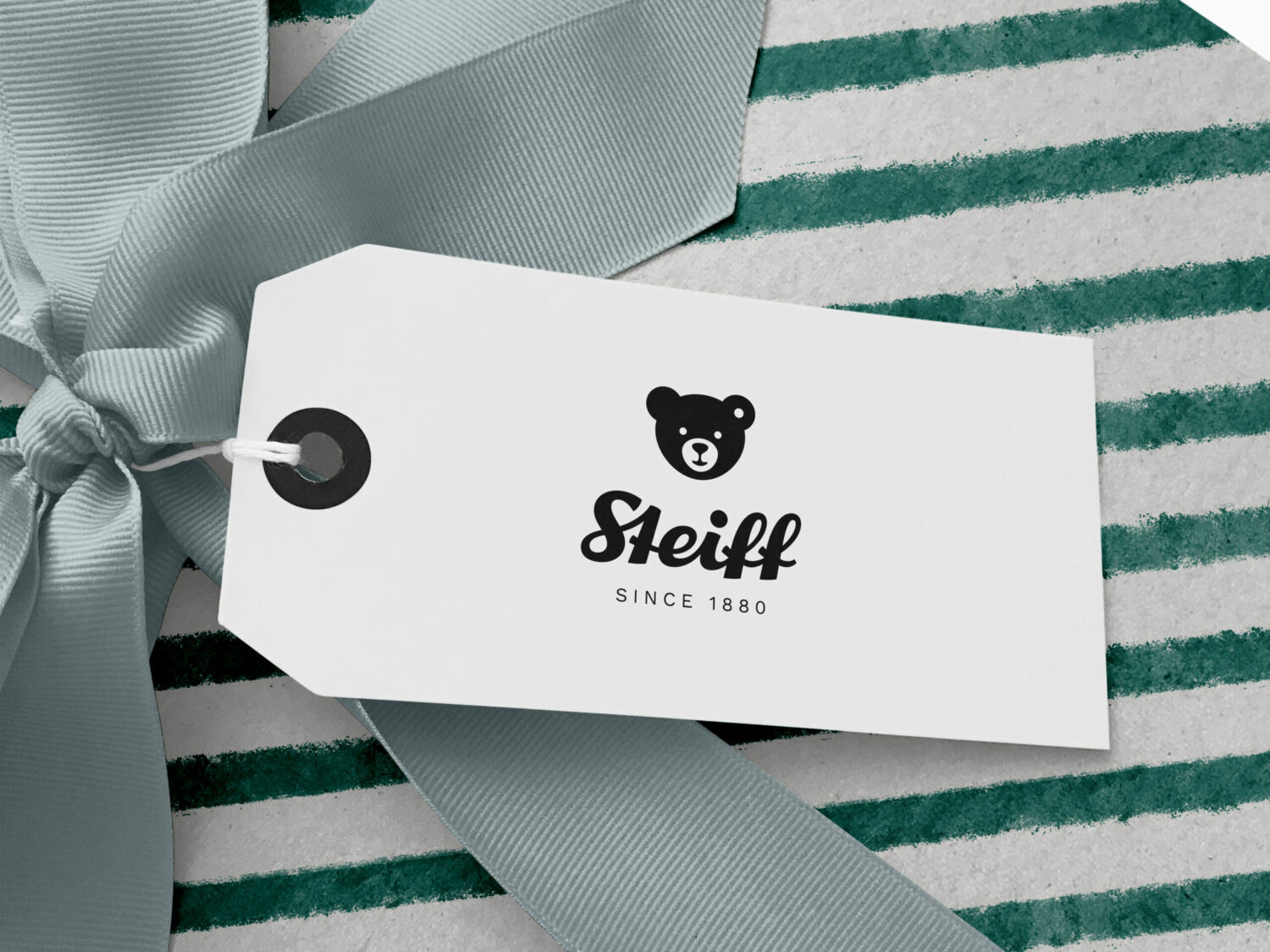
The new bildmarke is a flat black silhouette of a teddy bear head, drawn down to its essential traits.1, 4 The right ear carries a white circle that stands in for the Knopf im Ohr, the metal button that has marked every Steiff product since 1904.1, 4, 5 The previous bildmarke used a rectangular tag motif derived from the ear label, and the move to a circular form reads the trademark closer to its original three dimensional source.1 The earlier version had also rendered the head with a heavy outline; the 2022 head moves to a solid fill that holds its weight at small sizes and on digital surfaces.1
The wordmark sits below the bear head and stays close to the previous Steiff lettering. Peter Schmidt Group refines the alignment of the letters, slightly straightens the verticals and opens the counters so the mark reads more sharply at the sizes the brand now needs for app icons, profile images and packaging copy lines.1 The visible identity therefore reads as continuous with the past Steiff appearance, with the recognisable signature preserved, while the technical drawing is updated for the digital reproduction conditions of the 2020s.
Typography and palette
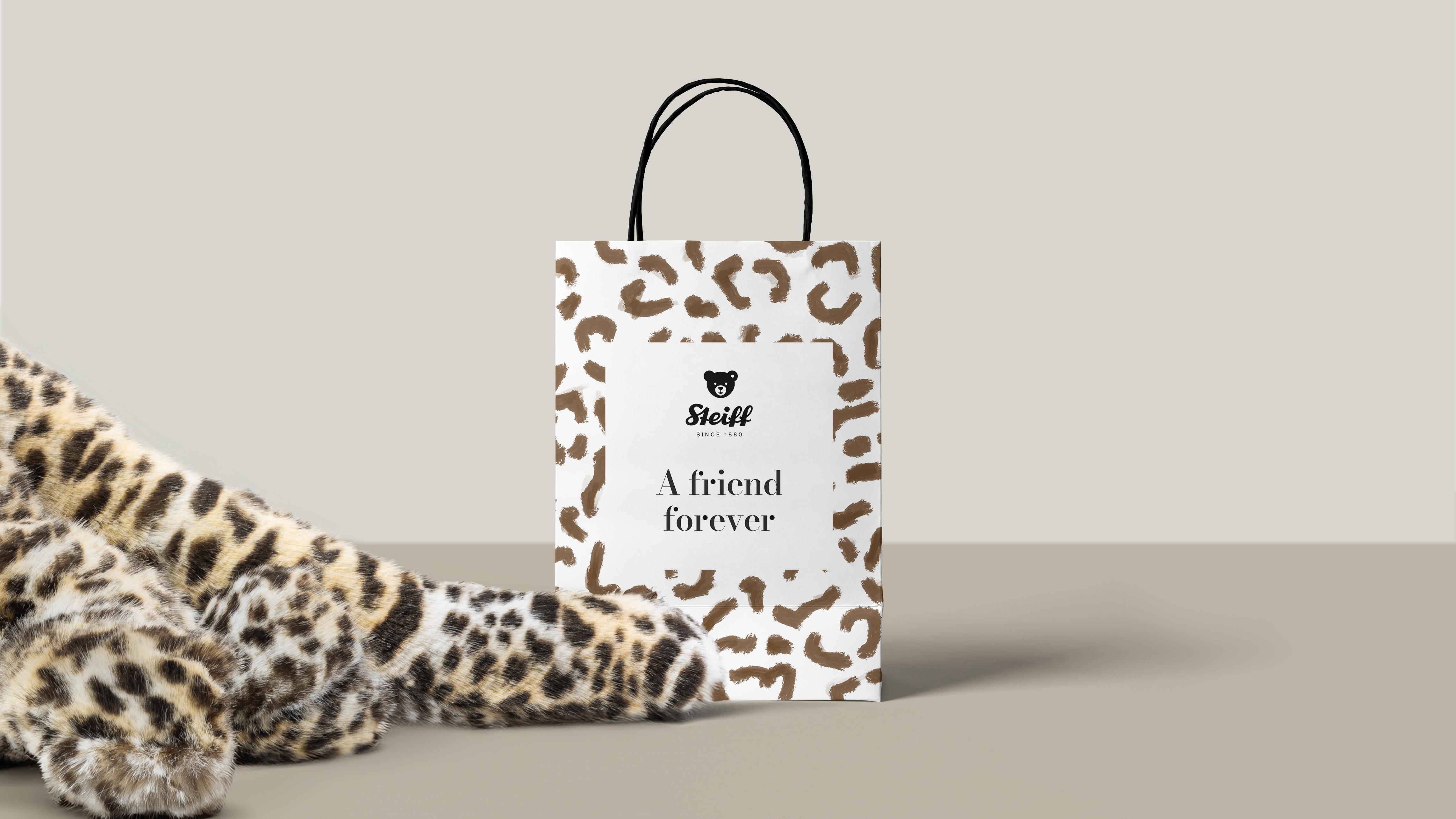
The new typographic system pairs the classicist Bodoni for headlines with Work Sans for body text.1, 4 The previous catalogue typography ran on a slab serif called NN Colroy, and the switch to Bodoni moves the brand from the slab register, which carries a workwear and signage association, into a classicist register that signals couture and editorial heritage.1 The palette moves to muted pastel tones used in flat fields, with the black wordmark and bear head retained as the structural constants.1 The result is a system that holds together across catalogues, packaging, social posts and the physical retail surfaces of the corporate stores.
Source: Peter Schmidt Group
The strategic frame
Ruediger Goetz, managing director of Peter Schmidt Group, frames the work as an expression of empathy for the brand's values, anchored on heritage, childhood dreams and excellent premium quality.1, 2 The framing is consistent with the strategic shift that the identity makes explicit. The previous Steiff identity treated the Knopf im Ohr claim as the brand's primary signal and used the wordmark as the carrier. The new identity treats the teddy bear head as the brand's primary signal and lets the Knopf im Ohr live inside the bear head as a graphic element rather than as a verbal claim. The shift moves Steiff's communications from a quality claim, where the brand asks the buyer to recognise an assertion, to a category prototype, where the brand asks the buyer to recognise a face.
The 120-year anchor
The anniversary that the work celebrates is the 120th birthday of the teddy bear, not the 142nd birthday of the company itself.1, 5 The bear referenced is the jointed plush animal that Richard Steiff first produced under the working name Bear 55 PB in 1902, and the figure carries forward through every Steiff anniversary cycle since.1, 6 The 2022 identity decision routes the brand's official voice through that figure rather than through Margarete Steiff, the founder, or through the Elefäntle, the brand's first product.5, 6 Two years earlier the 140-year corporate jubilee had centred the founding Elefäntle and the founder's biography; the 2022 identity work pivots back to the teddy as the brand's marketing argument.5
The brand consequence
The new identity completes a longer shift visible across the brand's commercial system. The Knopf im Ohr trademark, developed in 1904, becomes a graphic element.5, 7 The yellow and white ear tag colour system, introduced in 1953, continues to carry the limited edition architecture.8 The Replica programme, formalised in 1980, supplies the collector tier.5 The Steiff Club, founded in 1992, supplies the membership channel.5 The corporate museum in Giengen an der Brenz, opened in 2005, supplies the brand experience.5 The 2022 identity therefore does not replace any of those structural assets. It produces a single graphic mark that all of them can sit underneath and gives Steiff a digital surface that performs at the same level as its physical surfaces. The bear head, in other words, becomes the visible centre of a system that the brand spent over a century building underneath it.
Written with AI assistance, edited by a human. Find out more about our Use of AI.
1. Designtagebuch, Achim Schaffrinna, "Neuer Markenauftritt für Steiff", 20 May 2022, for the new brand identity presented for the teddy bear's 120th birthday, designed by Peter Schmidt Group with the strategy consultancy Batten & Company advising on the repositioning, for the redesigned bear head set beside the wordmark as a Bildmarke in place of the claim "Knopf im Ohr", for Batten & Company's large scale market research finding that almost all respondents automatically associate the name Steiff with the teddy bear, for the white circle in the right ear standing for the "Knopf im Ohr" and the change from the rectangular form derived from the label to a circular one, for the switch to a flat, filled rendering of the head, for the wordmark's alignment of letters being slightly straightened and its larger counters giving sharpness at small sizes and in digital use without reducing recognition, for Bodoni replacing the slab serif NN Colroy in headlines alongside Work Sans, for the palette of muted pastel tones, for Richard Steiff's bear of 1902 under the production name "Bär 55 PB", and for the statements of Dirk Petermann, CEO of Margarete Steiff GmbH, and Ruediger Goetz, Managing Director of Peter Schmidt Group. The body renders both statements in English; the original German reads: "Der Teddybär steht wie kein anderes Plüschtier für Steiff. [...] In unserem neuen Logo führen wir zusammen, was unverwechselbar zusammengehört" (Petermann) and "Der neue Look ist der Ausdruck von Empathie für die Werte der Marke und steht für Heritage, Kindheitsträume und ausgezeichnete Premiumqualität" (Goetz). The source says "automatisch" only, not "immediately", does not name app icons, profile images or packaging copy lines, and does not locate the agency in Hamburg. https://www.designtagebuch.de/neuer-markenauftritt-fuer-steiff/
2. Margarete Steiff GmbH, press release "120 Jahre Teddybär, Steiff rückt im Jubiläumsjahr den Teddy in den Fokus des Markenauftritts", 13 May 2022, as republished by Gütsel Online, off whitelist and used for corroboration only, for Dirk Petermann's title as CEO of Margarete Steiff GmbH and his statement that the teddy bear stands for Steiff like no other plush animal, for the Batten & Company market research finding that almost all respondents automatically associate the name Steiff with the teddy bear, and for Ruediger Goetz of Peter Schmidt Group describing the look as an expression of empathy for the brand's values. The Steiff newsroom page listed in this verse's sources returned a 404 on 25 September 2026 and the current newsroom no longer lists the release; this republication is cited in its place. https://www.guetsel.de/content/42913/120-jahre-teddybaer-steiff-rueckt-im-jubilaeumsjahr-den-teddy-in-den-fokus-des-markenauftritts.html
3. Margarete Steiff GmbH, "Steiff die Marke", consulted 25 September 2026, for the brand's own framing of the new logo, which brings the teddy bear head together with the "Knopf im Ohr": "Wir bringen zusammen, was längst untrennbar zusammengehört". https://corporate.steiff.com/de/unternehmen/steiff-die-marke/
4. Peter Schmidt Group, "Steiff", project page, consulted 25 September 2026, for the bear's head reduced to its essential features as the central element of the brand on the teddy bear's 120th birthday, for the button in the ear that all Steiff products carry as proof of authenticity, and for the typeface based on the classicist Bodoni. The listed German address now redirects to the English page. The agency describes its palette as colours drawn from the brand's most popular products and does not mention Batten & Company. https://www.peter-schmidt-group.com/de/projekte/steiff/
5. Margarete Steiff GmbH, "The Steiff Story", company history, consulted 25 September 2026, for the founding in 1880 with the felt Elefäntle, first made as a pincushion, for Richard Steiff's Bear 55 PB of 1902, for the "button in the ear" developed in 1904 by Franz Steiff, for the limited edition replicas produced from 1980, for the Steiff Club launched on 1 April 1992, for the new museum in Giengen opened on the 125th company anniversary in 2005, the first Steiff Museum having opened there in 1980, for the company's 140 years in 2020 and for the teddy bear's 120th birthday in 2022. The page does not say what the 2020 jubilee centred on, and it does not state that the button marks every Steiff product. https://corporate.steiff.com/en/company/history/
6. Wikipedia, "Steiff", consulted 25 September 2026, for Margarete Steiff as the founder and the fabric elephants sold as pincushions as her first products, and for Richard Steiff's "55 PB" as the world's first plush bear with movable arms and legs. https://en.wikipedia.org/wiki/Steiff
7. Deutsches Patent- und Markenamt, "Margarete Steiff", consulted 25 September 2026, off whitelist and used for corroboration only, for Franz Steiff designing the "Knopf im Ohr" in 1904 as the trademark for Steiff goods and for its registration following in 1905: "Die Marke wird beim Patentamt angemeldet und 1905 eingetragen." https://www.dpma.de/dpma/veroeffentlichungen/patentefrauen/margaretesteiff/index.html
8. Steiff, "Button in Ear Tags", consulted 25 September 2026, for the yellow ear tag with red lettering used for the standard range and the white ear tag with red lettering, fastened with a gold-plated button, reserved for limited collector editions. The page does not date the system, so the year 1953 rests on this journal's earlier verse on the Steiff ear tag, and it records a changeover to new ear tags from January 2024. https://www.steiff.com/en-us/i/steiff-button-in-ear-tags