
A metal disc against the imitators
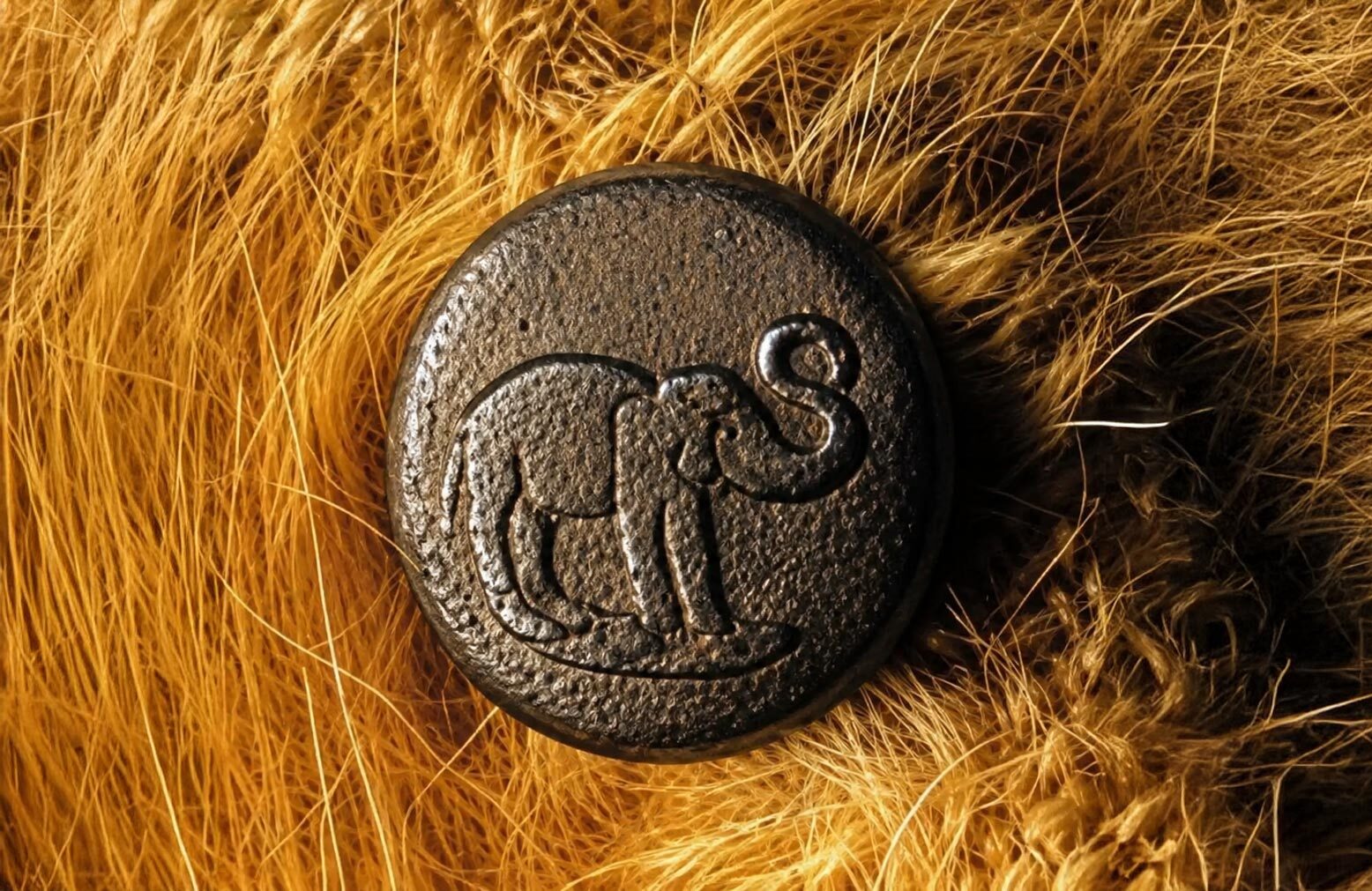
In late 1904 the Steiff factory in Giengen an der Brenz introduced a small metal disc in the left ear of every animal produced under the Margarete Steiff name. The decision was taken by Franz Steiff, Margarete's nephew and the commercial lead of the company, in response to a wave of imitations that had emerged in the German toy trade after the international success of the 1903 Bear 55 PB at the Leipzig Spring Toy Fair. The disc was embossed with the company's elephant figure, the original Steiff trademark dating from the 1890s. It was applied with a clinch press, after the animal had been stuffed and seamed, and it could not easily be removed without leaving a visible tear in the felt or mohair pile.
The competitive context
The early years of the twentieth century were a period of rapid expansion for the German toy industry. The Saxony and Thuringia regions produced large volumes of inexpensive plush, often constructed with the same external silhouette as Steiff animals but with lower grade fabrics and looser seams. Margarete and Franz Steiff had spent the previous decade defending the company's craft standard through magazine advertising in Die Modenwelt and through direct correspondence with department store buyers. The arrangement was reactive and could not scale. By 1904 the volume of look alike production from competing factories had reached a level at which the brand needed a permanent identifier built into the product itself.
The metal button was conceived as that identifier. Franz Steiff specified that the disc be applied to every animal without exception, regardless of price tier or distribution channel. The decision was deliberate. A button restricted to the higher end of the range would have suggested that the lower end of the range was not authentic, which would have weakened the company's defence in the broader market segment. The application of the same button to every animal removed that ambiguity and made the trademark a binary signal: either the disc was there, in which case the animal was authentic, or it was not, in which case the animal was not a Steiff product.
The registration
The button was applied in production from late 1904 onward. The formal trademark registration followed in 1905, when Franz Steiff filed the disc as a registered figurative mark at the Imperial Patent Office in Berlin. The registration covered both the elephant motif of the original button and the broader principle of a metal identifier in the left ear, which gave Steiff a legal instrument with which to pursue infringing factories regardless of which precise design the imitators chose to copy. The registration was renewed at each statutory interval through the twentieth century and continues to be held by the company.
The elephant motif on the disc evolved over a short period. Franz Steiff replaced the elephant with a plain Steiff wordmark on the button face within a year of the original introduction, on the grounds that the wordmark was a more direct identification of the manufacturer. The subsequent button designs are dated by collectors as Elephant Button, 1904 to 1905; Blank Button, 1905; Steiff Button with the f extending below the s in cursive, 1905 to 1912; Steiff Button in raised lettering, 1912 to 1934; and a series of further design refinements through the rest of the century. The metal substrate, the placement in the left ear and the principle of the disc have remained constant across every iteration.
The brand consequence
The Knopf im Ohr, German for Button in Ear, performed three functions for Steiff that no previous marketing instrument had been able to deliver. It made the trademark physically inseparable from the product. It positioned the brand mark at the most distinctive anatomical point of the animal, the ear, which kept the trademark visible regardless of how the animal was displayed or held. And it created a single, repeatable customer instruction. The brand could now be communicated to retailers and to gift buyers with a single sentence: look for the button in the ear. The instruction worked across language barriers, across export markets and across product categories within the Steiff range.
The arrangement also gave the company a measurable defence against imitation. Litigation records from the Imperial Patent Office through the 1910s and the 1920s show that Steiff successfully pursued multiple infringement cases against German and Austrian factories that had copied the silhouette of Steiff animals but could not match the metal identifier in the ear. The button therefore functioned not only as a brand signal but as a legal instrument, with the patent registration giving the company a clear evidentiary basis for trademark enforcement.
The long form
The 1904 button is the central reference point of the Steiff trademark system. Every subsequent piece of brand architecture, including the 1953 paper tag system, the limited edition certificates, the replica programme and the modern co branding agreements with Disney and HUGO BOSS, is anchored on the metal disc. The phrase Knopf im Ohr has entered the German language as a generic recognition signal for the brand and is one of the few company specific trademark phrases to have done so in any European language.
Franz Steiff died in 1939. Margarete Steiff had died thirty years earlier, in 1909, five years after the introduction of the button. The trademark they together established has now outlived both founders by more than a century and continues to perform the function it was designed for in 1904. The brand decision they made in the autumn of that year is consequently among the most durable single trademark moves in the history of the European toy industry.
Written with AI assistance, edited by a human. Find out more about our Use of AI.