From factory tour to brand world
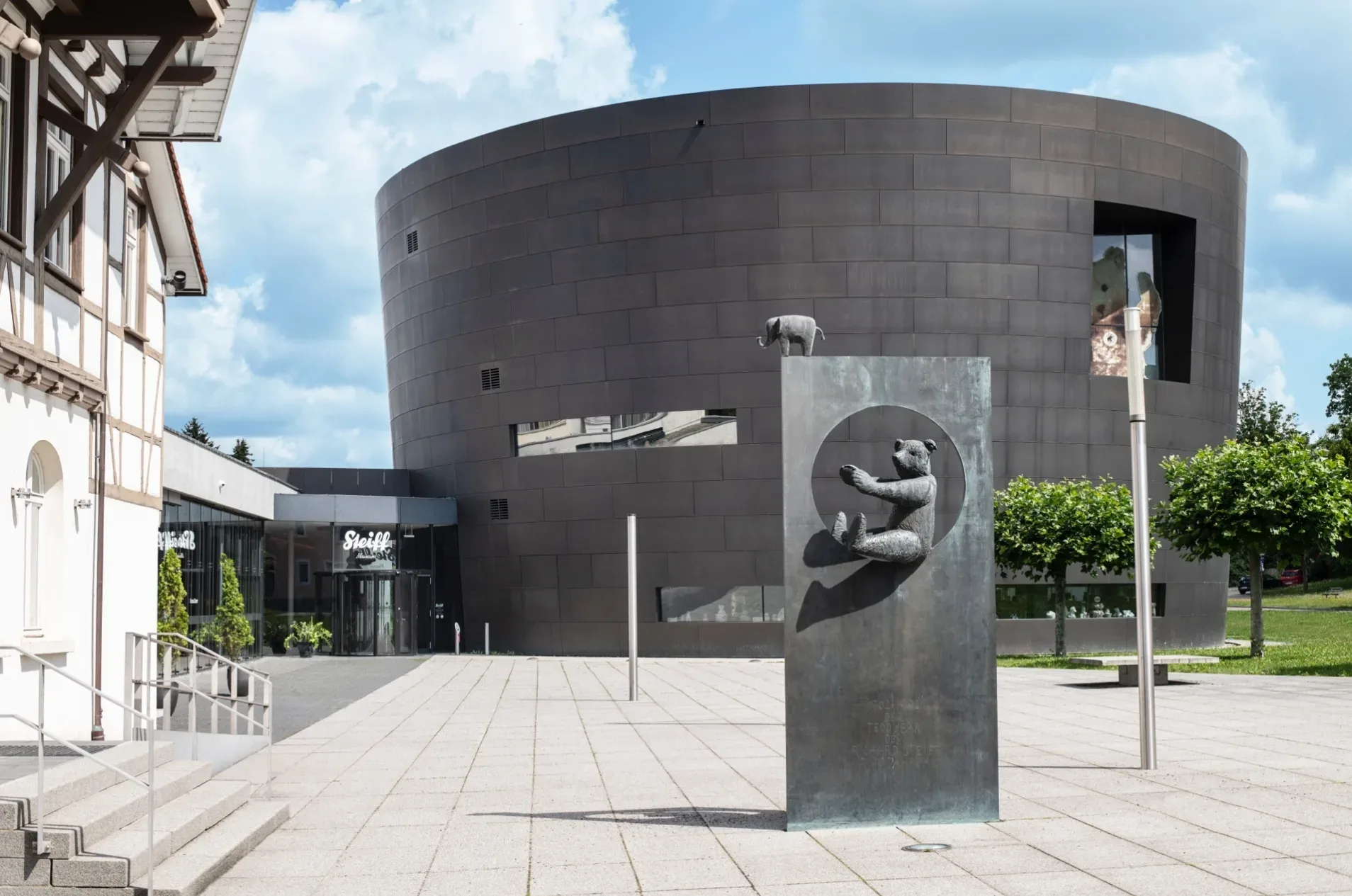
In the summer of 2005 Steiff inaugurated the World of Steiff, a 2,400 square metre experience museum and brand world on the company's grounds in Giengen an der Brenz. The building was designed by the Swiss architect Andreas Ramseier and completed over a five year construction period that had begun in 2000. The opening coincided with the brand's 125th anniversary year, counted from the 1880 founding by Margarete Steiff. The museum replaced an earlier factory tour programme that had been offered on the same site since the 1980s and which had operated as a guided walk through selected production halls.
The architectural decision
The decision to invest in a purpose built brand world rather than to renovate the existing factory tour was strategically significant. The factory tour had grown from a marginal hospitality offer into a substantial visitor stream through the 1990s, supported by the rising international value of vintage Steiff collector items and by the proximity of the Giengen factory to the well developed tourism infrastructure of the Schwäbische Alb region. The factory tour, however, was constrained by industrial safety requirements and by the operational calendar of the production halls themselves, which limited the number of visitors and the depth of engagement that the brand could offer.
Andreas Ramseier was selected for the project after a closed competition that the company had run between 1999 and 2000. His brief was to create a fully enclosed and climate controlled environment that could operate independently of the production schedule and that could carry a substantial visitor flow on weekends and during peak holiday periods. The eventual building combined two architectural moves: a large glazed entrance hall that read at urban scale from the factory street and a deep, low lit interior sequence that staged the brand narrative in a series of immersive tableaux.
The interior narrative
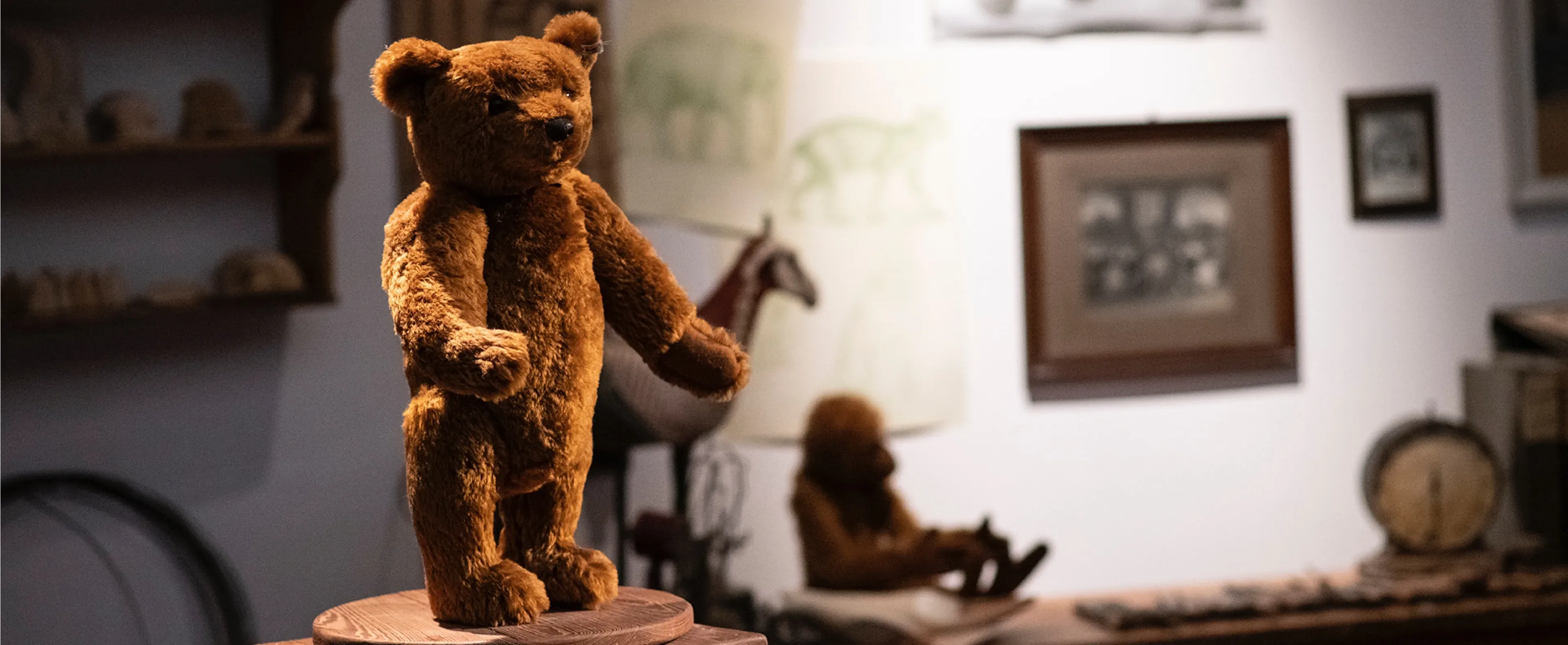
The interior was conceived as a continuous narrative journey rather than as a conventional museum installation. Visitors followed two animated guides, the bear Knopf and his companion Frieda, through a sequence of staged environments that drew material from the Steiff archive. The first section traced the brand's foundation, with Margarete Steiff's felt elephant pincushion at the centre, and continued through the development of the Bear 55 PB in 1902 and the introduction of the Knopf im Ohr in 1904.
The middle section staged the international export period, with reconstructions of the New York buying house of George Borgfeldt and Company, the Leipzig Toy Fair pavilions and the early twentieth century retail environments through which Steiff animals had reached an international audience. The deepest part of the building staged the underwater search for the lost teddy bears of the Teddytanic, an Antarctic expedition and a tropical jungle populated by life size Steiff animals. The narrative concluded in a contemporary retail and refreshment area, with the full current catalogue available for purchase and a viewing window into the working production halls.
Why the brand needed the building
The 2005 opening addressed a specific structural problem for the brand. Steiff's primary commercial channels through the late twentieth century had been department store accounts, specialty toy retailers and collector dealers. None of those channels were designed to communicate the brand's heritage in any depth. Department store displays could not narrate 125 years of company history within the available shelf space. Collector dealers communicated only to the existing collector audience and could not recruit new customers. The brand world filled the gap. It gave first time visitors a fully developed introduction to the company at a single location, and it gave existing collectors a curated archive experience that the secondary market alone could not provide.
The retail consequences were measurable. Within five years of opening the museum recorded annual visitor numbers in the range of 250,000 to 300,000 people, with revenue from on site retail and food and beverage operations contributing materially to the company's broader profit. The brand world also became a primary location for limited edition launches and for the photography and video assets that supported the international marketing calendar.
The extension
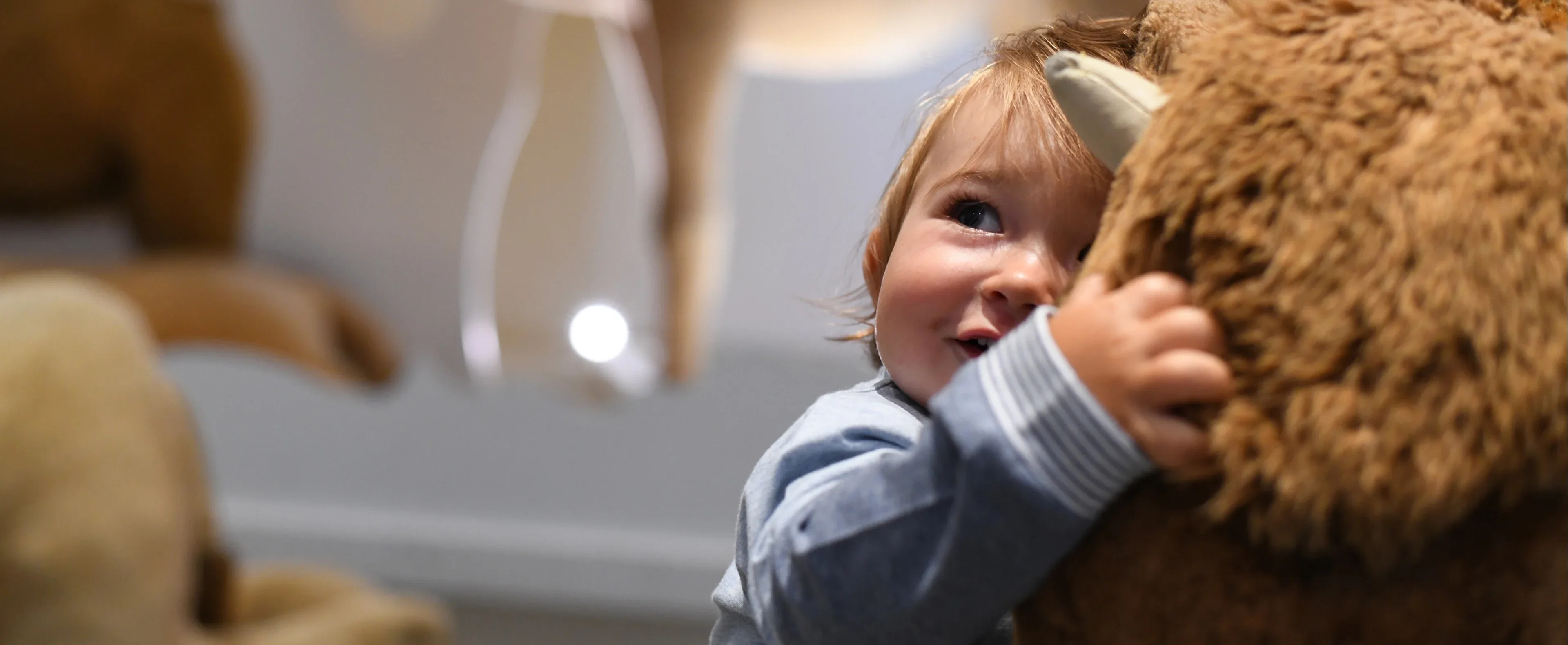
The World of Steiff was expanded in 2010 with the addition of a new wing that staged life size Steiff animals in an exotic jungle landscape. The extension allowed children to ride on the larger tigers, elephants and camels and added an indoor play environment underneath palm trees inhabited by impressive Steiff gorillas. The 2010 addition extended the average visit time from roughly 90 minutes to closer to three hours and broadened the visitor demographic from collector adults toward families with younger children.
The wider strategic effect of the 2005 opening and the 2010 extension was that the Giengen site moved from being primarily a production location to being a combined production and brand experience location. The factory continued to manufacture the standard range, the limited editions and the replicas that the catalogue required, while the adjacent World of Steiff received the public audience that the factory itself could not accommodate. The arrangement remains in place and continues to function as the company's principal direct to consumer brand environment in Europe.
The brand consequence
The 2005 World of Steiff opening confirmed three propositions for the company. It demonstrated that a heritage toy brand could invest at architectural scale in its own brand experience without diluting the trademark. It established that an immersive narrative environment could carry the same brand message that the metal Knopf im Ohr in the left ear had carried since 1904, at a different register and to a different audience. And it provided a permanent stage for the limited edition launches and the collector activations that the brand's long tail commercial model depended on. The museum therefore performed a brand function rather than a tourism function, with the tourism revenue as a secondary effect rather than as the primary objective.
Source: Steiff Youtube
Written with AI assistance, edited by a human. Find out more about our Use of AI.