A designer in plush
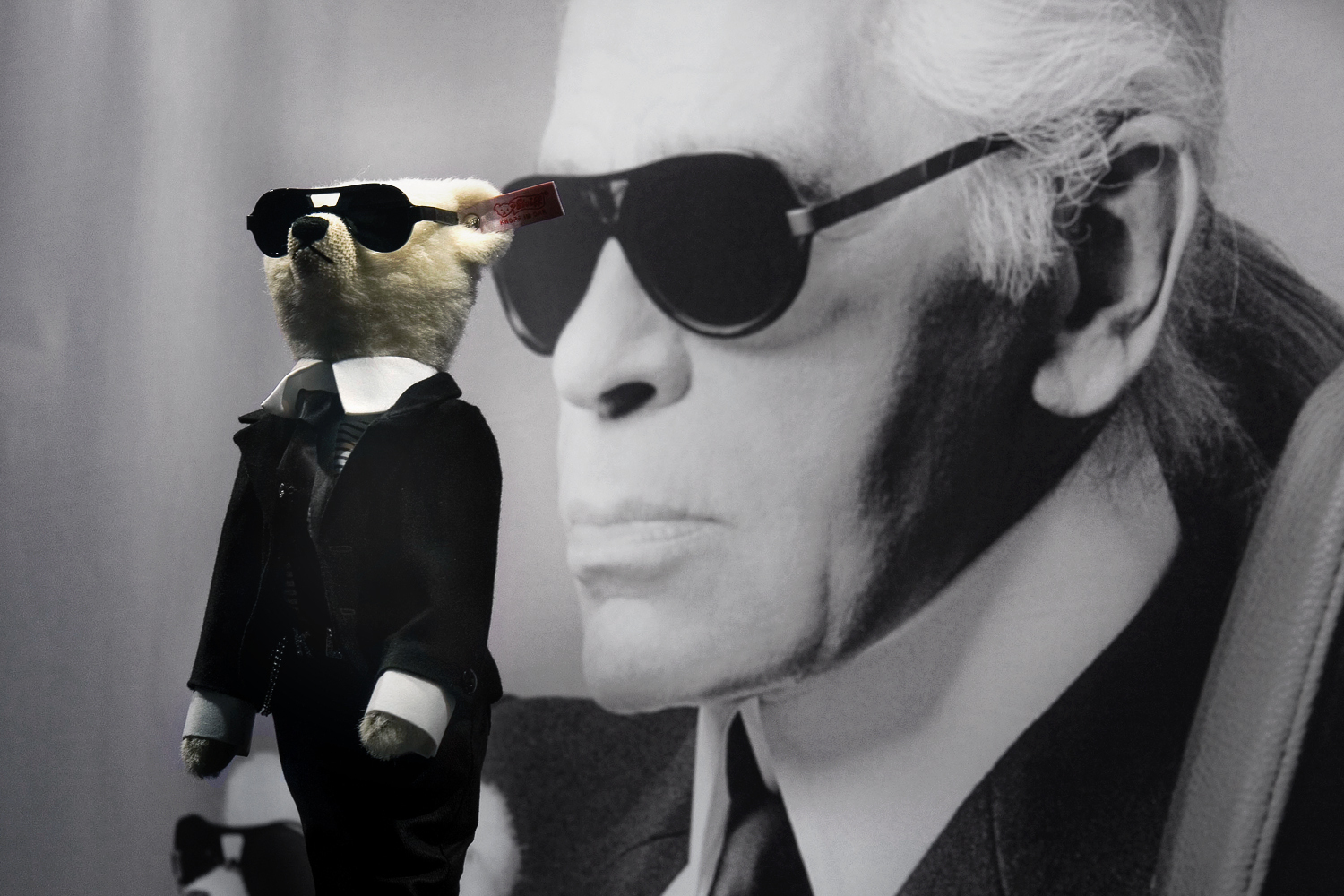
In September 2008 Karl Lagerfeld and Steiff released a limited edition teddy bear that translated the designer's public silhouette into a forty centimetre plush figure. The launch took place at Colette in Paris, the rue Saint Honoré concept store that throughout the 2000s served as the European staging ground for fashion crossover releases, and rolled out shortly afterwards at Neiman Marcus stores across the United States at a retail price of 1,500 US dollars. The edition was capped at 2,500 pieces worldwide. The bear carried the Knopf im Ohr trademark on the left ear and the white tag with red lettering that marks Steiff's limited edition tier.
The Lagerfeld silhouette as plush
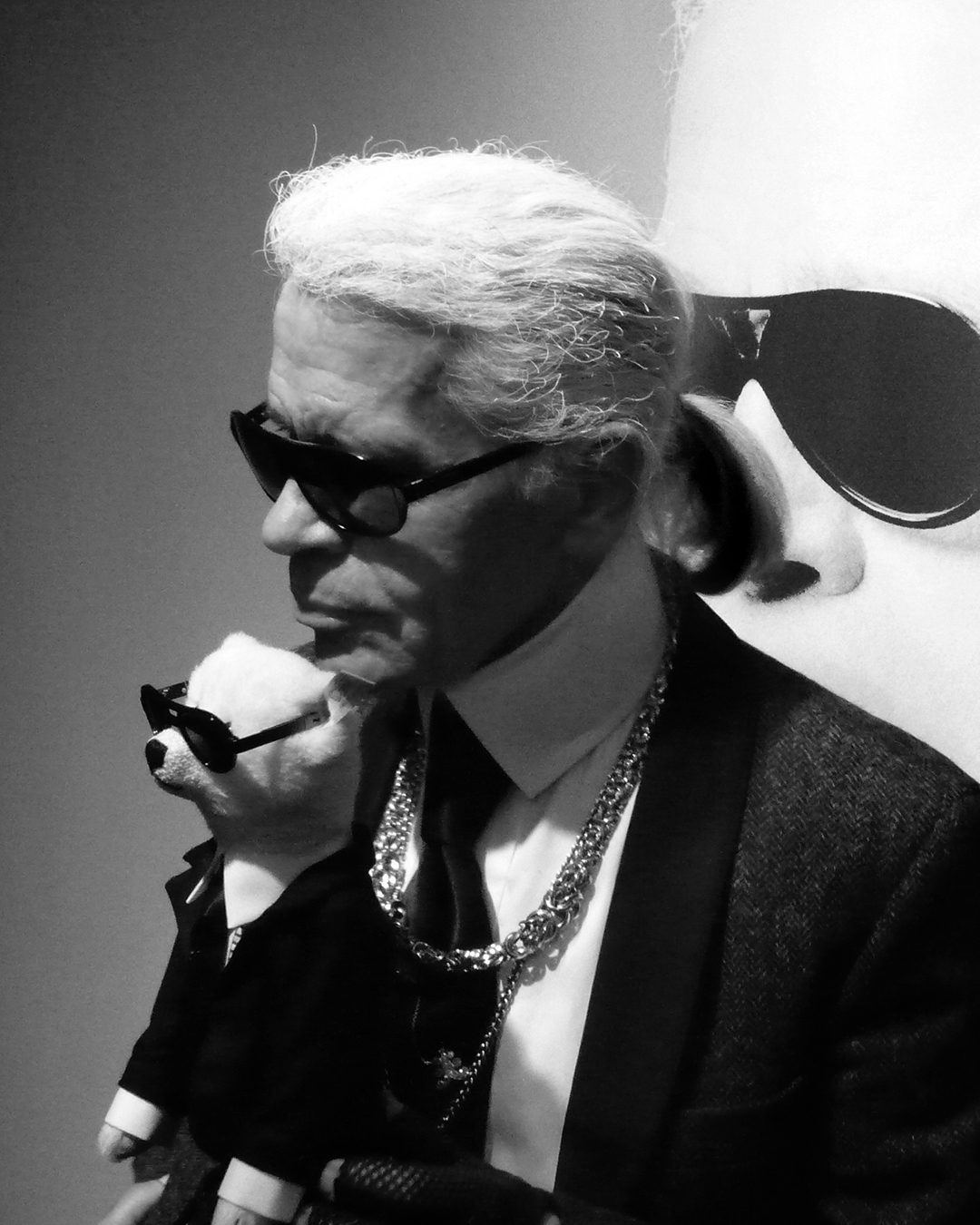
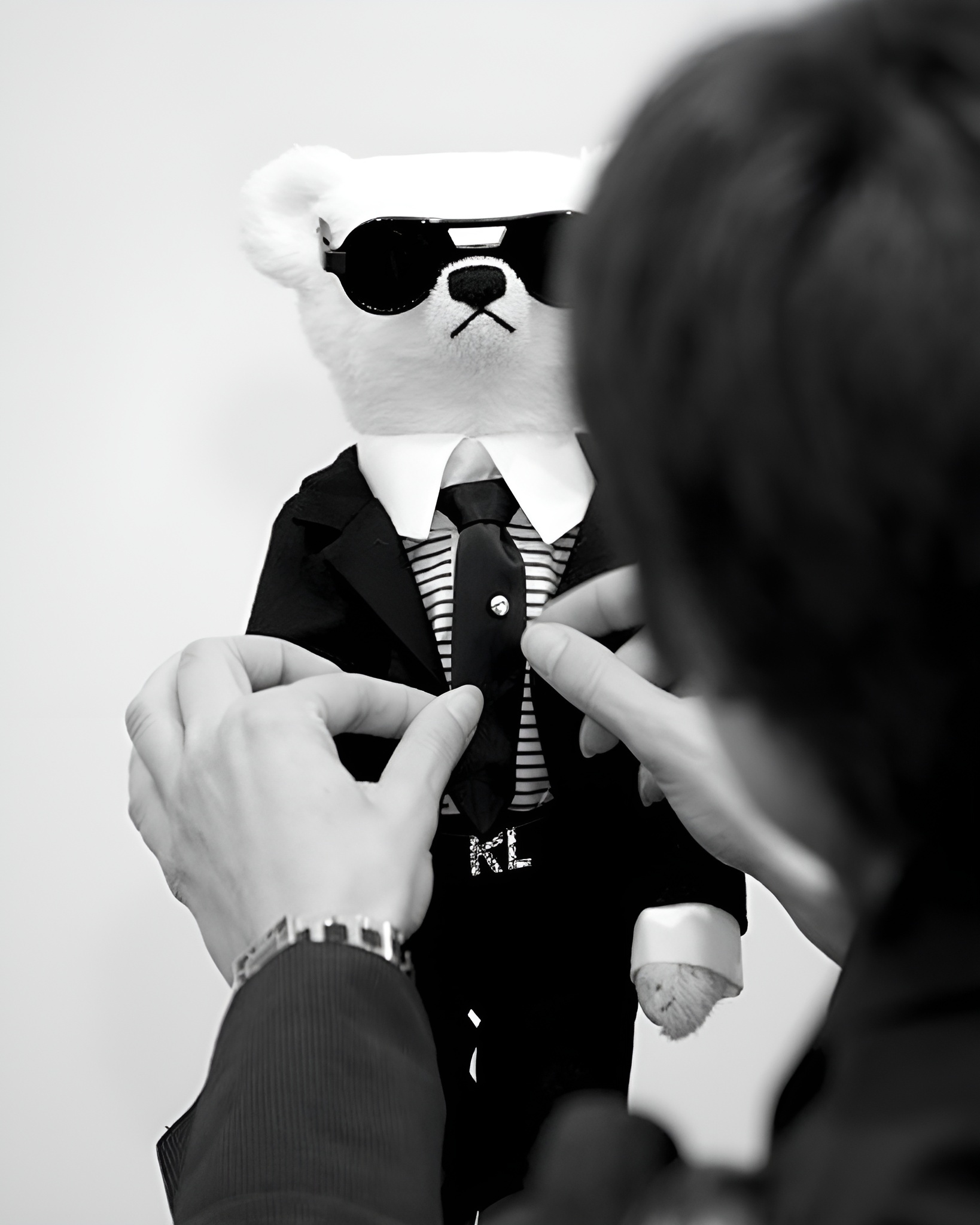
The bear was constructed in alpaca and mohair on a five point jointed skeleton and dressed in a precise reduction of Karl Lagerfeld's recognisable public wardrobe. The body wore a black jacket cut in Italian wool, a white poplin shirt with a stand up collar, a black silk cravat, dark jeans drawn from the K Karl Lagerfeld collection and a black leather belt with the initials KL set in Swarovski crystals. Two miniature black sunglasses sat on the muzzle. The white plush head approximated the designer's signature white ponytail by leaving the head fur exposed in contrast to the dark suit. The result was a portrait in fabric, executed by a manufacturer that does not normally produce portrait pieces.
Why Colette was the right room
Colette functioned through the 2000s as the bridge between fashion houses, designer collaborations and the editorial press. The store carried Lagerfeld's K Karl Lagerfeld line, regularly hosted limited edition releases for Chanel and Fendi, and built its retail calendar around exclusivity windows that gave a single product a defined moment in the cultural cycle. Hosting the launch at Colette therefore framed the Steiff bear as a fashion object rather than as a toy, and placed it in the same retail conversation as a Hermès scarf, a Comme des Garçons capsule or a Goyard exclusive. The exclusivity window also created the conditions for the resale value that the bear later acquired in the collector market.
DFROST's retail installation
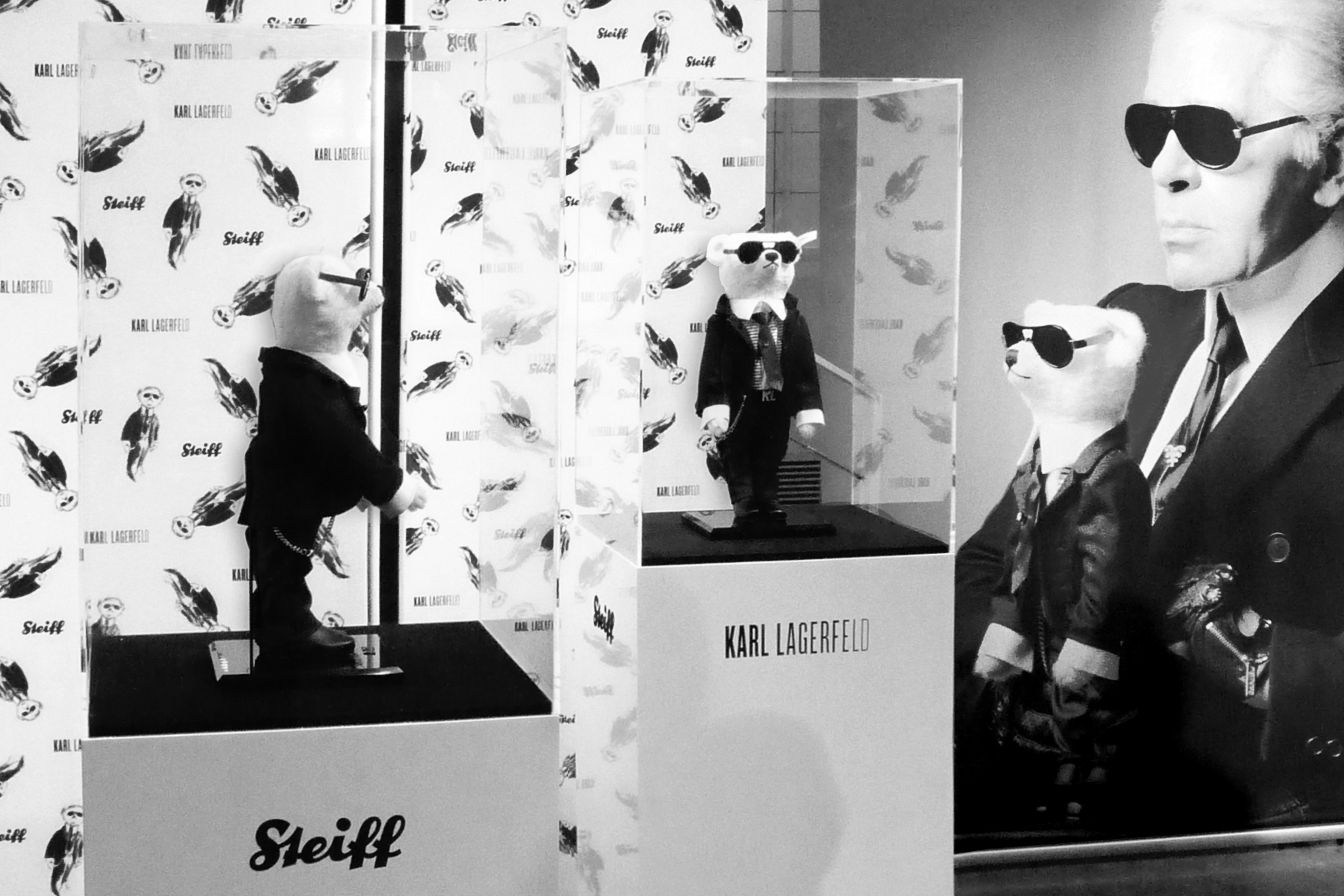
The retail staging at Colette was developed by DFROST, the Stuttgart based retail identity agency. The installation translated the partnership into an event window. Printed screens served as a flexible backdrop framing the display, and custom display cases placed the limited edition bears at the centre of attention. The Steiff figure in its Lagerfeld inspired look sat as the central element, bridging the spirit of fashion and toys. The staging applied the language of a fashion launch, with curated sightlines and a single focal object, to a category that more typically relies on volume display. The retail installation therefore did the same work that the bear's wardrobe did, treating the object as couture rather than as inventory.
The brand architecture
The Lagerfeld bear extended an architecture that Steiff had refined since the 1931 Disney Mickey Mouse licence. The Steiff trademark system, anchored on the Knopf im Ohr from 1904 and the ear tag colour code from 1953, can be applied to figures that carry a second identity without losing the underlying Steiff signature. The Disney series demonstrated the pattern with cartoon characters. The 2000 Louis Vuitton collaboration demonstrated it with a luxury house wardrobe. The 2008 Lagerfeld piece extended the pattern to a designer portrait, with the figure itself a depiction of the partner brand's founder rather than a generic bear dressed by the partner brand. The arrangement therefore expanded the licensing repertoire while leaving the trademark architecture untouched.
The collector aftermath
The bear's secondary market trajectory followed the pattern of other limited edition Steiff pieces. Numbered certificates of authenticity accompanied the original sale, and the white tag with red lettering identified the figure as a limited edition release. Auction results in the years following the launch placed the bear consistently above its 1,500 US dollar issue price, with Julien's Auctions and other specialist houses listing later resale examples at three to five times the original retail value. The piece appeared in the W Magazine Bear Market feature on Lagerfeld's portrait merchandising and entered the broader designer collectible canon alongside the Lagerfeld vinyl figure series for Tokidoki and the Karl Lagerfeld for Steiff Asia exclusives that followed.
The brand consequence
The 2008 Lagerfeld release positioned the Steiff trademark inside the designer collectible category with a single object. The bear neither modified the Steiff catalogue, which continued to run through its own seasonal cycle, nor introduced a new product line. What it did was confirm a precedent. A Steiff figure could carry a designer portrait at couture pricing, the partner brand could supply the wardrobe, and the Knopf im Ohr could anchor the result at the standard limited edition tier. The arrangement, executed at Colette and supported by the DFROST staging, gave the brand a second template for fashion crossovers alongside the 2000 Louis Vuitton charity precedent. That template, refined over the following decade and a half, leads in a direct line to the BOSS x Steiff holiday capsule of 2025 and to the broader heritage and fashion crossover pattern that defines premium plush in the present.
Written with AI assistance, edited by a human. Find out more about our Use of AI.