German premium plush toy manufacturer recognized as the inventor of the teddy bear and the steward of the Knopf im Ohr trademark, with a guiding princ…
12 Articles
Disney is one of the world's largest entertainment companies, combining animation, live-action studios, theme parks, and streaming under a unified nar…
20 ArticlesThe first licensed Mickey
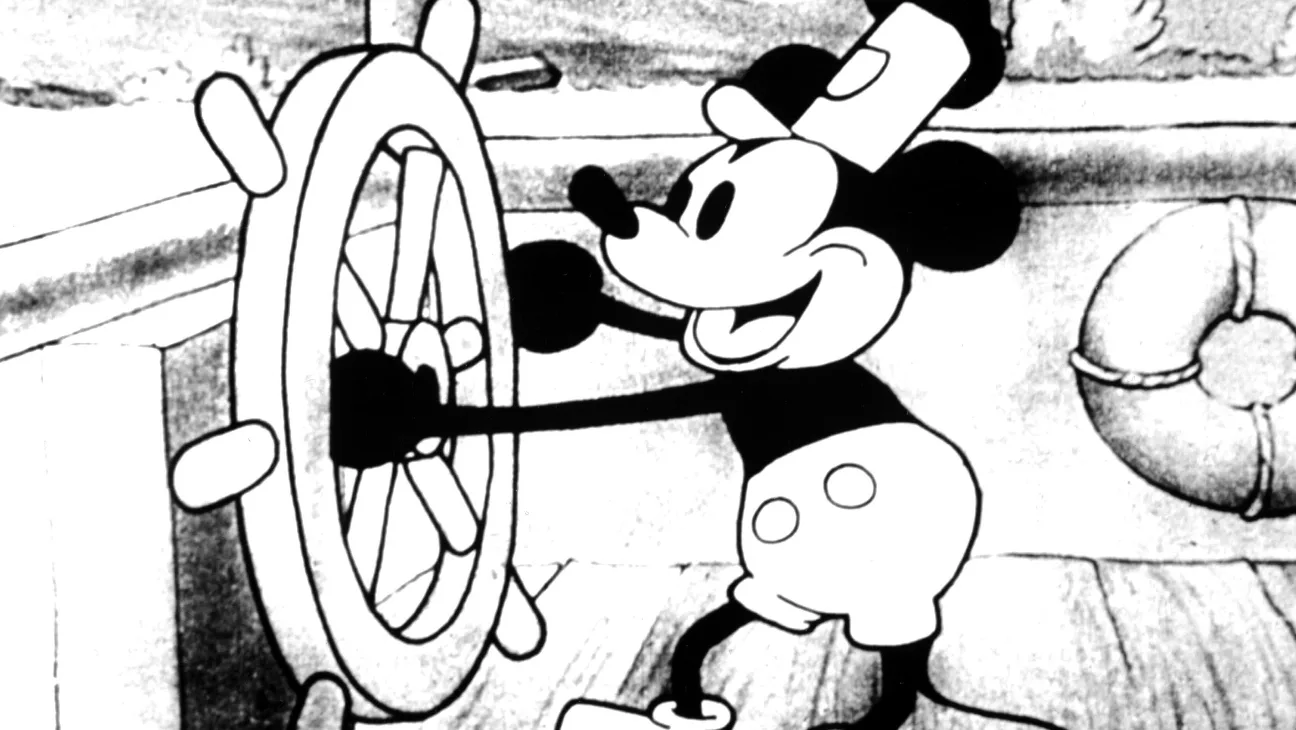
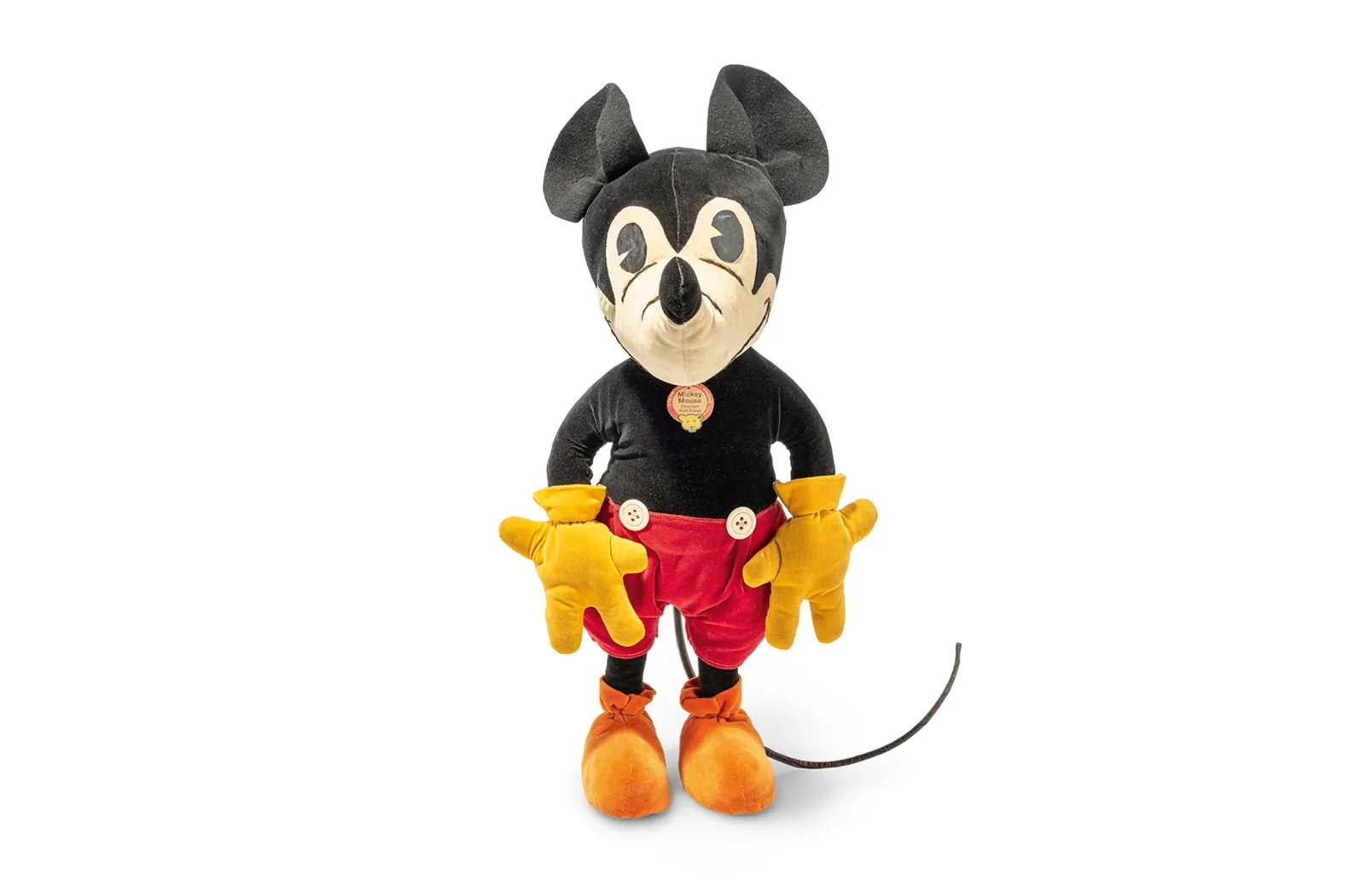
In 1931 the German toymaker Steiff secured the licence to manufacture the first commercially produced Mickey Mouse plush figure. The agreement was made with Walt Disney himself, three years after the Mickey Mouse character had appeared in the 1928 short film Steamboat Willie and at the moment at which the Walt Disney Studios began the systematic licensing of the character outside its original cinema audience. The Steiff Mickey was produced in mohair velvet, with the character's familiar yellow gloves and short red trousers, and carried the Knopf im Ohr trademark in the left ear.
Why Disney chose Steiff
The Walt Disney Studios were in 1931 a small Burbank operation with a single recognisable character and a fragile commercial position. Walt Disney and his brother Roy O. Disney had decided in 1929 that the studio would license Mickey Mouse to selected merchandise partners in order to generate a second revenue stream alongside the cinema receipts. The early licensing strategy was therefore not a marginal experiment but a structural decision that would underwrite the studio through the development of its first feature film, Snow White and the Seven Dwarfs, released in 1937.
The choice of Steiff for the plush licence carried several pieces of strategic logic. Steiff was at that point the most recognised toy manufacturer in continental Europe and held the strongest trademark in the plush category through the Knopf im Ohr metal button, registered with the German Imperial Patent Office in 1905. A Disney licence to Steiff therefore landed the character inside the most credible existing trademark in the segment. The decision also gave the Walt Disney Studios immediate access to Steiff's established export network, which served the United Kingdom, France, the Scandinavian markets and a small but commercially significant United States customer base through the New York buyer George Borgfeldt and Company.
The first production run
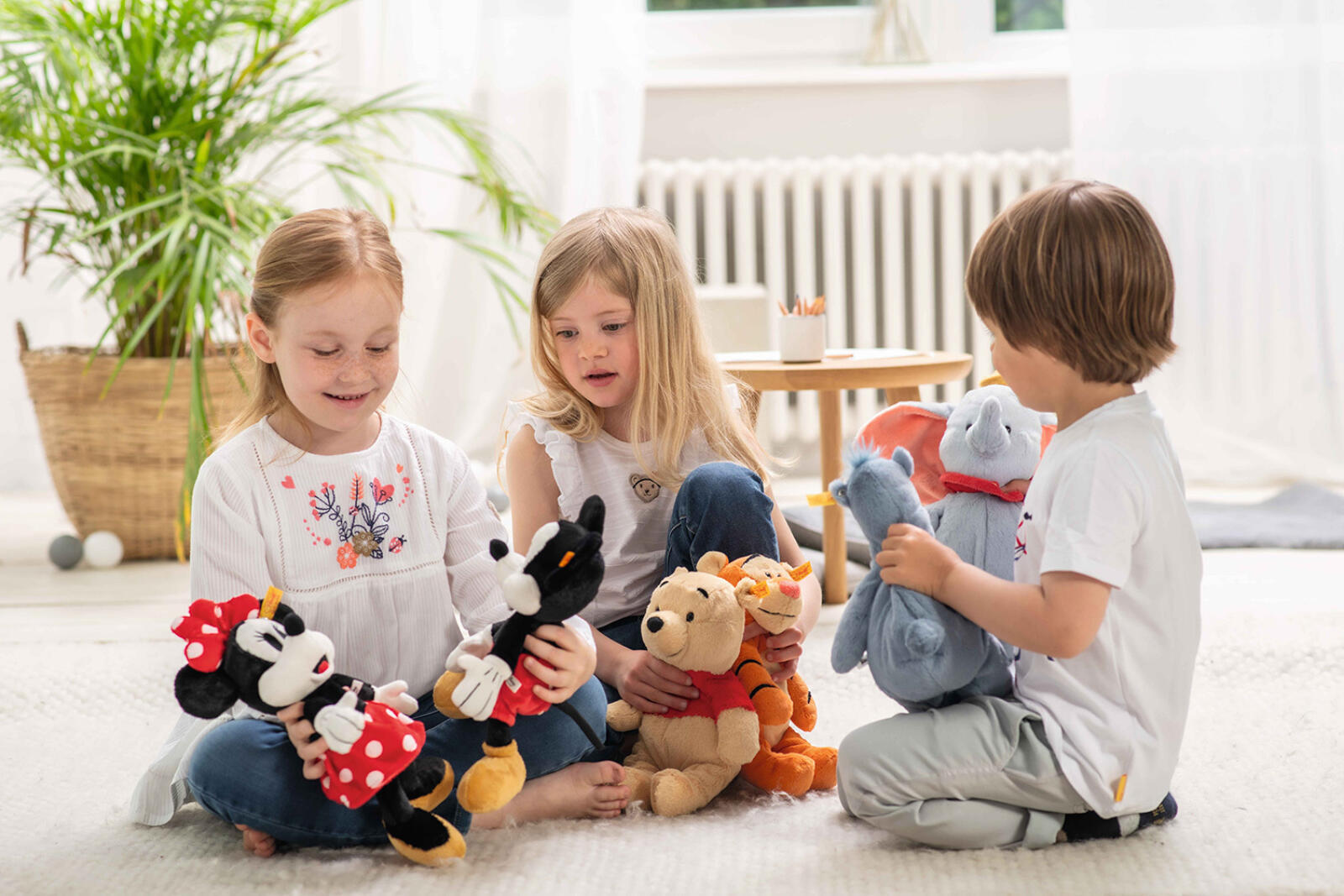
The first Steiff Mickey Mouse was produced in two heights, 18 centimetres and 25 centimetres, and was constructed from a short pile mohair plush over an excelsior stuffing, with felt details for the gloves and the trousers. The first production run reached 30,000 units, a substantial volume for a single character figure at the time and a number the Steiff archive records as exceptionally fast moving. Minnie Mouse was added to the catalogue in 1932 and produced to the same construction standard. By the mid 1930s Steiff had extended the licence to include Pluto, Donald Duck and several other Disney characters that the studio had developed in the intervening years.
The Knopf im Ohr trademark was applied to every figure regardless of which Disney character it represented, which placed the Steiff brand mark on the licensed character. The result was a piece of co branding that established a visual precedent for the segment. Two trademarks were resolved on a single product: the Disney character mark on the front of the figure and the Steiff trademark in the left ear. The arrangement was unusual for the period, which more typically treated licensed merchandise as a single brand event under the licensee, and it set the template for the subsequent Steiff Disney releases.
The partnership across the century
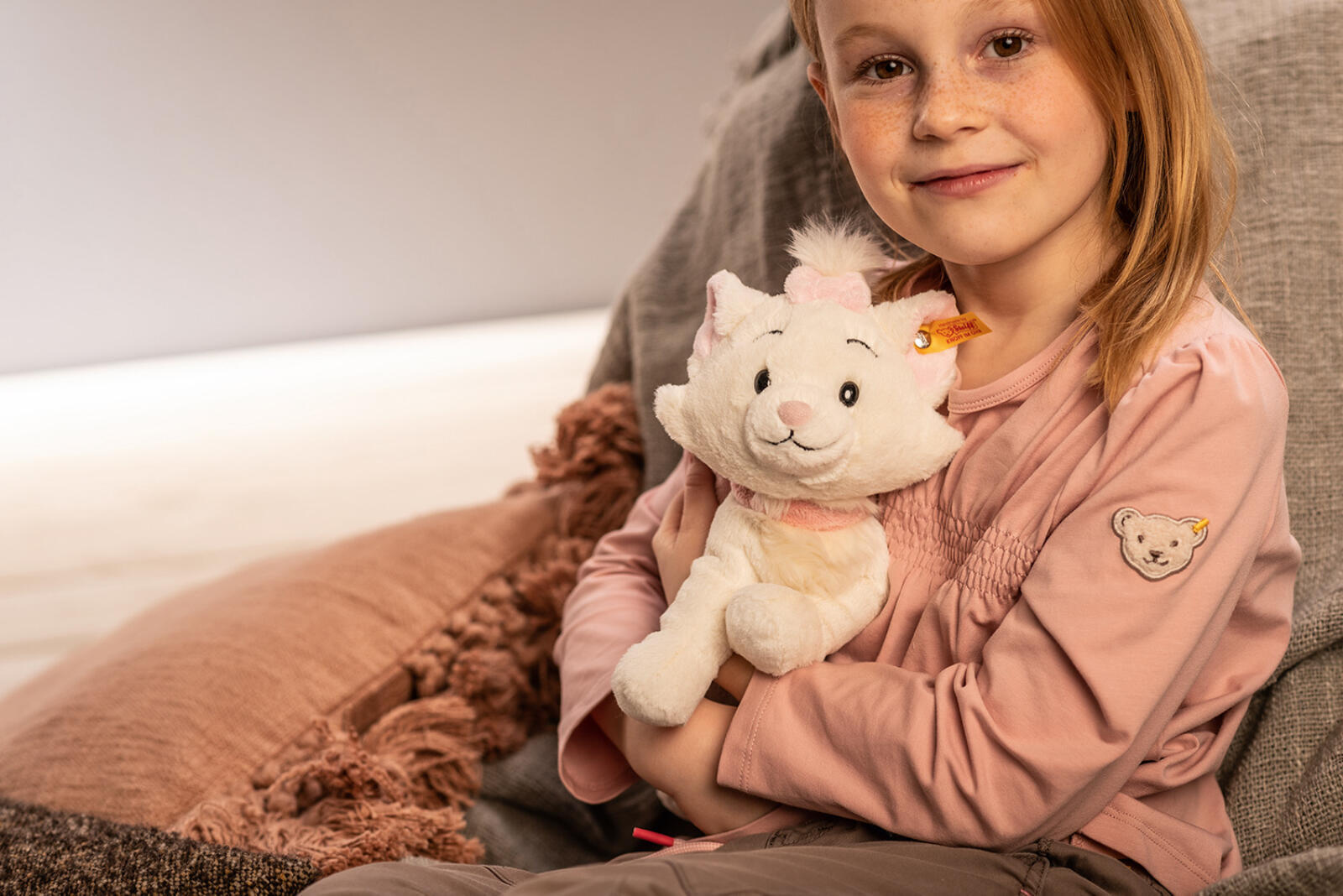
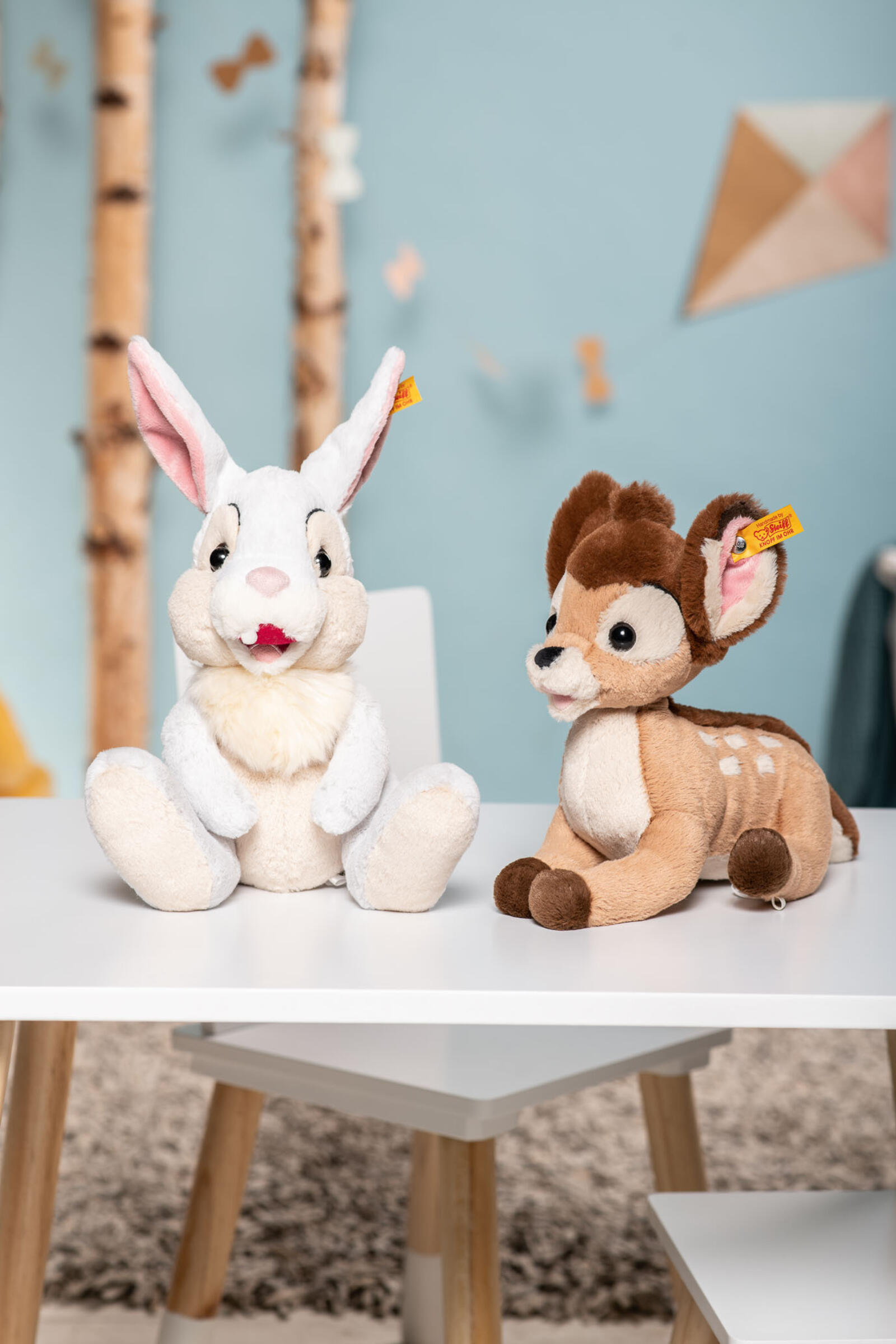
The Steiff Disney relationship continued through the rest of the twentieth century, with intermittent gaps during periods of disruption to international trade. The German factories continued to produce Disney characters through the 1930s until the outbreak of the Second World War interrupted export production. The licence was reactivated in the post war years, initially through United States distribution channels and later through Steiff's restored European retail network. By the closing decades of the century the Disney range had become a recurring fixture of the Steiff limited edition programme, with anniversary editions tied to Disney character milestones rather than to Steiff anniversaries.
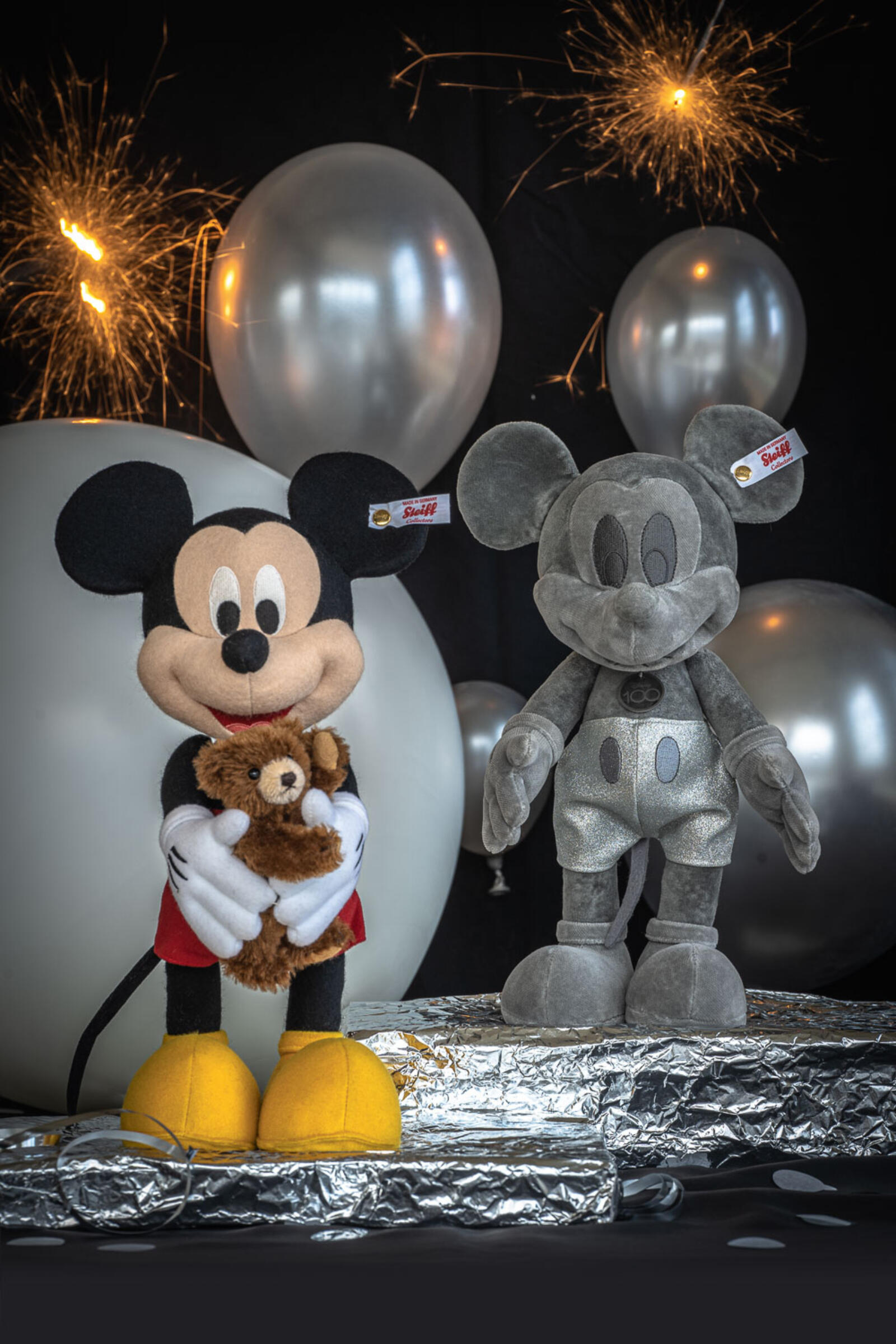
The 2023 Disney 100 anniversary year produced a substantial Steiff release programme. Steiff issued a limited edition Mickey Mouse with a smaller Steiff teddy bear, a Disney D100 commemorative edition, and a series of platinum coated mohair pieces. The 2023 releases marked more than 90 years of continuous Disney licensing through Steiff. Steiff's corporate communication on the partnership records the relationship as producing more than 100 Disney items across the partnership's history, ranging from unlimited children's plush through to one off auction pieces released for charity events.
The brand consequence
The 1931 Mickey Mouse licence positioned Steiff inside a category that had not previously existed. Before 1931 the licensed character toy was a marginal commercial form. The Steiff Disney pairing made it a primary category and gave it a quality threshold that subsequent licensees would have to meet. The arrangement established three precedents that the segment continues to reflect. It confirmed that the character mark and the manufacturer mark could co exist on a single product. It set the construction standard for high end licensed plush at the level of Steiff's existing mohair work rather than at the lower threshold that the price point of mass market merchandise would typically have allowed. And it established a relationship duration measured in decades rather than in product seasons.
The brand outcome for Steiff is the more durable result of the partnership. The Mickey Mouse licence extended the Knopf im Ohr trademark into a new cultural domain. Steiff had built its identity since 1880 around its own designed animals, with the Bear 55 PB of 1903 as the central reference. The 1931 Disney licence added a licensed character segment to that identity, without displacing the original archive. The brand carried two streams forward from that year: the historical Steiff animal range, anchored in the teddy bear and its companions, and the licensed character range, anchored in Mickey Mouse. Both streams remain in the Steiff catalogue almost a century later.
Written with AI assistance, edited by a human. Find out more about our Use of AI.