A sport with no gaps in it
Rolex supports all four Grand Slam tournaments, the leading international team competitions, and is Official Timekeeper of both the Association of Tennis Professionals and the Women's Tennis Association along with the highest-status tournaments on each tour. The company dates the relationship to 1978, when it partnered The Championships, Wimbledon, and describes it as support for almost fifty years.1
There is no week of the professional season, and no match that decides anything, that happens outside it.
What a complete set removes
A sponsorship built on one athlete is a position held on somebody else's behalf. Form goes. Injuries happen. Careers end, usually earlier than the contract imagined, and occasionally a name becomes a liability overnight. For the period a brand is exposed to that, its presence at the sport's biggest moments is contingent: if the player it pays loses in the second round, the brand spends the final watching someone else's logo.
Holding the tournaments removes the contingency entirely. Whoever wins, wins under a Rolex clock. The brand is present at every trophy presentation without having predicted any of them, and it never has to be right about a person.
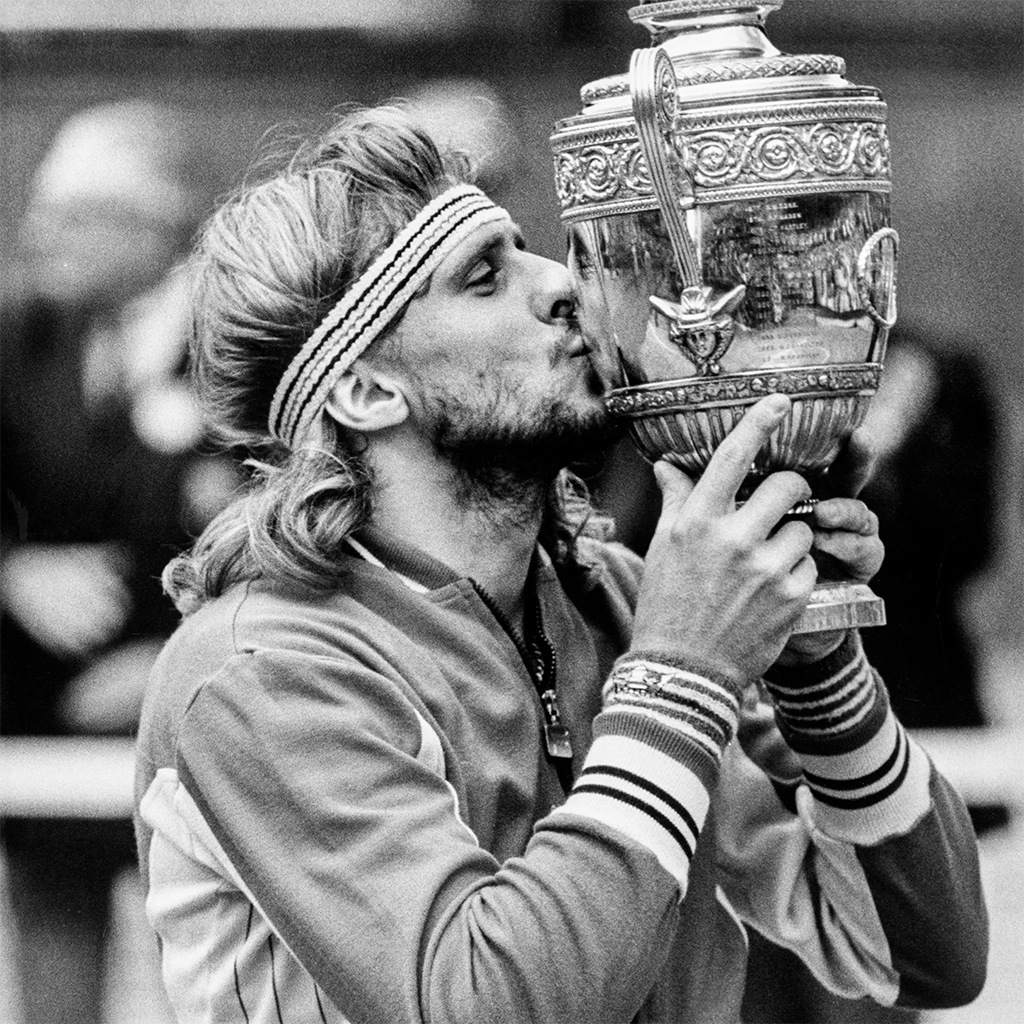
The people are the variable, the clock is the constant
Rolex still signs players, and it signs them early. Its own account of Roger Federer dates the partnership to 2001; his first Grand Slam title came at Wimbledon in 2003, and the twenty singles titles, the record eight Wimbledon crowns and the 310 weeks at world number one all followed.2 The brand did not buy a champion. It bought a nineteen-year-old and was proved right, which is a good outcome and was not a certainty.
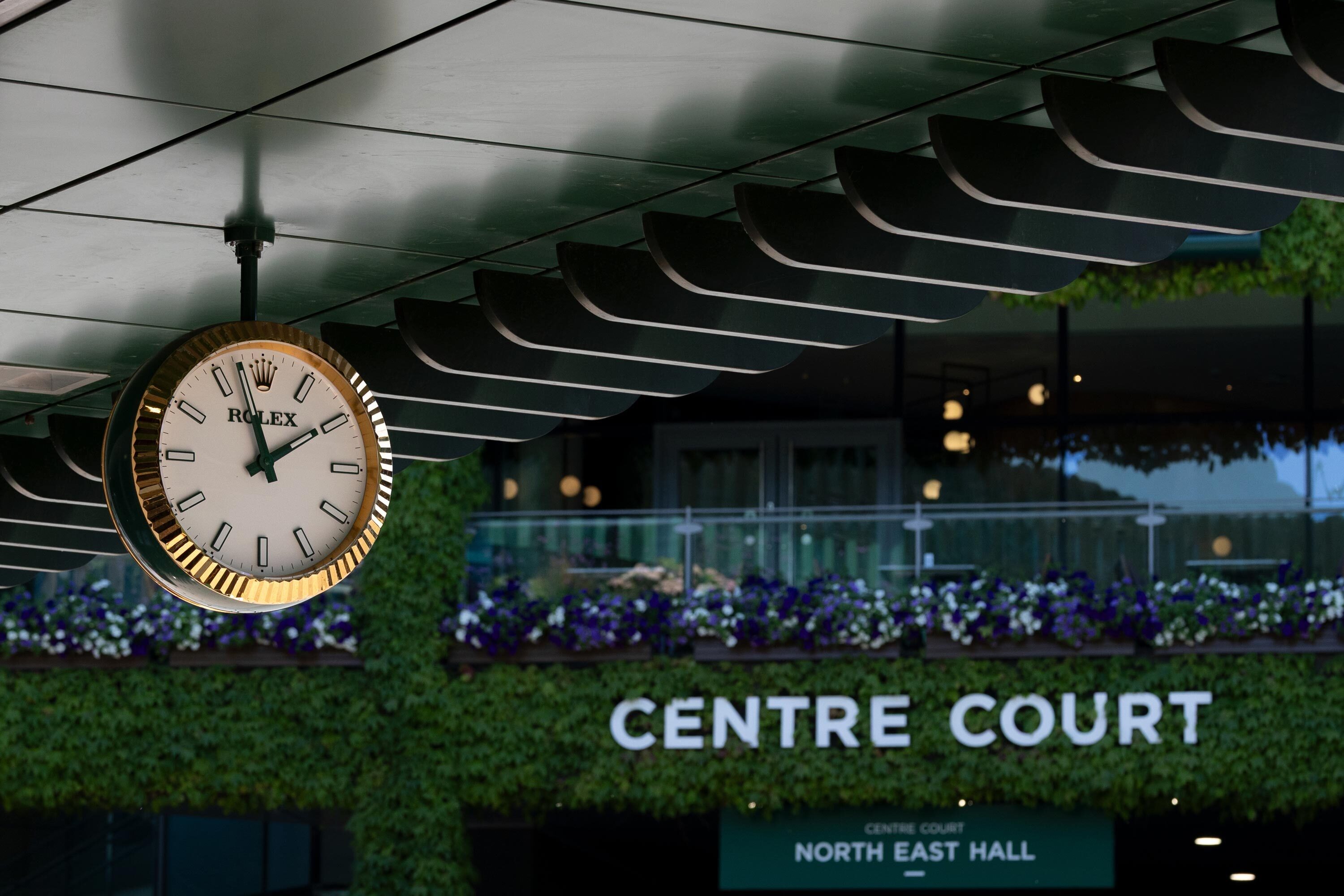
The clock required no such judgement. It has kept official time at Wimbledon since 1978, the same year Rolex took on Chris Evert as its first female tennis Testimonee, and it has hung there through every era of the sport since.3 Testimonees come and go against that backdrop: Björn Borg and Rod Laver have their names on trophies Rolex sponsors, and the company's current pages name Jannik Sinner, Carlos Alcaraz and Coco Gauff.1, 3
Why tennis and not another sport
The structure of the sport makes the strategy affordable in a way most do not. Tennis has four events that everyone agrees are the ones that count, fixed in the calendar and unchanged for a century, and two governing tours that run everything else. A brand that wants the whole of football or the whole of motor sport is buying an open-ended list of clubs, teams and national federations. A brand that wants the whole of tennis is buying four tournaments and two tours.
The sport also runs on elapsed time in public. A tennis broadcast displays a clock because the match has no fixed length, which gives a watch company a reason to be on screen that no arrangement had to invent. Rolex is not borrowing the frame here; it is supplying a thing the coverage already needed.
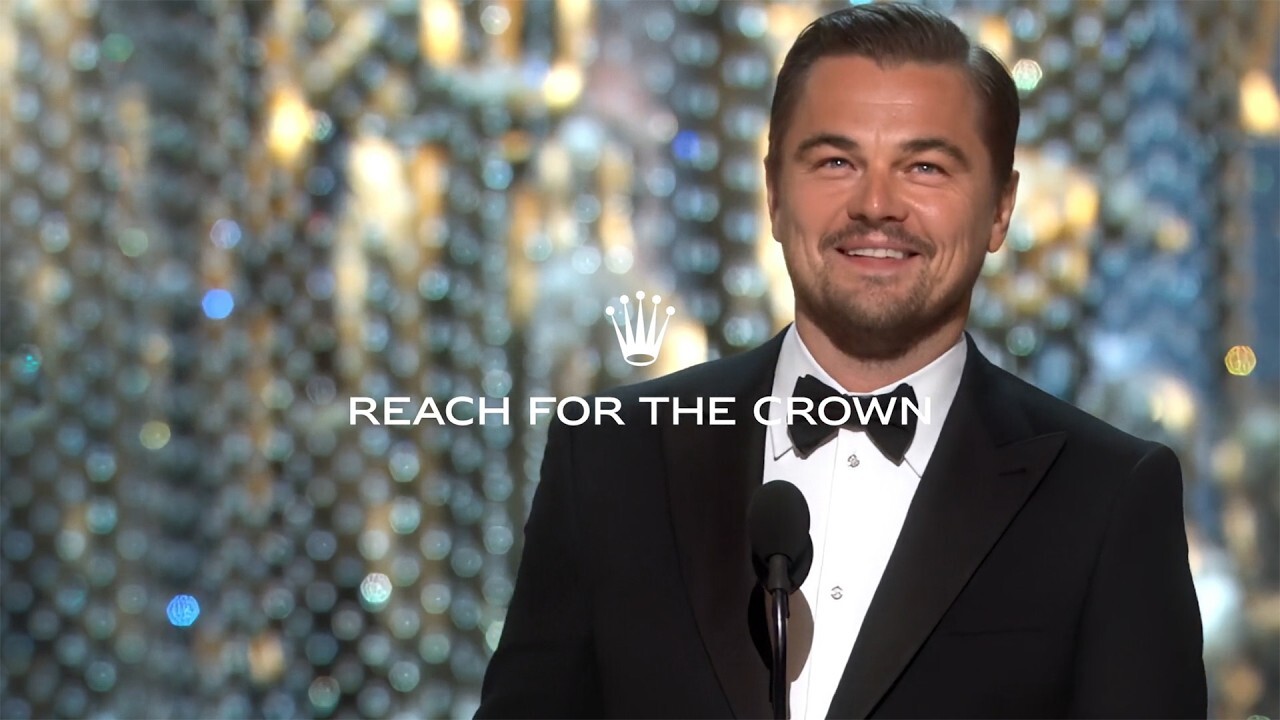
Sorce: Rolex Youtube
What it costs to own everything
Completeness is not free, and what it costs is distinctiveness. A brand that is at every tournament is nobody's exclusive. It cannot claim a side, cannot be the underdog's watch or the champion's watch, and cannot generate the friction that single-player sponsorships trade on. There is no rivalry for Rolex to be on one side of, because it is on both.
What it buys instead is a different kind of asset. Sponsorship that is everywhere for long enough stops being read as sponsorship. The clock at Wimbledon is not experienced as an advertisement by anyone watching; it is experienced as part of the place, in the way the grass and the queue are. A logo that appears for three years is a sponsor. A clock that has been there since 1978 is furniture, and furniture is not something an audience discounts.
The trick is the one Rolex sells
The line Rolex chooses to print beside Federer on its tennis pages is his own denial of effortlessness: "The truth is, I had to work really hard to make it look effortless."2
It is also a fair description of the sponsorship. Rolex's presence in tennis reads as natural, inherited, almost a property of the sport. It is nothing of the kind. It is four Grand Slam agreements, two tour timekeeping contracts, a roster of players signed young, and half a century of renewals, assembled so carefully that the audience has stopped seeing the assembly. The brand's proposition and its media plan make the same argument: what looks like it was always there took a great deal of work.
Written with AI assistance, edited by a human. Find out more about our Use of AI.
1. Rolex, "Rolex and tennis, A shared movement", retrieved 22 September 2026, for Rolex supporting all four Grand Slam tournaments and the leading international team competitions, for its role as Official Timekeeper of the ATP, the WTA and the highest-status tournaments on both tours, for the relationship dating to 1978 and the partnership with The Championships, Wimbledon, for the description of the support as spanning almost fifty years, and for the page naming Jannik Sinner and Carlos Alcaraz at Wimbledon in 2025 and Coco Gauff at Roland-Garros in 2025. https://www.rolex.com/en-us/rolex-and-sports/tennis
2. Rolex, "Roger Federer", Rolex Family, retrieved 22 September 2026, for the statement that Federer partnered with Rolex in 2001, for his first Grand Slam title at The Championships, Wimbledon, in 2003, for the twenty Grand Slam singles titles, the record eight Wimbledon crowns and the 310 weeks as world number one, and for the quotation "The truth is, I had to work really hard to make it look effortless." Rolex's tennis overview page renders the same quotation as "The truth is that I had to work very hard to make it look easy."; the wording used here is the one on Federer's own page. https://www.rolex.com/en-us/rolex-family/tennis/roger-federer
3. Rolex, "Behind the crown, Rolex and Partners", retrieved 22 September 2026, for the Rolex clock keeping official time at The Championships, Wimbledon, since 1978, for Chris Evert becoming the first female tennis Testimonee in that year, for the expansion into tennis in the late 1970s, and for the names of Rolex tennis Testimonees engraved on trophies the brand sponsors, among them Björn Borg and Rod Laver. https://www.rolex.com/en-us/about-rolex/behind-the-crown/rolex-partners