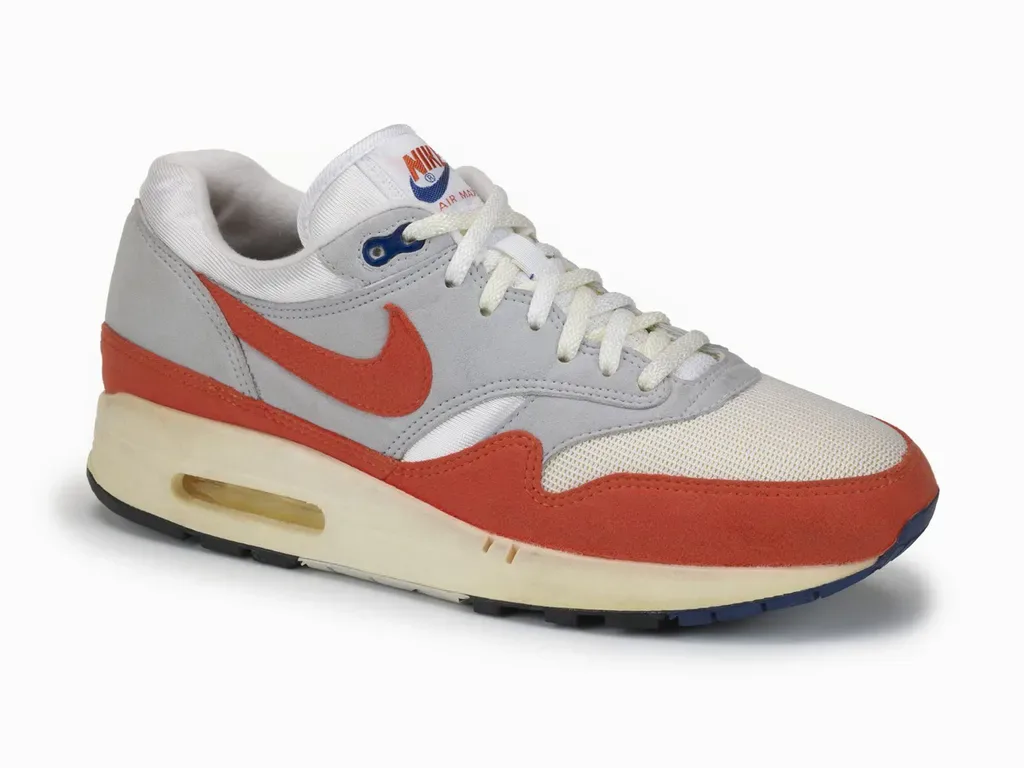

An architect's view of an athletic shoe
On 26 March 1987 Nike released the Air Max 1, the first running shoe in the company's history to put its Air-Sole cushioning unit on display through a transparent window in the midsole. The model was designed by Tinker Hatfield, an architect by training who had joined Nike in 1981 and was already steering the Air Jordan line.
Hatfield drew the brief from a trip to Paris and a visit to the Centre Pompidou by Renzo Piano and Richard Rogers, the building that turns its structural systems and service ducts onto its facade. He applied the same logic to running performance: the technology hidden inside Nike Air models since 1979 became a visible feature of the product. Internally, the proposal met resistance over fears that an exposed window would read as fragile or invite punctures.
From product release to brand asset
The launch repositioned an engineering detail as a brand signal. The Air Max line grew into a multi-decade design platform, and the original 1987 colourway, often referred to as the OG, became a reference point for subsequent anniversaries, including the 2018 Centre Pompidou tribute pack. The Air Max 1 has since been credited with linking technical innovation to visible design language across the wider sneaker category.
Written with AI assistance, edited by a human. Find out more about our Use of AI.