
An English claim for a global premium carrier
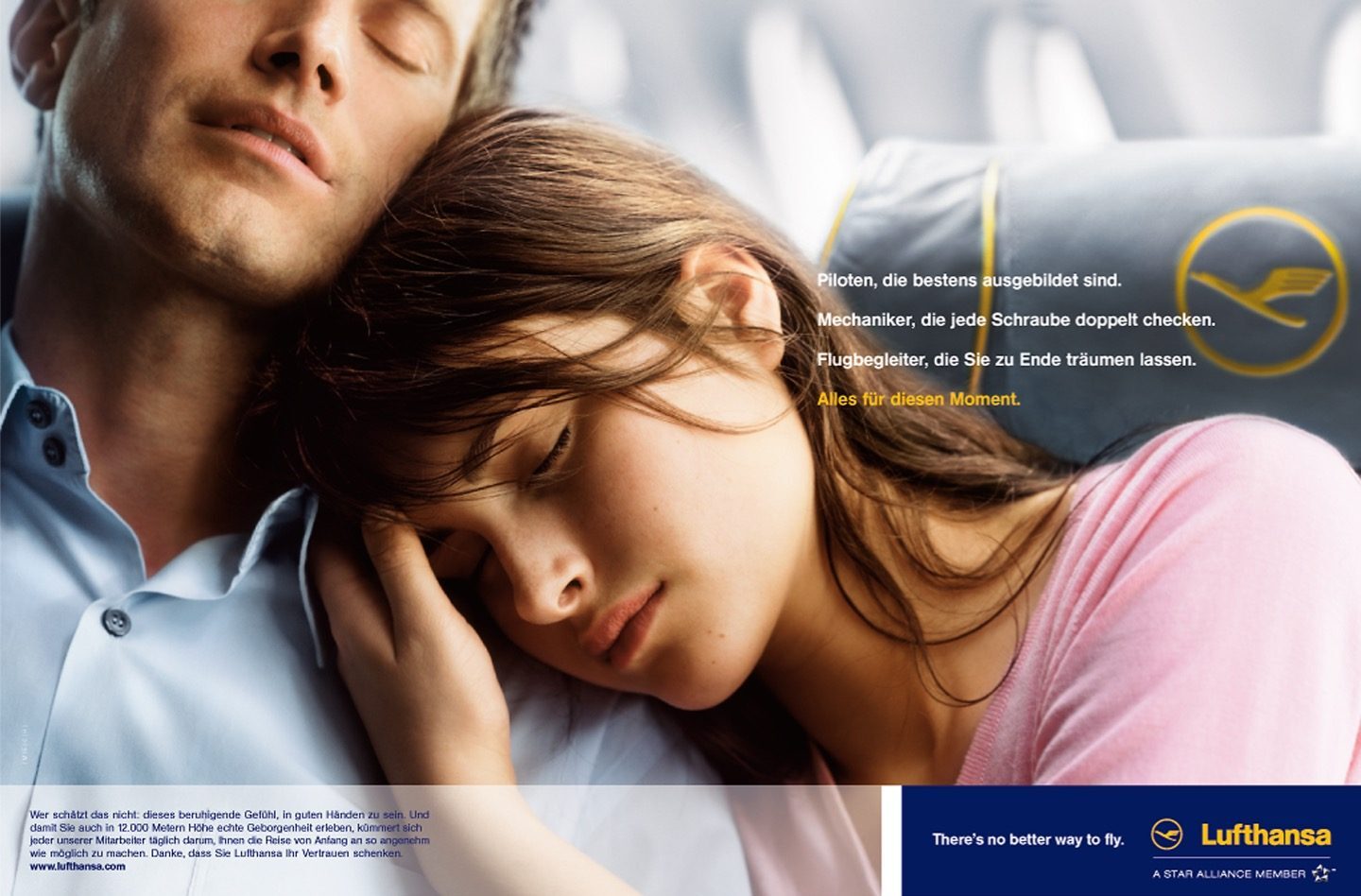
For more than a decade, Lufthansa told the world that "There's no better way to fly." The line, created by the agency McCann Erickson around the turn of the millennium, became the English-language claim that accompanied the German flag carrier through its most internationally confident years. It was short, declarative and unembarrassed about its ambition. The airline was not promising a good way to fly. It was claiming the best one.
The claim arrived at a moment when Lufthansa was consolidating its position as a premium long-haul carrier and a founding member of the Star Alliance, formed in 1997. The brand spoke primarily to frequent business travellers, and the slogan matched that audience. It framed flying with Lufthansa as a mark of judgement, the rational choice of people who knew quality when they saw it.
It was also a claim of its time. The early 2000s were a period of expansion and optimism for network carriers, before low-cost competition and the Gulf airlines reshaped the market. Stating outright that no one flew better was a posture the era allowed, and Lufthansa occupied it comfortably.
A statement of superiority
"There's no better way to fly" worked as a comparative without ever naming a competitor. By asserting that nothing surpassed Lufthansa, it placed the brand at the top of a field it never had to describe. That confidence suited the German engineering reputation the airline traded on, the sense of precision, reliability and seriousness that travellers associated with the crane. The claim and the brand reinforced one another, a disciplined and understated identity paired with a quietly absolute promise.
Because it was written in English rather than German, the line travelled. The same four words could anchor campaigns in dozens of markets without translation, which mattered for a carrier whose route map and customer base were global. English claims were common in international aviation, but few were as flatly self-assured as this one. It did not describe a destination, a fleet or a service. It simply ranked Lufthansa first.
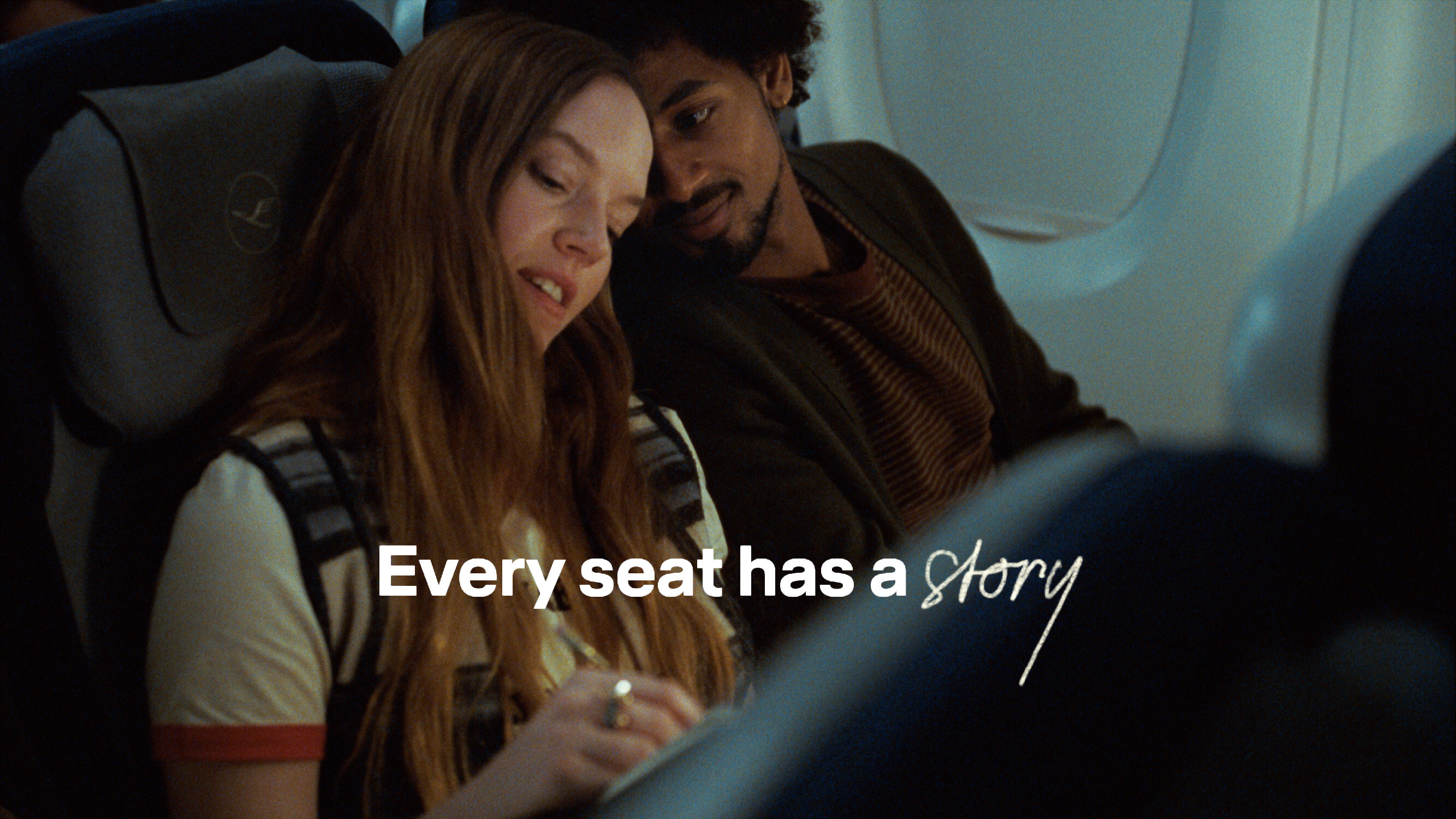
The line appeared across television, print and airport environments throughout the 2000s, including a long run of commercials that staged the comfort and reach of the Lufthansa network. Repetition was part of its strength. A claim held steady for years becomes a fixed point, and Lufthansa let this one settle into the brand until it read almost as a statement of fact rather than advertising.
Defending the words
Lufthansa treated the claim as an asset worth protecting. When British Airways later built communication around the closely related line "The way to fly," Lufthansa publicly objected to the similarity, a reminder that a slogan, once established, becomes part of a brand's competitive territory. The episode underlined how seriously the airline regarded its verbal identity, not as decoration but as property.
That protectiveness made sense given how much weight the line carried. For a brand whose visual identity, the crane in its ring, had remained remarkably stable since 1918, the verbal claim was one of the few elements that could be owned and defended in language. Lufthansa had long understood the value of consistency in its symbols, and it extended the same logic to its words.
From superiority to service
By the end of the 2000s, the ground beneath the claim had shifted. On short and medium routes, low-cost carriers such as Ryanair, easyJet and Lufthansa's own Germanwings were reshaping expectations about price. On long-haul routes, the Gulf carriers Emirates, Qatar Airways and Etihad were investing heavily in product and service. In that environment, a claim that announced Lufthansa as simply the best risked sounding both contestable and aloof.
Inside the company, the tone increasingly read as elitist, a message delivered from above rather than alongside the passenger. Lufthansa wanted to broaden its appeal beyond the core of business flyers toward families, retirees and younger travellers, and to be seen as a quality airline for everyone rather than a premium carrier for the performance-minded few. A claim built on superiority did not easily carry that more inclusive ambition.
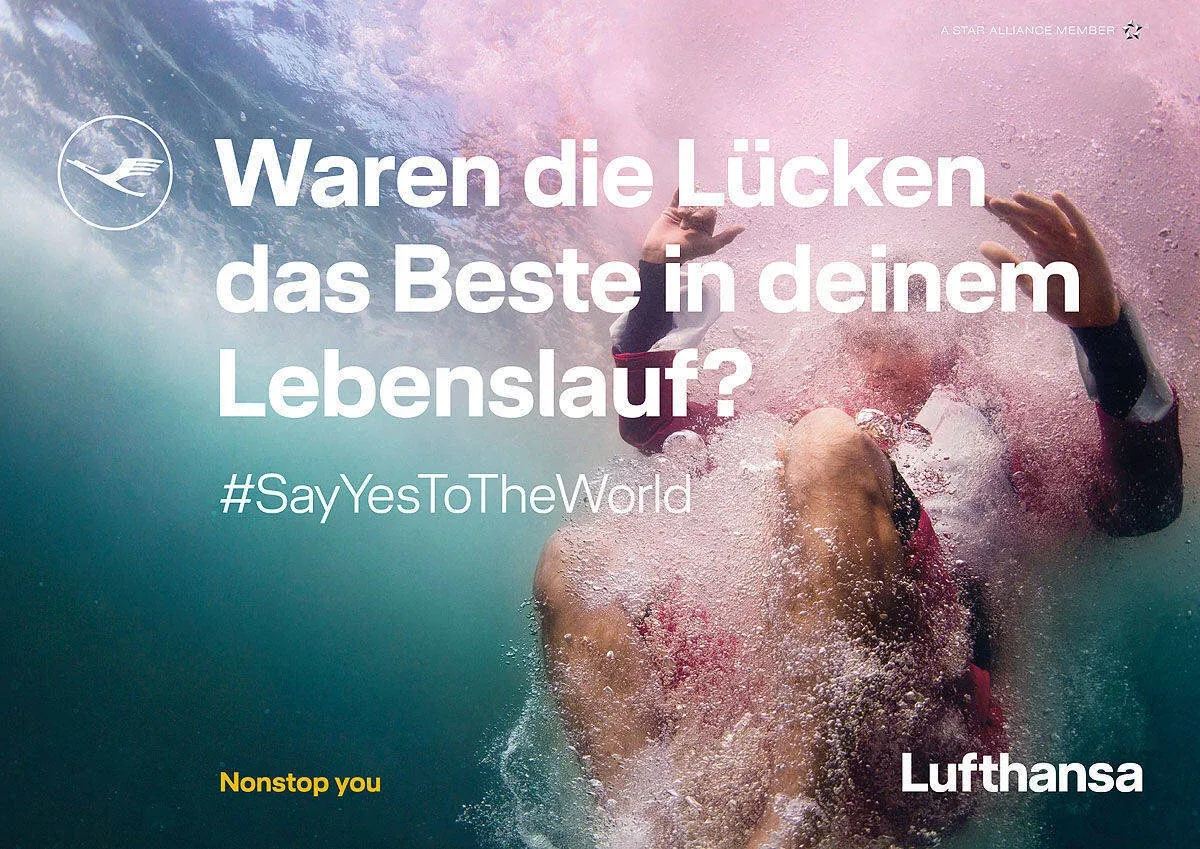
In early 2012 Lufthansa retired "There's no better way to fly" and replaced it with "Nonstop you," developed by the Hamburg agency Kolle Rebbe. The change marked a deliberate move from a statement about the airline to a statement about the customer. After roughly twelve years, the claim that had defined Lufthansa's most assertive era gave way to a softer and more personal register.
Seen across the brand's longer history, "There's no better way to fly" represented a particular phase of confidence. It belonged to a time when Lufthansa could state its leadership plainly and expect the market to agree. The claims that followed would spend their energy not on asserting superiority but on describing what the journey meant to the people taking it.
Written with AI assistance, edited by a human. Find out more about our Use of AI.