A crane that fills an aircraft
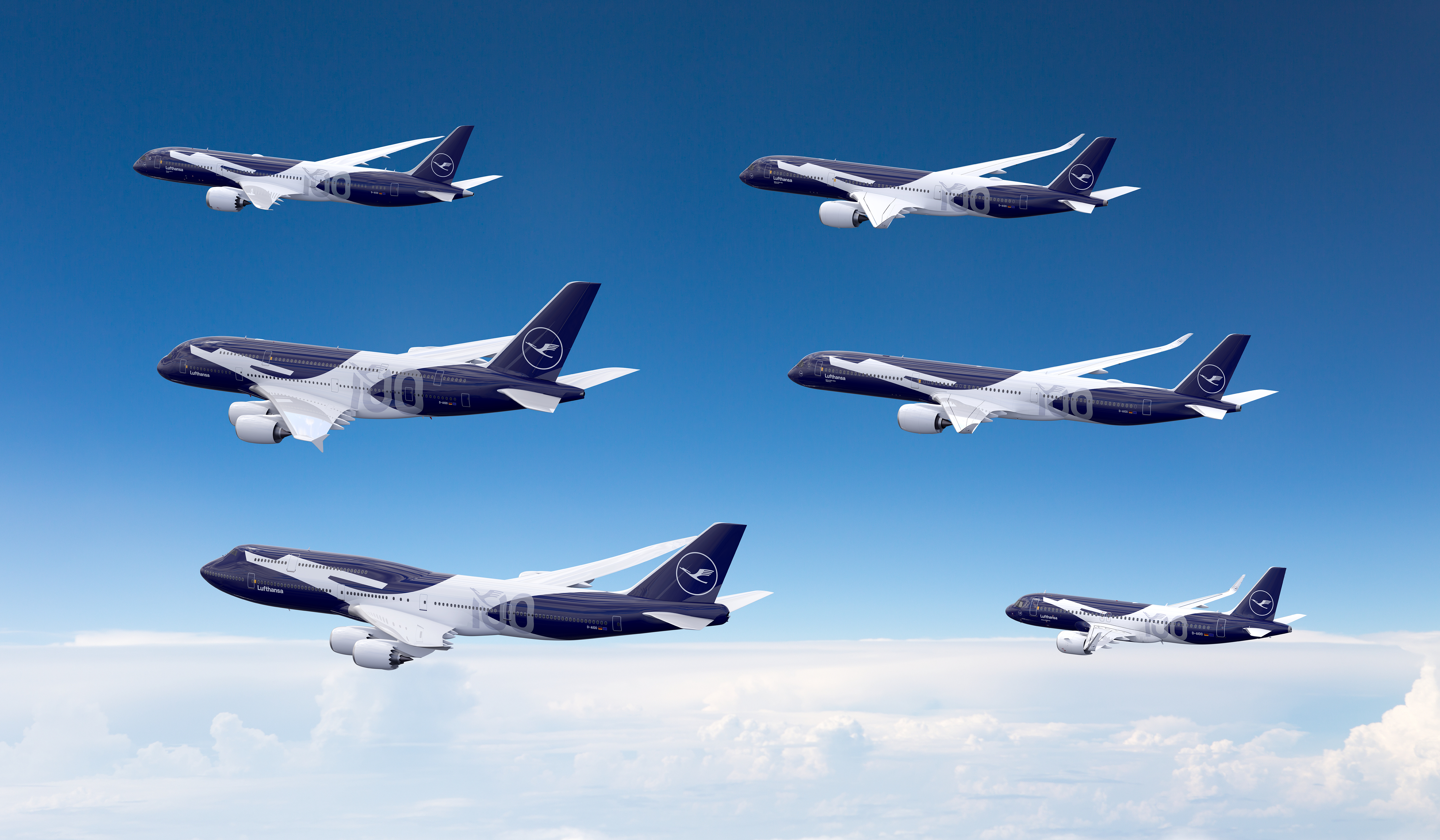
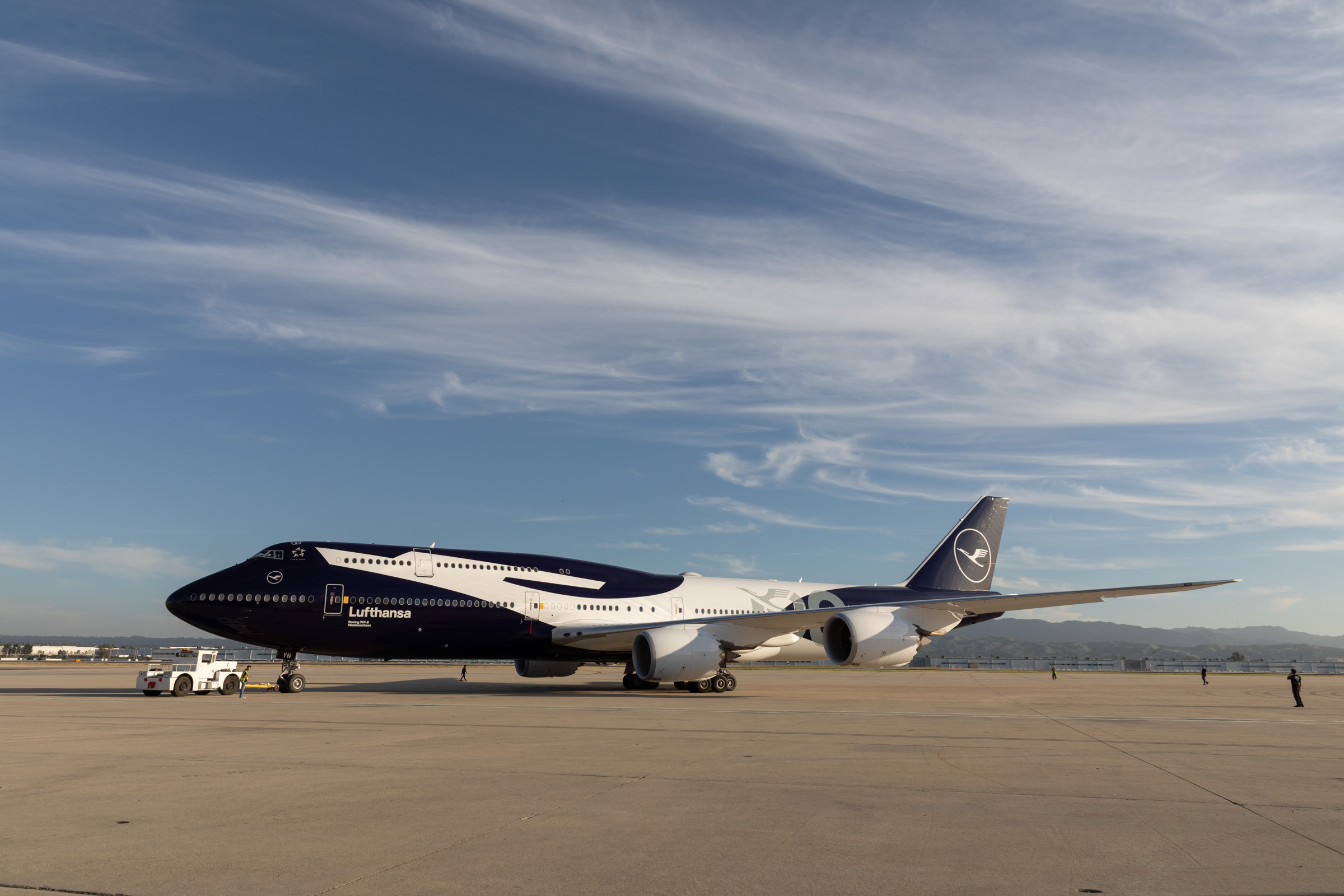
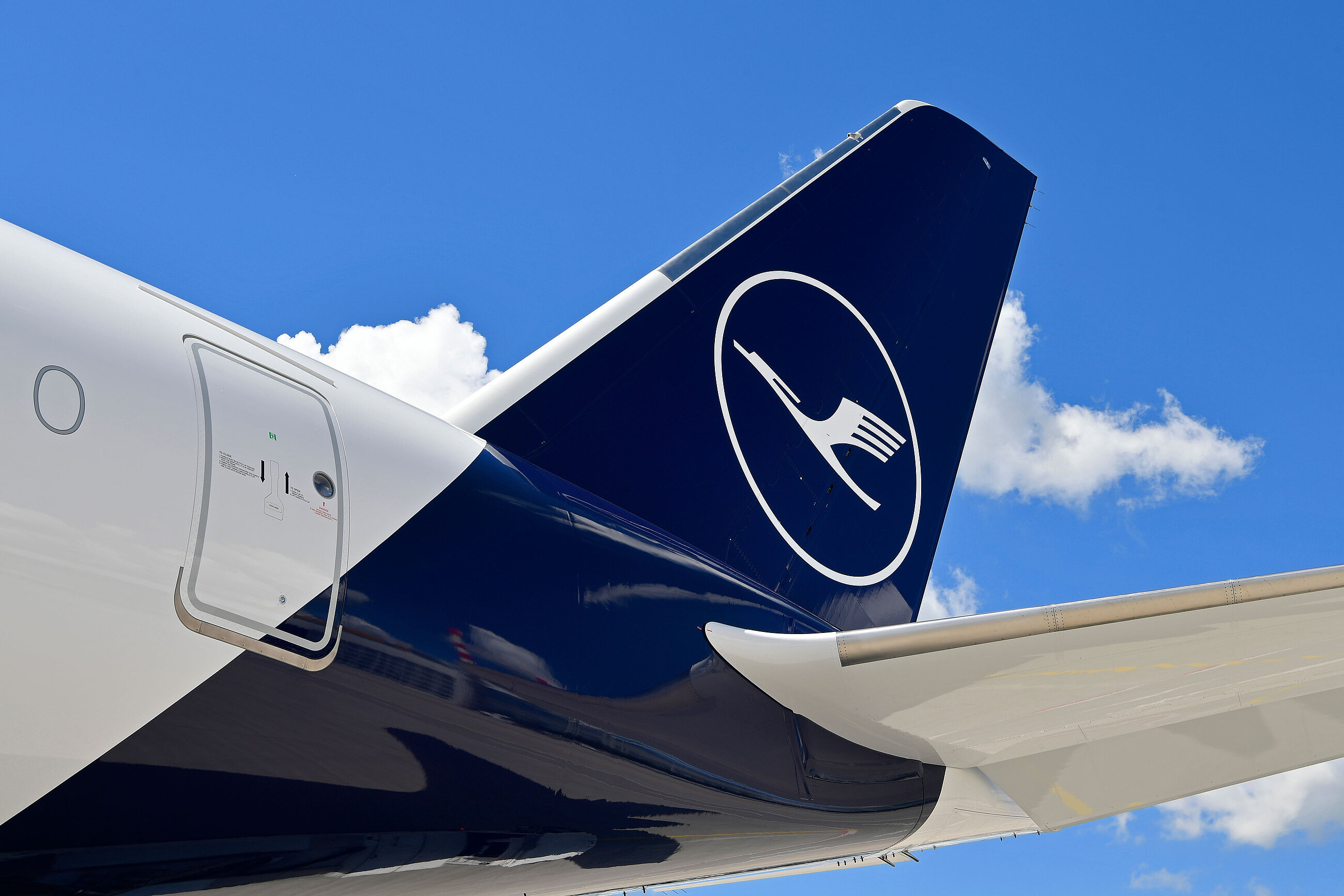
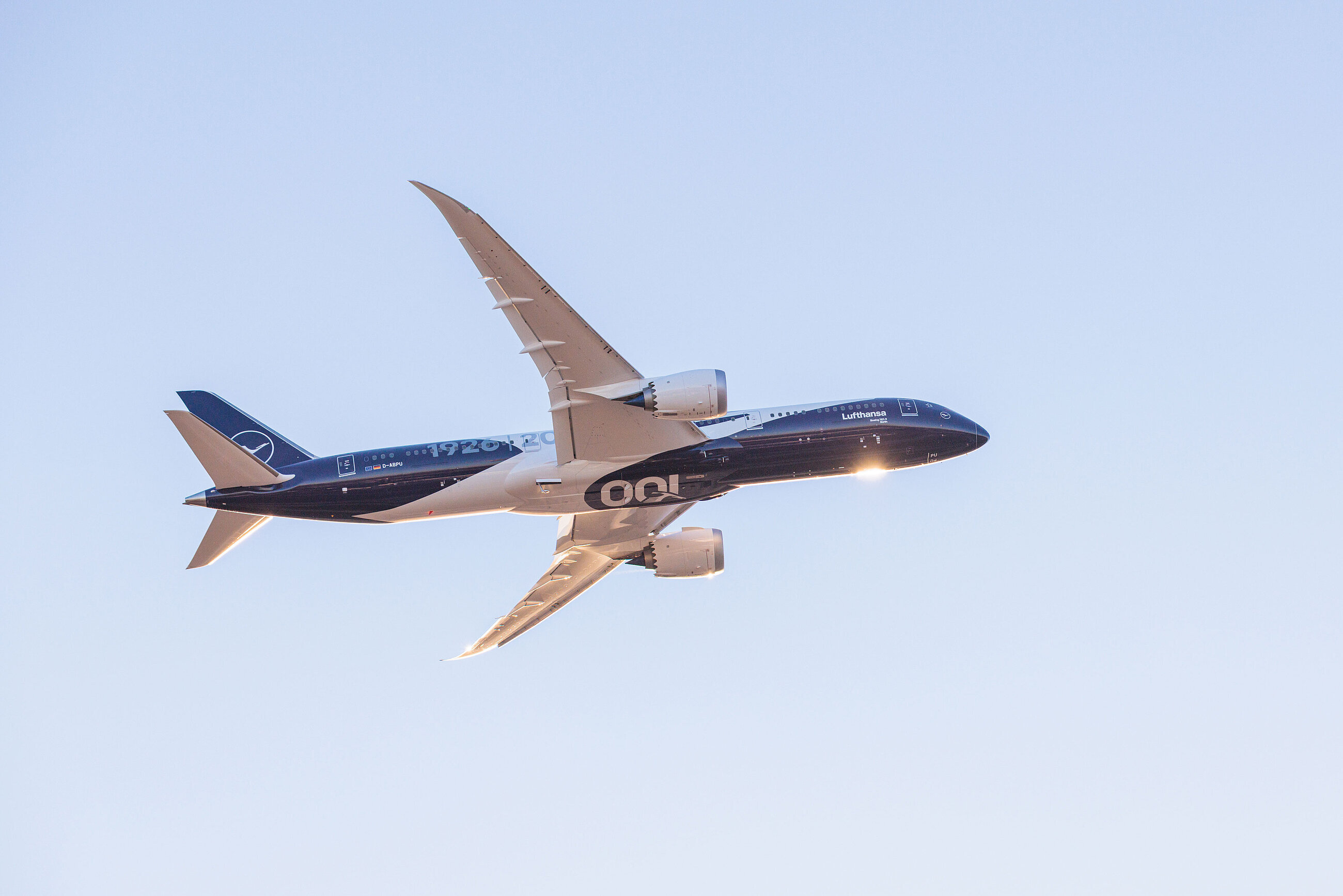
To mark its centenary in 2026, Lufthansa turns its oldest asset into its boldest statement. A Boeing 787-9 carries a special livery in which the crane no longer sits quietly on the tail but spreads across the entire fuselage and wings, so that the whole aircraft appears to rise into the sky like a bird. The design is known internally as the super crane, and it is the first of six aircraft that wear the anniversary look. For the first time, a Lufthansa fuselage appears in a deep blue finish, and against the white wings the effect is striking: the crane seems to take flight.
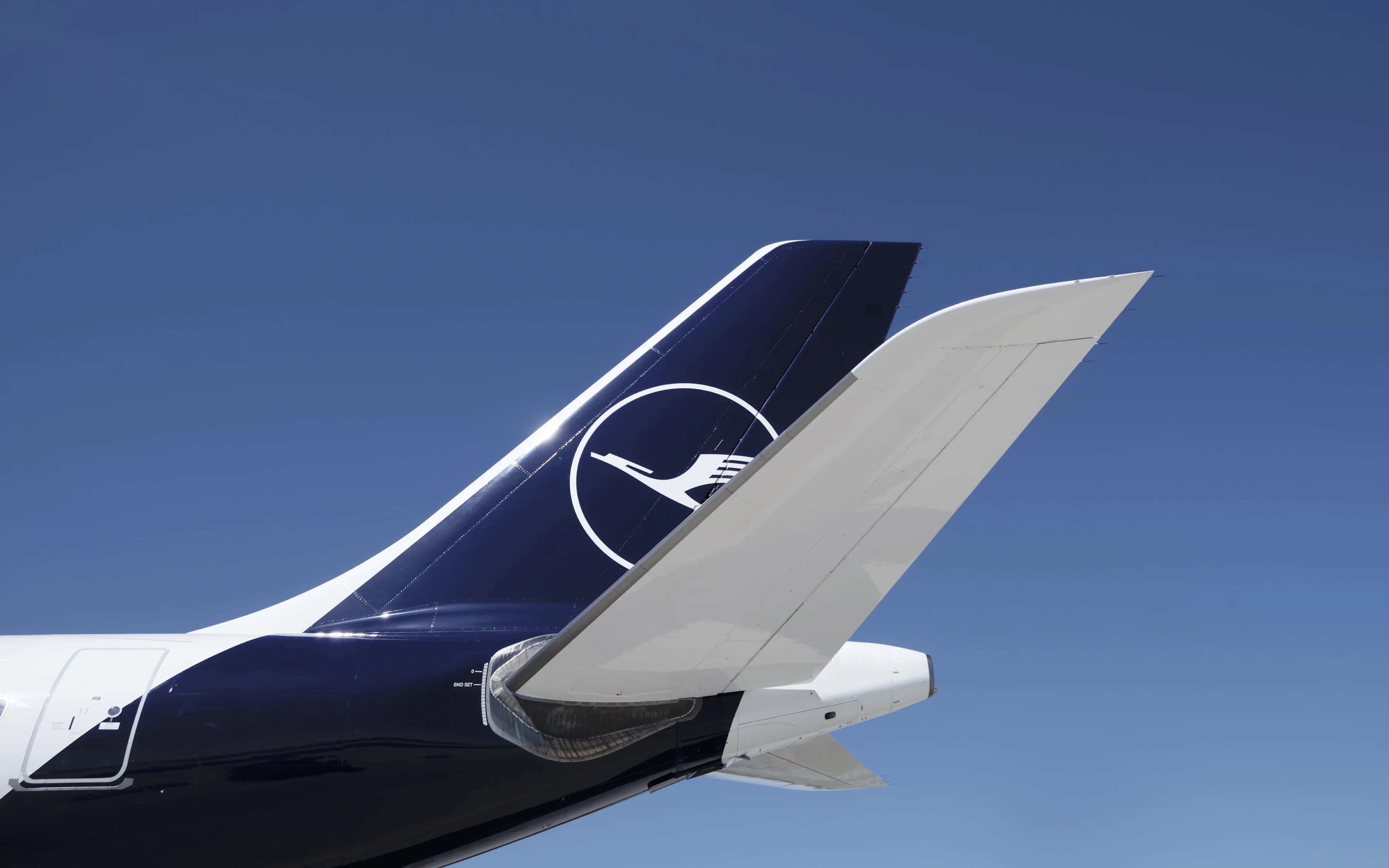
The concept is not new. According to the airline, the idea for the large crane has existed in its brand design department for some time and was one of the first proposals to emerge during the 2018 rebrand. The centenary provides the occasion to bring it back and translate it into the current livery. The design comes from the Lufthansa Design Unit, from the first sketch to the final execution, and it deliberately stands apart from the everyday fleet while quoting the historic crane that Otto Firle created more than a hundred years ago.
From concept to aircraft
The livery is applied by the Irish-British designer David Hedley Noble, whose London and New York studio Aerobrand marks its own thirtieth anniversary in 2026. Noble has shaped Lufthansa aircraft looks for years, including the deeper blue introduced in 2018, and he describes painting an aircraft as an intensely physical process. He and his team spend weeks with each airframe, measuring its curves and the way the wings meet the body, and they build highly accurate three-dimensional models so that the painting templates fit precisely in the hangar.
That precision matters more than ever. Noble notes that because almost everyone now carries a smartphone, travellers constantly photograph aircraft and post the images, so a design has to look right from every angle, including from above. The super crane, with its symmetry and its sense of motion, is built to reward exactly that kind of attention.
Six aircraft, one symbol
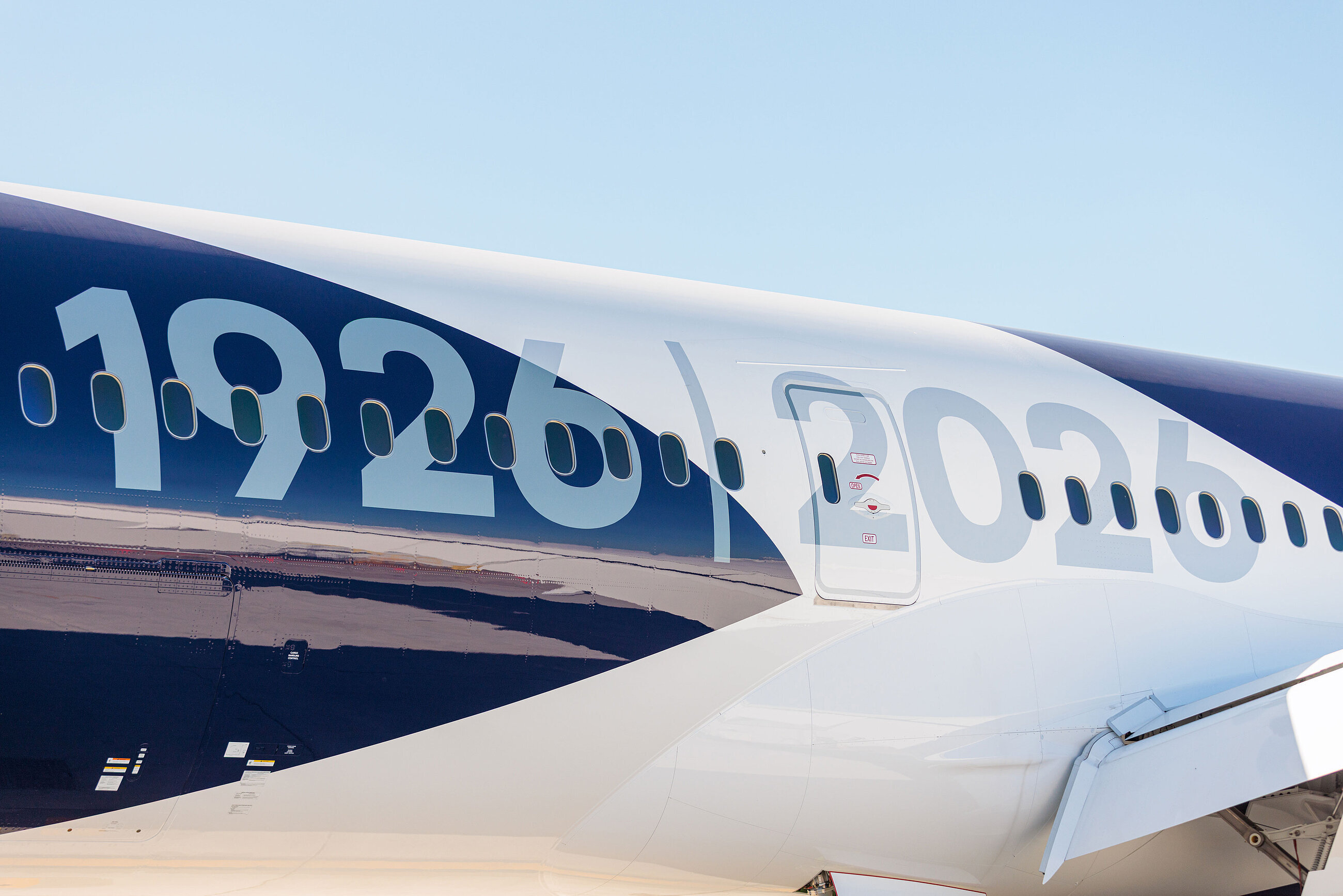
The Boeing 787-9, named Berlin, is the first to fly in the anniversary scheme, with its premiere planned in Frankfurt. It is joined over the course of the centenary year by an Airbus A380, an Airbus A350-1000, an Airbus A350-900, an Airbus A320 and a Boeing 747-8. Fuselage details carry the years 1926 and 2026, framing the livery explicitly as a hundred-year marker. Noble is also adapting a 1950s Lockheed Super Star scheme onto an Airbus A321, bringing a retro design from the brand's history onto a modern aircraft.
The choice to build a centenary campaign around the crane rather than a new slogan or a temporary logo is itself a brand decision. Lufthansa is using the anniversary to dramatise the single asset that has stayed constant through every era of its identity. The super crane is large and unmistakable, and the airline frames it as standing for reliability, freedom and openness to the world, the associations it wants travellers to attach to the brand.
Heritage as the headline
What makes the livery notable in branding terms is its restraint beneath the spectacle. The aircraft looks dramatic, but the idea is conservative in the best sense: it takes the existing crane and scales it up rather than inventing a new mark for the occasion. Noble points to Otto Firle's original drawing as proof that a streamlined, highly reduced sign can still look modern a century later, and he treats maximum reduction as the discipline that keeps a design timeless. The super crane is an enlargement of that logic, not a departure from it.
The campaign also shows how the 2018 identity continues to pay off. Because that programme established a deep blue premium palette and a flexible system, Lufthansa can stage a centenary livery that feels like a natural extension of the brand rather than a one-off stunt. The deep blue fuselage, new to the fleet, reads as the boldest expression yet of the colour direction set in 2018.
For a brand that has spent a hundred years protecting one symbol, the centenary livery is a fitting gesture. Lufthansa is not changing the crane to celebrate the anniversary. It is making the crane larger, more central and more visible than ever, and letting the bird that Otto Firle drew in 1918 carry the whole aircraft, and the whole story, into its second century.
Written with AI assistance, edited by a human. Find out more about our Use of AI.