
A photograph in a moving car
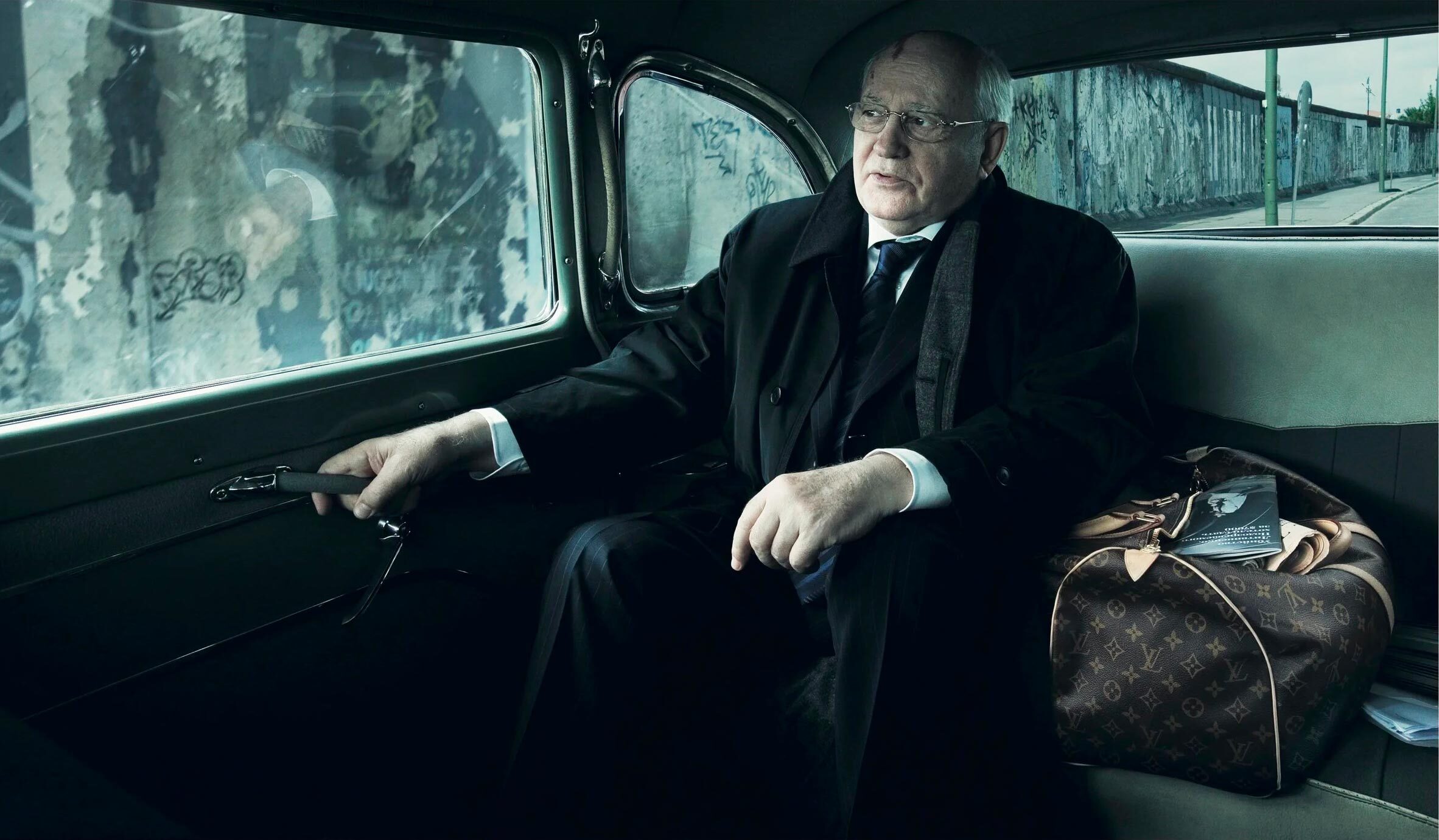
On 21 August 2007, Louis Vuitton launched the Core Values platform with a photograph of Mikhail Gorbachev seated in a chauffeured car as it passed the remnants of the Berlin Wall. A Louis Vuitton Keepall Bandoulière 55 in classic Monogram rested on the seat next to him. The line read: "A single journey can change the course of a life." The platform was photographed by Annie Leibovitz and developed by Pietro Beccari, then Senior Vice-President of Marketing and Communications at Louis Vuitton, and Antoine Arnault, then Director of Communications, with creative execution by Ogilvy & Mather Paris under Executive Creative Director Antoine Choquet.
The brief
The brief, set by Pietro Beccari and approved by Bernard Arnault, was to remove the product from the centre of Louis Vuitton advertising and to install the customer's life narrative in its place. By the mid-2000s, the Maison's advertising had been organised around editorial product imagery shot by Mert & Marcus, Steven Meisel and other fashion photographers in formal studio settings. The Monogram bag was the protagonist. Beccari proposed an inversion: the journey would be the protagonist, the bag would be a witness to the journey, and the protagonist would be a real public figure with a documented journey at scale.
The Core Values title operated as an internal description rather than as a public tagline. The public-facing tagline was "A single journey can change the course of a life," later refined across executions into "Where will life take you?" The platform was conceived to run across multiple executions over multiple years, with each execution carrying the same photographic register, the same Annie Leibovitz hand, the same single-line tagline, and the same registration of a public figure in a real location with a Louis Vuitton bag.
The first execution
Annie Leibovitz photographed Gorbachev in a single day in Berlin in July 2007. The location was the East Side Gallery section of the former Berlin Wall, photographed from a chauffeured car driving along the wall's eastern face. The Keepall Bandoulière 55 was placed on the seat next to Gorbachev with the leather handles facing the camera. The car was a private vehicle with Russian plates. The lighting was natural; the photograph was taken in late afternoon. Leibovitz produced approximately 600 frames in the working session; one frame was selected for the platform launch.
The execution ran globally from 21 August 2007 in the international broadsheet press, including The Wall Street Journal, The Financial Times, Le Monde, Frankfurter Allgemeine Zeitung, El País, The Times of London and the Nikkei. The platform also ran across selected international news and culture magazines including Vanity Fair, The New Yorker, Le Figaro Magazine, Der Spiegel, Time and Newsweek. The Maison did not run the campaign in fashion magazines; the platform was deliberately routed through news media to register a non-fashion audience.
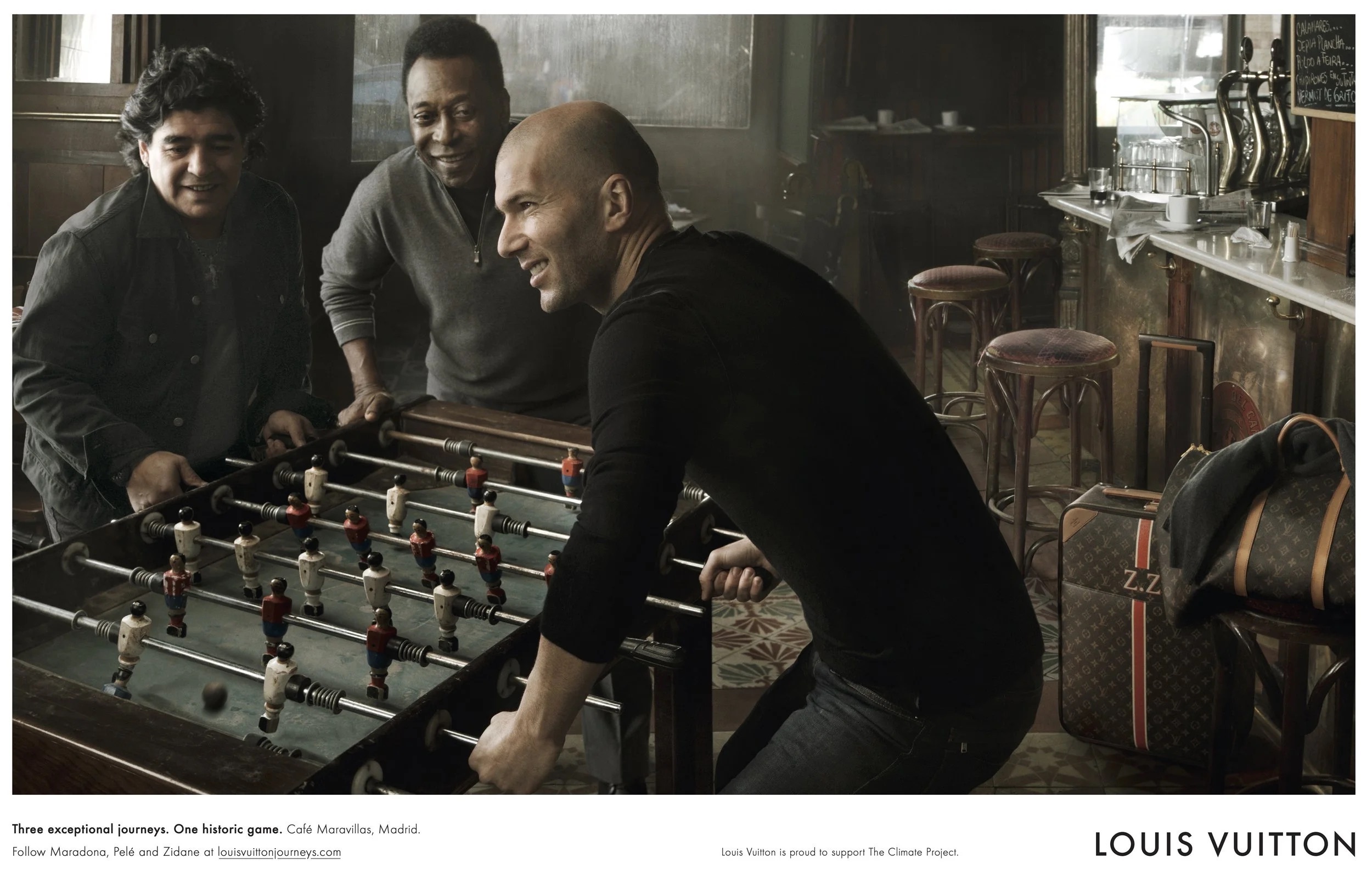
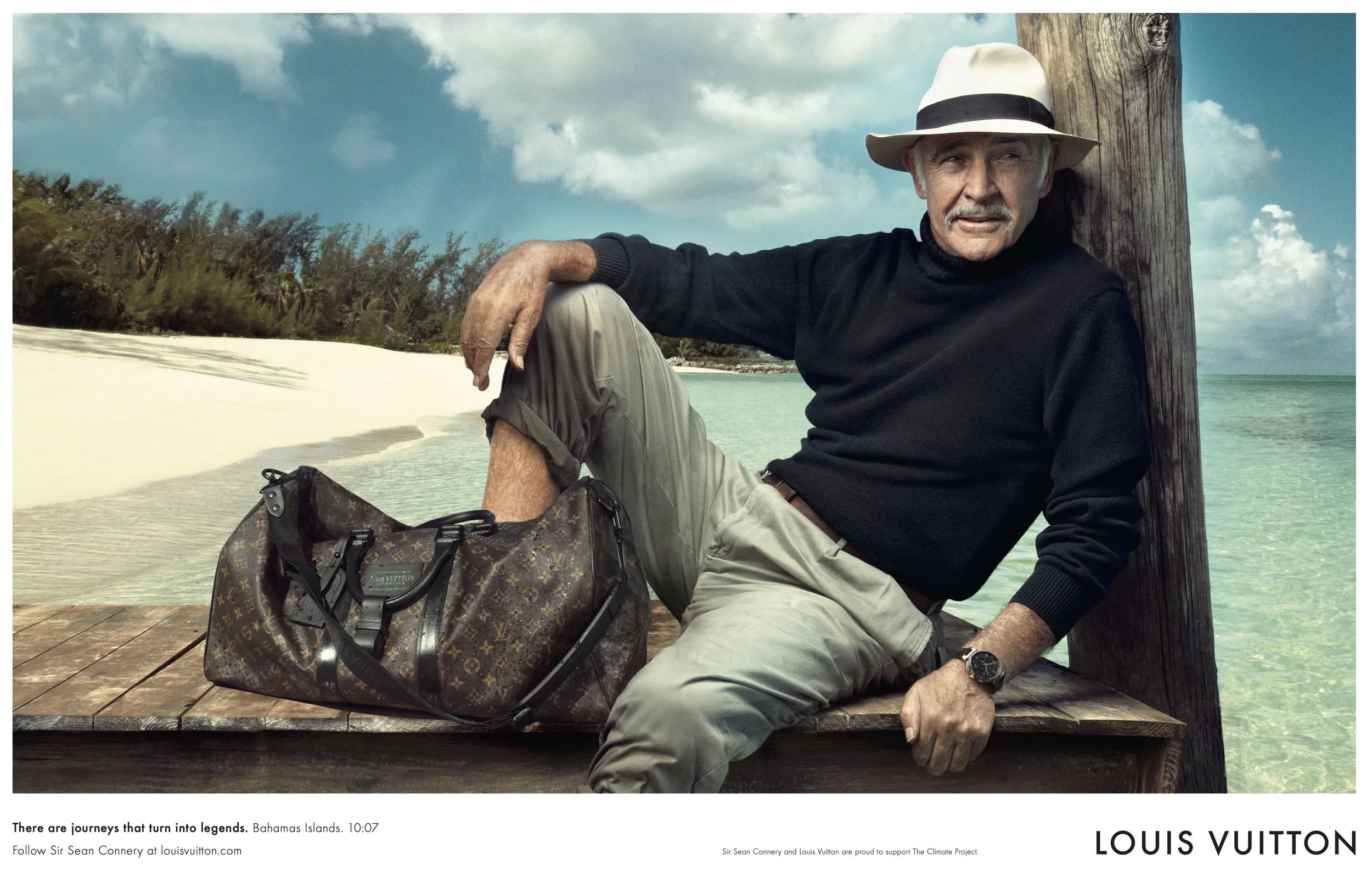
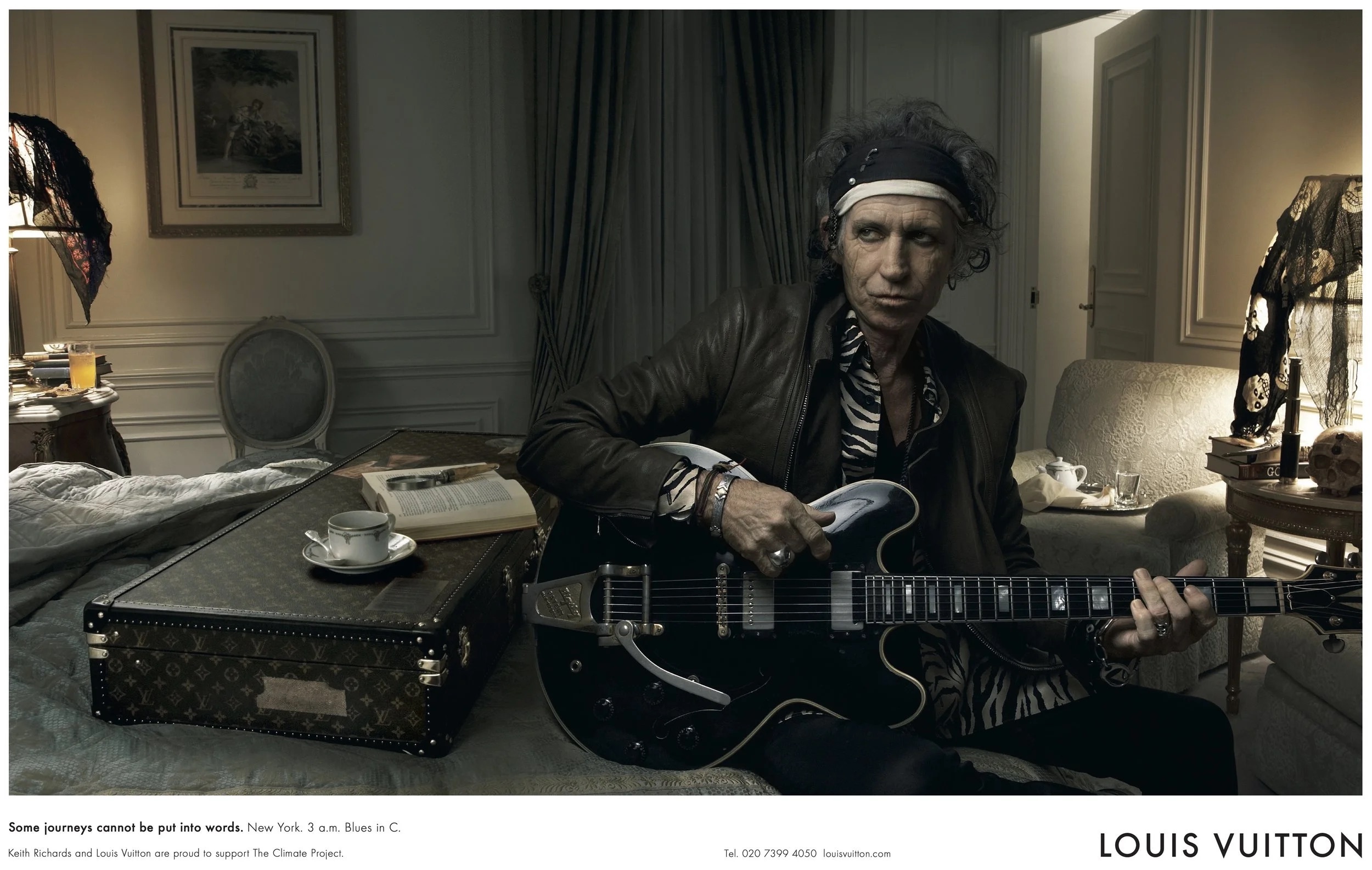
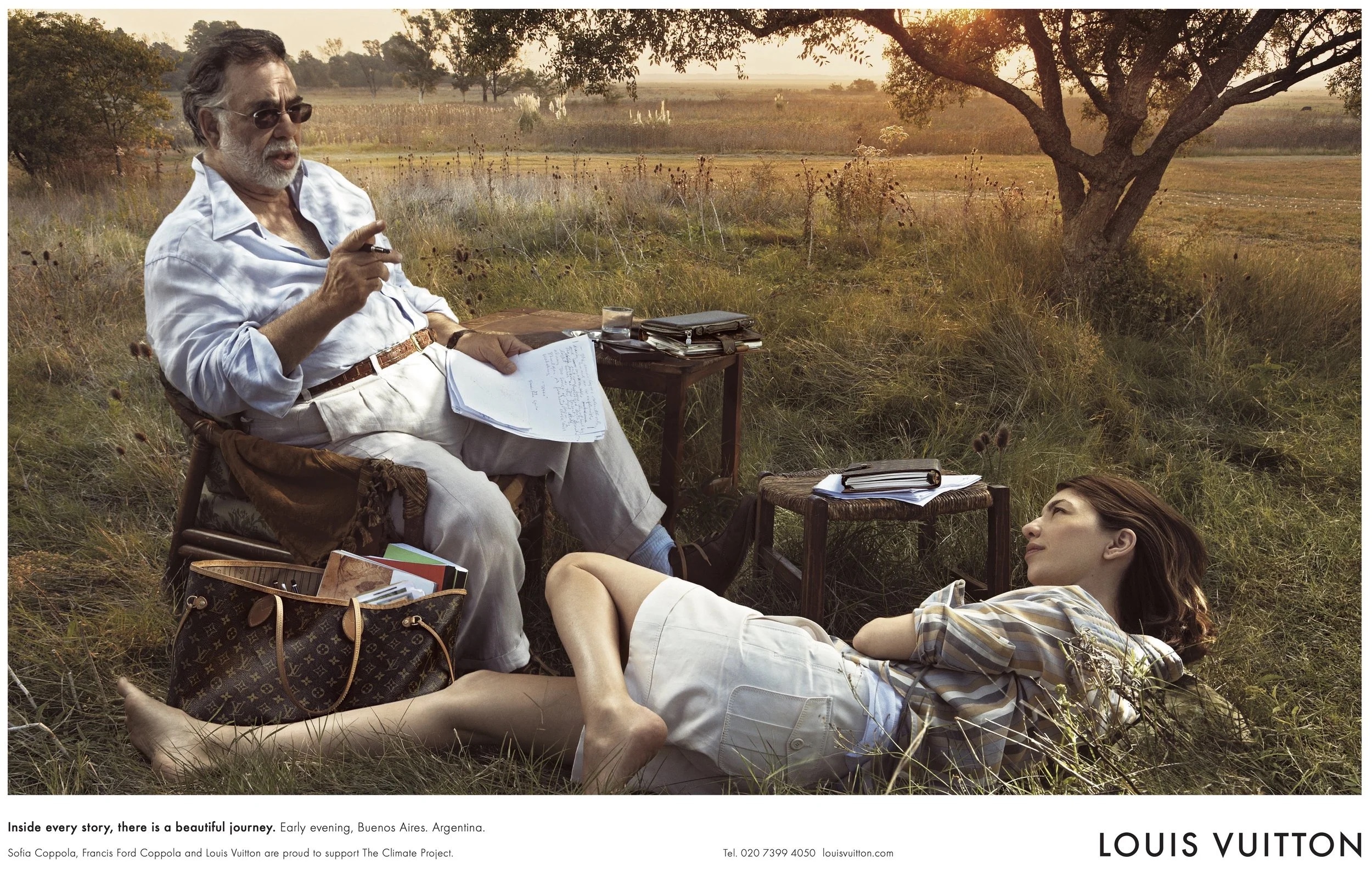
The seven-year run
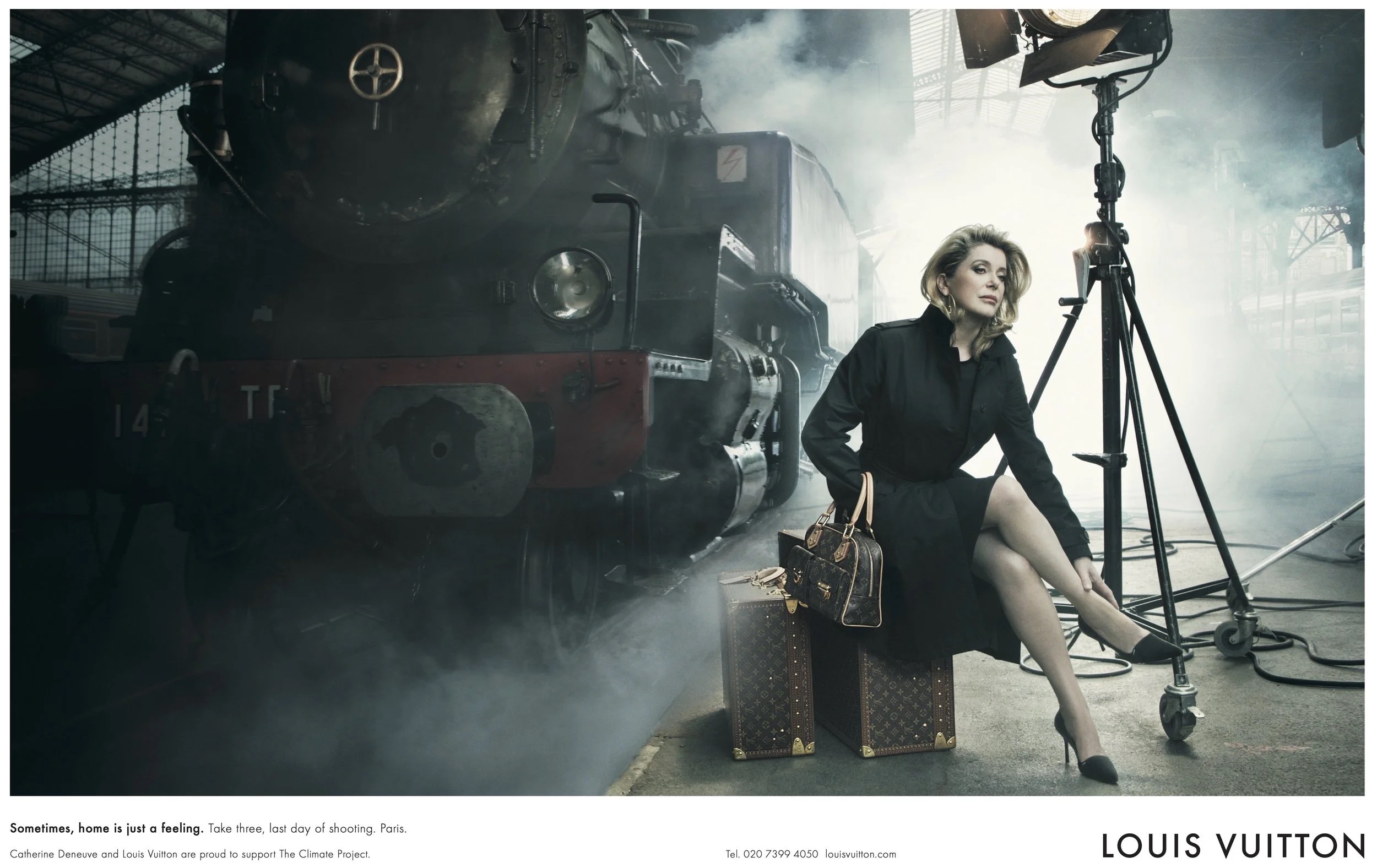
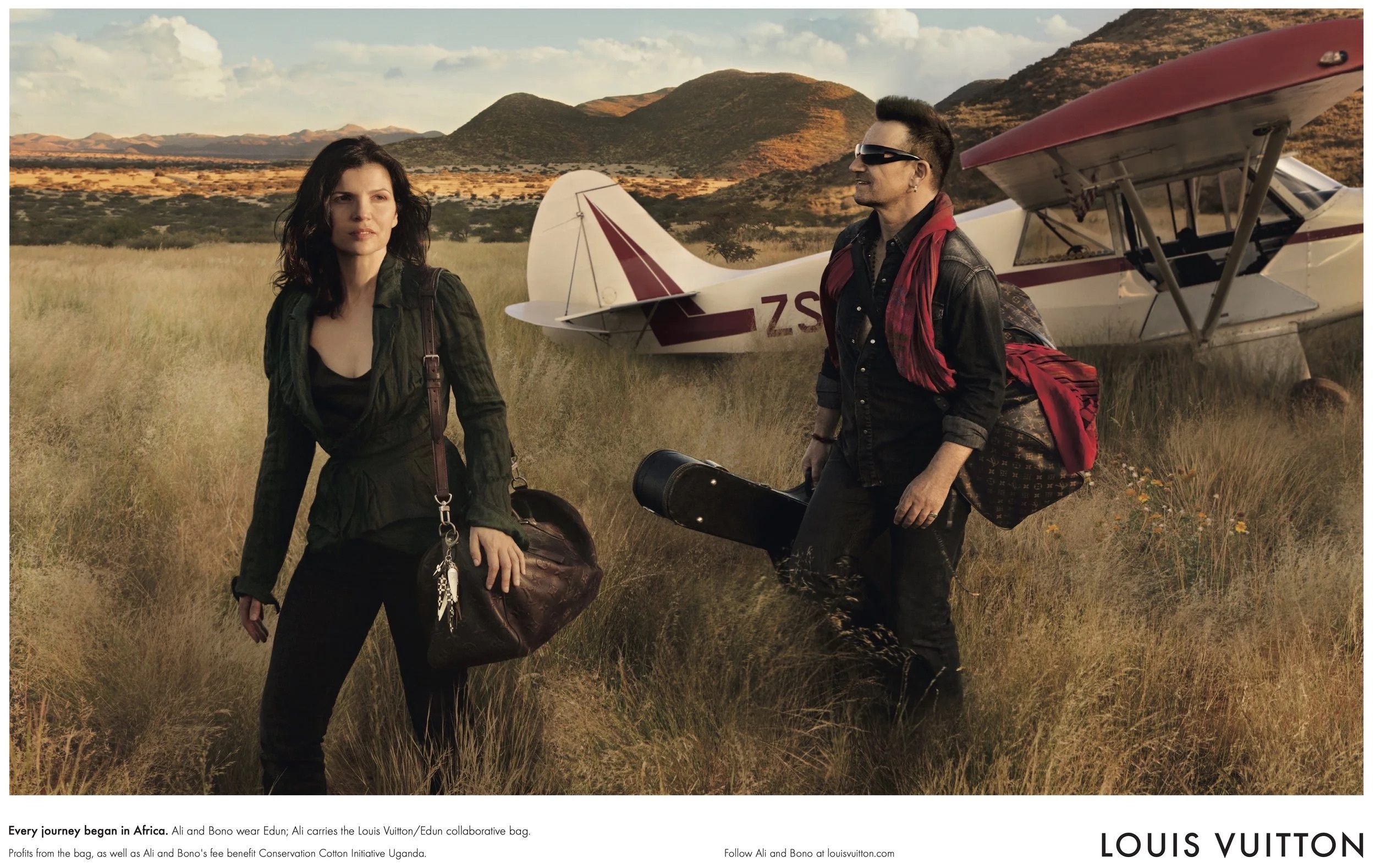
The platform extended across the seven years that followed under the same architecture. Catherine Deneuve at Gare de Lyon in January 2008. Sean Connery at his Bahamas residence in April 2008. Andre Agassi and Steffi Graf in their Las Vegas home in July 2008. Buzz Aldrin, Sally Ride and Jim Lovell in a Mojave Desert airfield, photographed against a desert sky, in September 2008. Francis Ford Coppola and Sofia Coppola in October 2008. Keith Richards in a hotel room with an acoustic guitar in March 2008. Bono and Ali Hewson in Africa, photographed at a project supported by the Hewson family, in May 2009.
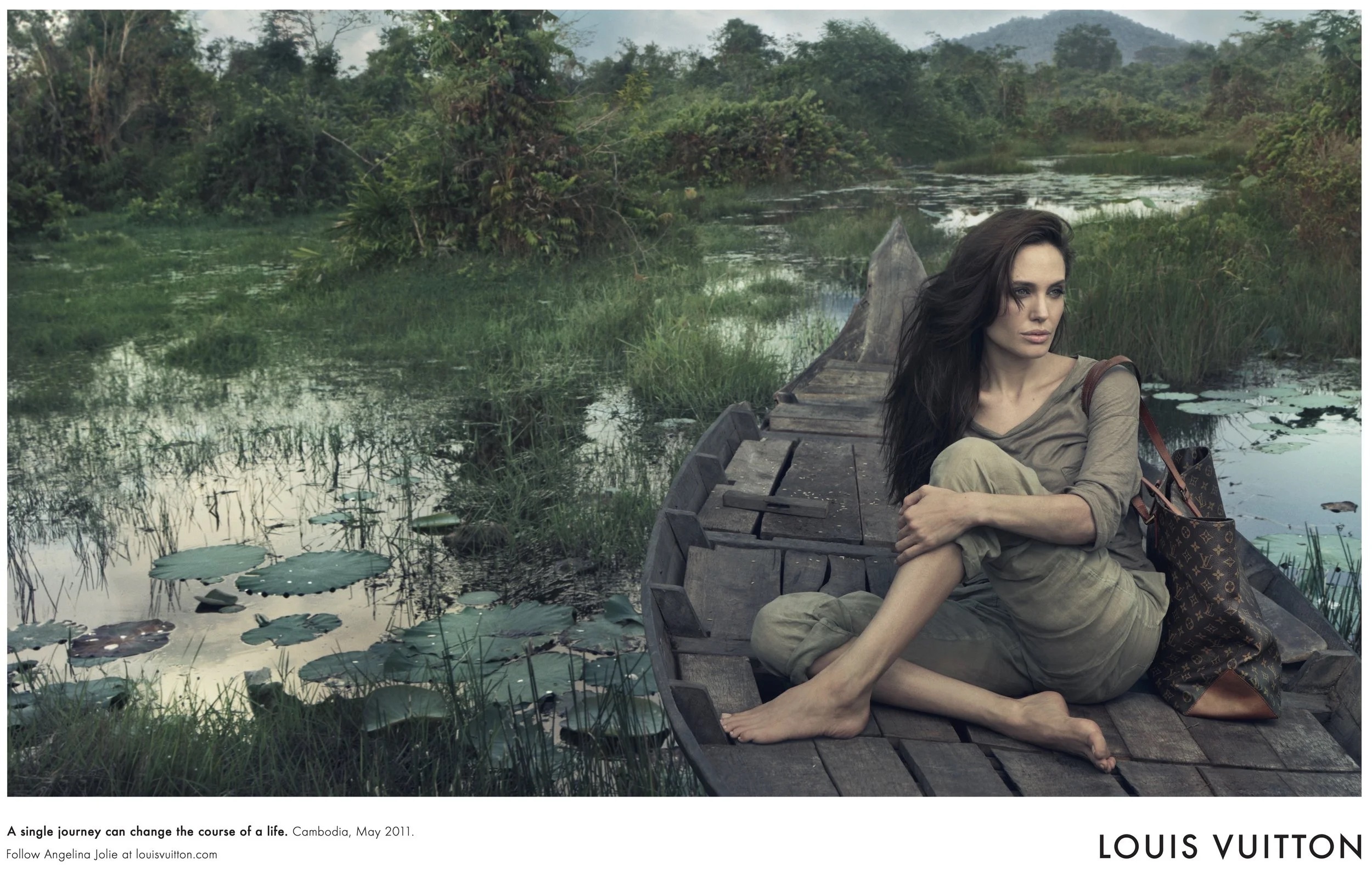
Subsequent executions extended the platform across 2010, 2011, 2012, 2013 and into 2014. The cast included Angelina Jolie photographed in Cambodia, Muhammad Ali with his grandson, Pelé with his family, the astronaut Buzz Aldrin in a Mercury-Apollo command-module context, and former Soviet cosmonaut Alexei Leonov. Annie Leibovitz photographed every execution. The Maison invited each public figure to choose the location of the shoot personally; the shoots ran on a one-day basis with the talent's own household participating where appropriate.
The brand reading
Core Values is, in the historical record of luxury advertising, the platform that converted Louis Vuitton from a product-advertising brand into a biography-advertising brand. The shift carried structural consequences. The bag, no longer the protagonist, became the consistent presence across executions. The protagonist rotated; the brand asset held. The construction registered the Maison as a witness to lives in motion rather than as a producer of objects in still life. The architecture treated the journey, not the bag, as the property of the brand.
The platform's editorial register also rewrote what was permitted in luxury communication. A public figure with documented political weight, in Gorbachev's case the principal figure in the dissolution of the Soviet Union, was offered to audiences without commentary, without context, and without a product credit other than the bag visible in frame. The Maison did not narrate the journey it asked the audience to read. The construction was unusual in 2007 and remains the standard against which biography-led luxury communication is now measured.
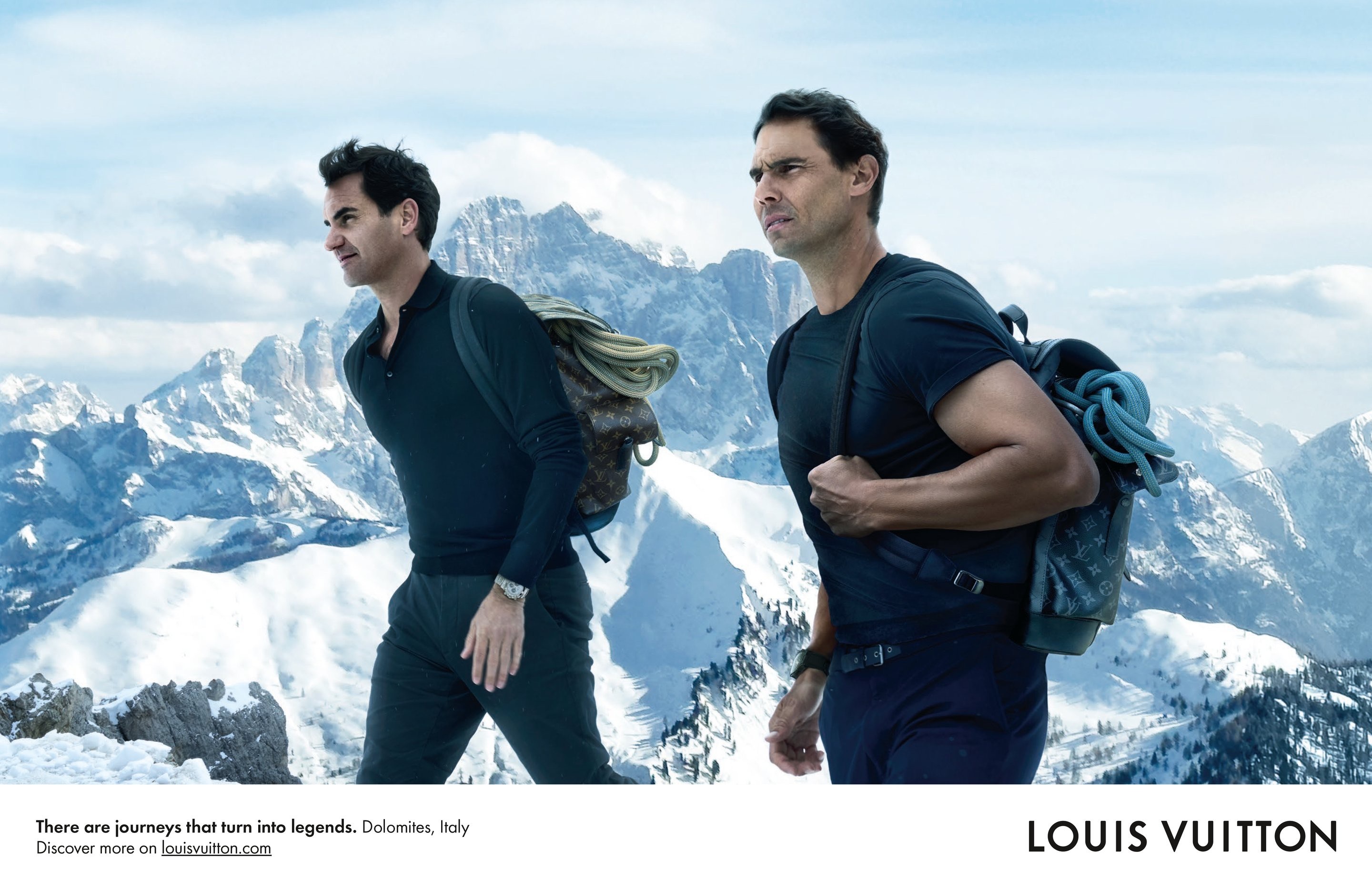
The work also installed a posture that subsequent Louis Vuitton platforms inherited. The 2020s campaigns under Pharrell Williams, Nicolas Ghesquière and the LVMH global brand team route the Maison through cultural co-authorship rather than through product editorial. The Pharrell Williams Spring-Summer 2026 campaign with Jeremy Allen White and Pusha T, the Nicolas Ghesquière Women's campaigns with Léa Seydoux and Cate Blanchett, and the Maison's ongoing posture around the Fondation Louis Vuitton all sit within the architectural logic that Core Values installed: the brand stands next to a life in motion, holds its bag, and lets the life carry the work.
Written with AI assistance, edited by a human. Find out more about our Use of AI.