Burmann Brand Identity Model
Quick Facts
Year Introduced: 2003
Complexity: Low
Best For: Defining brand identity, internal brand alignment, clarifying a brand's self-image
Also Known As: Burmann Identity Model
How the Burmann Brand Identity Model works
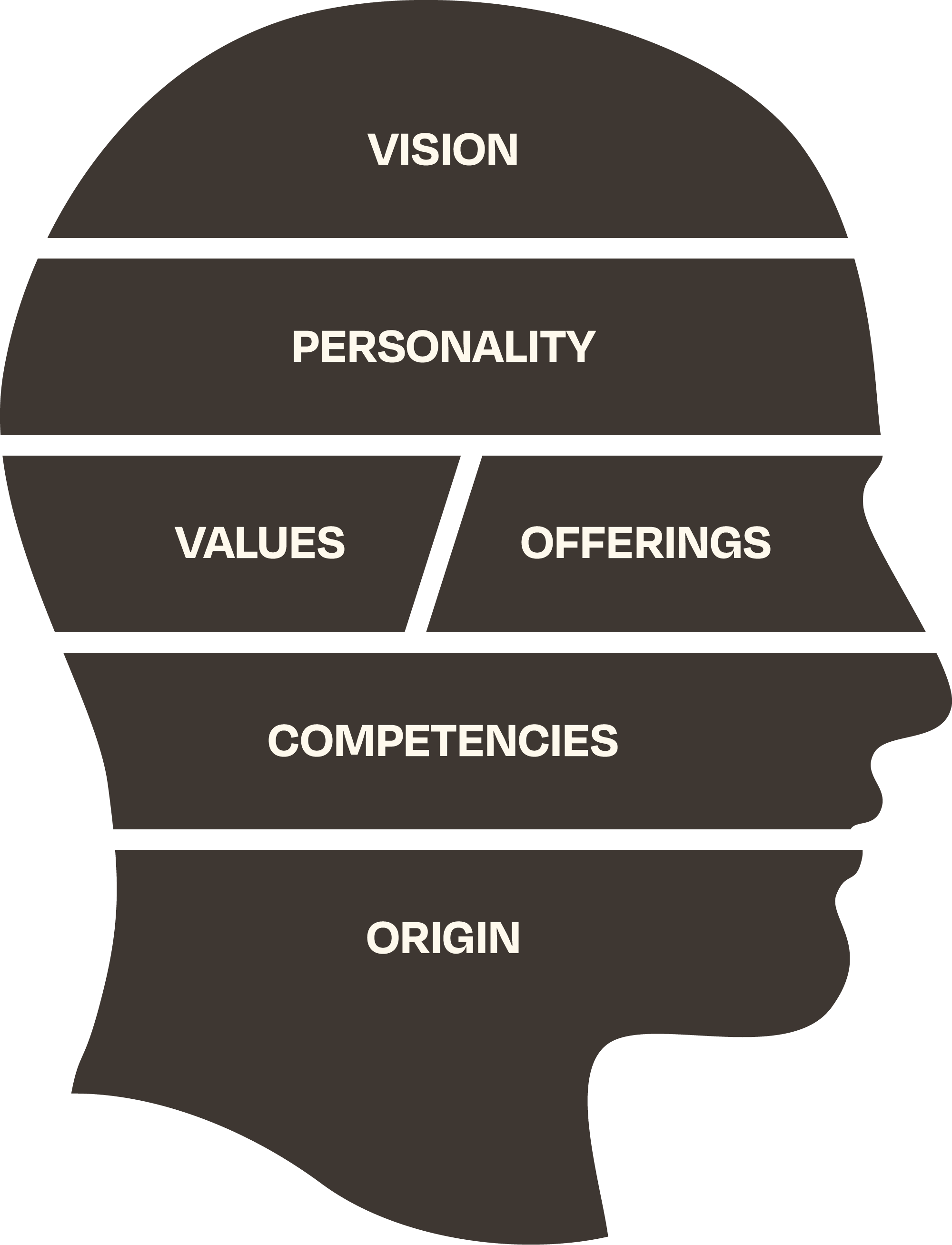
The Burmann model is a pure identity model. Like Esch's Brand Steering Wheel, it is not designed to run a positioning exercise but to describe the self-image that a brand's internal audiences hold of it, and it deliberately leaves the market context outside its components ¹. It belongs to the wider school of identity-based brand management, which rests on two opposing cornerstones: brand identity as a shapeable management concept on the inside, and brand image as a perceived concept of acceptance on the outside ¹.
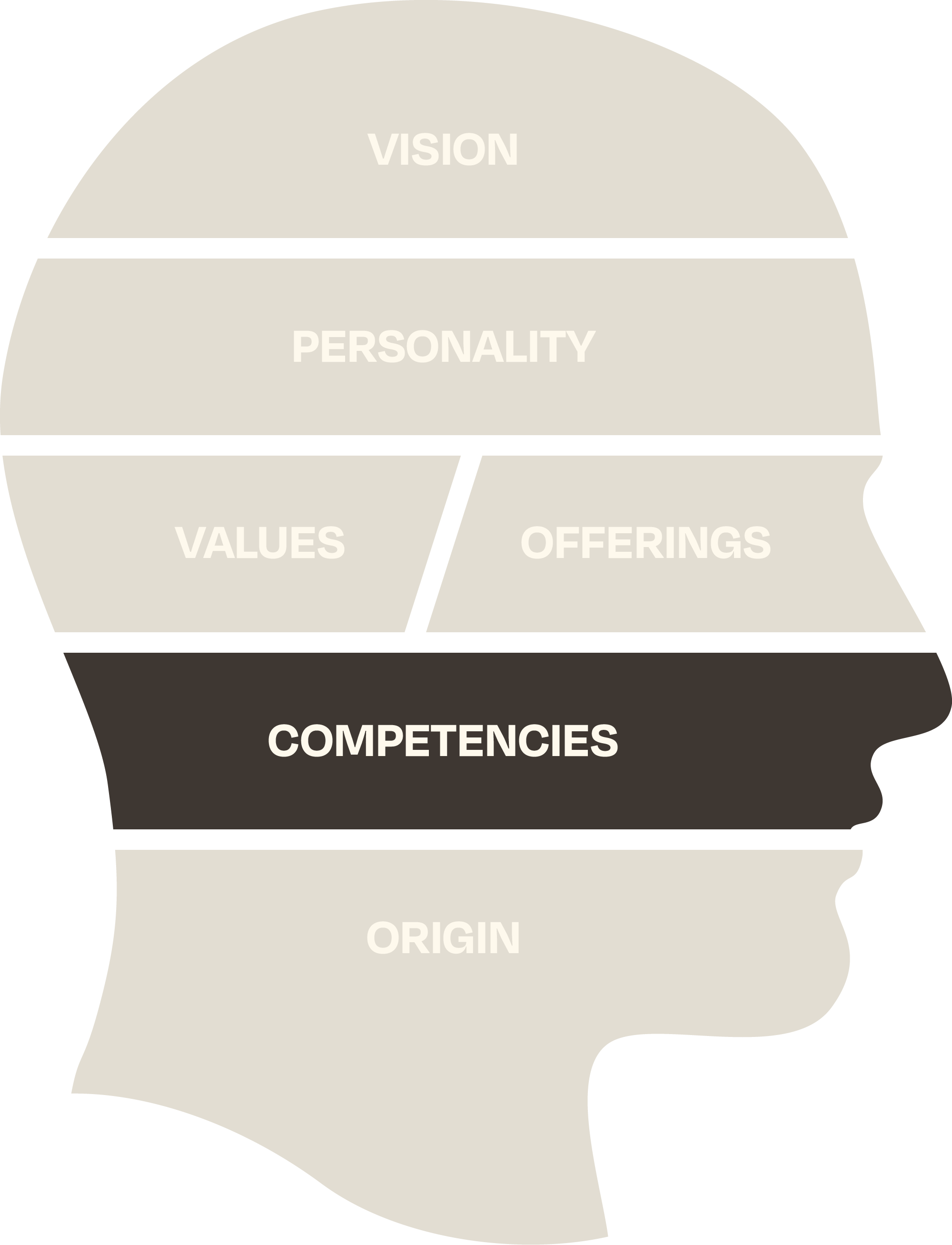
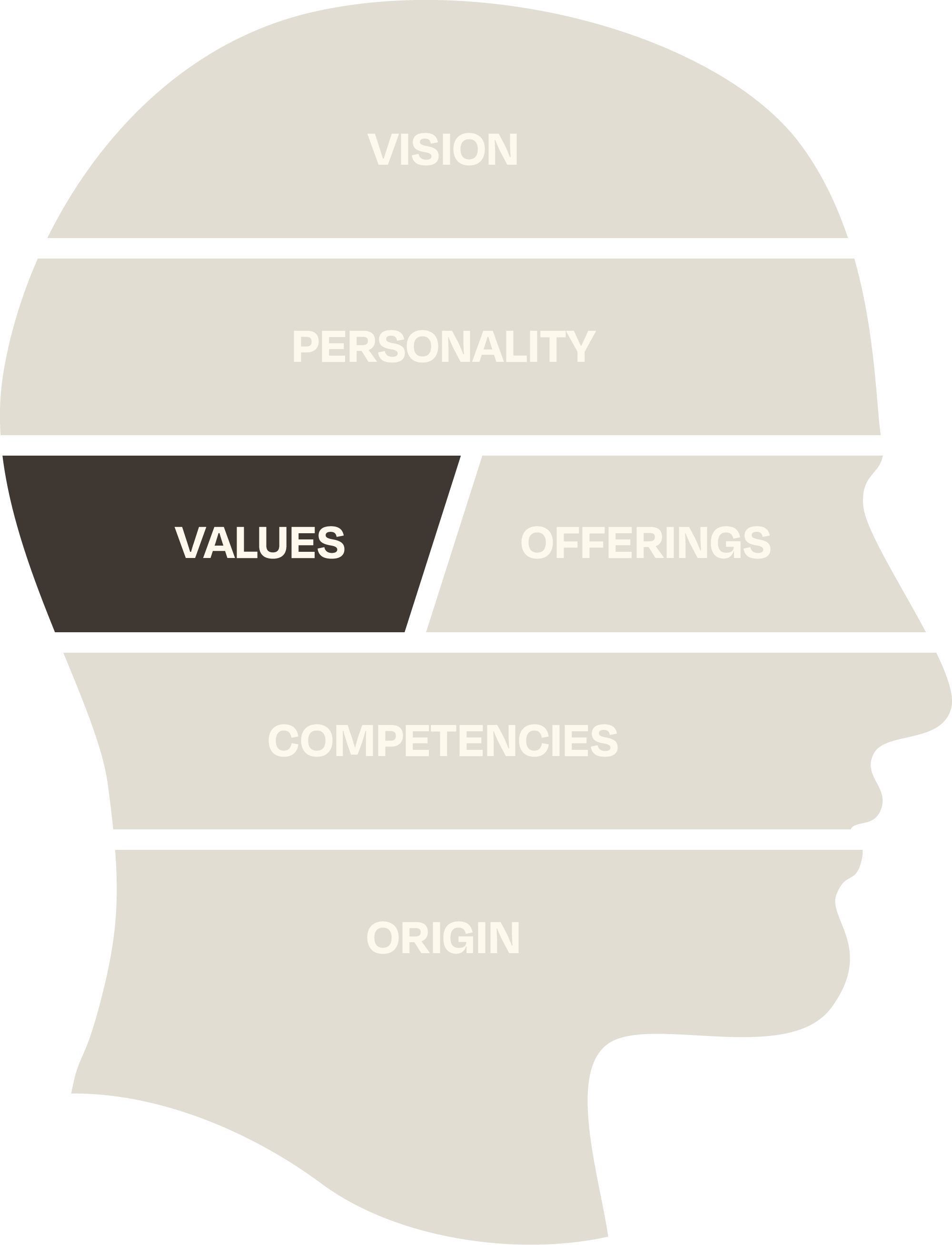
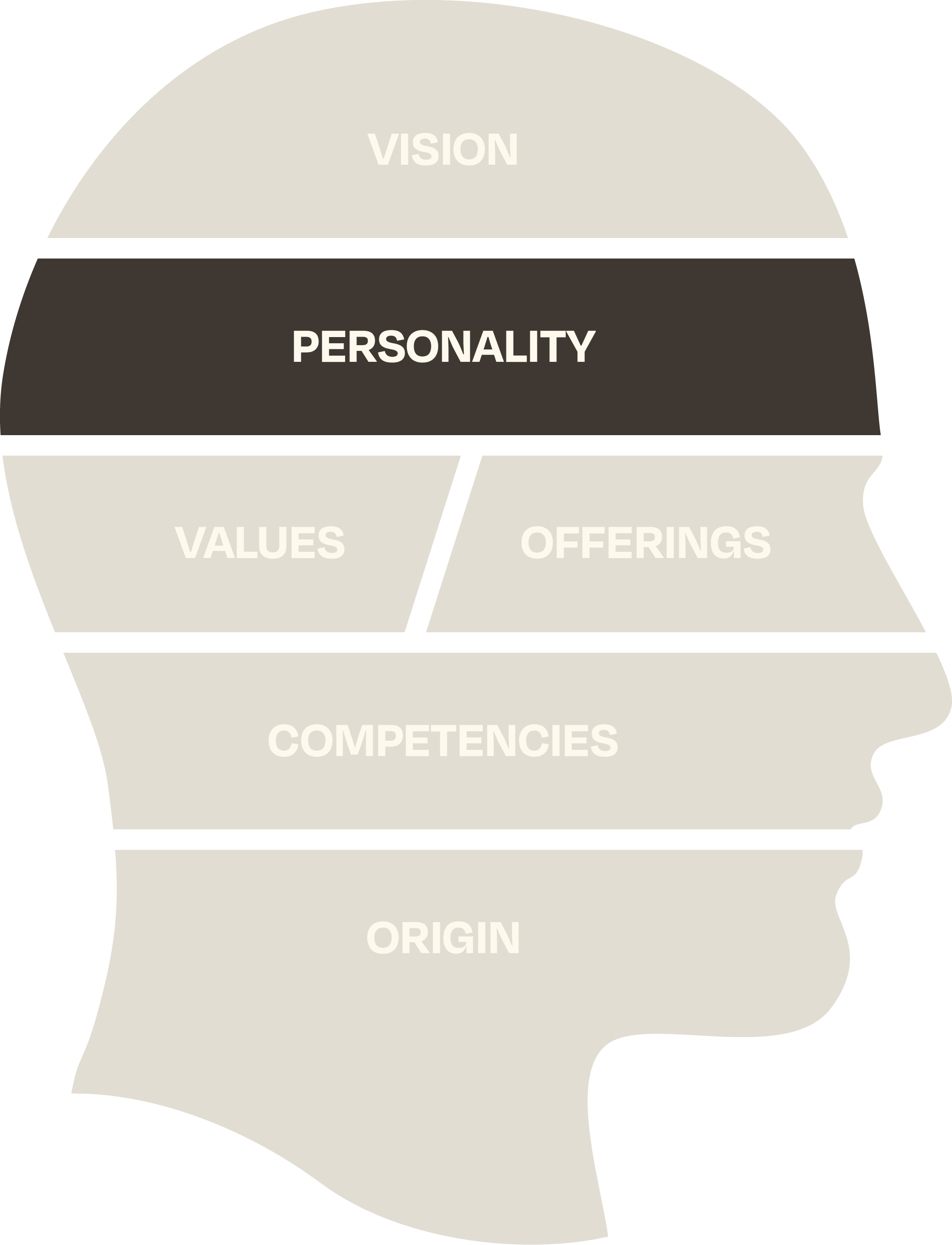
The model's distinctive move is to borrow from the psychology of human identity. Burmann and his co-authors take the traits that distinguish a strong human identity from a weak one, then translate each into a component of brand identity. A strong identity rests on a few outstanding traits rather than many, actively uses role conflicts to develop, forms its own values rather than adopting others', holds a clear vision, shows high self-confidence, and draws motivation from past achievements. Mapped onto a brand, those traits become the six constitutive components below, an origin story that is also why the model is drawn inside the silhouette of a human head ¹.
Brand origin
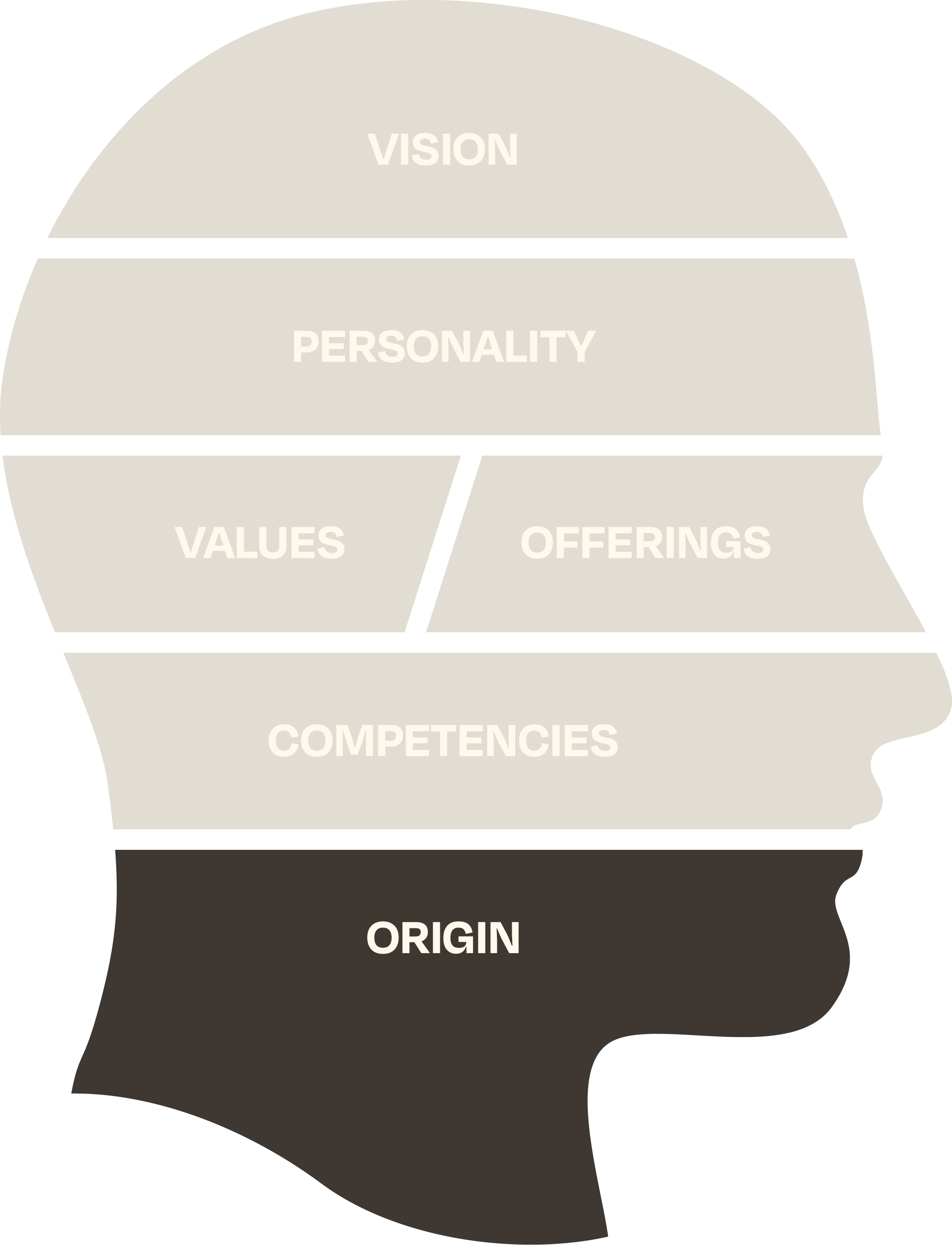
The origin is the foundation of the identity. A brand first acts on its audiences in the context of where it comes from, so the model highlights a few elementary facets of its history rather than the full record, with the aim of lending credibility and authenticity. Brand origin covers spatial, corporate and sector origin, and in international brand management it gains extra weight through the country-of-origin effect, which links a country's stereotyped competencies to its brands ¹.
Brand vision
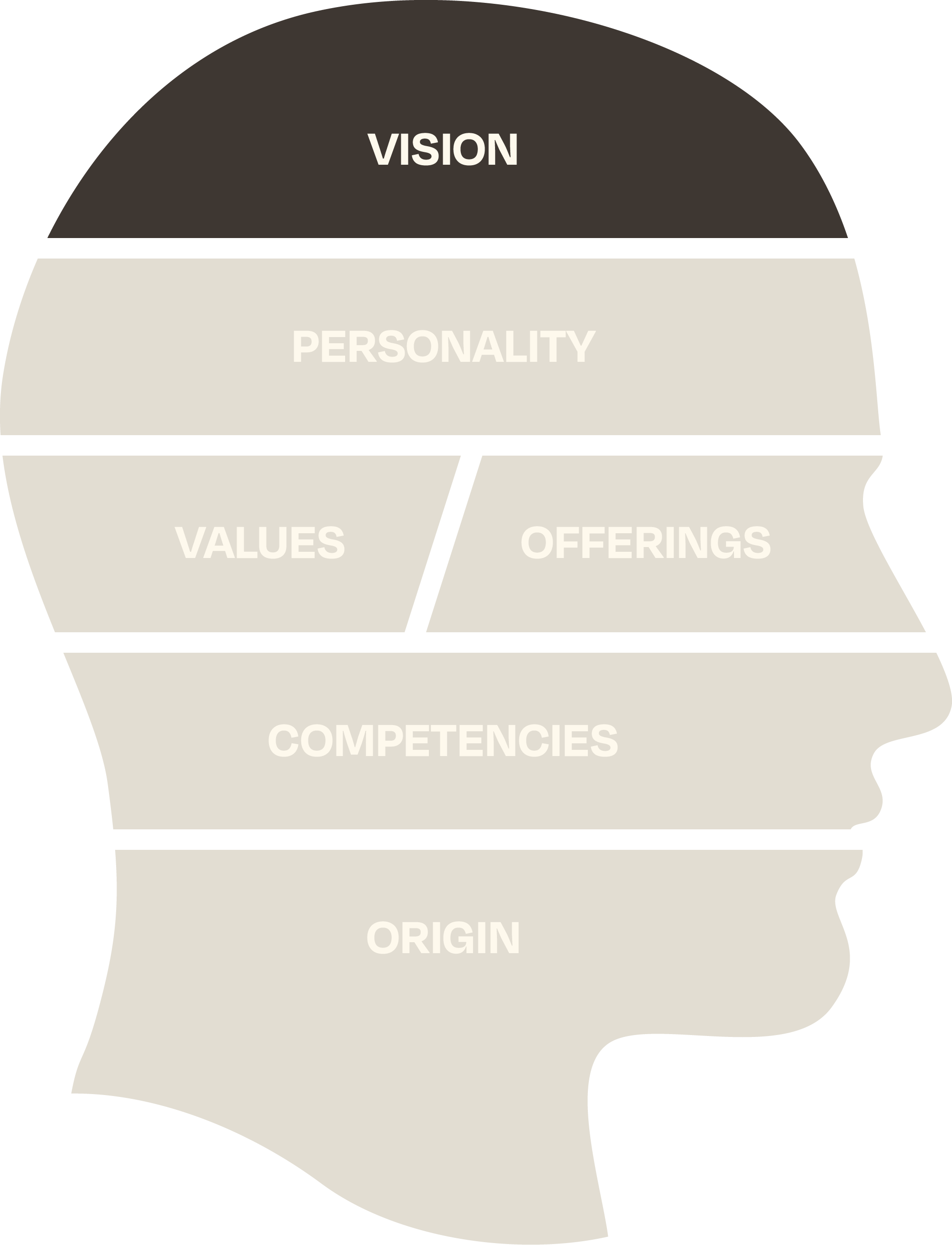
The vision is the future-facing component and, in Burmann's model, its most distinctive one. It sets the long-term direction of travel over a horizon of roughly five to ten years and works as a corridor for action that encourages on-brand behaviour and motivates both internal and external audiences. It should be ambitious yet realistically achievable: a vision pitched at an impossible goal can demotivate, so targets handed down from management need to be formulated with particular care ¹.
Brand competencies
The competencies answer the question of what the brand can actually do. Their value is measured by how far they create customer benefit that people are willing to pay for, and they fall into refinement competencies, market-supply competencies, and customer acquisition and retention competencies. Because any competency rests on a temporary knowledge advantage over rivals, it has to be improved, adapted and defended continuously ¹.
Brand values
The values express the core convictions of the people behind the brand. They carry the emotional side of the identity, they make clear what the brand believes in, and they contribute much of its symbolic benefit. Forming its own values, rather than borrowing them, is one of the markers of a strong identity that the model carries over from human psychology ¹.
Brand personality
The personality is carried by the brand's verbal and non-verbal communication style. Its theoretical root is the human tendency toward animism, the impulse to give lifeless objects human attributes in order to simplify interaction with them. Following Aaker, the model breaks brand personality into five dimensions: sincerity, excitement, competence, sophistication and ruggedness ¹.

Brand offerings
The offerings settle the basic question of the kind of value the brand creates for its customers. This stays on a strategic meta level rather than dropping into the operational detail of product policy. Burmann compares the choice to a person choosing a profession: a defining decision about what the brand is for, not a list of individual products ¹.
Self-image and external image
A single component set is only half of the identity-based picture. Burmann pairs the identity model, the internal self-image, with a separate model of brand image, the external concept of how audiences perceive the brand. The guiding idea is that an identity keeps its individuality only as long as it does not fully align its self-image with the outside image others hold of it ¹.
Strengths and limitations
What makes it powerful
The model's clearest strength is its psychological grounding. By deriving each component from a recognised trait of strong human identity, it gives brand and marketing teams an intuitive, well-argued vocabulary for describing who a brand is. Its six elements are defined without overlap, and, read together with the explanatory relationships between them, they interlock well enough to form a coherent whole ¹.
Its most individual contribution is the brand vision. Burmann builds a forward-looking element directly into the identity, something that models such as the Brand Steering Wheel and the Unilever Brand Key do not address at all. For an organisation trying to align internally around a single long-term direction, that makes the model an unusually strong tool ¹.
Where it falls short
The same choice that keeps the model clean also limits it. By focusing entirely on the self-image, it leaves the market out of its components. Radtke notes that the model neglects the reciprocity between identity and image and does not bring the market into the picture at all, so it describes only how a brand sees itself, not how that view meets reality ¹. The external image is set up as a separate concept, but the two-way relationship between identity and image is neither named as reciprocal nor visualised.
The model also gives no guidance on weighting. It deliberately avoids ranking its components, since their relative importance shifts from one type of company to another, which leaves that judgement to the user ¹. And its practicality is demonstrated component by component rather than proven on a single real brand, so teams looking for a fully worked case study will not find one here ¹.
The Burmann Brand Identity Model in practice
Because it is introspective by design, the model works best as a tool for definition rather than positioning. Its six components function as a structured set of questions a brand answers about itself: where it comes from, where it is going, what it can do, what it believes, how it behaves, and what value it creates. Used this way, it is a foundation exercise, the internal clarity a brand establishes before it turns outward to stake a competitive position.
That role is easiest to see when the model sits next to others. It is meant to be read against a matching model of brand image, and its components resurface, in modified form, inside broader frameworks that add the market layer it omits. The Brand Holosphere, for instance, counts Burmann's identity approach among the established models it analysed and built on, folding an identity core like this one into a structure that also captures competition and trends. Seen in that light, the Burmann model is less a finished positioning system than a rigorous account of the identity core that fuller models place at their centre.
Sources
¹ Radtke, B. (2014). Markenidentitätsmodelle. Springer essentials. (Survey and comparative evaluation of seven brand identity models, including the Burmann model; overlap-free elements p. 41, market not included p. 45)