Brand Steering Wheel
Quick Facts
Year Introduced: 2005
Complexity: Medium
Best For: Systematic brand identity analysis, ensuring consistency, internal brand clarity
How the Brand Steering Wheel works
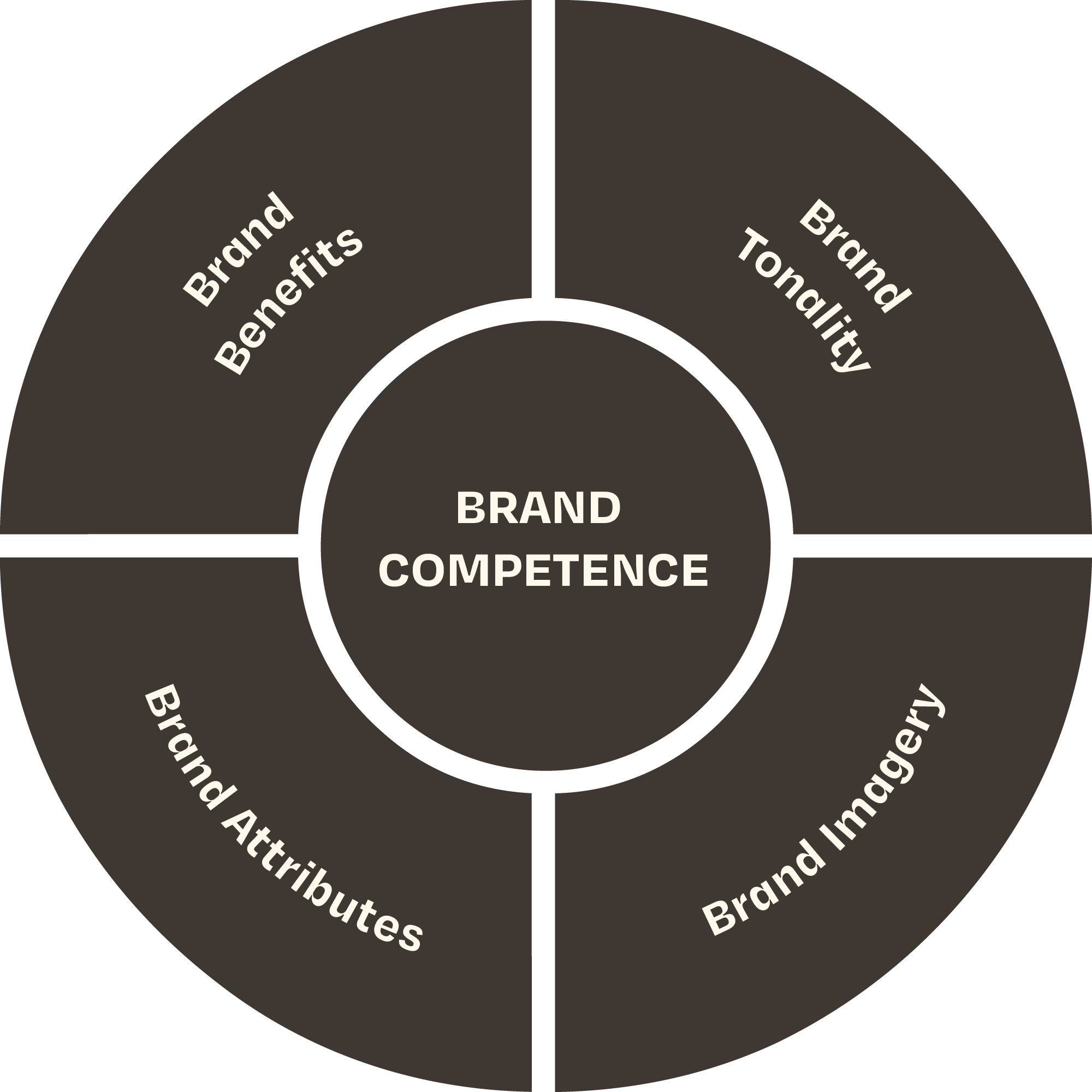
The Brand Steering Wheel (Markensteuerrad) is one of the most widely used identity models in Germany. It was originally created by a market research agency and later refined by Franz-Rudolf Esch, whose main additions were interlocking the modules more tightly and placing a fifth element, the brand competence, at the centre of the wheel ¹. Its purpose is to make a brand's strategic make-up visible and to hold it consistent over time.
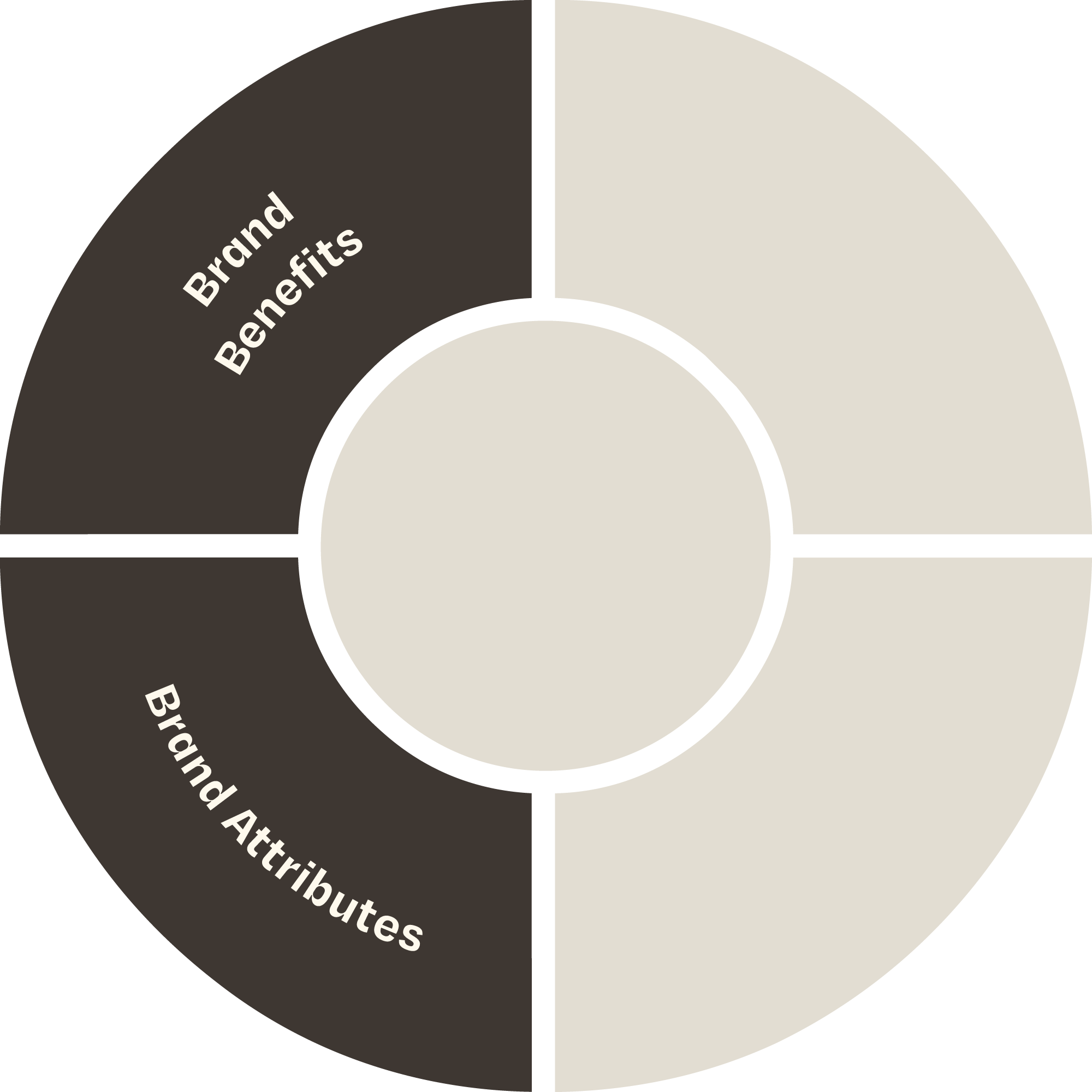
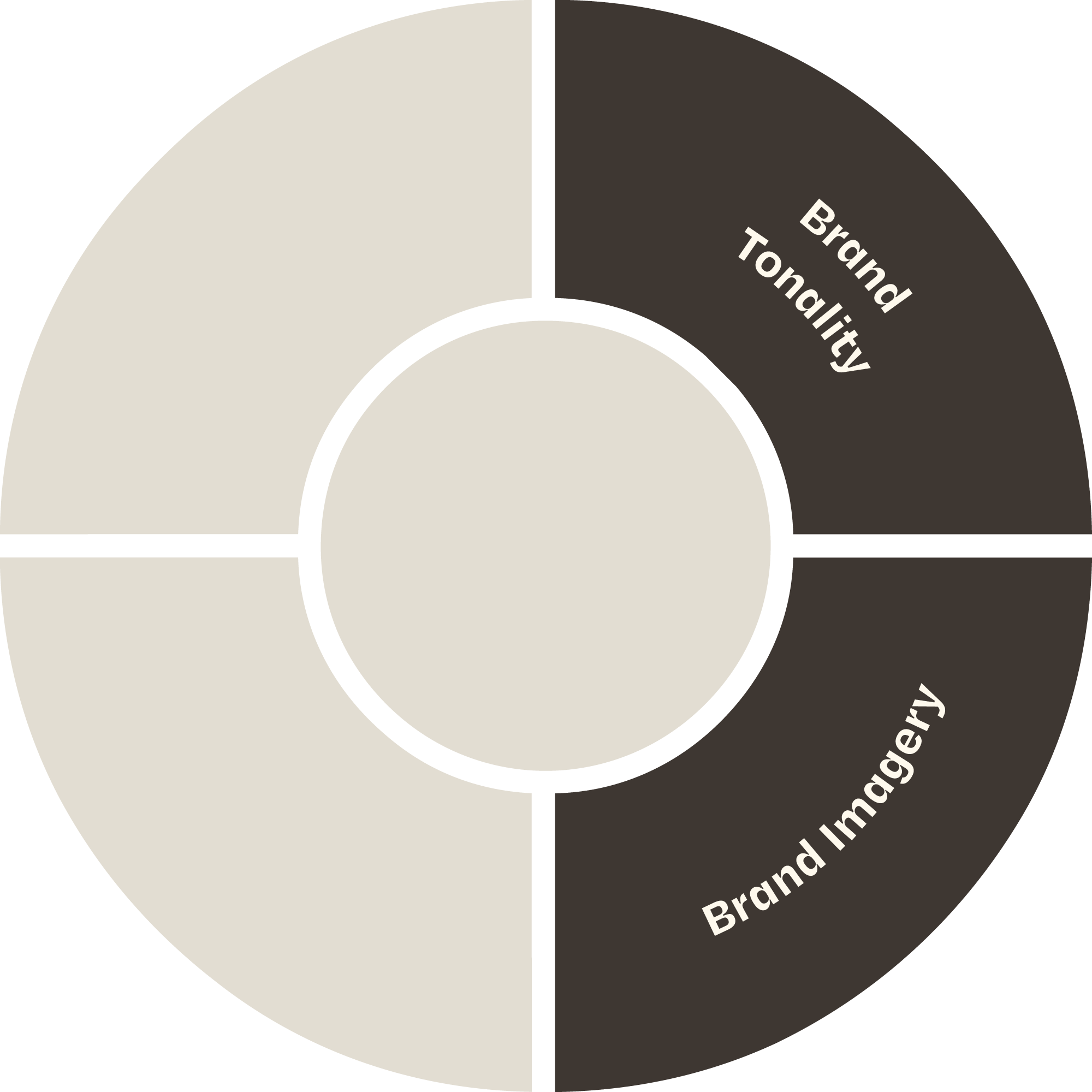
Despite the "steering" in its name, the model is an identity model, a tool for systematic analysis and for enforcing consistency, rather than one for actively steering a brand into the future. It has no explicit driver in the sense of a purpose or a why, and no set of values for staff to orient their decisions around ¹. The wheel divides a brand into two halves: the rational hard facts on the left, and the emotional, non-verbal soft facts on the right, arranged around a central core.
The hard facts
The left side captures what can be stated plainly about the brand. Brand attributes answer the question "What features do I have?" and cover the attributes of both the offerings and the company. They support the brand benefits, which answer "What do I offer?" and represent, in Esch's reading, the actual reason to buy. Benefits split into functional benefits, derived from a product's superiority, and psychosocial benefits, which work by triggering emotions and addressing social concerns such as recognition ¹.
The soft facts
The right side captures feelings and non-verbal impressions. Brand tonality answers "How am I?" and describes the emotions the brand is meant to evoke, approached through its personality, its relationships, and the experiences it stages. It sits close to the idea of brand values, though the model does not name values explicitly. Brand imagery answers "How do I present myself?" and is built from the many impressions, visual, acoustic, olfactory, haptic or even gustatory, that shape brand image and awareness through the way the brand communicates ¹.
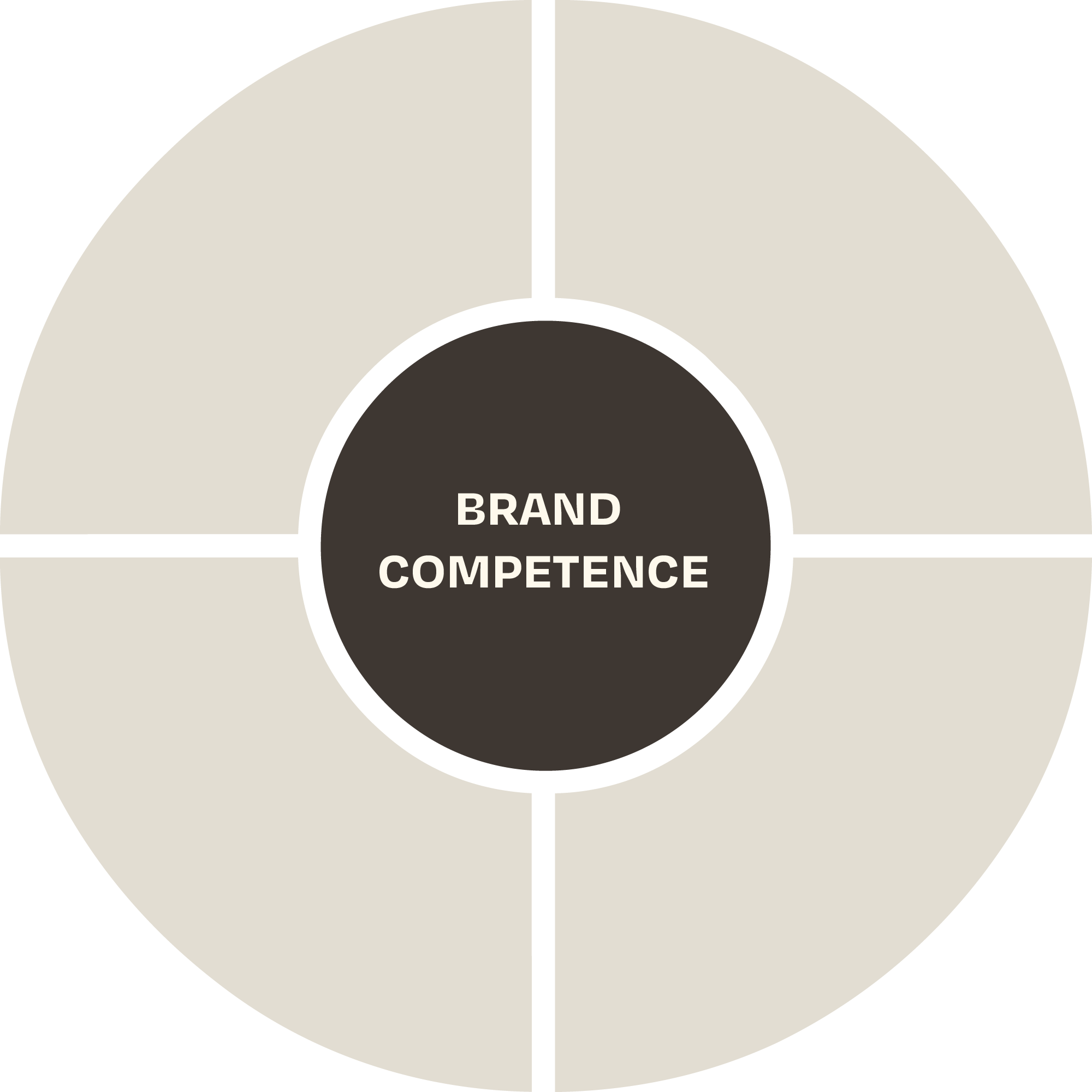
The brand competence at the centre
At the core sits the brand competence, the element Esch added to the original wheel. It comes close to the concept of brand essence, with which it is sometimes used interchangeably, and it captures the brand's central characteristics: its history, its origin, its role in the market, and its key assets. Because the wheel is built for analysis and definition rather than positioning, this core deliberately holds no explicit purpose or movement, unlike newer models that place a driver at their centre ¹.
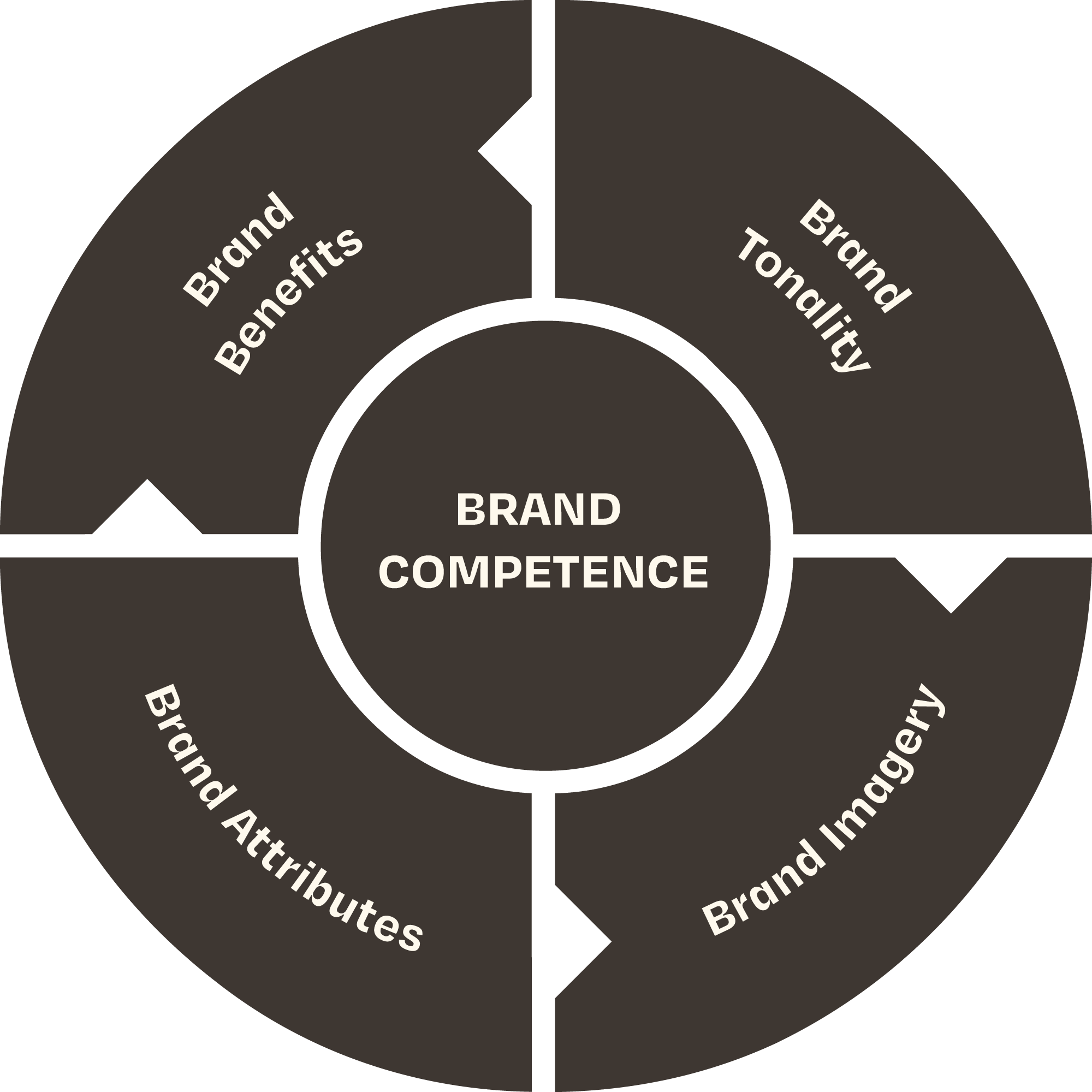
How the parts connect
Esch's refinement was to make the modules support one another rather than sit in isolation. The brand attributes underpin the functional and emotional benefits, and the brand imagery makes the tonality tangible while also giving the attributes something visible to attach to. That interlocking is what separates the wheel from a simple checklist and lets it describe a coherent identity ¹.
Strengths and limitations
What makes it powerful
The wheel's first strength is adoption. As one of the most used identity models in Germany, it gives teams a shared, well-understood language, and its four guiding questions make it unusually accessible for a strategic tool. That accessibility is a large part of why it spread so widely.
It is also sound on its own terms. Its modules interlock rather than stand alone, and Esch demonstrated its practicality across several worked case examples, so Radtke rates the criterion of practicality as fully met ¹. Measured against the constitutive traits of a brand identity, continuity, consistency, individuality and reciprocity, the wheel satisfies all but one, and its balance of rational hard facts and emotional soft facts gives a rounded picture of who a brand is ¹.
Where it falls short
The missing trait is reciprocity, and it is the model's defining limitation. The wheel concentrates on the brand's inner values and internal view of itself and leaves out external factors such as competition and the target audience ¹. A positioning can only be worked out in the context of a surrounding market, so the wheel serves at most as preparation for that task, not as the task itself. Bolting on detached values and benefits afterward, as the associated consultancy process does, only partly closes that gap ¹.
Two further gaps follow from its analytical purpose. It holds no purpose or why and no explicit values, so it offers little for deriving strategic direction or day-to-day decisions. And in practice the line between brand tonality and brand imagery is not always clean, since colours, typefaces, logos and image worlds shape perceived tonality directly, though Radtke judged the overlap slight enough not to count against the model ¹.
The Brand Steering Wheel in practice
In use, the wheel is a definition and consistency instrument. A team works through its four questions, what features the brand has, what it offers, how it is, and how it presents itself, and settles the brand competence at the core, producing a systematic account of the identity that can then be held consistent across everything the brand does. Esch demonstrated this across several case examples, which is what earns the model its high marks for practicality ¹.
Its natural place is upstream of positioning rather than within it. Because it maps the brand from the inside, it gives a clean starting point that a market-facing model can build on, and its central competence overlaps closely with the brand essence that many other frameworks carry. The models Brandvelle covers that do take on active positioning, the Golden Circle, the Unilever Brand Key and the Brand Holosphere, each add the external layer, competition, audience and a guiding purpose, that the wheel deliberately leaves out. Read alongside them, the Brand Steering Wheel is best understood as a disciplined way to know a brand before deciding where to place it.
Sources
¹ Radtke, B. (2014). Markenidentitätsmodelle. Springer essentials. (Survey and comparative evaluation including the Brand Steering Wheel: origin and Esch's refinement p. 27, practicality fully met pp. 42 to 43, overlap judged slight p. 41)