
Brand foundation
Once a brand lives in people's minds, it needs a stable centre that holds steady while products and campaigns change. The most important task of the people who own a brand is to define that centre, an unshakable purpose and a clear philosophy, and to keep communicating it.1
The foundation is made of five terms that are often mixed up. Purpose is the why. Vision is the where. Mission is the what. Values are the how. Essence is all of it distilled to one line. Read them in order.
Brand purpose
Brand purpose is the reason a brand exists beyond making money. In Simon Sinek's Golden Circle it is the why, the belief or cause at the centre, and money is a result, not the reason.2 Communicated from the inside out, the why gives people a reason to buy and the what becomes the proof of that belief.2
Purpose is the deepest layer and the owner's central task, to set an unshakable core and keep communicating it. Small differences in how the purpose is phrased create a very different picture of the brand, a different job for the people who represent it, and a different expectation among customers.1 A brand's purpose can even shift over its life, and owners may change it deliberately, but many brands would be better off simply owning a grounded purpose and being proud of it.1 A clear purpose is also what lets a person decide whether to connect with a brand at all.1
Brand vision
A brand vision is the future the brand is working to create. It answers where, and it is deliberately ambitious and long range, a picture of the world once the brand has had its effect.
Vision turns purpose into direction. Purpose explains why a brand exists, vision names the destination that belief is reaching for. Its real job is to act as a filter: an opportunity that does not move the brand toward its vision is usually the wrong opportunity, however attractive it looks. Vision is future tense, where mission is grounded in what a brand does today, and it can be bold to the point of discomfort, because it should describe a state that does not fully exist yet.
Brand mission
A brand mission is what a brand does, day to day, to move toward its vision. It answers what, and unlike the vision it is grounded in the present, the offering, the audience it serves, and how it delivers value now.
Mission is where the foundation becomes operational. Purpose and vision can stay abstract, but the mission has to be specific enough to guide what people do this week, and it should support the vision above it rather than replace it. A good mission is specific enough that it could not be swapped onto a competitor without sounding wrong.
Brand values
Brand values are the guiding principles that shape how a brand behaves and decides. In the Golden Circle they are the how, the values and principles that steer how a brand does what it does.2
Defining values lets a brand compare its own self-image with the image others hold of it, and the sum of those values points the direct way to the brand's identity.3 It is also practical: the values form the basis for a claim, a visual identity and, ideally, a full communication concept.3 This is where an abstract centre turns into something you can build with, which is why values feed forward so strongly into identity and expression.
Brand essence
Brand essence is the whole foundation distilled to a single, stable idea, the brand core. It can be defined as the known and historically learned core that changes little over the years, promising orientation and defining the brand's social roles.4
Essence is the foundation made portable and, above all, singular. To stay in memory a brand must give people one clear idea to hold onto, and everything must lead back to it.5 When brands try to say everything at once, competing messages interfere with each other and none is stored, so customers are left unsure what the brand stands for. The central rule is never to dilute what makes a brand unique.5 Essence is not a sixth, separate idea, it is purpose, vision, mission and values reduced to one line, and as the sharpest statement of who a brand is it hands directly to the next chapter, the art of focus.
In practice
How to build a foundation on a real brand.
Write the why before the what. State the belief the brand would hold even if the product changed, then test each phrasing, because a small change in wording changes the whole picture and the job it hands to your team. From there, project the vision several years out in the present tense, describing the change in the customer's world rather than your revenue, and write the mission as a single present tense sentence that says what you do, for whom, and how.
For values, draft them and then use them to compare how you see the brand with how the market sees it, closing the gap. Keep the list short enough to remember and carry each value forward into the claim, the visual identity and the communication concept, so they shape the brand rather than decorate a wall. Finally, distil the essence last, never first: reduce the four elements above to one line, then guard it, testing every message against it and cutting anything that competes with it.
Common mistakes: naming profit as the purpose, writing a vision that is really a mission, a mission so generic it fits any competitor, values that are interchangeable virtues, and an essence invented rather than distilled or diluted by too many messages.
Questions to ask: why does this brand exist beyond money, what does the world look like once it has succeeded, what does it do for whom right now, how is it meant to behave, and if the brand were one idea, what would it be.
Recommended reading


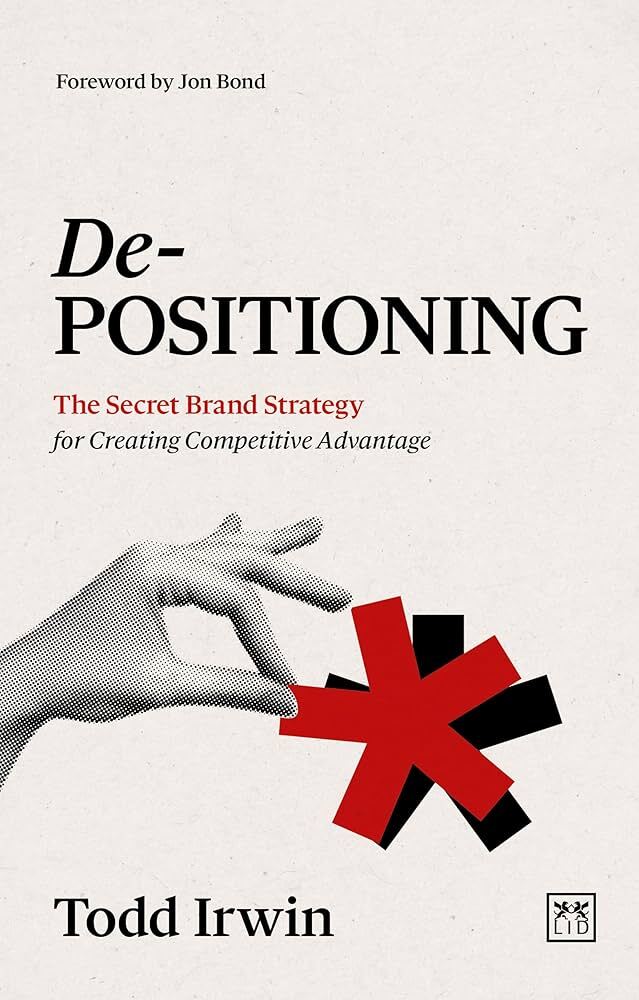
1 Freitag, A. Von Marken und Menschen. (The owner sets an unshakable core; the purpose can shift deliberately; wording changes the whole picture.)
2 Sinek, S. Frag immer erst Warum (Start with Why). (The Golden Circle: why, how, what.)
3 Hofbauer, G. & Schmidt, J. (2007). Identitätsorientiertes Markenmanagement. Walhalla Fachverlag. (Values connect self-image and outside image and point the way to the brand's identity, the basis for claim, visual identity and communication concept.)
4 Wenger, C. (2006). "Trends for Brands." (Brand values as the historically learned brand core.)
5 Irwin, T. De-Positioning. (Singularity, interference theory, never dilute what makes a brand unique.)
Vision and mission are treated as self-evident foundational terms and are written without a citation, by agreement.