Quick Facts
Review and key takeaways
Review
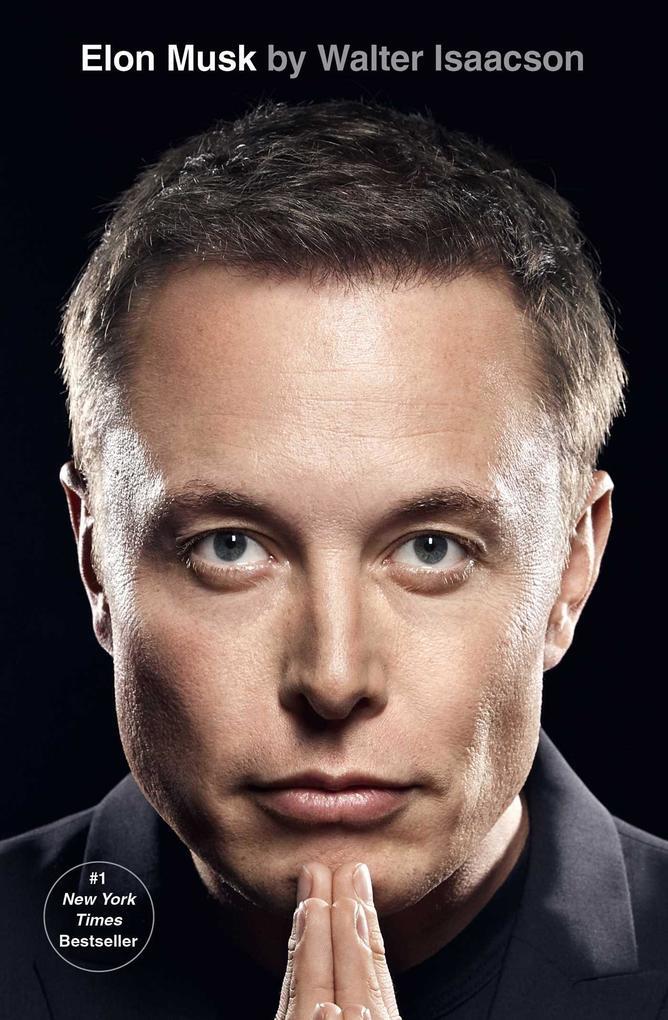
Walter Isaacson writes biographies the way few others manage to: as narratives that pull you forward rather than reference works you consult. He proved it with Steve Jobs, and he does it again here. Elon Musk runs to nearly seven hundred pages and rarely feels like it. Isaacson shadowed his subject for two years, sat in on board meetings, walked the factory floors at Tesla and SpaceX, and was in the room when Musk decided to buy Twitter and to start an artificial intelligence company. The result reads less like an authorized profile and more like a long, close observation, and that access is the book's first and biggest asset.
Musk polarizes, and the book does not soften him. Isaacson lets the difficult scenes stand: the abrupt firings, the impossible deadlines, the treatment of people who cannot keep pace, the swings between vision and cruelty. It is not a defense and it is not a takedown. It documents a person who is genuinely hard to be around and genuinely capable of moving the world, and it leaves the reader to hold both facts at once.
What lifts the book above a personality study is its view into the companies. This is where it earns its place for anyone interested in how brands and businesses are actually built. Isaacson traces how SpaceX and Tesla came to exist, how close each came to collapse, and how Musk's method, the relentless questioning of every requirement, the compression of timelines, the willingness to risk everything on one bet, translated into products that reset entire categories. You come away understanding not just what these companies make, but the operating logic that produced them, and how inseparable that logic is from one man's temperament.
That inseparability is also the book's most useful lesson about brands. Tesla and SpaceX are not neutral corporate identities; they are extensions of their founder, carrying his ambition and his volatility in equal measure. The biography shows how much reach a single personality can give a brand, and how much risk it concentrates in the same place. It is a live case study in founder-driven identity, with all the upside and all the fragility that model implies.
Where the book invites criticism is the same place it draws its power. Isaacson's approach, the close, sympathetic chronicle of a singular figure, has been called a dated way to explain a life, and some of Musk's methods are presented with less scrutiny than they deserve. The framing occasionally treats brilliance as a given and asks the reader to accept the human cost as the price of it. Readers looking for a hard interrogation of Musk's politics or his claims will find the book more observational than adversarial.
None of that undermines its value. Elon Musk is not a leadership manual and does not pretend to be. It is a rare, detailed record of how one of the most consequential and most divisive builders of this era operates, told with enough narrative craft that the reader stays for all seven hundred pages. Read for insight into how bold companies come to exist, and into how much a brand can inherit from the person who founds it, it delivers. Read as a verdict on the man, it deliberately leaves the judgment to you.
Key takeaways
Founder and brand can become the same thing. Tesla and SpaceX are inseparable from Musk's temperament. That fusion gives a brand enormous reach and concentrates enormous risk in a single person. It is the clearest argument for and against founder-led identity you will find.
Question every requirement. Musk's core method is to treat no constraint as fixed. Deadlines, specifications and industry norms are all challenged until only the physics remains. It produces breakthroughs and it produces wreckage, often on the same project.
Access is not the same as scrutiny. Isaacson's two years of proximity make the book vivid, but closeness to a subject can soften the questions asked of him. The most valuable reading holds the reporting and its blind spots in view at once.
Great outcomes can carry a real human cost. The book does not hide what it takes to work inside Musk's orbit. It documents the achievement and the damage together, and refuses to pretend the two can be cleanly separated.
Who should read this
This book is for founders, leaders and brand people who want to understand how audacious companies actually get built, and how deeply a brand can be shaped by the character of one person. It is a narrative, not a framework, so readers hoping for transferable leadership principles should treat it as a case study rather than a playbook. Anyone who admires Isaacson's storytelling, or who wants a balanced but unflinching look at a figure who splits opinion, will find it hard to put down.
About the author

Brands featured in the book

The electric vehicle company repositioning itself as an autonomous technology and robotics platform, with ambitions extending from mobility to humanoi…
11 Articles
Private space transportation company founded by Elon Musk, building reusable rockets and the Starlink satellite internet service, with a stated goal o…
12 Articles