A Japanese North Face comes to Brooklyn
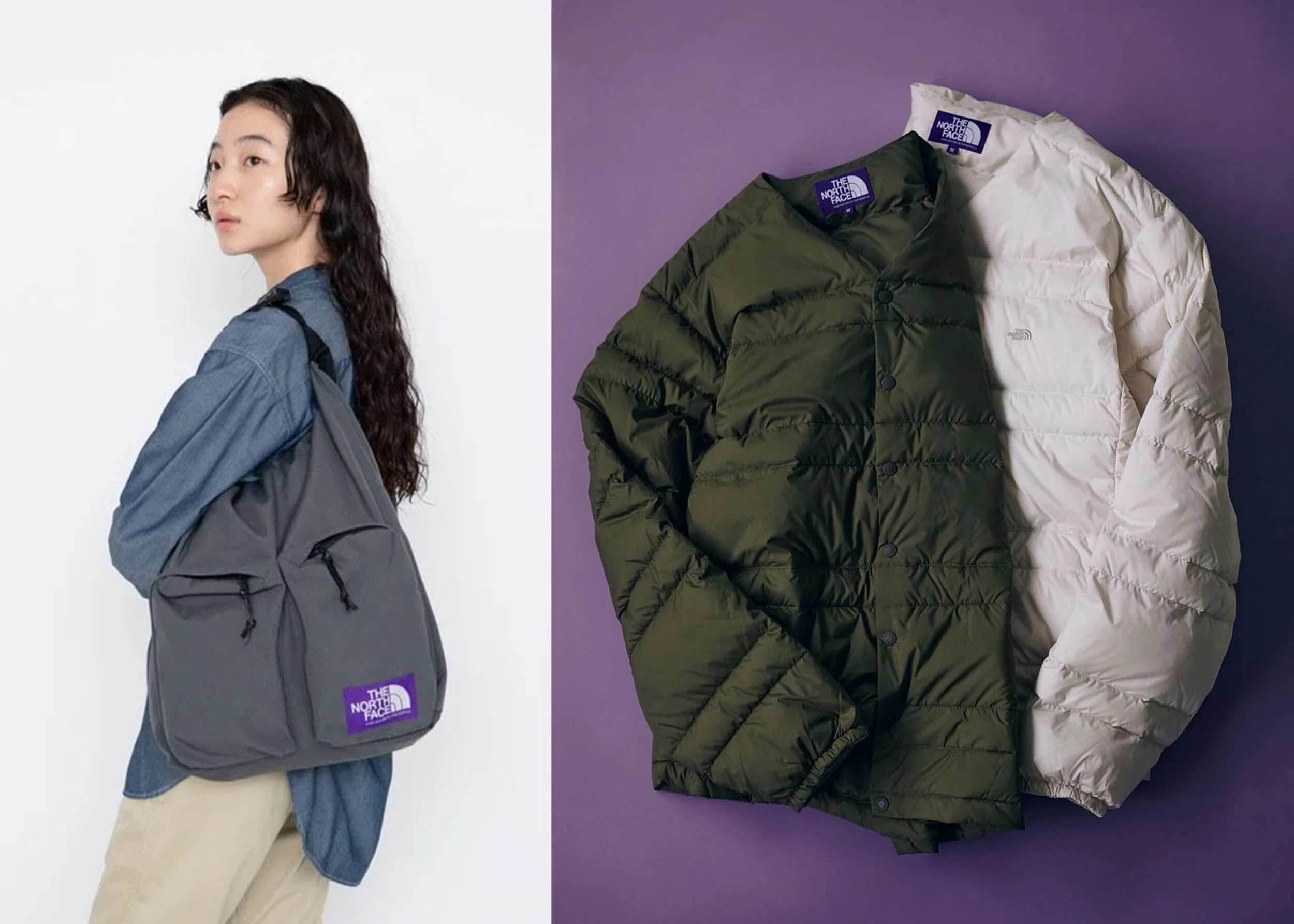
On 23 January 2019, The North Face Purple Label went on sale in the United States for the first time, at the brand's concept store in Williamsburg, Brooklyn. Until then the line had been available only in Japan. Buyers needed a reservation and could take home no more than two items.1 A second drop followed on 6 February, including a limited collaboration with Spike Jonze.2
Purple Label is a North Face that the American company did not design. It was created in 2003 by the Japanese label nanamica and its founder Eiichiro Homma, together with Goldwin, the company that holds The North Face in Japan.23 With its arrival in New York, a line developed abroad under the brand's name was brought into the brand's home market.
How a licence became a brand world
The arrangement goes back decades. Goldwin became The North Face's main distributor in Japan in 1978 and acquired the rights to produce the brand in Japan and Korea in 1994.3 Gear Patrol summarised the result in 2019: Purple Label is owned by Goldwin, distinct from the North American North Face owned by VF Corporation.1
With production rights came design freedom, and Goldwin used it. Homma described his approach to Sabukaru: "I took the traditional 1980s The North Face garments, but gave them the slimmer shapes that were in style at the time." The result, he said, "looked classic while still using the latest down technology."3 Purple Label kept the mountain vocabulary of the American brand and translated it into a refined line designed for urban living and Japanese body types.4
In brand architecture terms, the arrangement produced a sub-line that reads as an independent brand while carrying the parent's name. Purple Label has its own designer, its own aesthetic and its own following, yet every piece carries The North Face's mark. It shows what the brand looks like when its codes are interpreted by a different culture.
Purple Label is not an isolated case. In South Korea, a White Label line developed with a Korean partner mainly targets women in their twenties, and in Japan Goldwin runs its own development centre, the Goldwin Tech Lab in Oyabe, Toyama, opened in 2017.4 Sabukaru notes that around 90 percent of The North Face garments sold in Japan are made in the country.3 Under one logo, the brand in Asia has grown its own family of lines, each read differently by its market.
New York in the story twice
The Brooklyn launch closed a loop that runs through New York. According to Sabukaru, Takao Watanabe, vice president of Goldwin, saw young people in New York wearing Nuptse jackets on the city's streets in the 1990s and recognised that outdoor clothing had become something more than equipment. He is credited with Goldwin's "core & more" approach, which addressed both committed outdoor customers and a wider lifestyle audience.3
In other words, the street meaning that New York gave The North Face in the 1990s travelled to Japan, was developed there into a refined product line, and returned to New York more than two decades later as a coveted import. The Williamsburg store, which stocked curated capsule collections, carried Purple Label among them.2
Scarcity as a signal
The terms of the launch were as telling as the product. Reservations, a two-piece limit and a separate second drop are the mechanics of streetwear releases, not of outdoor retail. Highsnobiety listed the first drop of winter pieces and luggage at $100 to $850, and the spring drop at $65 to $470.2 Gear Patrol called it "a highly sought-after streetwear brand that, until now, has only been available in Japan."1
For The North Face in America, the launch did two things. It placed a fashion-oriented line carrying the brand's name in front of American customers. And it showed the American market that The North Face had a parallel life abroad, in which the same logo stood for something closer to Japanese menswear than to expedition gear.
The Japanese side has kept growing. A 2025 survey cited by nippon.com ranked The North Face first in its outdoor category for awareness, favourability and perceived quality among Japanese women aged 20 to 59.4 Goldwin reports that The North Face's sales in Japan exceeded ¥100 billion in the fiscal year ending March 2025.4 Purple Label is one expression of that success, and its American launch made visible how much of The North Face's meaning is now produced outside the company that owns the brand in its home country.
Written with AI assistance, edited by a human. Find out more about our Use of AI.
1. Tanner Bowden, "The North Face's most exclusive collection is coming to the US", Gear Patrol, 18 January 2019, updated 1 June 2021, read 7 October 2026, for the launch at the Williamsburg concept store on 23 January 2019, the reservation requirement and two-item limit, Goldwin's ownership distinct from VF Corporation, and the quotation on a "highly sought-after streetwear brand". https://gearpatrol.com/2019/01/18/north-face-purple-label-us-launch/
2. Kyle Hodge, "The North Face Purple Label NYC launch", Highsnobiety, 25 January 2019, read 7 October 2026, for the founding in 2003 by Eiichiro Homma and nanamica, the two drops on 23 January and 6 February, the Spike Jonze collaboration, the price ranges, and the store stocking curated capsules including Purple Label. https://highsnobiety.com/p/the-north-face-purple-label-nyc-launch
3. Joe Goodwin, text by Alessandro Ranieri, "The North Face: an expedition into Japan", Sabukaru, 1 December 2022, read 7 October 2026, for Goldwin as distributor from 1978 and production rights from 1994, Purple Label in 2003, the quotations from Eiichiro Homma, Takao Watanabe and New York's Nuptse-wearing hip-hop scene, the "core & more" approach, and domestic manufacturing in Japan. https://sabukaru.online/articles/the-north-face-an-expedition-into-japan
4. nippon.com, "The North Face: a storied US brand and a Japanese success story", read 7 October 2026, for Purple Label designs for urban living and Japanese body types, the White Label line in South Korea mainly targeting women in their twenties, the Goldwin Tech Lab opened in 2017, the 2025 Startdash survey among Japanese women aged 20 to 59, and The North Face sales in Japan above ¥100 billion in fiscal 2025. https://www.nippon.com/en/japan-topics/g02570/the-north-face-a-storied-us-brand-and-a-japanese-success-story.html