
Coca-Cola commissions a new Santa image
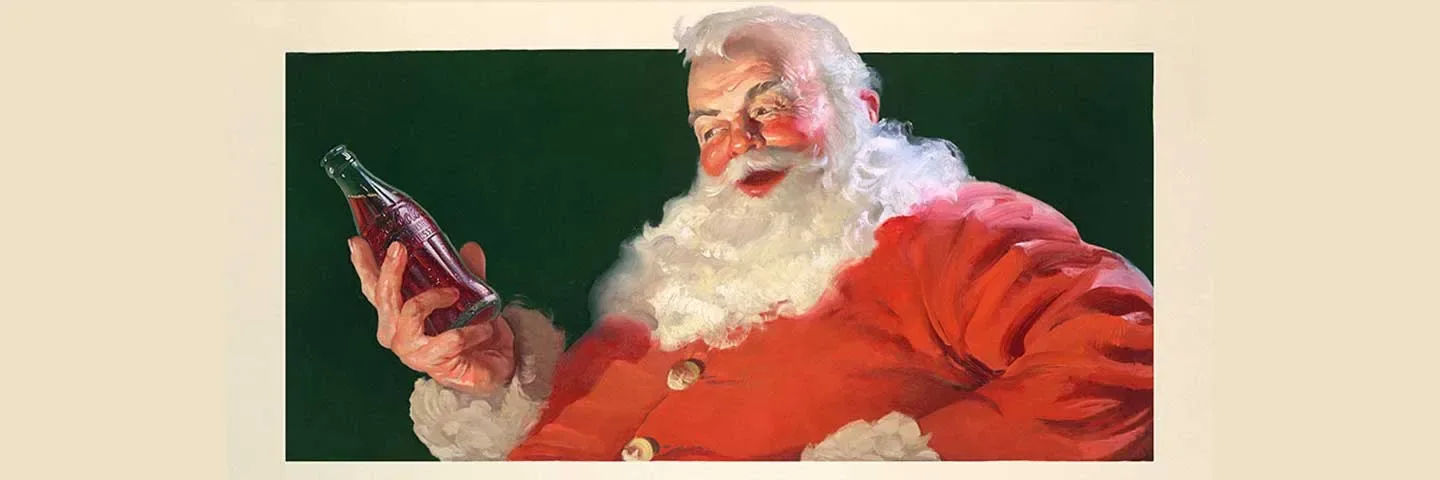
In 1931, Coca-Cola begins placing Christmas advertisements in major magazines as part of its winter marketing strategy. The company commissions illustrator Haddon Sundblom to create a new visual interpretation of Santa Claus for these ads. The brief calls for a Santa who feels warm, human, and believable, rather than a costume figure. Sundblom develops a character based partly on traditional literary descriptions, especially Clement Clarke Moore’s poem “A Visit from St. Nicholas”.
The creation of a modern visual standard
Sundblom’s first Coca-Cola Santa appears in 1931 advertising and quickly becomes a recurring figure in the brand’s seasonal campaigns.
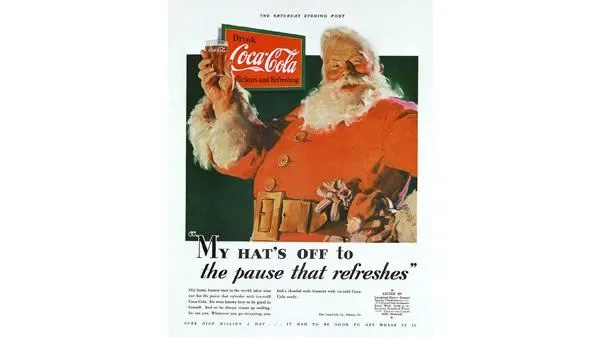
He portrays Santa as a friendly, larger-than-life figure with rosy cheeks, a white beard, and a red suit, often shown enjoying Coca-Cola during his journey. This visual interpretation becomes highly consistent across decades of advertising.
A long-running visual campaign
From 1931 onward, Sundblom continues producing Santa imagery for Coca-Cola for more than 30 years.
Each illustration shows Santa in everyday festive moments, such as delivering gifts, resting by the fire, or visiting homes. The repeated visual language strengthens the association between Coca-Cola and Christmas imagery in global culture.
A lasting cultural impact
Over time, Sundblom’s Santa becomes one of the most influential depictions of the character in modern history. The imagery helps standardise the idea of Santa Claus as a warm, cheerful, red-suited figure across many countries.
Although Coca-Cola did not invent Santa Claus, its advertising plays a major role in shaping and globalising his modern visual identity.
Written with AI assistance, edited by a human. Find out more about our Use of AI.