
A synthesiser with a jeans label on it
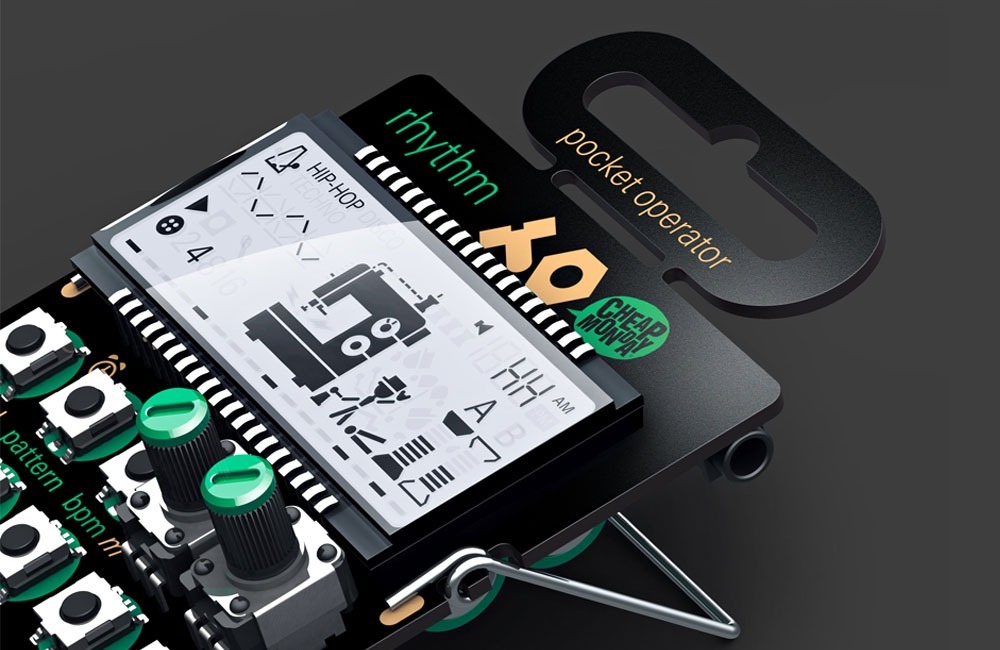
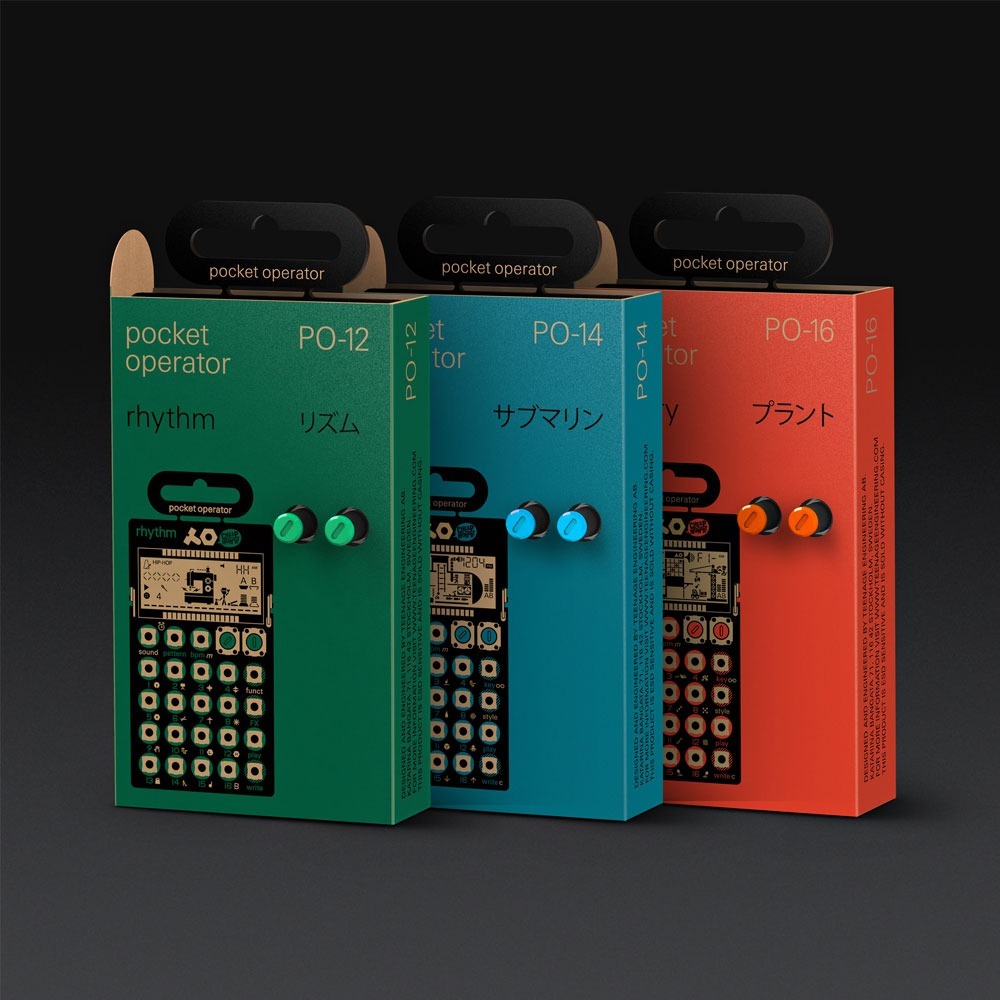
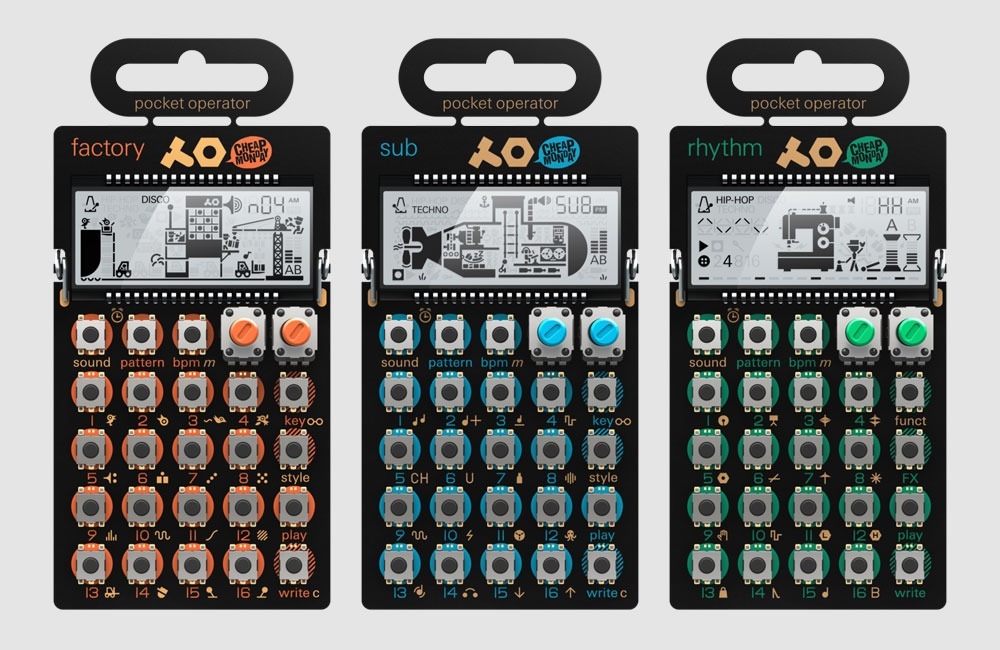
On 22 January 2015, the first day of the NAMM trade show, teenage engineering launched three small synthesisers called Pocket Operators: the PO-12 rhythm, the PO-14 sub and the PO-16 factory.1 Each cost $59, and each carried a second name besides the maker's. The Swedish clothing brand Cheap Monday had its branding on every unit.1 The line went on sale at the same time at Colette in Paris, in store and online.2
The Stockholm company, founded in 2005, had until then been known above all for one instrument, the OP-1, which it had announced in 2009.3 In 2015 the OP-1 cost $799.1 The Pocket Operator sold for less than a tenth of that, and the company had originally aimed even lower, at $49.3 teenage engineering later described the line as "the world's most affordable and accessible music machine" and the idea behind it as a way to "grow the synth population".4
The response at the show was immediate. Third-party estimates put orders at NAMM as high as 40,000 units, and shipments were delayed by up to three months.3 For a company whose reputation rested on a single premium instrument, the queue was a first sign that the name could travel with a much cheaper product.
A circuit board instead of a case
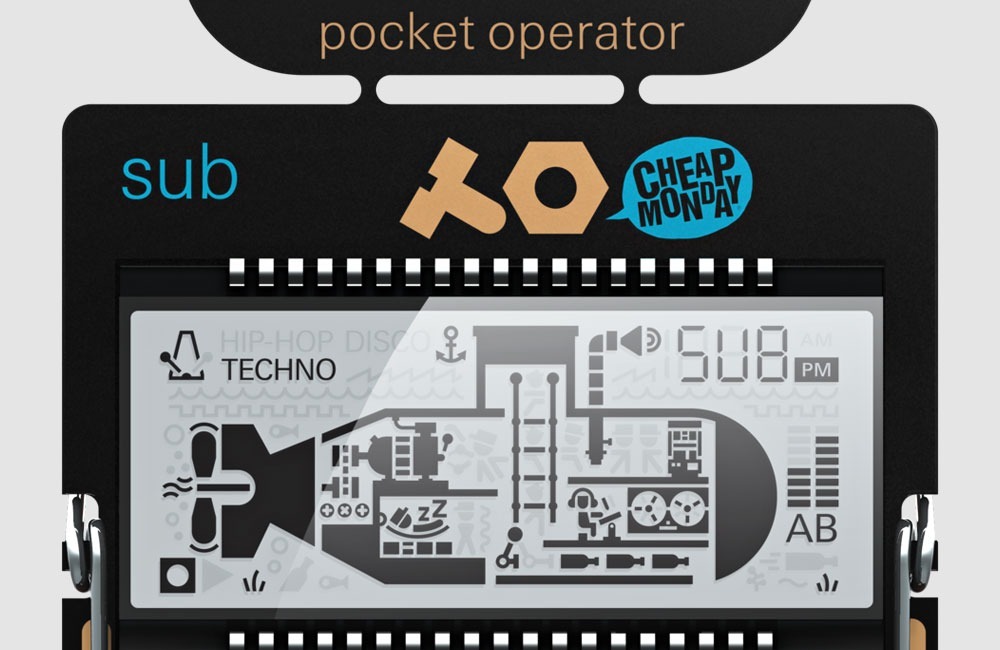
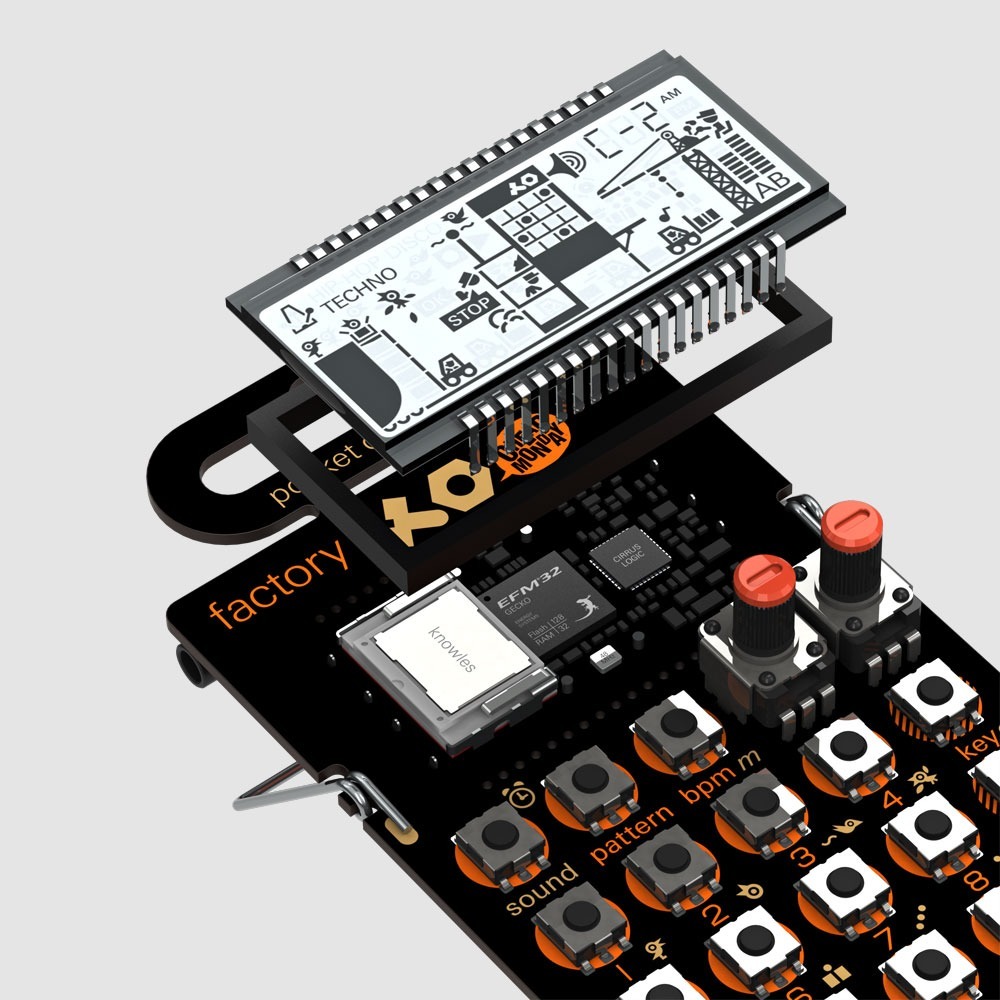
The Pocket Operators had no casing. Their components and artwork sat visibly on the printed circuit board, together with a segment LCD screen, a built-in speaker, an alarm clock and a stand made of bent wire, and two AAA batteries powered them.2 Cool Hunting described them as "miniature synthesizers resembling calculators".5
Leaving out the case kept the price down and turned the construction into the look. Without a shell, the board itself carried the graphics, so the parts that made the device work were also the parts that made it recognisable. teenage engineering had so far shown its design language on a $799 instrument. The Pocket Operator put the same graphic attention on a bare board that could be produced cheaply and in large numbers, and anyone who saw one could place it without reading the name. The exposed solder, the small screen and the printed labels became the product's packaging, its advertising and its identity at once.
Lab coats in exchange for a synth
The partnership started with clothing. In autumn 2013, according to Synthtopia's account of the launch, teenage engineering needed new lab coats for its staff, and its creative director Jesper Kouthoofd asked his friend Ann-Sofie Back of Cheap Monday to design them. Cheap Monday asked for a favour in return.6 teenage engineering tells the story as a deal with Back, then the designer of Cheap Monday, to "create the cheapest synth ever made in exchange for free lab clothes."4 A first run of 200 prototypes without screens appeared at Moogfest in 2014.4
For the launch, Cheap Monday added T-shirts inspired by the clothing made for teenage engineering's teams, pins and a €39 carrying case, and sold the line on its website and in a series of stores worldwide.7 Håkan Ström, Cheap Monday's COO, framed the product as a new category for a jeans brand.7
"We felt an instant match with Teenage Engineering, and when we began to discuss the Pocket Operator, we realized that it was time to kick things into a higher gear."7
A music machine for people who do not play
Launching with a jeans label rather than a music brand changed who met the product. A synthesiser sold next to T-shirts and pins reached people who would not walk into an instrument shop, at a price close to what they paid for clothing. Cool Hunting called it "a music machine for people who can't play an instrument".5 For teenage engineering, the line addressed an audience far beyond the musicians who bought the OP-1, and it did so in the brand's own design language rather than a simplified one. The fashion setting also changed how the object was read. Next to jeans and T-shirts, a bare circuit board looked less like a component and more like an accessory, something to carry and show.
The collaboration continued with the PO-20 series in 2016. Cheap Monday closed in 2018, and teenage engineering carried the series on alone.8 At the line's tenth anniversary, the company counts "just shy of a million units sold".4
The 2015 launch set a pattern the brand still follows: its cheapest product carries the most visible version of its look. The bare board, the small screen and the graphics printed on the circuit became a signature that a $59 device could spread much further than a $799 one. The fashion partner made sure that the signature first appeared where people buy what they wear.
the PO-20 series launched in 2016. Source: teenage engineering Youtube
Written with AI assistance, edited by a human. Find out more about our Use of AI.
1. Aaron Souppouris, "Teenage Engineering will put a synth in your pocket for $59", Engadget, 21 January 2015, read 18 October 2026, for the PO-12, PO-14 and PO-16 at $59 each, Cheap Monday's branding on each unit, the launch on the following day timed with the start of the NAMM show, the OP-1 priced at $799 and the units as circuit boards with display, switches and knobs. https://www.engadget.com/2015-01-21-teenage-engineering-pocket-operator-synths.html
2. CreativeApplications.Net, "teenage engineering and cheap monday launch a line of pocket operators", 21 January 2015, read 18 October 2026, for the simultaneous launch in store and online at Colette in Paris and at NAMM, the missing casing with components and artwork visible on the printed circuit board, the segment LCD, speaker, alarm clock, bent wire stand and two AAA batteries. https://www.creativeapplications.net/news/teenage-engineering-and-cheap-monday-launch-a-line-of-pocket-operators/
3. Wikipedia, "Teenage Engineering", read 18 October 2026, for the founding in Stockholm in 2005, the announcement of the OP-1 at the Frankfurt Musikmesse in 2009, the original target price of $49, and third-party estimates of up to 40,000 units ordered at NAMM with shipments delayed by up to three months. https://en.wikipedia.org/wiki/Teenage_Engineering
4. teenage engineering, "ten years of pocket operator", brand website, undated, read 18 October 2026, for the quotations on the most affordable and accessible music machine, growing the synth population and the deal with Ann-Sofie Back, the 200 screenless prototypes at Moogfest 2014 and the figure of just shy of a million units sold. https://teenage.engineering/products/po/anniversary
5. Richard Prime, "Hands On with the Teenage Engineering + Cheap Monday's Pocket Operators", Cool Hunting, 17 February 2015, read 18 October 2026, for the quotations describing the units as resembling calculators and as a music machine for people who cannot play an instrument. https://coolhunting.com/tech/teenage-engineering-cheap-mondays-pocket-operators-review
6. Synthtopia, "Teenage Engineering Intros Inexpensive Pocket Operator Micro Synthesizers", 24 January 2015, read 18 October 2026, for the origin of the collaboration in autumn 2013, the lab coats requested by Jesper Kouthoofd from Ann-Sofie Back and the favour Cheap Monday asked in return. https://www.synthtopia.com/content/2015/01/24/teenage-engineering-intros-inexpensive-pocket-operator-micro-synthesizers/
7. Olivier Guyot, "Cheap Monday flirts with electronics", FashionNetwork, 27 February 2015, read 18 October 2026, for the T-shirts, pins and the 39 euro case, sales on Cheap Monday's website and in a series of stores worldwide, and the quotation from Håkan Ström, Cheap Monday's COO. https://us.fashionnetwork.com/news/Cheap-monday-flirts-with-electronics,532807.html
8. Wikipedia, "Pocket Operators", read 18 October 2026, for the PO-20 series of 2016 with Cheap Monday and the end of the partnership when Cheap Monday closed in 2018. https://en.wikipedia.org/wiki/Pocket_Operators