
A synthesiser behind glass
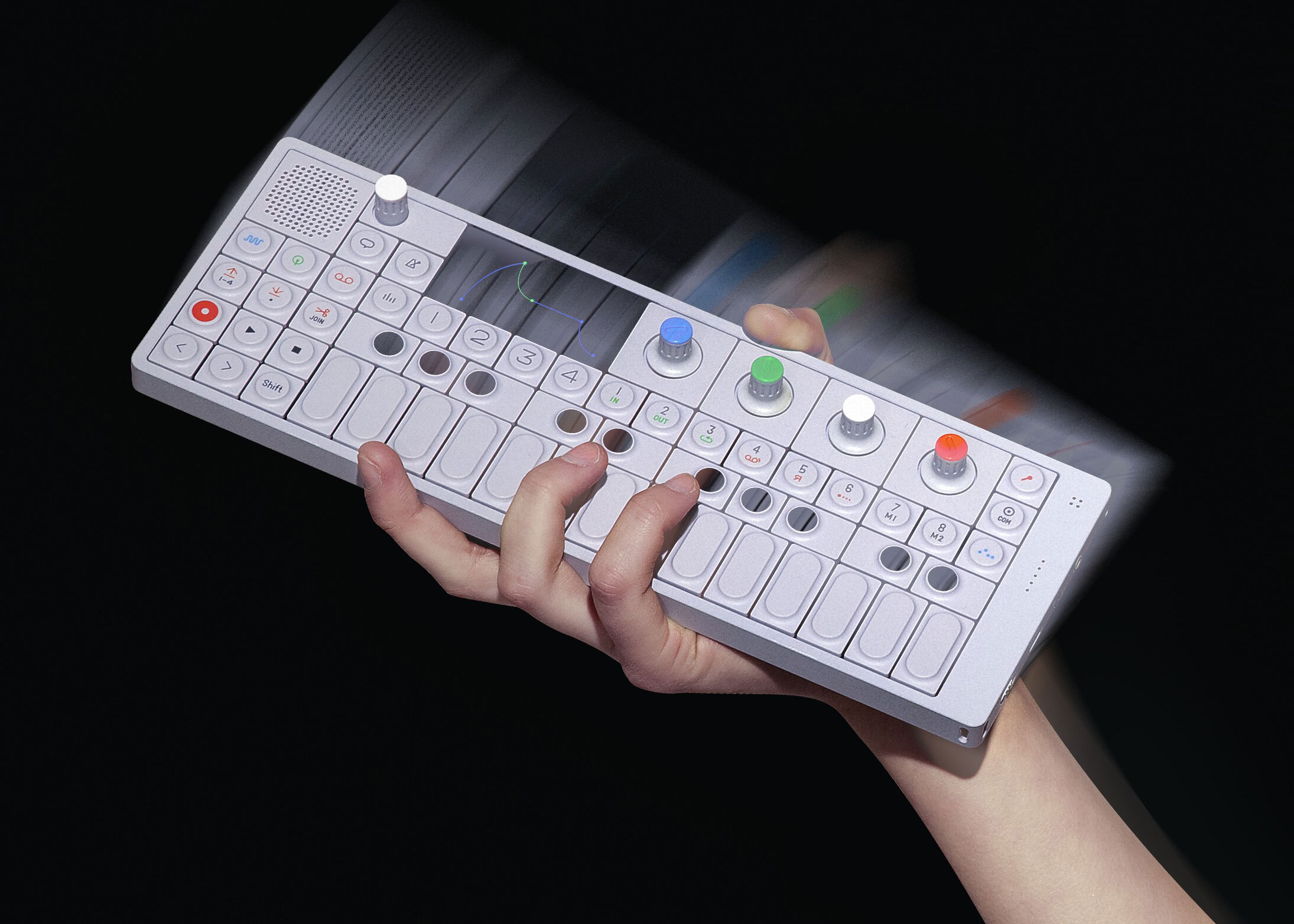
On 1 April 2009, the opening day of the Musikmesse in Frankfurt, a young company from Stockholm showed its first product.1 teenage engineering's OP-1 was a portable synthesiser with a built-in FM radio for sampling, and it looked so unlikely that MusicRadar briefly wondered whether its own story from the day before had been an April Fool.1 The single unit on the stand was a prototype, and it sat under glass.2
The company still tells its story from that moment. In a press alert from 2019, teenage engineering called the OP-1 its first product and recalled that, shown as a prototype for the first time at Musikmesse 2009, it made many people doubt it was real, because something so small seemed to hold far too much.3 The doubt became part of the brand. Its first public appearance was an object people could see but not touch, and could hardly believe.
From glass case to sold out
Visitors could look but not play, and after the fair little news followed. When teenage engineering brought a working model to the NAMM Show in Anaheim in January 2010, MusicRadar noted that many had expected the OP-1 to become vapourware.4 Sonic State had reported a planned price of about 700 euros and a beta programme for later in 2009, and described a team that brought synthesiser design experience, including from the Swedish instrument maker Elektron.2 The newcomer arrived with a pedigree, but without a track record of its own. Everything the public knew about teenage engineering came from one object.
The OP-1 went on sale in 2011 at $799, and in June the company wrote: "The first stock of the OP-1 sold out instantly".5 Two years between showing and shipping turned a product into an expectation. By the time the instrument reached buyers, the name of its maker had travelled ahead of it.
Source: teenage engineering Youtube
A design language in one object
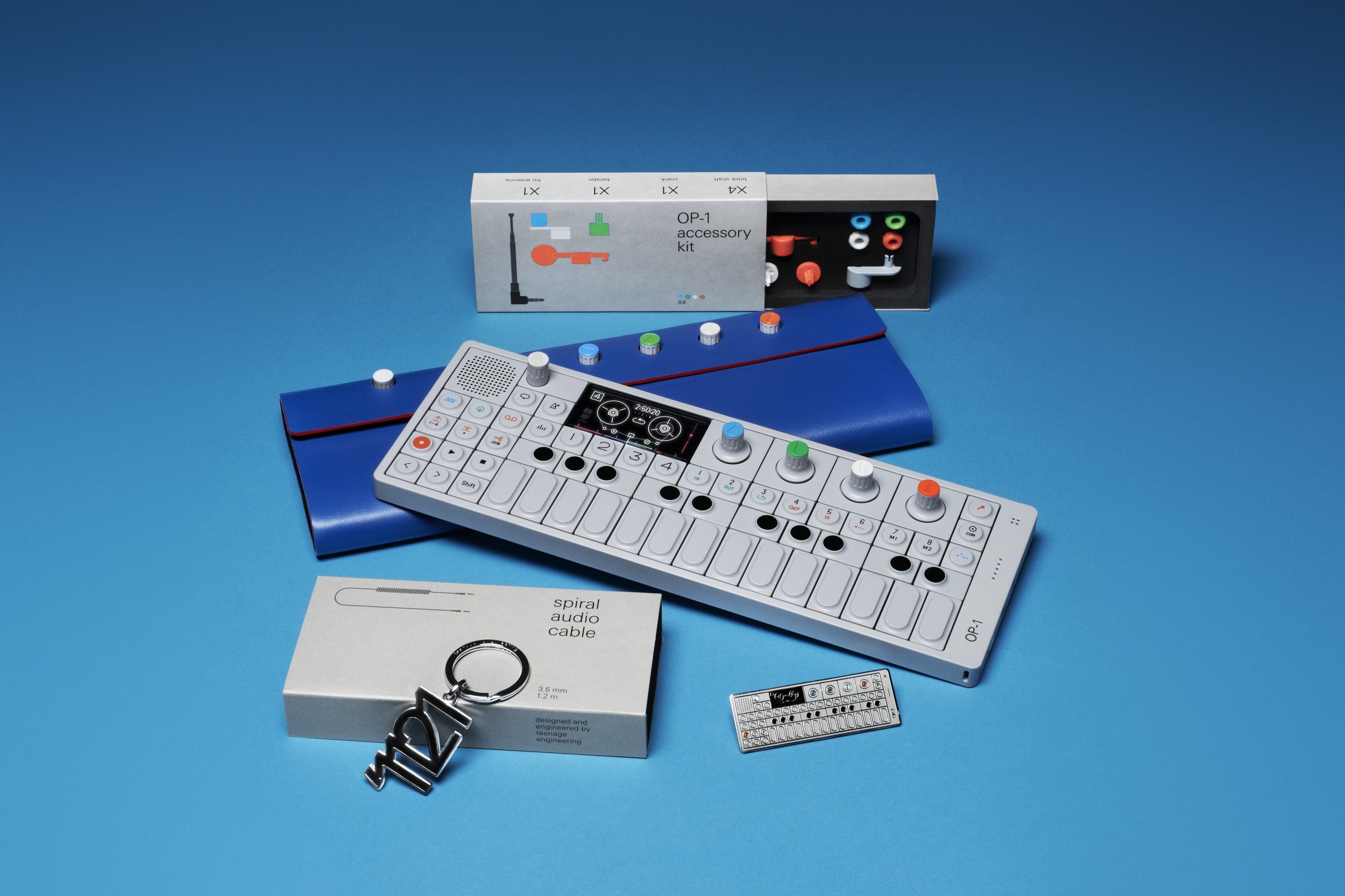
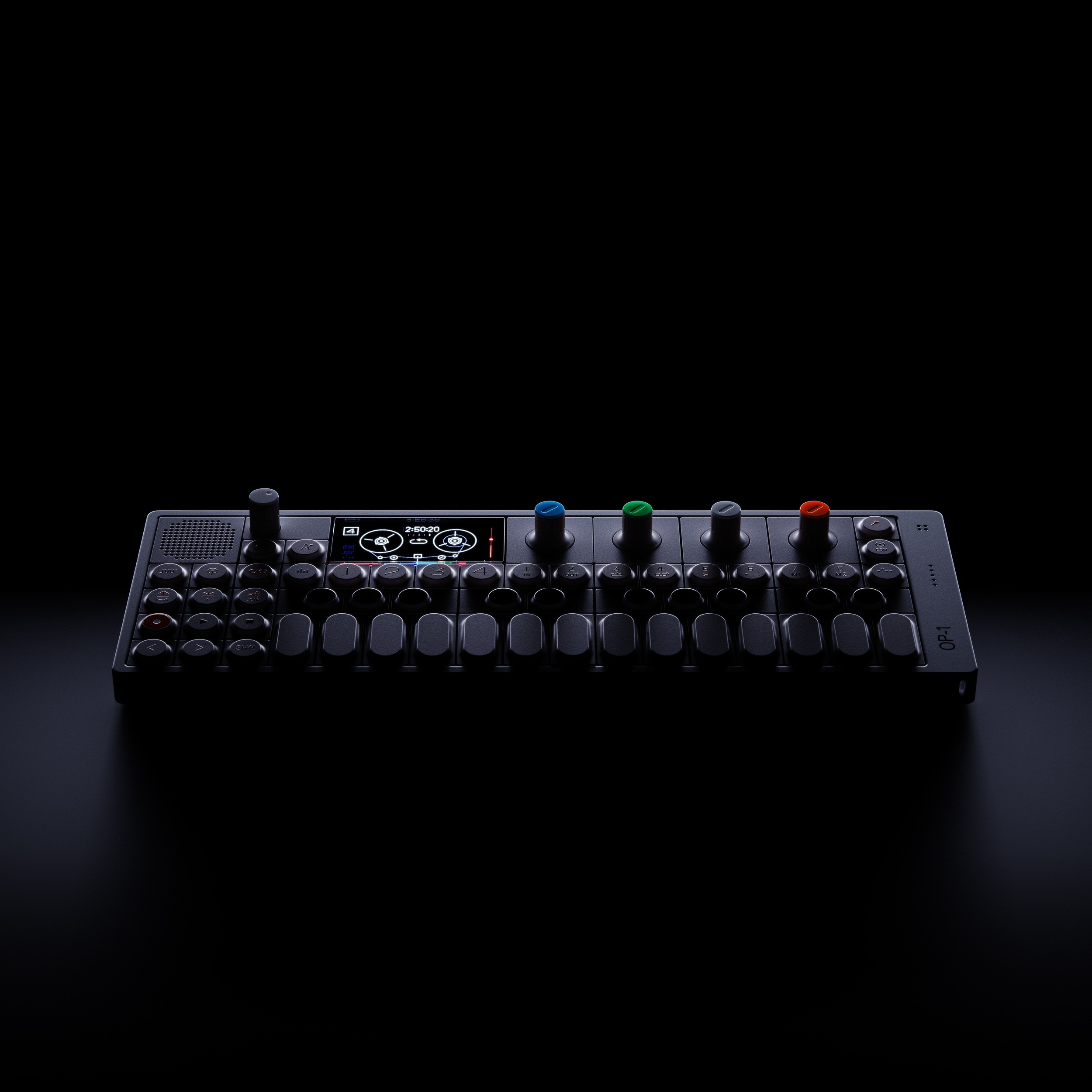
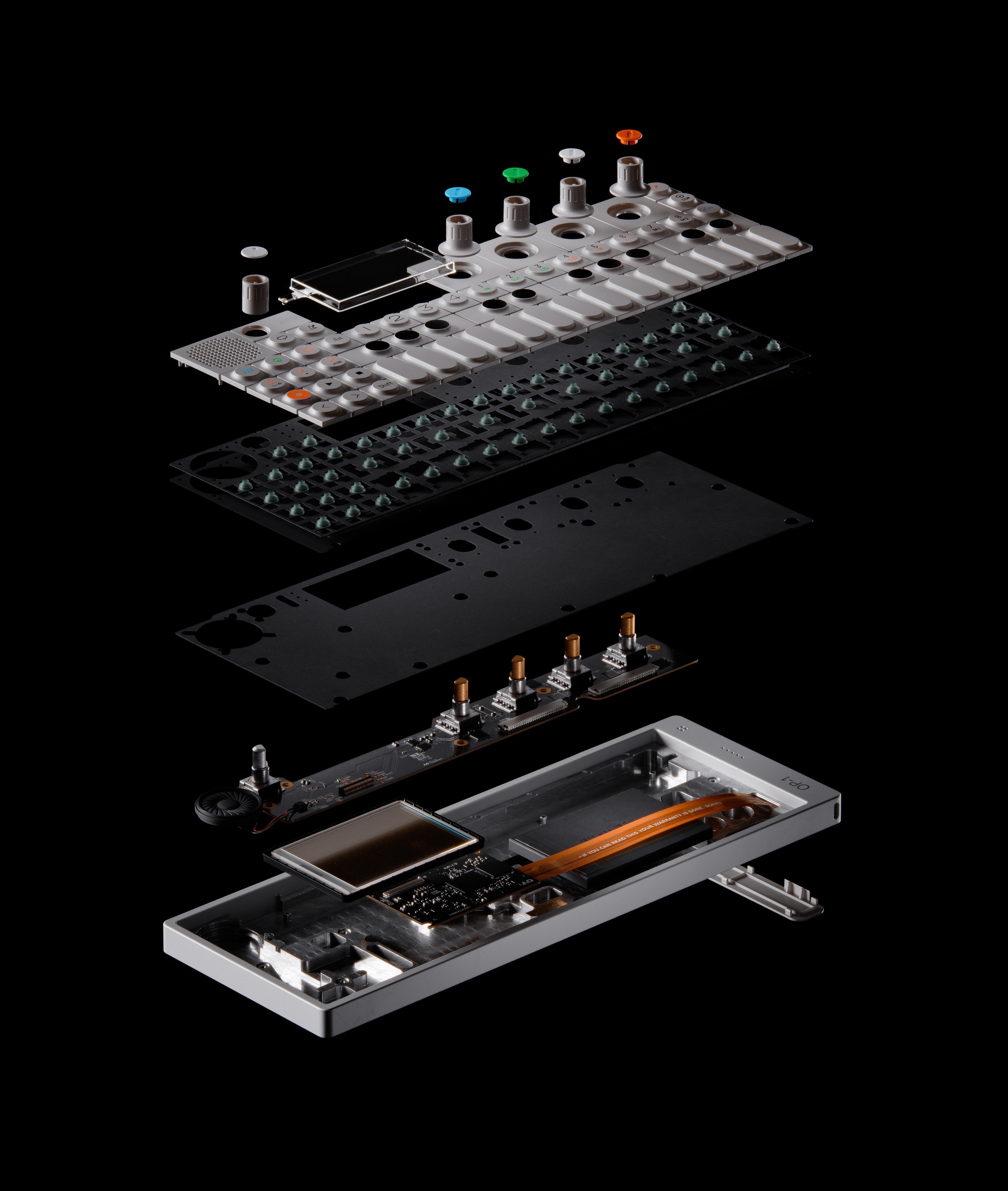
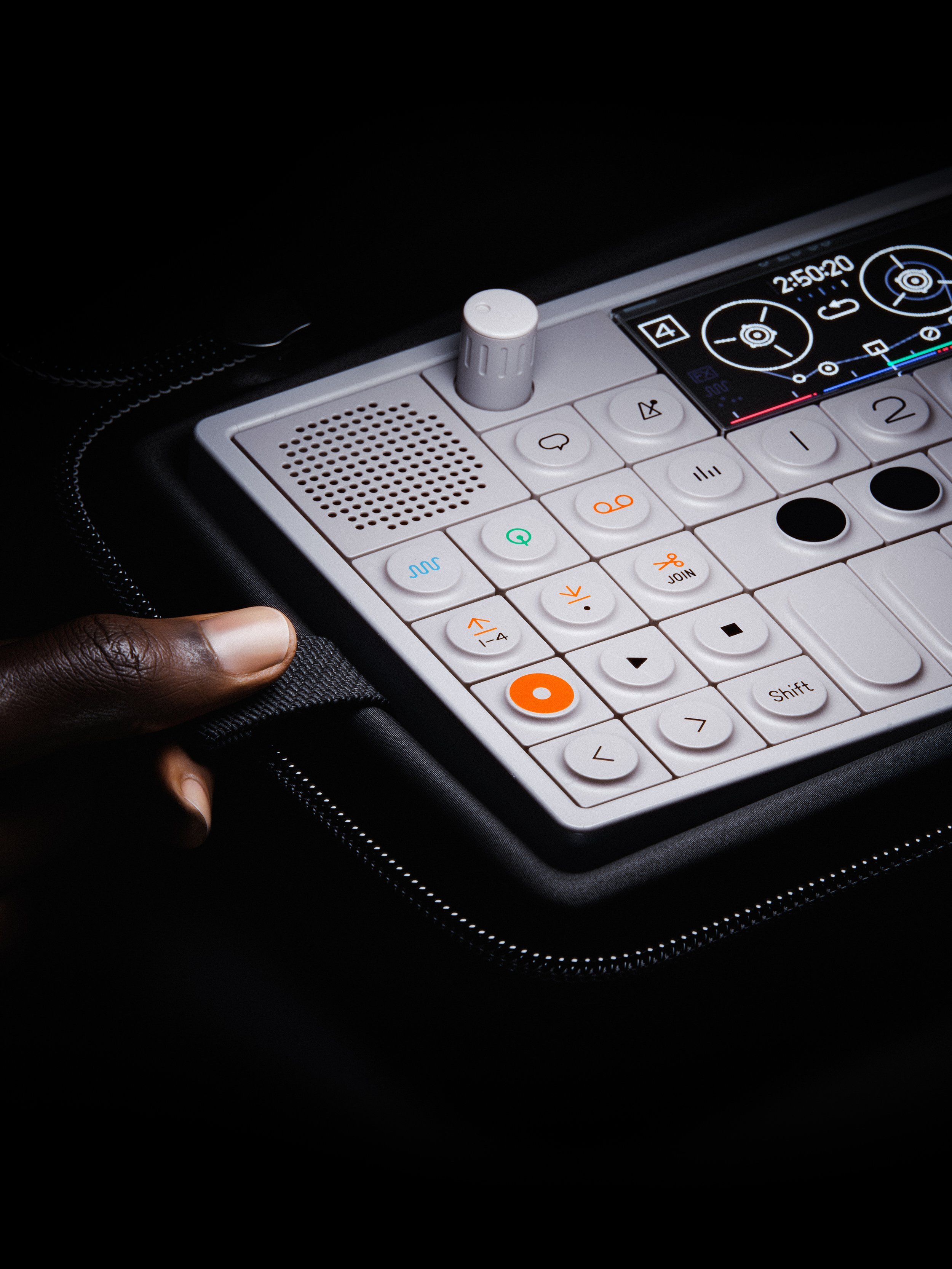
What people saw was a complete visual vocabulary. Future Music's review in MusicRadar describes "the CNC machined aluminium body" and "the four colour-coded rotary encoders", each matched in colour to the graphics on the small OLED screen.6 Every synthesis engine had its own graphic; a filter called punch appeared as a boxer.7 Recording happened on a virtual four-track tape machine rather than in a list of files. The reviewer placed the look "somewhere between a MacBook and a prop from 2001: A Space Odyssey".6
The colour coding was not decoration. It became a system the company carried into everything that followed. "I connect colors to a meaning and then apply that to all products," Kouthoofd, the founder, told SFMOMA in 2024. "If it's orange or red, it means recording." He describes the work itself in narrative terms: "When I design a product, it's like making a film. You tell a story."8 The Pocket Operator series, introduced with the fashion brand Cheap Monday in 2015, and the OP-1 Field of 2022 extend the same vocabulary.9 A buyer who knows the OP-1 can read a later teenage engineering product before switching it on.
Between toy and tool
The same choices placed the instrument in an unusual spot. "It's colourful, it's portable and using it makes us feel like we're playing with a very powerful toy," the 2011 review said.6 Critics noted that its small size and simplicity made it resemble a toy.7 The company did not argue the point. The cartoon graphics, the boxer and the radio made play part of the product, while the machined body and avionics-grade encoders signalled that it was built to last.6 The brand did not have to choose between the hobbyist and the professional, because the object spoke to both at once.
Recognition came from both directions. Musicians including Depeche Mode, Jean-Michel Jarre and Beck used it, and in 2012 it won a Swedish Design S award, whose jury summed it up as "Music and machine in one."7 In 2011 teenage engineering gave an OP-1 to the San Francisco Museum of Modern Art, where it is catalogued as a design object.10 Placing its first product in a design museum in the year it shipped told the public how the company wanted to be read: as designers first.
That reading returns in October 2026, when Kouthoofd announces that the company plans to stop making synthesisers, the OP-1 included. He now describes the instrument without reference to music: "It's therapy. It's entertainment. It's a hobby. That's what the OP-1 is."11 The object shown under glass in Frankfurt introduced a brand built on colour, play and doubt overcome. The brand it made now intends to outlive it.
Written with AI assistance, edited by a human. Find out more about our Use of AI.
1. Chris Wickett and Ben Rogerson, MusicRadar, "Video: Teenage Engineering OP-1", 1 April 2009, read 18 October 2026, for the OP-1 shown at the Frankfurt Musikmesse on its opening day, 1 April 2009, the editors' doubt whether the story of the previous day was an April Fool, and the FM radio for sampling. https://www.musicradar.com/news/tech/video-teenage-engineering-op-1-201973
2. Nick Batt, Sonic State, "MESSE09: Teenage Engineering OP-1", 4 April 2009, read 18 October 2026, for the single prototype under glass, the proposed price of about 700 euros, the planned beta programme later in 2009 and the makers' synthesizer design experience, including at Elektron. https://sonicstate.com/news/2009/04/04/messe09-teenage-engineering-op-1
3. teenage engineering, "press alert", 14 February 2019, read 18 October 2026, for the OP-1 as the company's first product and the doubt at Musikmesse 2009, when shown as a prototype for the first time, that so small a device could be real. https://teenage.engineering/_img/5c653d27f0e1240004279ee2_original.pdf
4. Chris Wickett, MusicRadar, "NAMM 2010: Teenage Engineering's OP-1 on video", 14 January 2010, read 18 October 2026, for the working model at NAMM 2010, the glass case at Musikmesse 2009 and the speculation that the OP-1 would become vapourware. https://www.musicradar.com/news/tech/namm-2010-teenage-engineerings-op-1-on-video-232612
5. Synthtopia, "Teenage Engineering OP-1 Synthesizer Ready For Release", 8 June 2011, read 18 October 2026, for the price of $799 and the company's quoted announcement that the first stock sold out instantly. https://www.synthtopia.com/?p=33394
6. Future Music, MusicRadar, "Teenage Engineering OP-1 review", 6 October 2011, read 18 October 2026, for the CNC machined aluminium body, the four colour-coded encoders built from avionics-grade components with their functions shown in the screen graphics, the OLED screen, the virtual four-track tape machine, and the quoted comparisons with a MacBook, a prop from 2001: A Space Odyssey and a very powerful toy. https://www.musicradar.com/reviews/teenage-engineering-op-1
7. Wikipedia, "Teenage Engineering OP-1", read 18 October 2026, for the graphic for each synthesis engine and the punch filter shown as a boxer, the criticism that its size and simplicity make it resemble a toy, users including Depeche Mode, Jean-Michel Jarre and Beck, and the Design S award of 2012 with the jury's quoted phrase. https://en.wikipedia.org/wiki/Teenage_Engineering_OP-1
8. Cristina Chan, SFMOMA, "Stay Curious, Stay Naive: An Interview with teenage engineering's Jesper Kouthoofd", February 2024, read 18 October 2026, for Jesper Kouthoofd, head of design, founder and CEO of teenage engineering, on colours and their meanings and on design as storytelling, interviewed by curator Joseph Becker. https://www.sfmoma.org/read/stay-curious-stay-naive-an-interview-with-teenage-engineering-jesper-kouthoofd/
9. Wikipedia, "Teenage Engineering", read 18 October 2026, for the Pocket Operator series with Cheap Monday announced in January 2015 and the OP-1 Field of May 2022. https://en.wikipedia.org/wiki/Teenage_Engineering
10. SFMOMA, "OP-1, 2010, Teenage Engineering", collection record 2011.225, read 18 October 2026, for the OP-1 as a design object of aluminium, electronic components and plastic, acquired in 2011 as a gift of teenage engineering. https://www.sfmoma.org/artwork/2011.225/
11. Lukas Mauve, Highsnobiety, "Teenage Engineering Is Going to Stop Making Synths", 7 October 2026, read 18 October 2026, for Kouthoofd's plan to stop making synthesizers, the OP-1 included, and his quoted description of the OP-1. https://www.highsnobiety.com/p/teenage-engineering-interview/