
A button and a riff
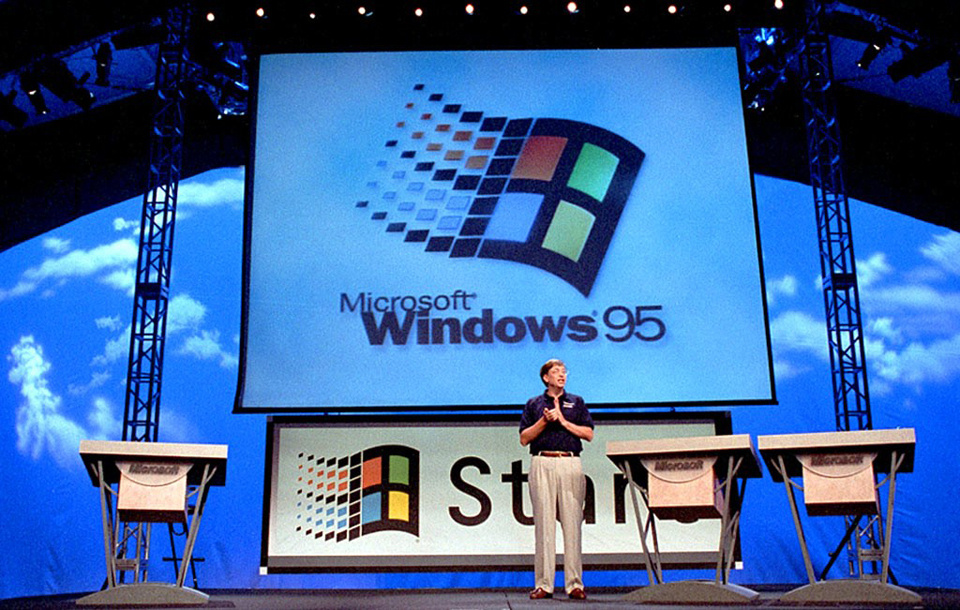
On 24 August 1995 Microsoft turned the public release of Windows 95 into a global media event. The new operating system's most visible interface feature was the Start button in the lower left corner of the screen, a piece of design that anchored the user's mental model of the system. Microsoft's marketing organisation, working with the Portland agency Wieden+Kennedy, anchored the entire launch campaign on a single Rolling Stones track, Start Me Up, released on the 1981 album Tattoo You. The pairing of a four word system instruction with a four word rock chorus gave the launch a single, repeatable mnemonic across every channel.
The negotiation
The licensing deal had taken months. Microsoft had opened negotiations earlier in 1995 with Prince Rupert Loewenstein, the long serving financial advisor and de facto manager of the Rolling Stones, and had eventually concluded the agreement after direct conversations with the band in Amsterdam. Early industry reporting placed the fee at between 10 million and 14 million dollars, a figure that was widely repeated in technology and music trade publications through the autumn of 1995. The figure that subsequent reporting eventually settled on was approximately 3 million dollars, a sum that the agency record at the American Association of Advertising Agencies later confirmed.
The deal was unusual on three counts. It was the first time the Rolling Stones had licensed a recording of their own performance, rather than a cover version, for use in a commercial. It was the first product television advertisement that Microsoft had ever commissioned, the company having previously confined its marketing investment to print and to retail trade activity. And it was the largest single music licence in technology marketing to that point, well above the figures that Apple and IBM had paid for soundtrack work in the same period.
The wider launch architecture
The Stones licence sat inside a much larger marketing programme. Microsoft's total advertising and promotion investment for Windows 95 reached approximately 300 million dollars across television, print, retail, event production and partnership marketing. The launch event at the Microsoft campus in Redmond on 24 August 1995 was broadcast live, with Jay Leno on stage with Bill Gates and with a sequence of staged demonstrations of the new system. The Empire State Building in New York was illuminated in the Windows logo colours that evening. The Times of London was bought out for a free distribution edition that carried only Windows 95 advertising and editorial copy. Toronto's CN Tower carried a banner of the same dimensions as a small office building.
The first television commercial in the Wieden+Kennedy campaign premiered during NBC's primetime Seinfeld slot in late August 1995. The cut opened on a sequence of close ups of the Start button being clicked, with Keith Richards's opening guitar riff at the front of the audio mix. The advertisement carried minimal copy. The product name and the system requirements ran in a final three second card, with the Start Me Up chorus held over the close. The decision to lead with the music rather than with the demonstration was strategically deliberate. The campaign was designed to register an emotional rather than a technical proposition for an audience that, by Microsoft's own market research at the time, did not understand the underlying technology and did not want to.
Source: Kyntteri Youtube
The marketing logic that the licence carried
The Stones licence performed three pieces of brand work for Microsoft. It positioned the company outside the technology category for the duration of the launch by associating Windows 95 with the most prominent rock and roll brand of the previous three decades. It softened the public perception of Bill Gates, who had become a figure of trade press scrutiny over the antitrust questions that the Department of Justice would formalise three years later, by placing him in the same campaign as Mick Jagger and Keith Richards. And it gave the retail trade a single, audible cue. The opening guitar riff of Start Me Up became the in store sound bed that retailers used to mark the Windows 95 display and the launch event line ups at midnight openings on 23 and 24 August 1995.
The campaign also functioned as a recruitment instrument. Microsoft used the Wieden+Kennedy launch to signal a different kind of corporate identity to the talent market. The agency had at that point been associated primarily with Nike, and the move to a Portland creative shop rather than to the established New York or San Francisco technology agencies was read in the trade as a deliberate statement about Microsoft's ambitions outside the enterprise software audience.
The shape of the legacy
The commercial outcome of the launch was unambiguous. Microsoft sold approximately one million copies of Windows 95 in the first four days of availability and seven million copies in the first five weeks. The operating system reached an installed base of more than 40 million copies in its first year and remained the dominant desktop operating system for the rest of the decade.
The cultural outcome was more durable. The 24 August 1995 launch became the reference point for technology marketing as theatre. It set a template that Apple subsequently extended with the original iPod and iPhone launches, that Sony adopted for the original PlayStation in the same year, and that Microsoft itself revisited at intervals across the launches of Xbox in 2001, Windows XP in the same year and the Surface line from 2012 onward. The Rolling Stones cue retained its specific meaning. Start Me Up has been re used in Windows retrospectives by Microsoft itself at intervals across the three decades since, and it remains a primary cultural reference for the moment at which the operating system entered ordinary life.
Source: TheHirnheiner Youtube
Written with AI assistance, edited by a human. Find out more about our Use of AI.