A clown out of a cancelled Bozo show
In late 1963, a Washington D.C. McDonald's franchisee named Oscar Goldstein produced three local television commercials featuring a new character called Ronald McDonald, the Hamburger-Happy Clown. The clown was played by Willard Scott, a Washington radio and television performer who had held the regional rights to Bozo the Clown on WRC-TV from 1959 to 1962. Goldstein's chain of franchised McDonald's restaurants in the Capital region had sponsored Scott's Bozo programme during its broadcast life. When the show was cancelled in 1962, the sponsor and the clown were left with a built audience and no character to attach it to.
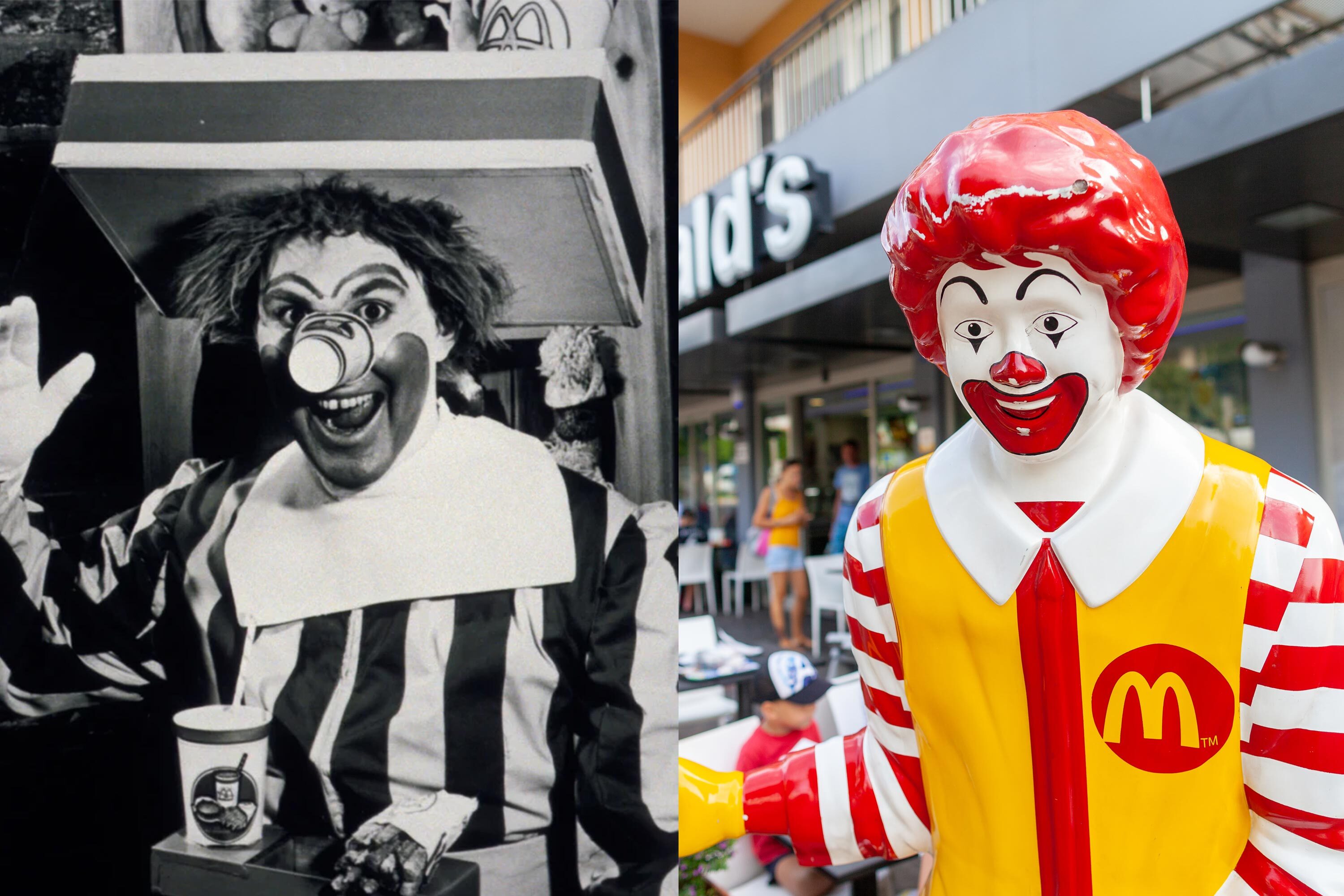
The three commercials, written and produced inside Goldstein's franchise marketing apparatus, ran on local Washington stations in the autumn of 1963. They introduced a clown who was unmistakably McDonald-coded: a paper-cup nose drawn from the brand's drink cup, a hat constructed as a food tray carrying a fake hamburger, a bag of fries and a milkshake, oversize yellow shoes and a red and yellow costume that anticipated the McDonald's corporate palette by years. The character was named for the brand, not for the actor, and was offered to franchise audiences as the brand's own face.
The character that grew past its inventor
The Washington commercials were a regional success. Within months Ronald McDonald was visiting hospital wards, opening franchise locations and shaking hands at parades across the D.C., Maryland and Virginia markets. McDonald's Corporation, then headquartered in Chicago, observed the character's traction and decided in 1965 to take Ronald national. Scott himself did not make the move. According to Scott's own later interviews, he was let go from the role when McDonald's Corporation determined that a thinner, more youthful performer would carry the character better on national television. The clown survived the change of actor. The actor went on to become the long-running weatherman of NBC's Today.
The national introduction came in stages across 1965. The character appeared in network television advertising tied to the Macy's Thanksgiving Day Parade in November 1965 and to the NFL Championship Game in January 1966. The McDonald's Corporation creative apparatus, then led by Don Conley and the in-house marketing team, simplified the costume from Goldstein's franchise version. The food-tray hat was removed; the paper-cup nose was replaced with a sculpted red nose; the suit was rationalised to the red-and-yellow combination that the brand had already adopted across its restaurants. The character that emerged from this revision was the Ronald McDonald that two generations of customers would recognise.
First commercial featuring Ronald McDonald. Source: VintageTVCommercials Youtube
A franchise invention scaled into a master brand asset
Ronald McDonald is one of the few cases in modern brand history where a character invented at the franchise level was promoted to the master brand level without being remade from the ground up. Goldstein's commercials were not approved by corporate headquarters; they were a regional franchise experiment. The character moved upward because its commercial effect was visible. Goldstein's Washington restaurants reported sales increases in the period after the Bozo sponsorship that the McDonald's Corporation marketing department interpreted as character-driven rather than schedule-driven. When Ray Kroc's headquarters team weighed whether to put the clown on a national budget, the Washington results were the decisive evidence.
The character carried the brand for the next four decades. By the 1970s Ronald McDonald was the second most recognised fictional character in the United States after Santa Claus, according to repeated brand-recognition surveys cited by McDonald's Corporation in its annual reports of the period. The 1971 Needham, Harper and Steers expansion of the McDonaldland universe, which added Mayor McCheese, Grimace, the Hamburglar and Birdie around the clown, presupposed Ronald McDonald as a recognisable centre. Ronald McDonald House, the brand's hospital-accommodation charity for families of seriously ill children, was founded in 1974 in Philadelphia around the character's name. The clown's signature became a commercial asset, a hospitality programme and a community trust position at the same time.
McDonald's Corporation began to retire Ronald McDonald from front-line advertising in the mid-2010s. The brand cited a 2014 survey by Insiders Health that linked clown imagery to childhood anxiety, and the rise of the killer-clown trend in 2016 that pushed many clowns out of public-facing roles. The character is no longer the centre of McDonald's advertising. The Ronald McDonald House Charities organisation, however, continues to operate in more than 60 countries with the clown as its trademark. The character that began in 1963 in three Washington commercials, written by a single franchisee outside the corporate marketing function, remains the brand's longest-running and most widely recognised mascot.
Source: ewjxn Youtube
Written with AI assistance, edited by a human. Find out more about our Use of AI.