
Did Somebody Say McDonald's: a global tagline for a global menu
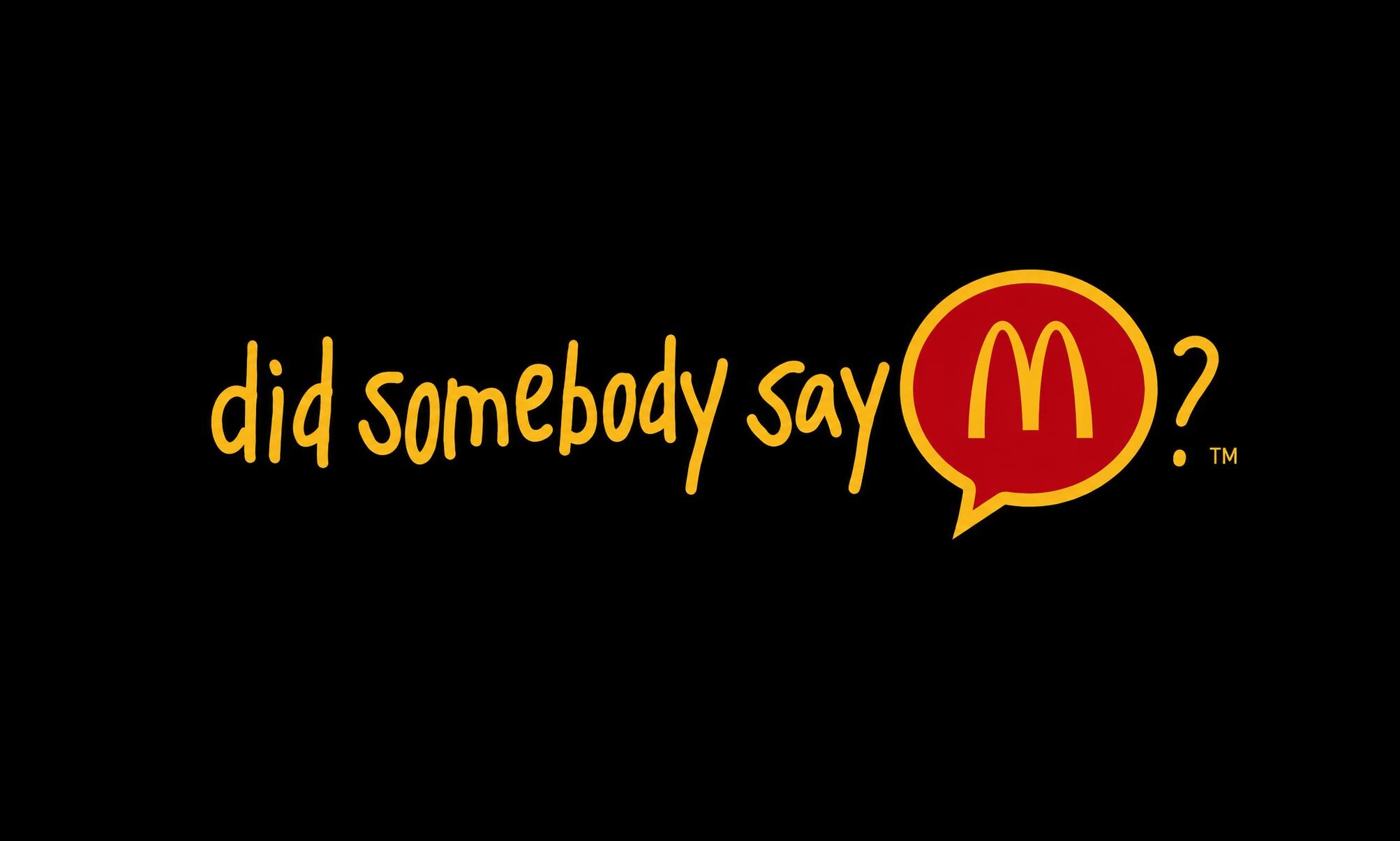
In August 1997, McDonald's introduced Did Somebody Say McDonald's, a global advertising platform developed by DDB Needham Worldwide that ran in more than one hundred markets between 1997 and 2000. The line had been tested in regional markets across 1996 and 1997 and was elevated to a full international platform after McDonald's parted ways with Fallon McElligott in January 1997 over the agency's refusal to take on price-led product work. The new platform replaced the regional patchwork of taglines and local executions McDonald's had been running through the mid-1990s, including the residue of Have You Had Your Break Today, with a single conceit that translated identically across languages and cultures.
A single hook for one hundred markets
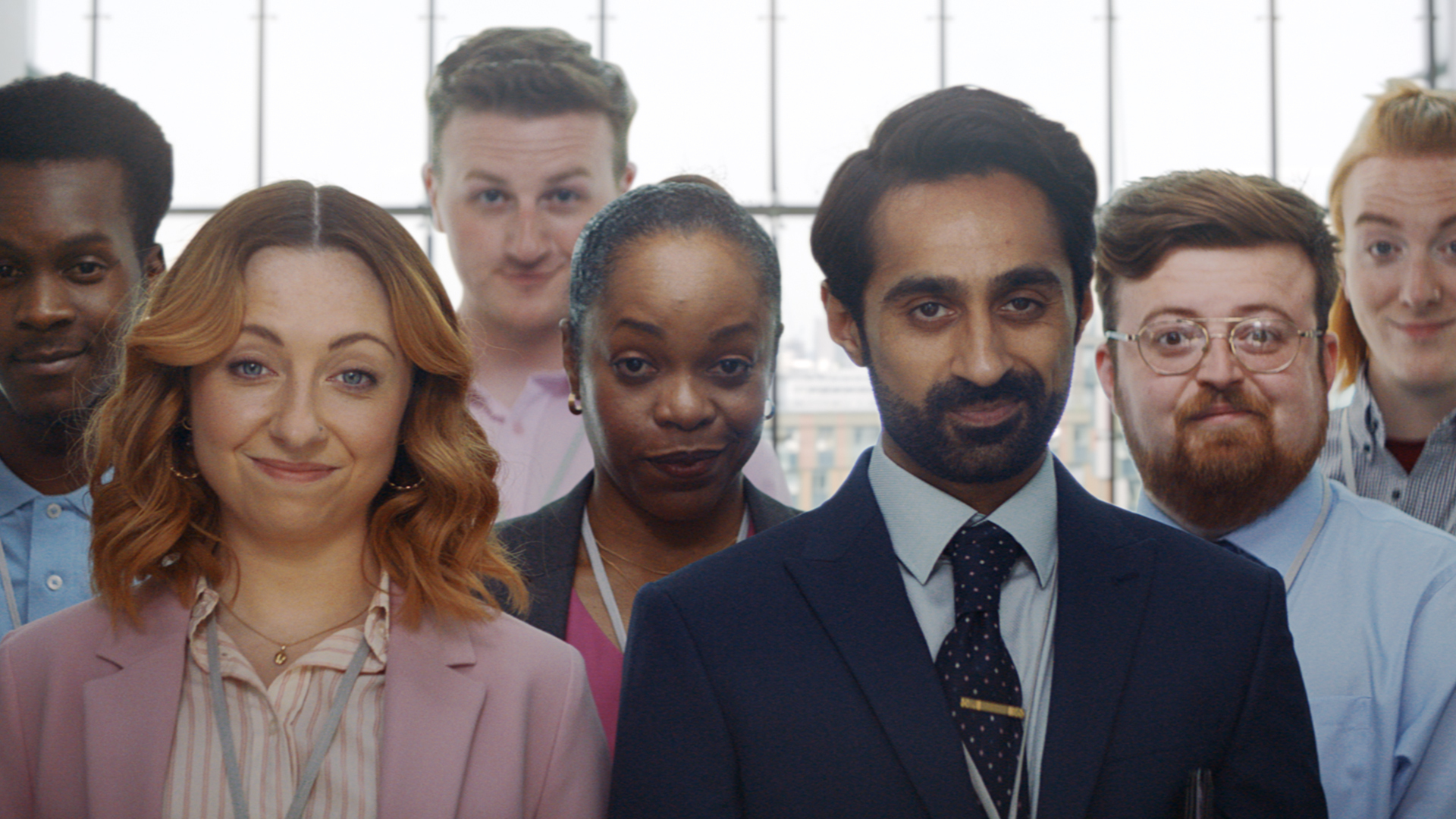
The premise was deliberately uncomplicated. The mere mention of the brand name caused characters in each spot to drop whatever they were doing and pay attention. A waitress poured coffee into a customer's lap, a sleeping passenger snapped awake on an aircraft, a librarian shouted across a quiet reading room, a road worker dropped his tools, each interruption triggered by a stray reference to McDonald's somewhere in the surrounding scene. The construction allowed local DDB offices to film their own versions in their own languages with their own actors, while the global platform line and the underlying gag remained constant. Production was decentralised, with McDonald's market teams briefing local DDB offices in Frankfurt, Sydney, São Paulo, Toronto and elsewhere on a shared creative blueprint, and a global creative council reviewing the work for consistency.
The strategic frame after Arch Deluxe
The platform read as a deliberate correction to the previous eighteen months. The Arch Deluxe launch of May 1996 had attempted to widen the McDonald's franchise into an adult sub-brand and had stalled at much less than its commercial projections. The 55-cent Big Mac discount programme of early 1998, in which the price of a sandwich was conditional on the purchase of a full-priced second item, had been criticised as confusing and was discontinued within months. Did Somebody Say McDonald's pulled the brand back into universal territory by refusing to argue for any particular product, demographic or price point. The spot did not tell viewers what to buy, what they should think about quality, or how the brand differed from its competitors. It only argued that the brand name itself was reflex-triggering enough to interrupt whatever was happening on screen.
The choice was strategically defensible. WARC's contemporaneous case study on the platform recorded that McDonald's research showed brand awareness in core markets had plateaued at very high levels, with prompted recall above ninety per cent in the United States, the United Kingdom, Germany and Japan. The marketing task was not to introduce the brand but to keep the brand top of mind without the cost of constant product news, and the Did Somebody Say McDonald's construction was engineered for exactly that purpose: cheap to produce locally, instantly recognisable across the network, content-light enough to run for years without exhausting its premise.
What the platform built and what it left undone
The campaign ran into 2000 and was retired as McDonald's prepared the brief that would eventually produce I'm Lovin' It in 2003. In retrospect the platform's contribution was structural rather than creative. It demonstrated that McDonald's could run a single global line across more than one hundred markets without requiring each market to translate or reinterpret the underlying idea, and it set the template for what would later become the operating model for the I'm Lovin' It platform developed by Heye & Partner in Unterhaching. The mechanic of a globally consistent hook, executed locally by network agencies under shared guardrails, has remained the McDonald's standard since.
What the platform did not solve was the question that had driven the Arch Deluxe in the first place. Did Somebody Say McDonald's worked precisely because it asked nothing of the audience, but that restraint also meant the brand offered no answer to the differentiation argument competitors were making. Burger King continued to lean on quality-of-beef messaging, Wendy's on freshness, Subway on freshly made bread. The McDonald's response, when it came, was the Plan to Win strategy that James R. Cantalupo introduced after taking over as chief executive in January 2003, and the I'm Lovin' It platform that followed it. Did Somebody Say McDonald's bought the brand the time to develop both.
Its place in the McDonald's record sits as a hinge between the disorganised mid-1990s and the disciplined Plan to Win era. The platform did not win design awards. It did not produce a single iconic spot the way The Showdown had in 1993. But it built the operating model that the brand has used to coordinate global advertising for the quarter-century since, and that contribution is the reason it remains in the brand's institutional memory.
Source: McDonald's commercial archive Youtube
Written with AI assistance, edited by a human. Find out more about our Use of AI.