A new name, a recipe closer to the master brand
Coca-Cola began rolling out Coca-Cola Zero Sugar in late June 2016, replacing Coke Zero in Belgium, France, Great Britain, Ireland and the Netherlands. The shift involved a reformulation closer to the original Coca-Cola taste profile and a new pack design, supported in the United Kingdom by a £10 million campaign that the bottler described as its largest investment in a new product launch in a decade. The relaunch was the company's first answer to consumer research showing that nearly half of UK consumers did not realise that Coke Zero contained no sugar.
One Brand strategy and the red disc
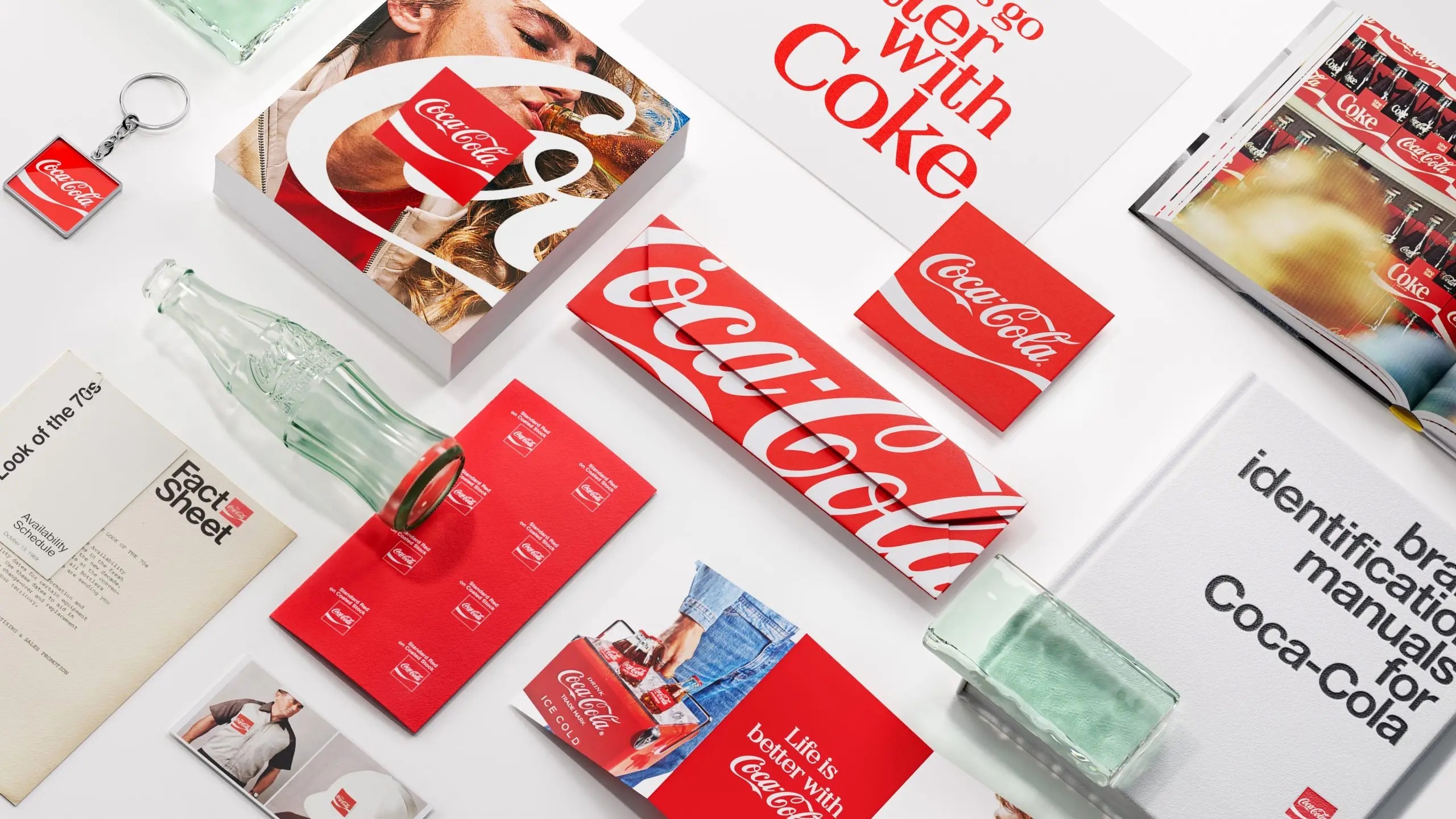
The rebrand executed within the wider One Brand framework introduced in March 2015 by then chief marketing officer Marcos de Quinto. Under that strategy, the four cola variants of Coca-Cola, Diet Coke, Coca-Cola Zero and Coca-Cola Life moved beneath a single master brand expressed through the "Taste the Feeling" platform and a unified visual system anchored by the red disc that Coca-Cola first introduced in its advertising in the 1930s. On Coca-Cola Zero Sugar's UK packaging, the red disc sat on a black field; in international markets that followed, the red ground of the classic Coca-Cola pack carried a black band reading "zero sugar" or its translated equivalent.
Clarifying the brand under James Quincey
The renaming was driven by the conviction that the existing name obscured the product's central proposition. With "Sugar" placed inside the name, the brand stated its no-sugar positioning directly, addressing the perceived confusion between Coke Zero and Diet Coke. The shift was led during the transition between Muhtar Kent and James Quincey, who had been promoted to president of The Coca-Cola Company in August 2015 and was named chief executive in December 2016. For Quincey, the Coca-Cola Zero Sugar relaunch represented an early statement of his strategic priority: bringing greater clarity to the company's portfolio and tightening the relationship between its variants and the Coca-Cola master brand.
From Europe to the United States
One year after the European relaunch, the company announced in July 2017 that the new name and recipe would replace Coke Zero in the United States, despite the original product's healthy growth there. The change drew vocal protest from American consumers, with comparisons to the 1985 New Coke episode appearing in the press. By the early 2020s the product had become the company's fastest-growing cola variant, was reformulated again in 2021, and by 2024 ranked seventh among soft drinks sold in the United States, the largest market-share gain in the category since its 2005 introduction.
Written with AI assistance, edited by a human. Find out more about our Use of AI.