A simple idea that became a global message
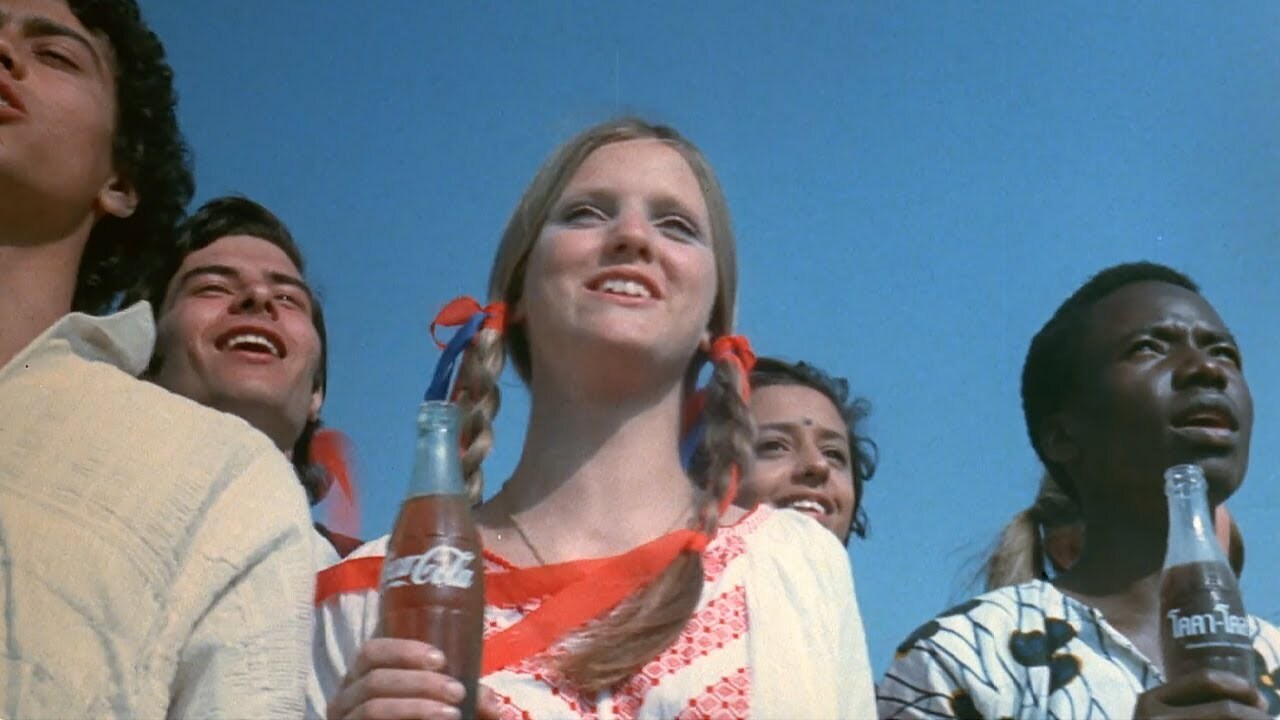
Coca-Cola launched the “Hilltop” commercial in 1971 as part of its “It’s the Real Thing” campaign.1, 2 The concept was developed around the idea of global harmony, showing young people from different countries gathering on a hillside in Italy to share a Coke.2 The advertisement positioned Coca-Cola as a shared cultural experience rather than just a beverage, using music and visual storytelling to express unity.
A song that became bigger than the ad
The jingle “I’d Like to Buy the World a Coke” quickly evolved beyond its original commercial purpose. It was reworked into the song “I’d Like to Teach the World to Sing,” which became a commercial hit and was released independently as a pop single.1, 2 This transition helped the campaign move from advertising into mainstream culture, extending its reach far beyond television.
A visual language of unity
The commercial depicted a diverse group of young people standing together on a sunny hilltop, holding Coca-Cola bottles and singing in harmony.2 The imagery emphasized peace, inclusion, and shared humanity during a period marked by social and political tension.
Coca-Cola used this setting to communicate emotional values rather than product attributes, reinforcing its role as a symbol of connection.
Source: Meaningful Impact Youtube
A defining moment in advertising history
The “Hilltop” campaign became one of the most iconic commercials ever created.1 It received an unusually strong public response, with many viewers requesting copies of the song and the advertisement after its release.1, 2 Its influence extended across decades, shaping how brands approached emotional storytelling and music-driven advertising.
A lasting model for emotional branding
Overall, the campaign established a blueprint for global emotional advertising, showing how a brand could communicate ideals such as unity and togetherness through simple but powerful storytelling.
The campaign remained a cornerstone of Coca-Cola’s brand identity and a reference point in advertising history.
A later cultural reference in Mad Men
The campaign was later referenced in Mad Men’s finale, where the 1971 spot itself appeared in the final scene, reinforcing the enduring cultural legacy of the original “Hilltop” concept.3
Source: Región Cuatro Youtube
Written with AI assistance, edited by a human. Find out more about our Use of AI.
1. The Coca-Cola Company, "Creating I'd Like to Buy the World a Coke", company history page, undated (page metadata 20 July 2026), for the commercial's release in the US in July 1971 under the line "It's the real thing. Coke.", the hillside shoot in Rome with five hundred young people hired from embassies and schools there, the song version under its new title becoming a Top 10 hit, the listeners who called radio stations "begging to hear it" and the more than 100,000 letters the company and its bottlers received about the commercial, and its standing as an ad that "has consistently been voted one of the best of all time". https://www.coca-colacompany.com/about-us/history/creating-id-like-to-buy-the-world-a-coke
2. Wikipedia, "I'd Like to Teach the World to Sing (In Perfect Harmony)", accessed 8 October 2026, for "It's the Real Thing" as the Coca-Cola slogan introduced in October 1969, the spot first aired in July 1971 showing a multicultural group of young people lip synching the song on a hill in Manziana outside Rome, the revision of the jingle into a full song with added verses and the product references removed, the singles by The New Seekers (No. 1 in the UK, No. 7 in the US) and The Hillside Singers (No. 13 on the Billboard Hot 100), and DJs receiving requests to hear the commercial. https://en.wikipedia.org/wiki/I%27d_Like_to_Teach_the_World_to_Sing_(In_Perfect_Harmony)
3. The Coca-Cola Company, Coca-Cola Australia media center, "Coke's 'Hilltop' Featured in Final Scene of 'Mad Men'", 18 May 2015, for the 1971 "Hilltop" spot itself being featured in the final scene of the Mad Men series finale. https://www.coca-cola.com/au/en/media-center/cokes-hilltop-featured-in-final-scene-of-mad-men