Apple repositions itself with "Think different"
On 28 September 1997, Apple Computer broadcast a sixty-second television commercial across the United States during the network premiere of the 1995 film "Toy Story" on ABC. The spot, titled "The Crazy Ones," paired a montage of black-and-white archival footage of figures including Albert Einstein, Bob Dylan, Martin Luther King Jr., Richard Branson, John Lennon, Buckminster Fuller, Thomas Edison, Muhammad Ali, Mahatma Gandhi, Amelia Earhart, Alfred Hitchcock, Martha Graham, Jim Henson, Frank Lloyd Wright, and Pablo Picasso with a voice-over narrated by Richard Dreyfuss. The closing line of the film, "Think different," was rendered on a white field beside the rainbow Apple logo. The campaign marked the moment at which Apple's brand position was formally restated after its near-collapse of the mid-1990s.
The creative team and the writing of "The Crazy Ones"
The campaign was developed at TBWA\Chiat\Day in Los Angeles. Lee Clow led the agency relationship. The slogan "Think different" was conceived by Craig Tanimoto, an art director at Chiat\Day, who proposed it as part of a wider conceptual brief responding to IBM's then-running "Think" advertising line. Rob Siltanen, then creative director at the agency, drafted the script of "The Crazy Ones" overnight in July 1997 following a series of meetings with Steve Jobs. Ken Segall, an account creative who later worked closely with Jobs on Apple naming, contributed to the writing. Although it has been widely assumed that Steve Jobs wrote the text personally, Siltanen has stated that he authored the script with Ken Segall and that Jobs initially expressed reservations about it before approving the final cut.
The television advertisement was directed by Jennifer Golub of Chiat\Day, who shared the art director credit with Jessica Schulman and Yvonne Smith. A version narrated by Steve Jobs himself was recorded but not used in the broadcast cut, with the Richard Dreyfuss version selected for release.
Context: Apple in 1997
The campaign followed Apple's acquisition of NeXT in December 1996, the return of Steve Jobs as interim chief executive in July 1997, and a financial crisis that had brought the company within months of insolvency. Apple's product line had become diffuse, its market share had declined sharply, and its brand had lost the cultural distinctiveness it had established in the 1980s. Jobs's brief to TBWA\Chiat\Day was to develop a campaign that re-anchored Apple's brand without referring to specific products. The result was a positioning exercise rather than a product introduction, with the company itself, rather than the Macintosh or any peripheral, as the subject of the work.
The campaign in market
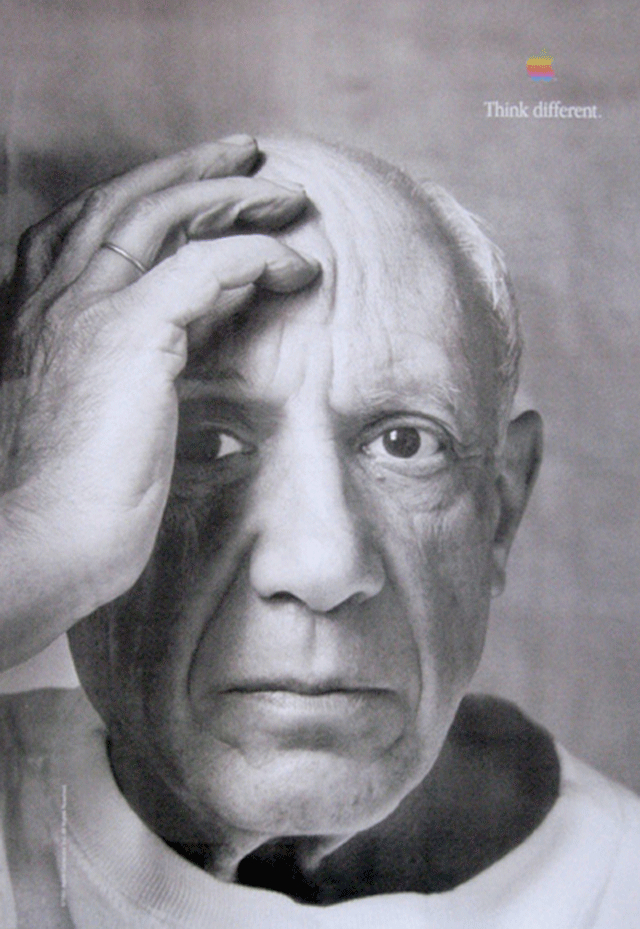
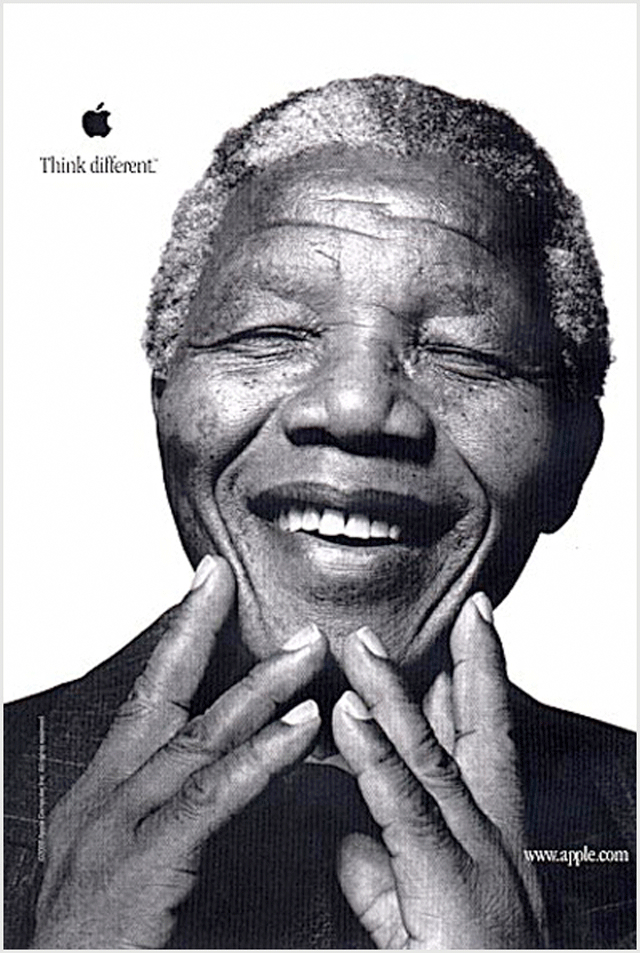
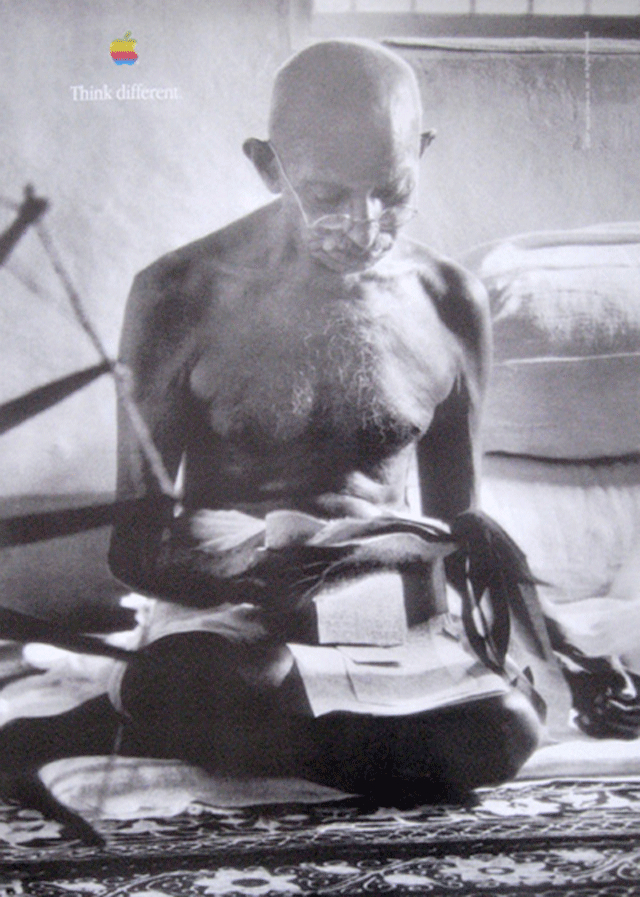
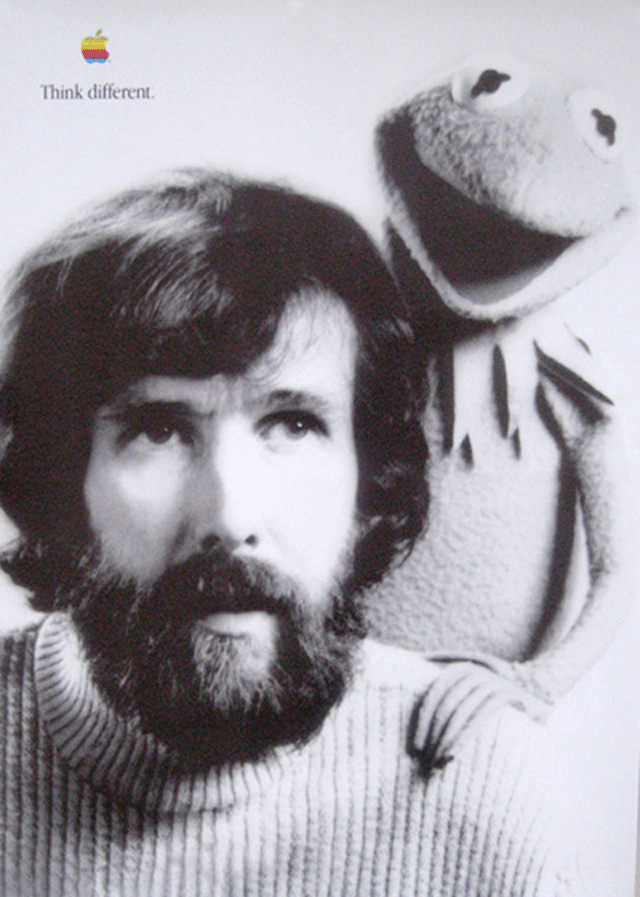
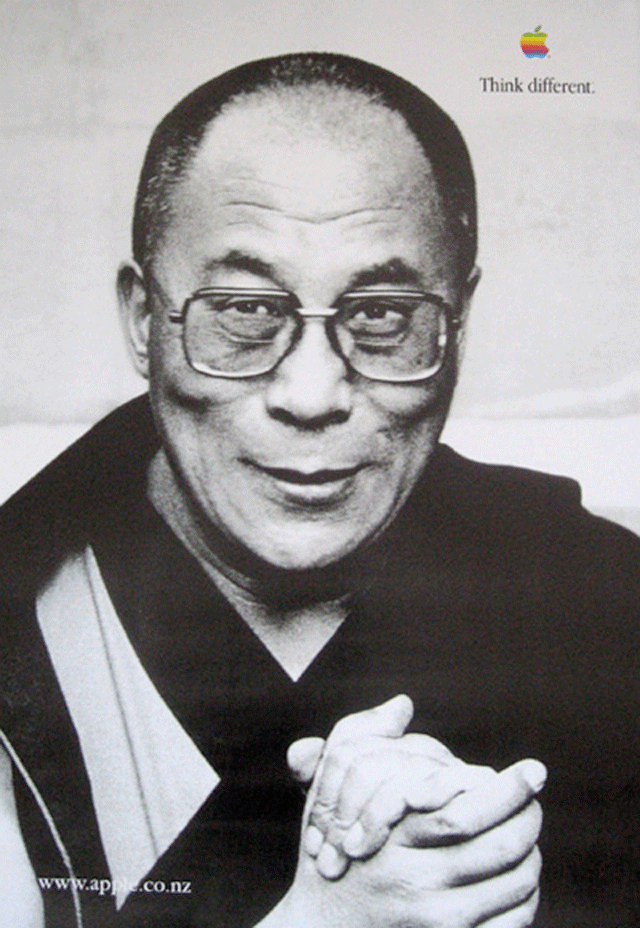
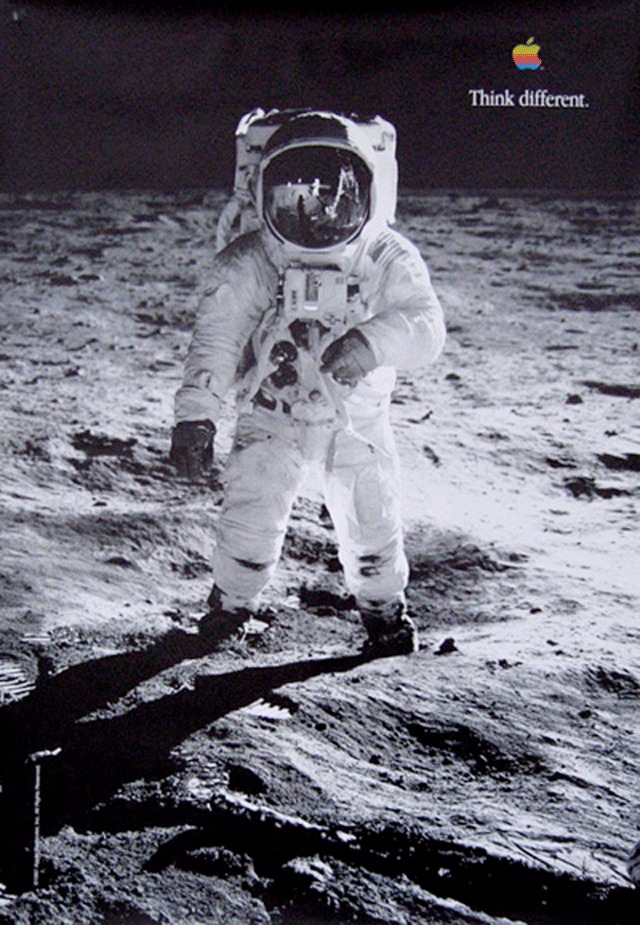
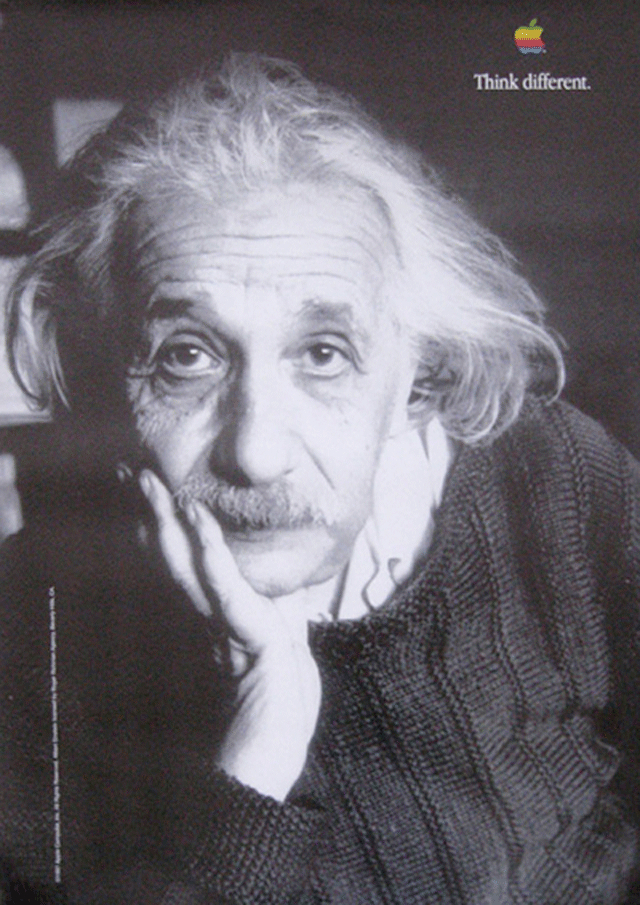
"The Crazy Ones" ran in cinema, television, and out-of-home formats. A print and outdoor extension featured single black-and-white portraits of the same figures alongside the line and the Apple logo. The portraits became one of the most reproduced advertising series of the late 1990s, appearing on billboards, bus shelters, and city wraps in Apple's principal markets. A licensing programme handled the copyright clearances for each subject's likeness, with proceeds in several cases directed to charitable foundations chosen by the families or estates of the figures depicted.
Internally, Apple distributed copies of the film to its employees and used it to recover morale among a workforce that had been depleted by years of restructuring. Externally, the campaign re-established Apple as a brand of cultural ambition rather than as a struggling computer manufacturer.
Reception and legacy
The campaign received the Emmy Award for Outstanding Commercial in 1998 and the Grand Effie for the most effective campaign in America in 2000. It ran in various forms until 2002, when it was succeeded by the "Switch" campaign. "Think different" remained one of the most discussed advertising platforms of the late twentieth century, and the slogan was used by Apple on packaging, product literature, and corporate communication for several years after the television advertising ceased.
Within Apple's brand history, "Think different" performed two distinct functions. It restated the identity that had been established by "1984" and the early Macintosh marketing of the 1980s, and it provided the conceptual framework within which the iMac, the iPod, the iPhone, and the company's subsequent product introductions were positioned. The campaign remains the reference point against which later Apple brand work is measured, and its phrase has continued to appear in Apple corporate communications, including during the company's fiftieth anniversary celebrations in 2026.
Source: Harry Piotr Youtube
Written with AI assistance, edited by a human. Find out more about our Use of AI.