Quick Facts
Review and key takeaways
Review
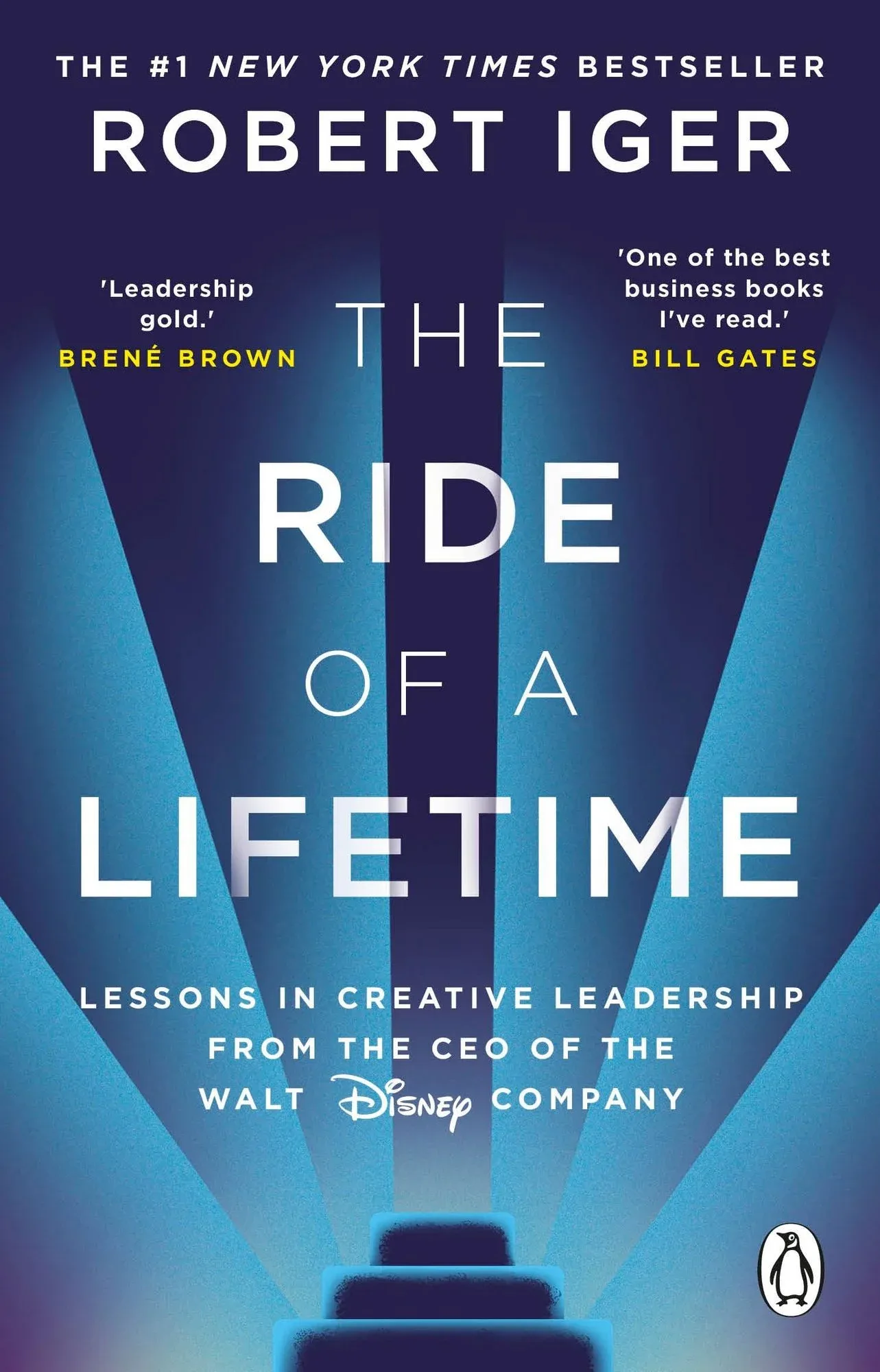
Robert Iger ran the Walt Disney Company from 2005 to 2020, and The Ride of a Lifetime is his account of what those years taught him. It is part memoir, part leadership book, and its most valuable quality is its temperament. Iger writes as a calm, pragmatic and notably humane operator, and the portrait he draws of himself is the opposite of the volatile genius archetype. Where figures like Steve Jobs or Elon Musk are celebrated for bending people to a singular will, Iger makes a quieter and, on the evidence of Disney's results, no less effective case: you do not have to go over people to build something great. That contrast is the book's throughline and the reason it lands.
His approach to the top job came down to three simple ideas he repeats throughout: recommit to quality, embrace technology rather than fight it, and think bigger and more global. Around those he builds a short list of leadership principles, optimism, courage, decisiveness and fairness, and illustrates each with decisions he actually faced. The virtue of the book is that these are not abstractions. They are drawn from real moments, from a difficult succession to the friendship he built with Jobs in his final years, and they read as lived rather than theorized.
For anyone thinking about brands, the strongest material is Iger's instinct for stewardship. He treats the Disney brand as a promise about quality and creativity that a leader is obliged to protect, and he shows how that conviction guided his biggest moves. His acquisitions of Pixar, Marvel and Lucasfilm are, read through a branding lens, a masterclass in brand architecture: buying distinct creative identities, then resisting the urge to flatten them into the parent. He understood that each brand's autonomy was the asset, and that stewardship sometimes means restraint.
That said, the book leans heavily on those acquisitions. A large share of its pages goes to the courtships and negotiations of Pixar, Lucasfilm, Marvel and later 21st Century Fox. The stories are well told and genuinely instructive on deal-making and on handling founders and creative talent, but their weight comes at a cost. What gets less room is Disney itself, the inner workings, the culture, the creative machine that makes the company what it is. Readers who came to the great memoirs of company builders, the way Howard Schultz opened up Starbucks from the inside in Pour Your Heart Into It, may find the view of Disney as an organization thinner than expected. The famous Disney magic is discussed and defended, but it rarely spills off the page and into the reader.
There is also the natural limit of a sitting executive's memoir. Iger is generous and reflective, but he is telling his own story while still close to it, and the hardest edges of a long tenure are smoothed. It is an honest book, not an exposing one.
None of that diminishes what it does well. The Ride of a Lifetime is an unusually decent and readable leadership memoir, and its central argument, that decency and pragmatism can out-build ego, is worth taking seriously. As a study in protecting a brand's promise across two decades and a string of transformative deals, it delivers real insight. As a look inside the creative soul of Disney, it leaves you wanting more of the very magic it set out to steward.
Key takeaways
You can build greatly without going over people. Iger's career is the counterexample to the volatile-genius model of leadership. Decency, empathy and steadiness, applied consistently, produced two decades of results that ego-driven leadership is usually credited for.
Steward the brand as a promise. Iger treats the Disney name as a standing commitment to quality and creativity that leadership exists to protect. Every major decision is measured against whether it strengthens or dilutes that promise.
In brand architecture, autonomy is the asset. The Pixar, Marvel and Lucasfilm deals worked because Iger bought distinct creative identities and let them stay distinct. Resisting the urge to absorb an acquired brand into the parent is itself a strategic act.
A memoir close to the events smooths its own edges. The book is honest and reflective, but it is written by a leader still near his tenure. The deal stories dominate, and the inner life of Disney as a company gets less room than the brand's mythology might promise.
Who should read this
This book is for leaders, brand builders and anyone weighing how to lead well without leading harshly. It is especially useful for readers interested in brand stewardship and brand architecture, since Iger's acquisitions are a practical lesson in growing a portfolio without erasing what made each part valuable. Those hoping for a deep interior portrait of Disney's culture and creative process should temper that expectation: the memoir spends more time on the deals than on the magic. Read for a humane, pragmatic model of leadership at scale, it is genuinely rewarding.
About the author